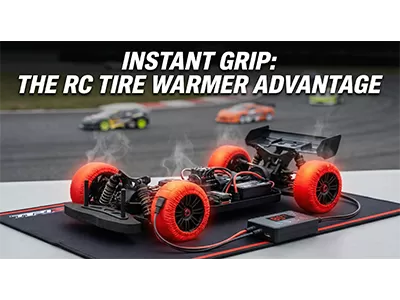
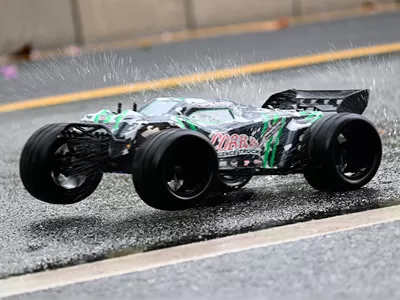
Active Heating & Heat Soaking Tire warmers use electric heating elements—either wrapped in belts or housed in "warming cups"—to evenly bake the tires. The goal is to get the rubber compound into its "sweet spot," typically between 50°C to 80°C (122°F - 176°F), depending on the specific tire formula. They also act as insulators, keeping that heat locked in until you are ready to set the car on the track.
This is the most critical function. Cold rubber is hard and has low molecular activity, meaning it slides across the track surface like it's on ice. By pre-heating the tires, the rubber softens and becomes sticky. This allows the tire to "bite" into the track immediately, giving you the confidence to push hard right off the starting line without spinning out.
Without warmers, a driver needs to drive conservatively for the first few laps to generate friction heat naturally. This leads to inconsistent lap times. Tire warmers allow you to skip this dangerous phase. Your tires start at peak performance, meaning your first lap can be as fast as your last, and the performance curve remains stable throughout the race.
It sounds counter-intuitive, but heating your tires actually protects them. Driving aggressively on cold tires causes "cold tearing" or surface graining because the stiff rubber shears off against the asphalt. By warming them up gently, the tire enters its working window smoothly, reducing abnormal wear and extending the life of your expensive race tires.
Tires can slightly deform during storage. Warmers help return the tire to a "true" round shape. Furthermore, heat expands the air inside the tire (Insert). By heating them on the bench, you can set your tire pressure (PSI) based on the hot operating temperature, ensuring your handling is precise and predictable once you hit the track.
On-Road Racing (Touring Car, F1, Pan Car): Mandatory. On asphalt or high-grip carpet, you will have almost zero competitiveness without them.
Off-Road (Buggy/Truggy): Optional. While less critical because dirt tracks rely more on mechanical pin grip, warmers are still used in high-level competition for specific tire compounds.
Bashing/Casual: Not Required. However, using them will immediately make the car feel more responsive and fun to drive.
Match the Temp: Don't just set it to max. Different compounds (Soft/Medium/Hard) require different temps. Overheating can turn your tires into mush and ruin them.
Safety First: These are high-current electrical devices. Never leave them unattended to avoid fire risks.
Conclusion Think of RC tire warmers like the tire blankets used in Formula 1. They activate your car's potential before you even touch the throttle. If you are chasing consistent lap times and podium finishes, a quality set of tire warmers is one of the best investments you can make.