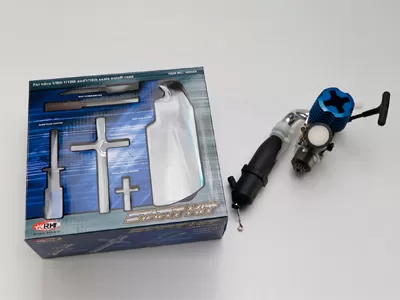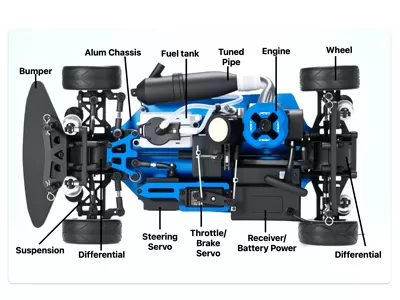
So, you've just unboxed your new VRX Racing nitro buggy—maybe it's the legendary Spirit N2, the VRX-2, or the RANGER. The chassis looks dialed, and the anodized parts are gleaming. You are itching to rip some dirt, but hold your horses!
Before you hit the track or the backyard, you must perform the Break-In Ritual. This isn't just a recommendation; it is the difference between an engine that screams for years and one that becomes a paperweight in a week.
Whether your rig is running a .18 or a big-block .21 engine, this guide will walk you through the Heat Cycle Method—the pro racer's choice for maximizing power and engine life in your VRX machine.
Before you pull that starter cord or hit the starter box, get your gear ready:
Air Filter: Never run without a properly oiled foam filter.
Fail-Safe: Ensure your throttle servo returns to neutral/brake if the signal is lost.
Glow Plug Check: Remove the glow plug and put it in the igniter. The coil should glow bright orange immediately. If it's dim or dark, replace the plug or charge the igniter.
Pre-Heating: New engines are tight. Use a heat gun or hair dryer to warm the engine head to approx. 180°F-200°F. This expands the sleeve and reduces stress on the connecting rod during the first start.
Fire up the engine. It should be set very rich from the factory (lots of blue smoke).
Do not just let it idle. Idling doesn't generate enough heat to expand the sleeve properly, which wears down your piston prematurely.
Drive the car in slow, gentle circles (quarter throttle) or blip the throttle on the box.
Target Temp: You want the engine to reach 200°F - 220°F quickly. If it's too cold (under 180°F), lean the High-Speed Needle (HSN) slightly or wrap the head in foil to retain heat.
Run for 2-3 minutes, then shut it down.
This is where the magic happens.
Stop the engine.
Immediately rotate the flywheel so the piston is at Bottom Dead Center (BDC). Use your finger to rotate the flywheel underneath the chassis. When the piston is at the bottom, the flywheel will spin freely without the "pinch" resistance.You should feel zero resistance.
Allow the engine to cool completely to ambient temperature (approx. 10-15 minutes). Why? As the sleeve cools and contracts, you want the piston far away from the "pinch zone" at the top.
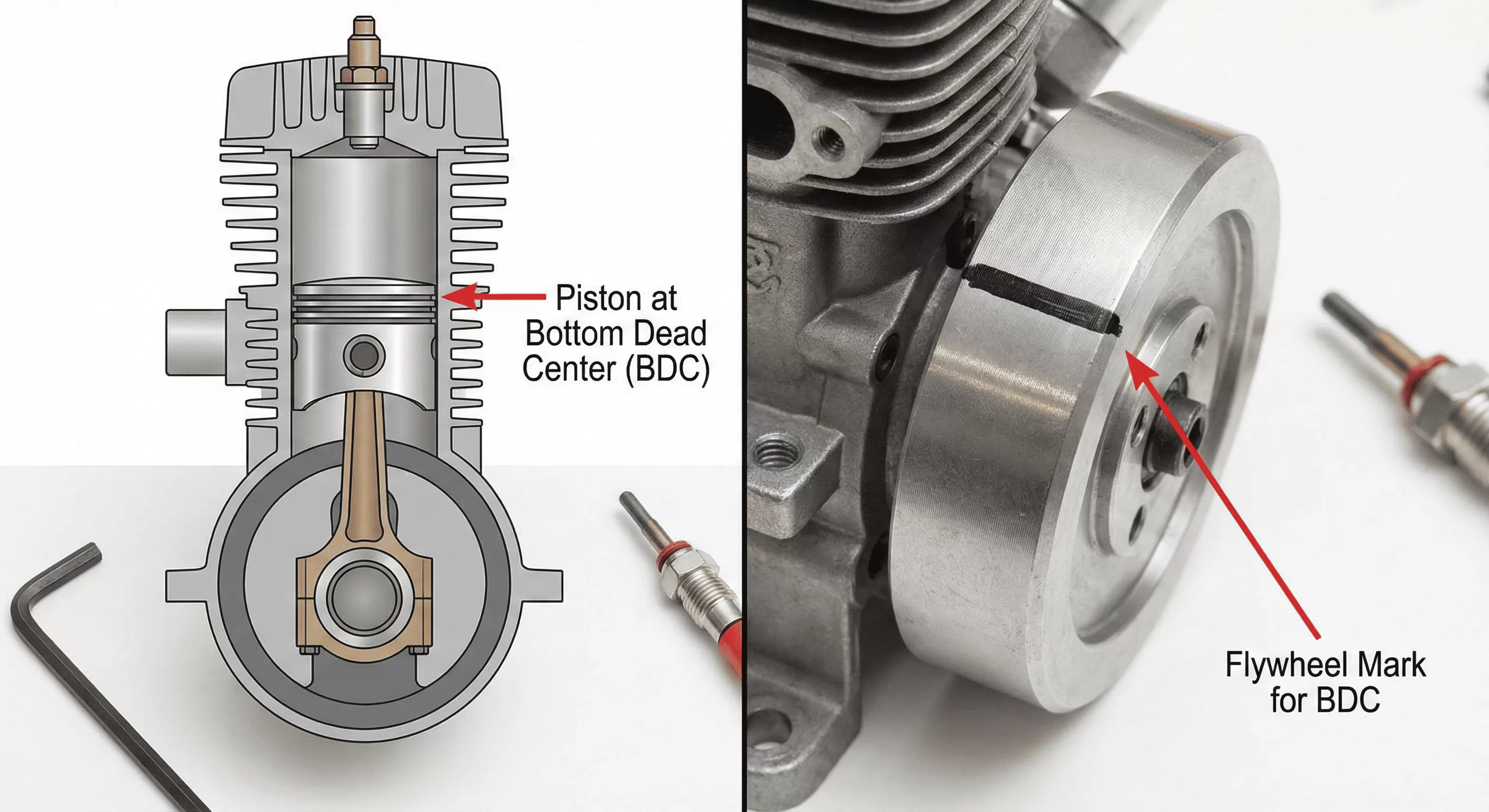
Repeat the heat cycle process for tanks 2 through 4.
Gradually Lean It Out: On each subsequent tank, lean the HSN by 1/8th of a turn (Turn Clockwise to Lean, Counter-Clockwise to Richen.1 hour on a clock face).
Listen to the Sound: You are looking for a clean specific sound as RPMs increase, clearing out the "four-stroke" burble into a crisp scream.
Watch the Smoke: Always ensure there is a visible trail of blue smoke. No smoke = Too lean (Danger!).
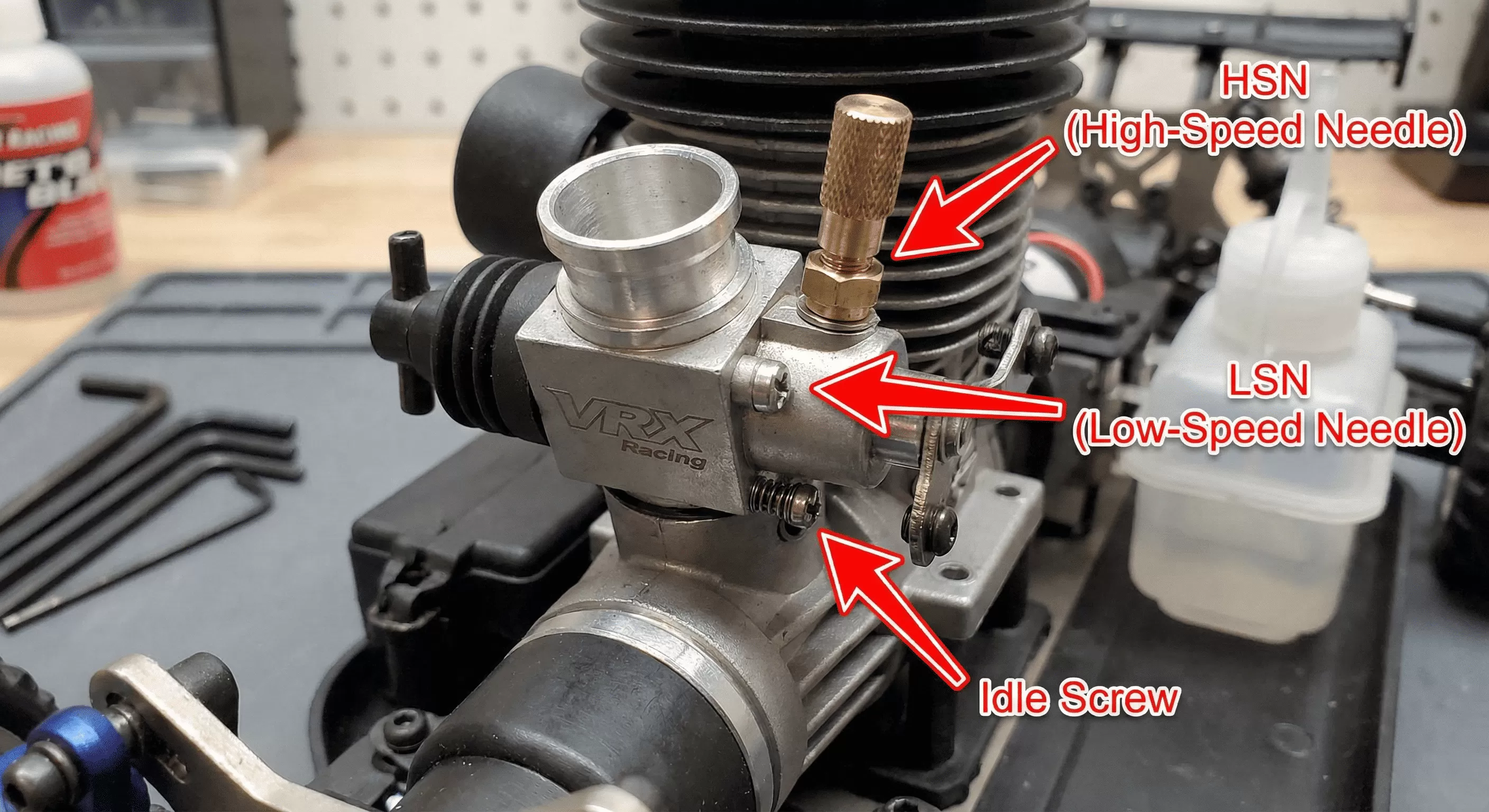
By tank 5 or 6, your engine should hold a steady idle and have good punch. Now you can fine-tune the Low-Speed Needle (LSN) for crisp acceleration off the line. Remember, a race-ready engine is always tuned slightly rich to account for weather changes and fuel load.
Pull start feels stuck?
Don't force it! The engine is likely flooded (hydro-locked). Remove the glow plug, turn the car upside down, and pull the starter to clear the excess fuel.
Engine cuts out when braking?
Check your Idle Screw. It might be set too low. Turn it clockwise slightly to keep the carb gap open about 1mm.