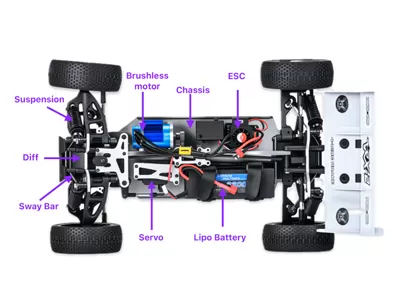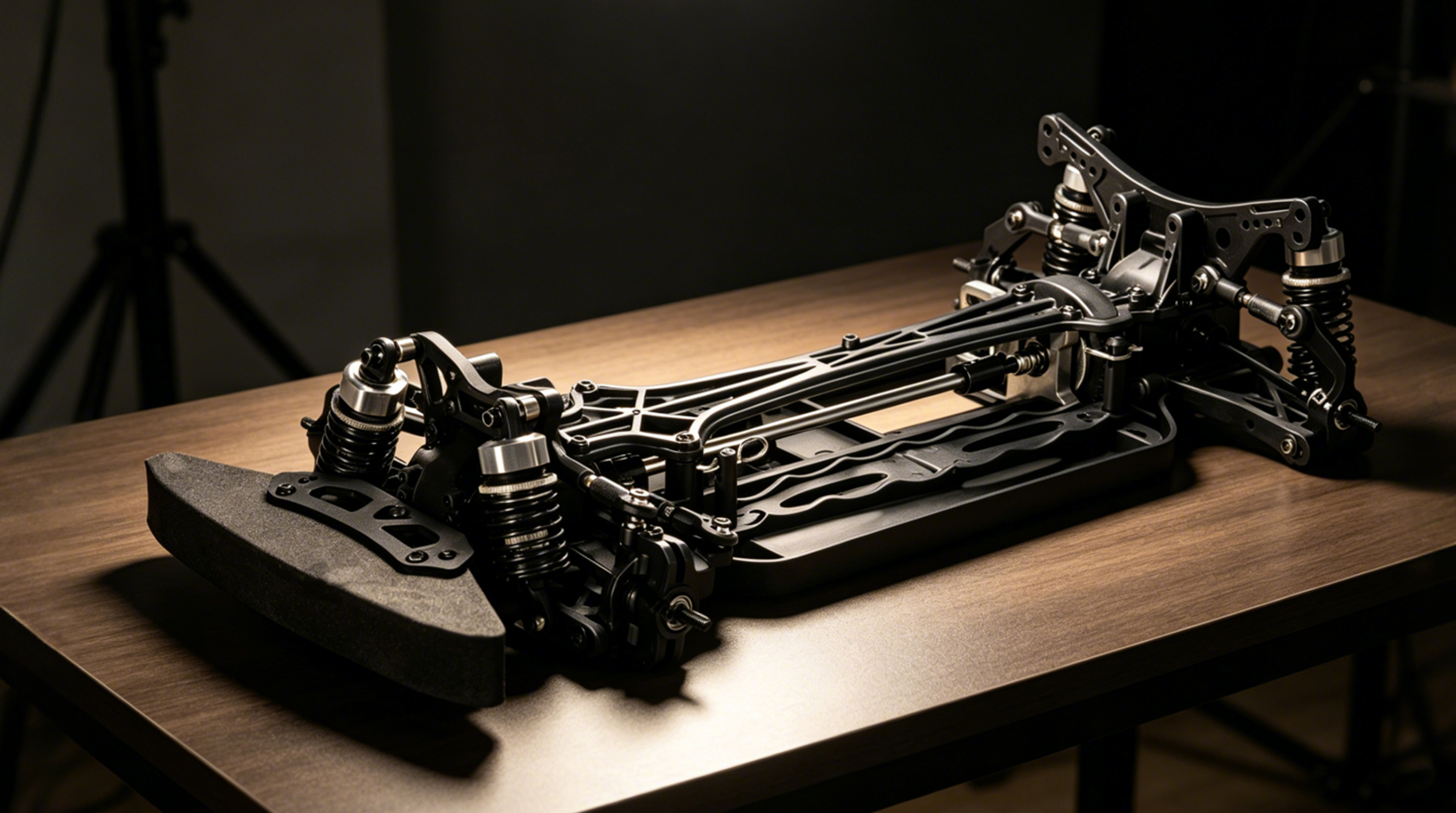
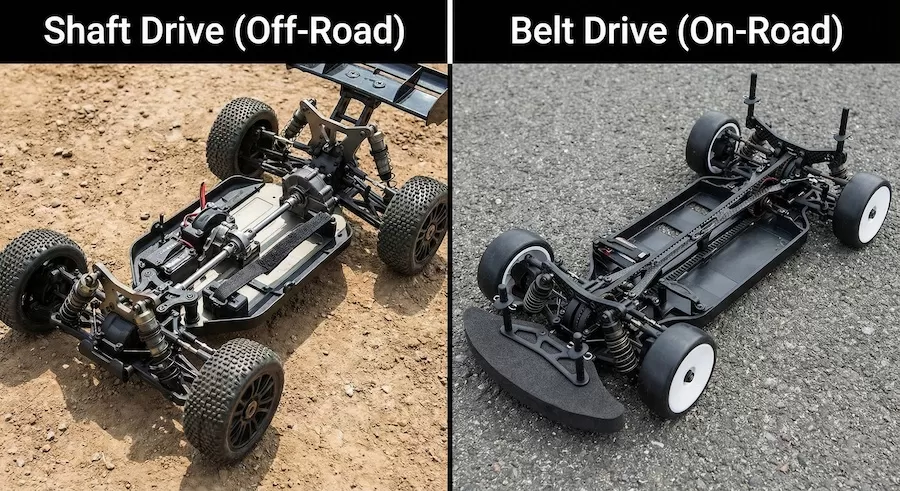
The fundamental difference lies in how power travels from the motor to the wheels.
 |  | |
Feature | Shaft Drive | Belt Drive |
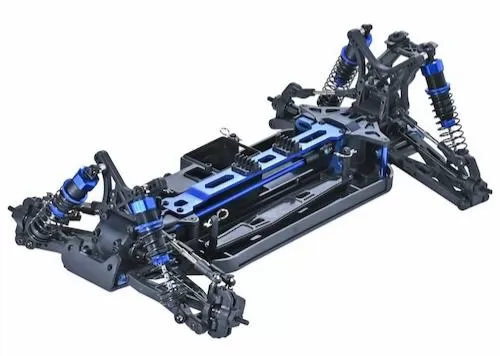
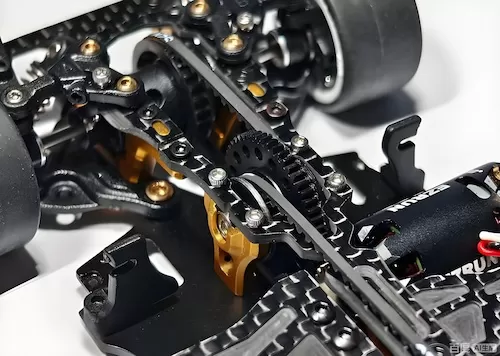
Medium | Metal Shafts (Dogbones/CVDs) | Reinforced Rubber/Composite Belts |
Power Path | Motor → Pinion/Spur → Center Shaft → Diffs | Motor → Pulleys → Belts → Diffs |
Typical Layout | Central drivetrain tunnel. Common in buggies & trucks. | Side-mounted belts. Common in touring & drift cars. |
Instant Response: With a direct metal-to-metal connection, there is almost zero lag. When you hit the throttle, the car launches instantly.
Torque Twist: Because a heavy metal shaft is spinning, it creates rotational mass. In mid-air jumps, hitting the throttle can significantly alter the car's pitch and roll.
Drag Brake Feel: Shaft drives often have more natural resistance when you let off the throttle.
Linear & Smooth: Belts have a tiny amount of elasticity that absorbs shock. The power delivery feels incredibly linear and manageable.
Control on High Grip: While there is a micro-second of "lag" due to belt stretch, this actually helps traction on high-grip surfaces (like carpet or asphalt), making the car less twitchy.
Silence: Belt drives are whisper-quiet, often leaving you hearing only the motor whine.
Shaft Drive (Low Maintenance)
Bulletproof: Metal shafts and gears are incredibly durable. They are practically "install and forget" for most users.
Sealed System: Most shaft drive differentials are enclosed, keeping dirt out.
The Risk: If a rock gets jammed in an exposed driveshaft (common in open-wheel buggies), it can damage the joint.
Belt Drive (High Maintenance)
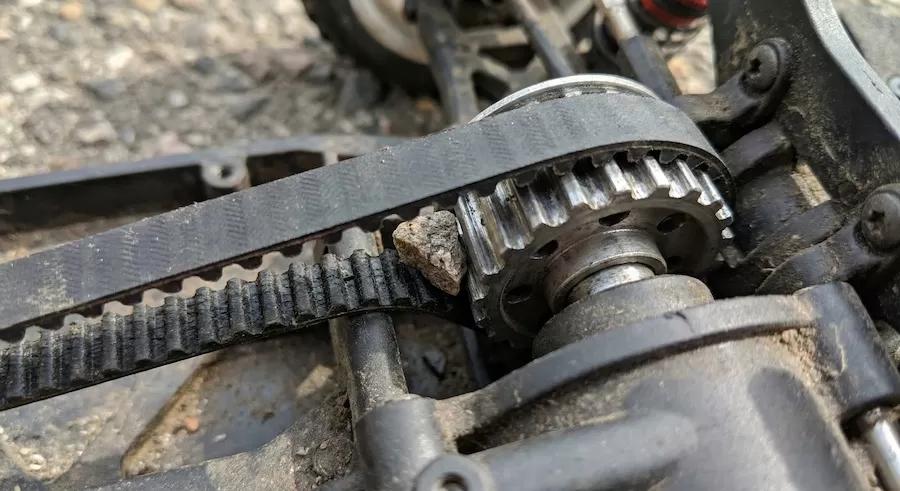
Debris Intolerance: The biggest enemy of belts is small rocks ("pebbles"). If a pebble gets stuck between the pulley and the belt, it can strip the teeth instantly. This is why they are rarely used for serious off-roading.
Tension Tuning: You must check belt tension regularly. Too loose = skipping teeth (slipping); Too tight = drag and motor heat.
Wear Item: Belts will stretch and wear out over time and need replacement.
Shaft Drive: The "Basher's" Best Friend
Best For: Monster Trucks, Rock Crawlers, Short Course Trucks, and Bashers.
Why: It can handle mud, dirt, jumps, and abuse. Reliability is king in these environments. If you want to run through puddles and sand without worry, go shaft drive.
Belt Drive: The "Racer's" Weapon
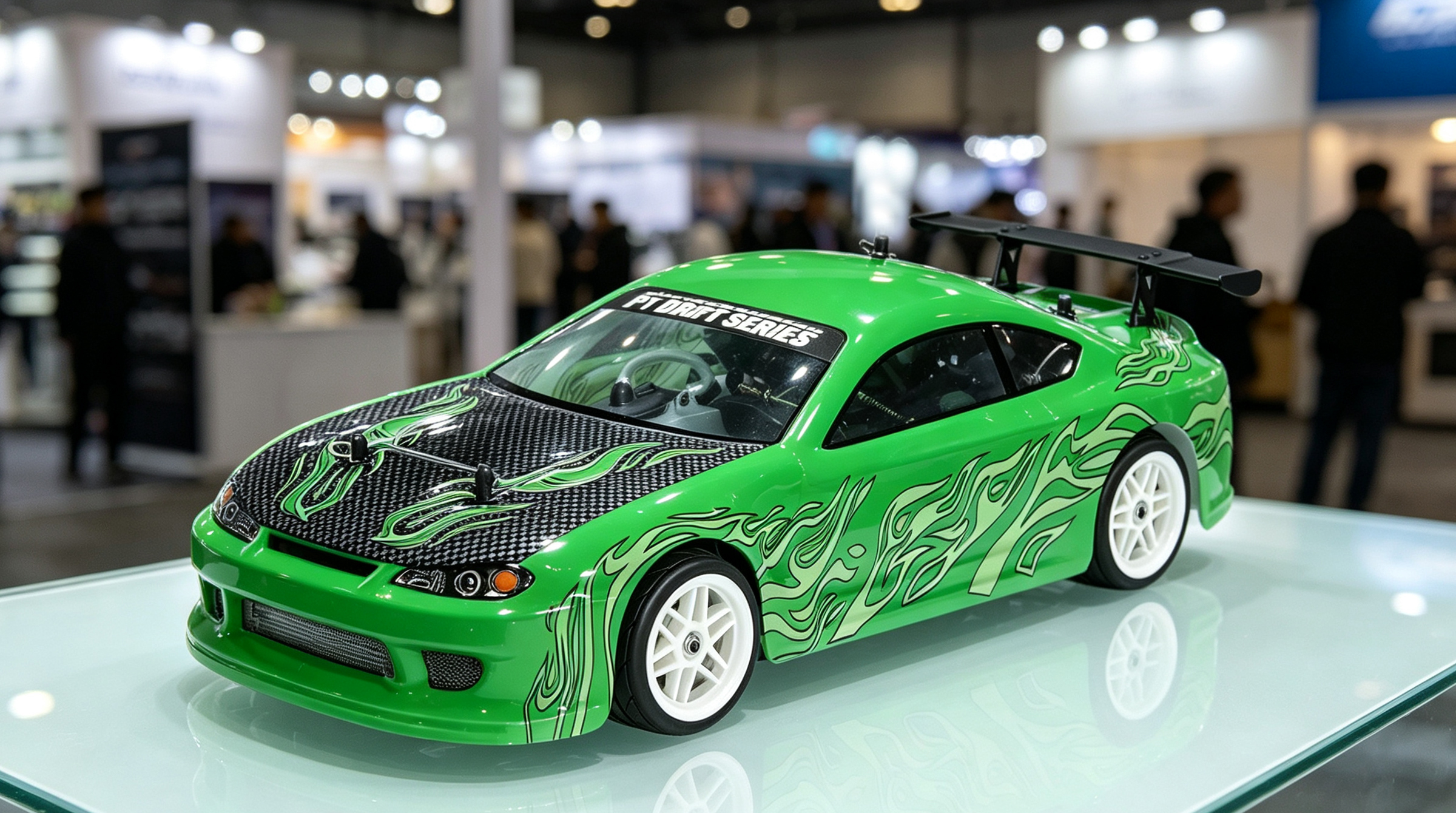
Best For: Touring Cars (On-Road), Drift Cars, and Carpet Buggies.
Why: On a clean track, the smoothness of a belt drive allows for faster corner speeds and more precise lines. The weight distribution is also more flexible, allowing for lower Center of Gravity (CG) setups.
Summary: Which One Should You Choose?
Use this quick checklist to decide:
If you care about... | Choose Shaft Drive | Choose Belt Drive |
Terrain | Dirt, Mud, Rocks, Grass | Asphalt, Carpet, Concrete, Drift Track |
Driving Style | Bashing, Jumping, Speed Runs | Racing, Precision Drifting, Lap Times |
Maintenance | "I just want to drive." | "I don't mind tuning and cleaning." |
Sound | Mechanical metal gear noise | Silent, smooth operation |
The Verdict:
Building a Rock Crawler or Basher? Stick to Shaft Drive.
Building a Drift Car or Touring Racer? Belt Drive is the gold standard.