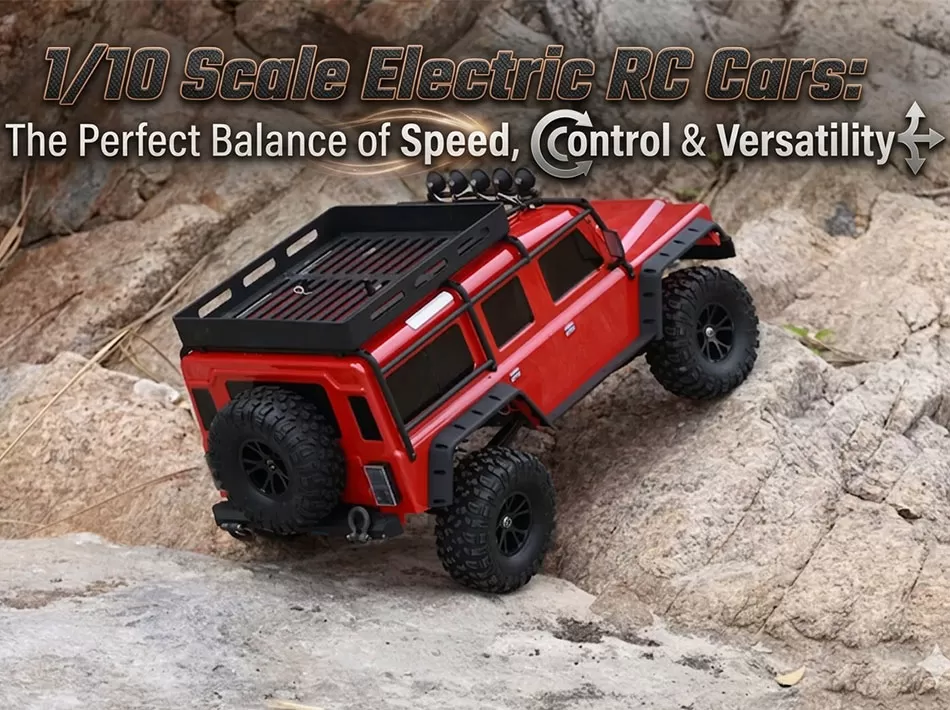
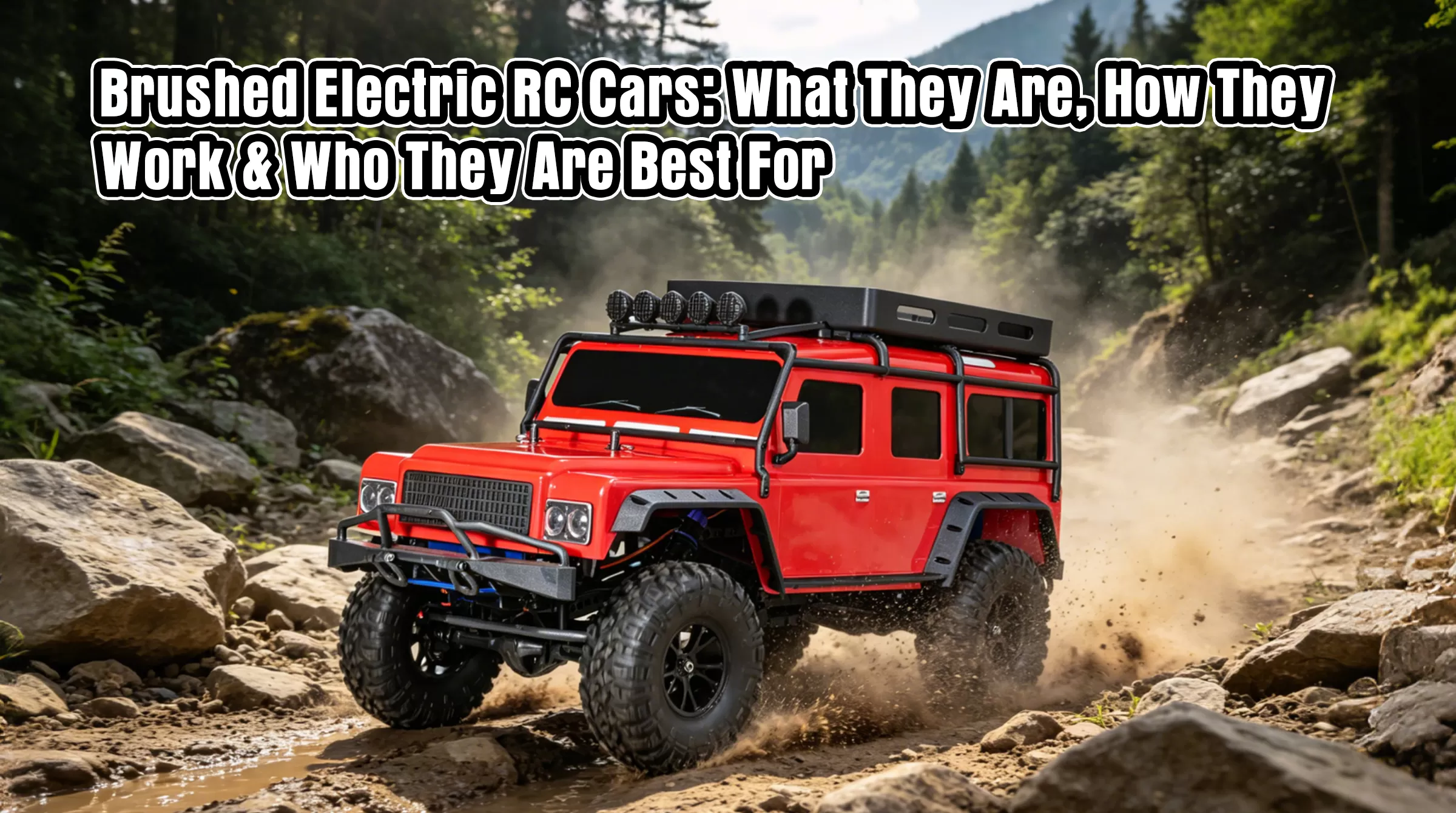
While brushless motors dominate high-performance RC discussions, brushed electric RC cars remain extremely important—especially as the most accessible entry point into the hobby. Simple, affordable, and easy to control, brushed RC cars continue to serve millions of first-time users and budget-conscious buyers worldwide.
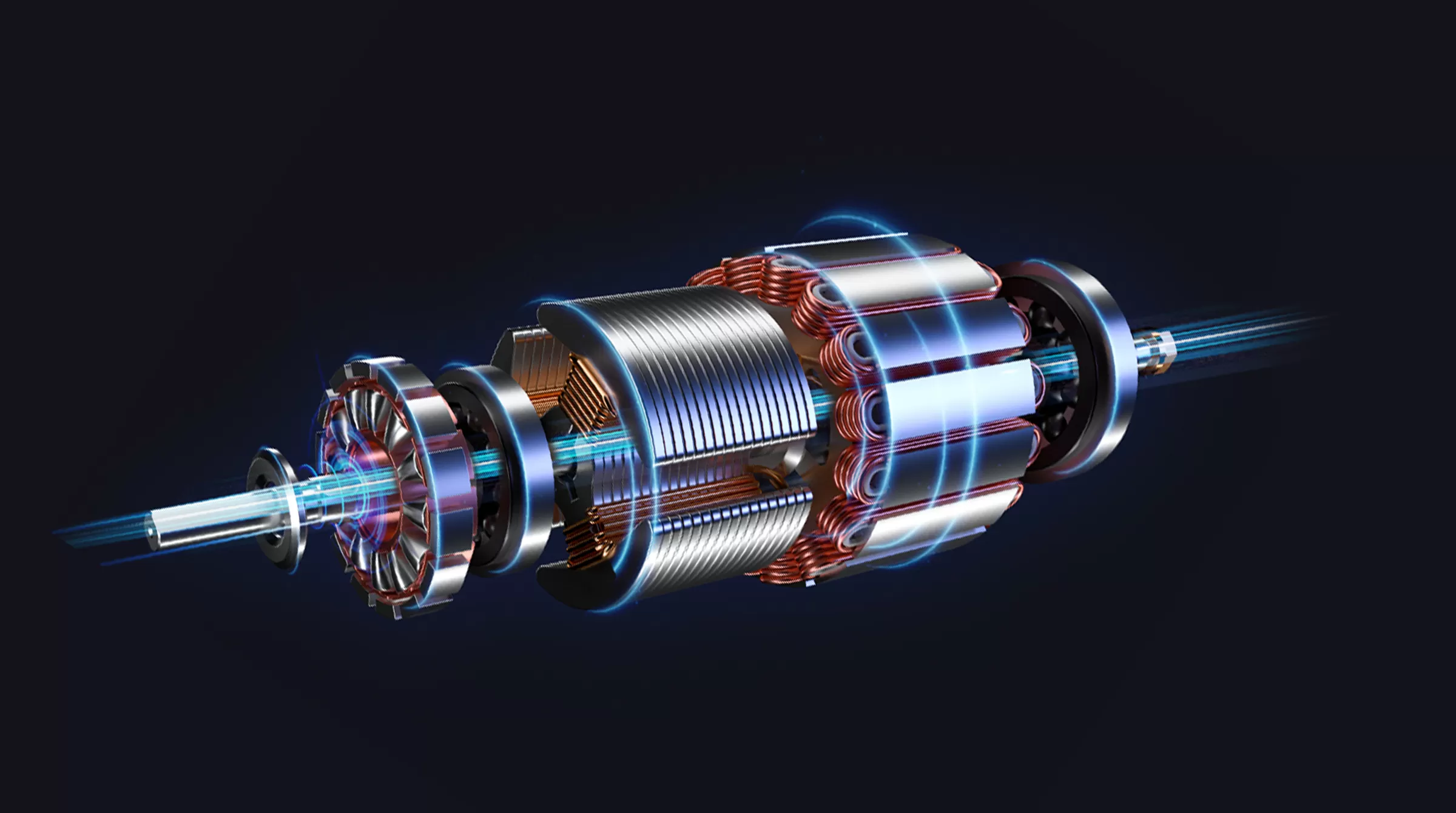
Brushed electric RC cars are vehicles powered by traditional brushed motors. In a brushed motor, electric current flows through carbon brushes that physically contact a rotating commutator, creating the magnetic field that spins the motor.
This design is mechanically simple and cost-effective, making brushed motors the standard choice for entry-level and ready-to-run (RTR) RC cars. They are most commonly found in 1/24, 1/18, 1/16, and 1/10 scale platforms, including entry-level buggies, beginner monster trucks, short course trucks, and youth-focused RTR kits.
Core Definition: Brushed electric RC cars are the industry-standard entry point into the RC hobby, valued globally for their mechanical simplicity, affordability, and accessible handling.
The working principle of a brushed RC car is straightforward and easy to understand. The battery supplies power to an Electronic Speed Controller (ESC), which modulates the current delivered to the brushed motor. Inside the motor, carbon brushes maintain physical contact with the spinning commutator, directing current through the rotor windings. The electromagnetic field generated by the rotor interacts with the fixed magnetic field of the stator, spinning the motor shaft. This rotational force is then transferred through the gearbox to the wheels, propelling the vehicle forward or in reverse.
Because there is physical contact between brushes and commutator, brushed motors naturally produce some friction, heat, and wear over time. This results in slightly lower energy efficiency and more noticeable heat buildup compared to brushless systems. However, the simple mechanical design also makes them very predictable and easy for beginners to control.
One-sentence summary: Simple mechanical design makes brushed motors easy to control and cost-effective.
Despite the rise of brushless technology, brushed RC cars continue to hold a significant share of the market for very good reasons:
Lower Cost Entry Point — They make RC accessible to budget-conscious families and first-time buyers.
Beginner-Friendly Control — power delivery is more linear and forgiving, reducing the chance of losing control.
Easy Maintenance — Simple structure means easier repairs and lower long-term costs.
Ideal for RTR Packages — Factories can produce reliable, ready-to-run cars at attractive price points.
They remain especially popular in the entry-level, kids’, and casual hobby segments under keywords like "brushed rc cars for beginners", "cheap rc cars", and "entry level rc cars".
Here's a clear comparison to help you understand the trade-offs:
Feature | Brushed Electric RC Cars | |
Speed | Lower | Higher |
Cost | Cheaper | More expensive |
Maintenance | Simple | Very low |
Lifespan | Shorter | Longer |
Best For | Beginners & budget buyers | Enthusiasts & performance seekers |
Brushed is about accessibility; brushless is about performance.
Further Reading:
While brushed and brushless RC cars differ in speed, maintenance, and cost, the real distinction comes from the motor technology powering them. For a deeper understanding of how RC motors affect acceleration, efficiency, durability, and overall performance, read Brushed vs. Brushless Motors – The Heart of Your RC Race Car Explained.
Brushed electric RC cars are generally slower than brushless models, but they still deliver plenty of fun for beginners and casual users.
Typical speed ranges include:
Entry-level brushed cars: 10–20 mph
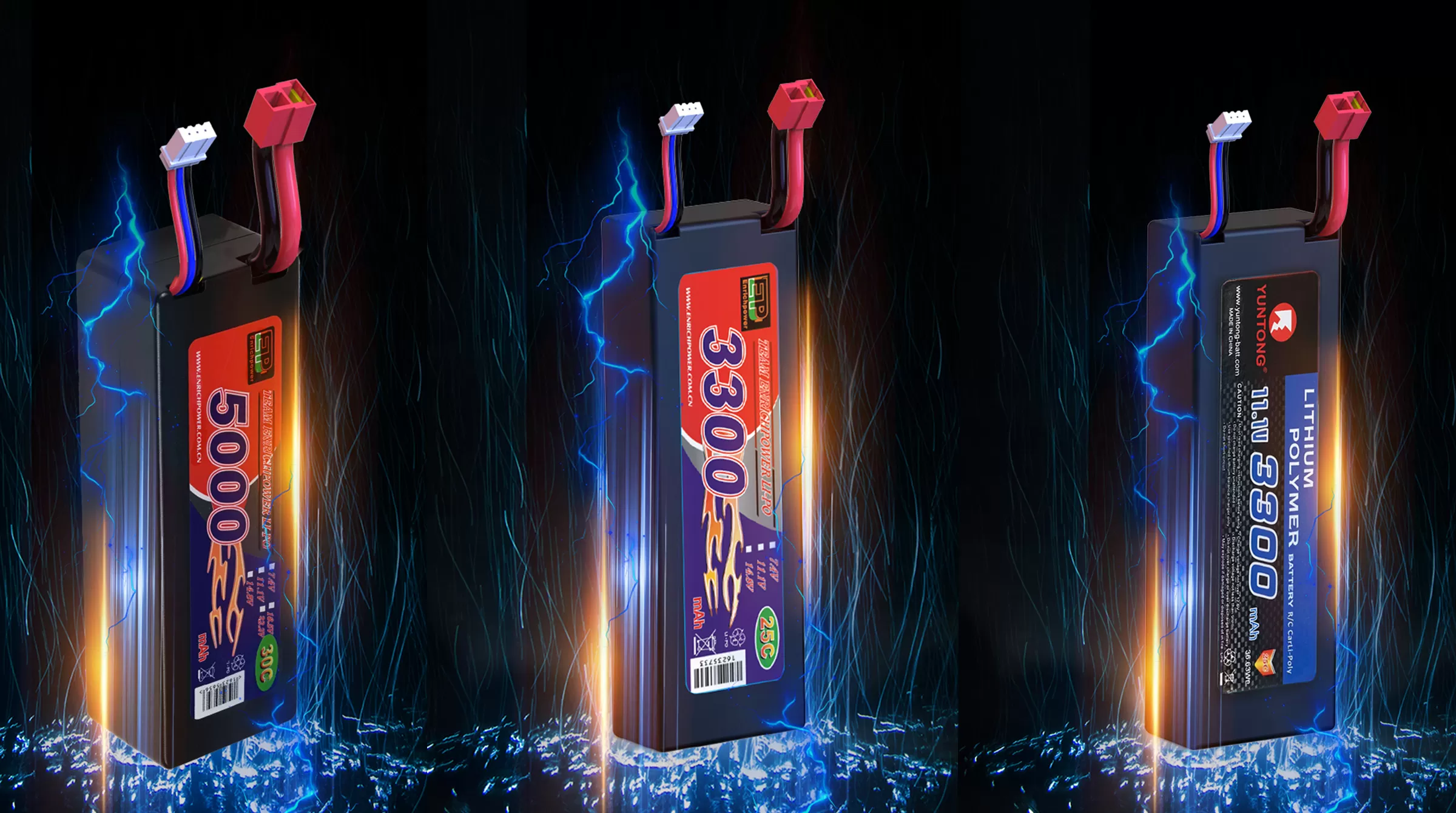
Upgraded brushed setups with optimized gearing and 2S LiPo: 25–35 mph
Actual speed depends on battery voltage, vehicle weight, gear ratio, and terrain. On smooth surfaces with good gearing, brushed cars can feel surprisingly lively for their price point. Keywords such as "how fast do brushed rc cars go" and "rc car speed brushed motor" are frequently searched by new users evaluating their first purchase.
Yes — brushed RC cars are often the best choice for true beginners. Their power delivery is more gradual and forgiving, making it easier to learn throttle control without sudden surprises. They are also less intimidating in small spaces and require minimal technical knowledge to maintain.
However, most users eventually reach a performance ceiling and choose to upgrade to brushless. This creates a natural upgrade path: Brushed = entry → Brushless = upgrade path. This progression is healthy for both users and the overall RC market.
Brushed motors are most commonly found in entry-level and budget-friendly models, including:
1/16 and 1/18 scale RC trucks and cars
Entry-level monster trucks
Beginner buggies and short course trucks
Kids' RTR ready-to-run cars
VRX Racing offers brushed platforms across multiple scales (1/24 to 1/10), making it easy for distributors to cover the important entry-level segment with reliable, cost-effective products.
While excellent as starter vehicles, brushed RC cars do have natural limitations:
Carbon brush wear over time, requiring eventual replacement
Lower energy efficiency and more heat generation
Limited top speed compared to brushless systems
More frequent maintenance needs as the motor ages
These are not flaws — they are simply characteristics of a stage-appropriate product. Many users enjoy brushed cars for months or even years before naturally moving up to brushless.
Brushed RC cars are the ideal choice in these situations:
First-time RC users and young beginners
Budget-conscious or gift-market buyers
Indoor and light backyard casual use
Retailers building an accessible entry-level product range
From a business perspective, brushed RC cars are high-volume entry products that help retailers attract new customers and build long-term loyalty through natural upgrade paths.
VRX Racing has developed a strong range of brushed RC platforms specifically optimized for the entry-level segment. Our models feature durable beginner-friendly chassis, reliable RTR assembly, and cost-controlled manufacturing that maintains good quality at competitive prices.
For distributors and retailers, we provide stable production lines, multiple scale options (1/24–1/10), OEM/ODM customization, and excellent spare parts support. Brushed RC cars form the foundation of any successful RC product lineup, and VRX Racing helps partners build profitable entry-level offerings that introduce new users to the hobby.
1. Are brushed RC cars slower than brushless?
Yes, they are generally slower, but they still provide plenty of fun for beginners and casual users.
2. Do brushed motors need maintenance?
Yes, carbon brushes wear over time and may need replacement depending on usage intensity.
3. Can brushed RC cars be upgraded?
Yes, many hobby-grade brushed chassis support conversion to brushless systems.
4. Are brushed RC cars good for kids?
Yes, especially entry-level RTR models. They are easier to control and more forgiving.
5. How long do brushed motors last?
With regular maintenance and proper use, a brushed motor will last 50–100 run hours before requiring brush replacement. Its total service life is shorter than a brushless motor, which typically delivers hundreds of run hours with minimal upkeep.
Brushed electric RC cars remain the most important entry point in the RC hobby market. While they are not the fastest or most advanced, they offer the best balance of affordability, simplicity, and accessibility — making them essential for global RC distribution strategies.
Looking for reliable brushed RC platforms for your market? VRX Racing provides scalable OEM solutions for global distributors.