Performance in electric RC cars is about much more than just top speed. It's the thrilling combination of explosive acceleration, precise handling, stable cornering, and long enough runtime to actually enjoy your drive. Whether you're bashing in the backyard, racing on a dirt track, or crawling over rocks, every component in your RC car works together as a system. A single weak link can ruin the entire experience. In this comprehensive guide, VRX Racing breaks down all the major factors that affect performance and shows you how to optimize your setup for maximum speed, power, and efficiency.
Performance is what separates an average RC car from an unforgettable one. It's not only about how fast the car can go in a straight line — it's about how quickly it accelerates out of corners, how confidently it handles rough terrain, how stable it feels at high speed, and how long you can keep driving before the battery runs out.
Great performance delivers three key benefits:
Exciting Acceleration – That instant punch when you pull the trigger
Precise Handling & Stability – The car stays planted through turns and over bumps
Long Runtime – More time driving, less time waiting to recharge
The truth is, no single upgrade magically makes a car "better." Performance is the result of many factors working together in harmony. Understanding these factors helps you make smarter choices when buying, upgrading, or tuning your VRX Racing electric RC car.
The battery is the foundation of all performance in an electric RC car. Two key specifications matter most: voltage and capacity.
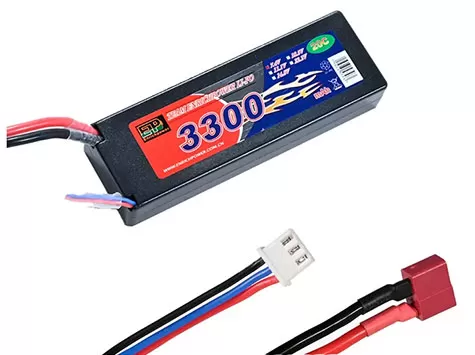
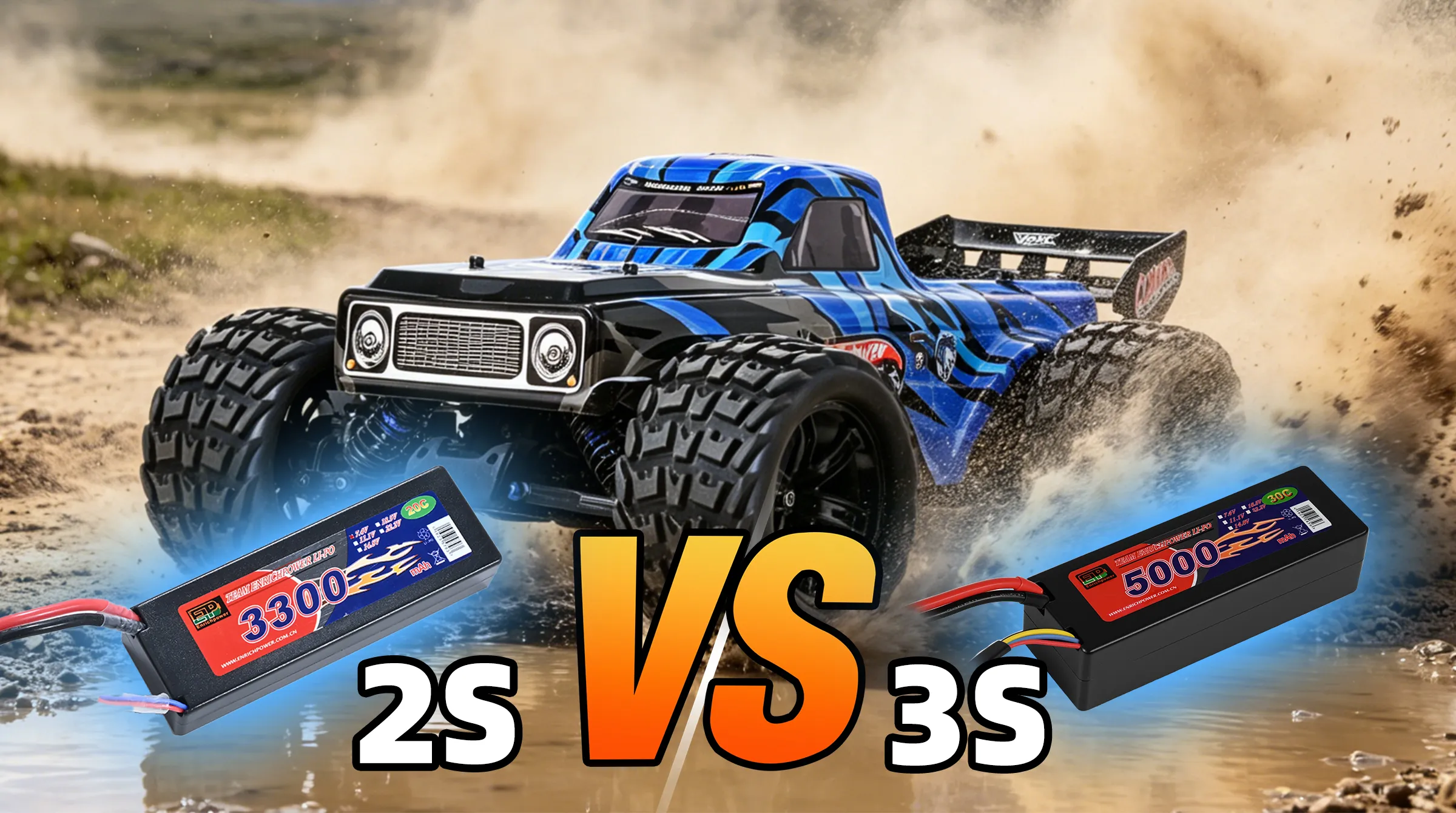
Voltage determines how much "push" the motor receives. A 2S LiPo (7.4V) is gentle and beginner-friendly. Moving to 3S (11.1V) gives a noticeable jump in speed and acceleration. 4S (14.8V) or higher delivers serious power for high-performance setups. However, higher voltage also puts more stress on the ESC and motor, so everything must be properly rated.
Capacity tells you how long the battery can supply power. A 3000mAh pack runs shorter than a 6000mAh pack, but larger batteries are heavier, which can reduce acceleration and handling. Finding the right balance between voltage, capacity, and weight is key to optimizing performance.
Battery Type | Voltage | Speed Impact | Runtime Impact | Best For |
2S LiPo | 7.4V | Moderate | Good for short sessions | Beginners |
3S LiPo | 11.1V | Strong increase | Balanced | Most enthusiasts |
4S LiPo | 14.8V | Very high | Shorter unless high capacity | Performance & racing |
Pro Tip: Start with 2S or 3S and upgrade voltage only when your ESC and motor can safely handle it.
Related Reading: Electric RC Cars Battery Guide (LiPo vs NiMH)
Voltage and capacity are two of the most important factors affecting RC car performance, but they are only part of the full battery system. Understanding how LiPo and NiMH technologies differ in power delivery, safety, charging methods, and long-term usage will help you make better setup decisions: Electric RC Cars Battery Guide: LiPo vs NiMH – Everything You Need to Know
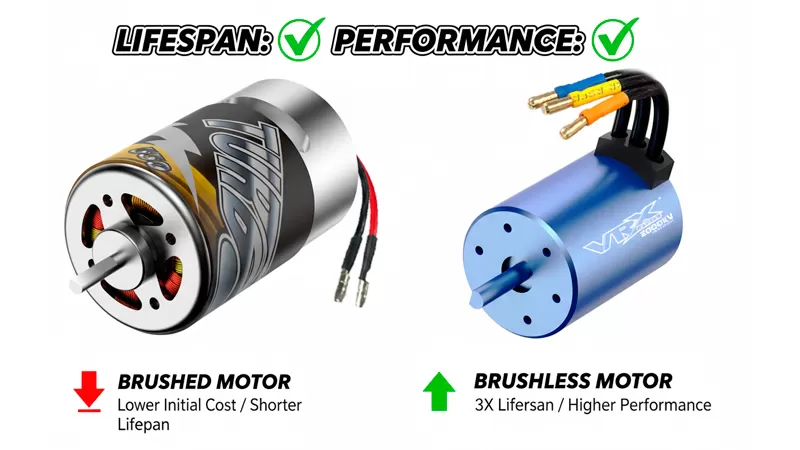
The motor is where electricity becomes motion. There are two main types: brushed and brushless.
RC Brushless motors are significantly more efficient than brushed ones. They run cooler, produce greater power, and require minimal maintenance. For this reason, most high-performance RC cars—including VRX Racing models—now rely on brushless systems.
Within brushless motors, the KV rating is critical. KV stands for revolutions per volt. A higher KV motor spins faster and delivers higher top speed, but it produces less torque. A lower KV motor gives stronger low-end torque, making it better for crawling, climbing, or heavy trucks.
KV Rating | Characteristics | Best For |
High KV (3000+) | High top speed, less torque | On-road, buggies, speed runs |
Medium KV (2000–3000) | Good balance | Most versatile setups |
Low KV (under 2000) | High torque, lower top speed | Crawlers, monster trucks, off-road |
Related Reading: RC Motor Types & Performance Explained
Motor type and KV rating are just part of the bigger picture. If you want to fully understand how different RC motors impact speed, torque, efficiency, and maintenance, explore these in-depth guides:
Brushed vs. Brushless Motors - The Heart of Your RC Race Car Explained
What Type of Electric Motors Are Used in RC Cars? Complete Guide
Weight is one of the most overlooked factors in RC performance. Every extra gram makes the car slower to accelerate, harder to turn, and more demanding on the battery and motor.
Reducing weight improves acceleration and handling, but too much weight reduction can hurt stability and traction. The goal is finding the right balance — light enough for quick response, but stable enough to stay planted at speed. VRX Racing designs many models with lightweight yet strong materials to achieve this balance without sacrificing durability.
Gear ratio determines how the motor's power is converted into wheel speed and torque. A "taller" gear ratio (higher numerical value) gives more top speed but less acceleration. A "shorter" gear ratio provides stronger low-end torque for climbing or rough terrain.
Drivetrain layout also matters. 2WD is lighter and more efficient on smooth surfaces, while 4WD offers superior traction and control in loose or technical conditions. Efficient drivetrains with quality bearings and properly meshed gears reduce power loss and heat, giving you more usable performance.
Setup | Result |
High gear ratio | Higher top speed, slower acceleration |
Low gear ratio | Stronger torque, lower top speed |
4WD drivetrain | Better traction, slightly heavier |
Tires are the only part of the car that actually touches the ground, so they have a massive impact on performance. Soft compound tires provide excellent grip on smooth surfaces but wear quickly. Harder compounds last longer but offer less traction. Tread patterns also matter — pin tires excel in dirt, while slick or ribbed tires work better on asphalt or carpet.
Choosing the right tire for your terrain can dramatically improve acceleration, cornering, and overall control. Many enthusiasts own multiple sets of tires and swap them depending on where they plan to drive.
Performance is always a compromise. For example, running high voltage with a high-KV motor on a heavy car may give impressive top speed but poor handling and quick battery drain. A lightweight crawler with low-KV motor and soft tires will climb rocks beautifully but feel slow on open ground.
Successful setups balance all factors:
Racing setups usually combine 3S–4S voltage, high-KV brushless motors, and low-profile tires on smooth surfaces.
Off-road bashing setups favor slightly lower KV motors, higher torque gearing, and aggressive tread tires.
Here are the most effective ways to boost performance, ranked by impact:
1. Upgrade to a higher voltage LiPo battery (3S or 4S) and compatible ESC
2. Install a more powerful brushless motor with appropriate KV rating
3. Optimize gear ratio for your driving style and terrain
4. Reduce unnecessary weight and improve weight distribution
5. Choose the right tire compound and tread pattern for your surface
Many drivers unintentionally limit their car's potential with these common mistakes:
Using a battery with too high voltage on an incompatible ESC or motor → overheating and damage
Wrong gear ratio → either sluggish acceleration or overheating motor
Using the wrong tires for the terrain → poor grip and frustration
Ignoring weight distribution → unstable handling at speed
1. Does higher voltage always mean faster speed?
Yes, higher voltage generally increases speed and acceleration, but your ESC and motor must be rated for that voltage.
2. What KV motor is best?
It depends on your setup. High KV for speed, low KV for torque and crawling.
3. How can I make my RC car faster?
Upgrade battery voltage, install a higher-KV brushless motor, optimize gear ratio, and reduce weight.
4. Does weight really affect speed that much?
Yes. Every extra gram slows acceleration and increases battery drain.
Performance in electric RC cars is the result of a well-balanced system — not just one magic upgrade. When battery, motor, weight, gearing, and tires all work together in harmony, the car feels alive, responsive, and genuinely fun to drive.
At VRX Racing, we engineer every model with this balanced performance philosophy. Whether you want a beginner-friendly basher or a competition-ready machine, our cars are designed to deliver outstanding speed, power, and efficiency right out of the box — with plenty of room to grow as your skills improve.
Ready to experience better performance? Explore our full range of electric RC cars and start building your perfect setup today.