The battery is the heart and soul of every electric RC car. It determines how fast your car accelerates, how long it can run, how responsive it feels, and ultimately how much fun you have on the track or in the backyard. Choosing the wrong battery — or not taking proper care of it — can lead to poor performance, short run times, or even safety issues. In this detailed guide, VRX Racing breaks down the two main battery types used in RC cars: LiPo (Lithium Polymer) and NiMH (Nickel-Metal Hydride). We’ll explain their strengths and weaknesses, decode all the important numbers, share real-world usage tips, and give clear recommendations so you can make the best decision for your needs and skill level.
RC car LiPo batteries have become the standard for modern hobby-grade electric RC cars. They are compact, lightweight, and capable of delivering massive amounts of power in a short time. This makes them perfect for high-speed running, aggressive bashing, and competitive racing. Their high energy density allows stronger acceleration and better overall handling because the car weighs less.
However, LiPo batteries are more sensitive. They require careful charging and storage practices. When mishandled, they can swell, overheat, or in rare cases pose a fire risk. With proper care, a good LiPo battery typically lasts between 150 and 300 charge cycles.
NiMH RC batteries are an older but still useful technology. They are noticeably safer than LiPo, with almost no risk of fire, making them a popular choice for beginners, children, or anyone who wants a simple, low-maintenance option. They are also more tolerant of improper charging and storage.
The trade-off is performance. NiMH batteries are heavier, deliver less peak power, and their voltage drops more quickly during use, so the car gradually becomes slower toward the end of a run. They are best suited for casual driving and budget builds.
Quick Verdict: Choose LiPo if you want maximum performance and are willing to follow basic safety rules. Choose NiMH if you prioritize simplicity, safety, and ease of use — especially for beginners or younger drivers.
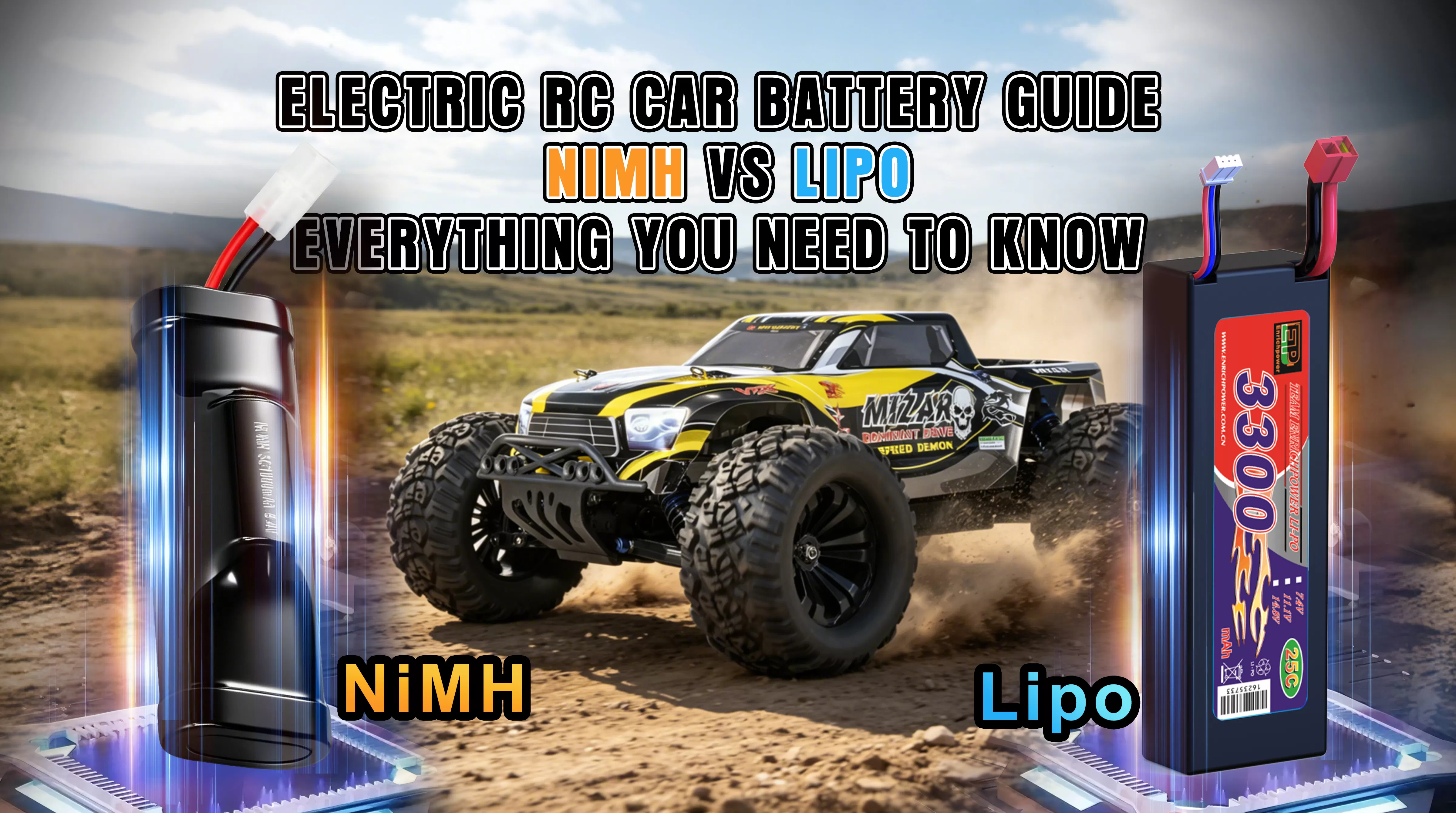
Every LiPo battery has three critical pieces of information printed on it. Understanding these numbers is essential before you install the battery in your RC vehicles.
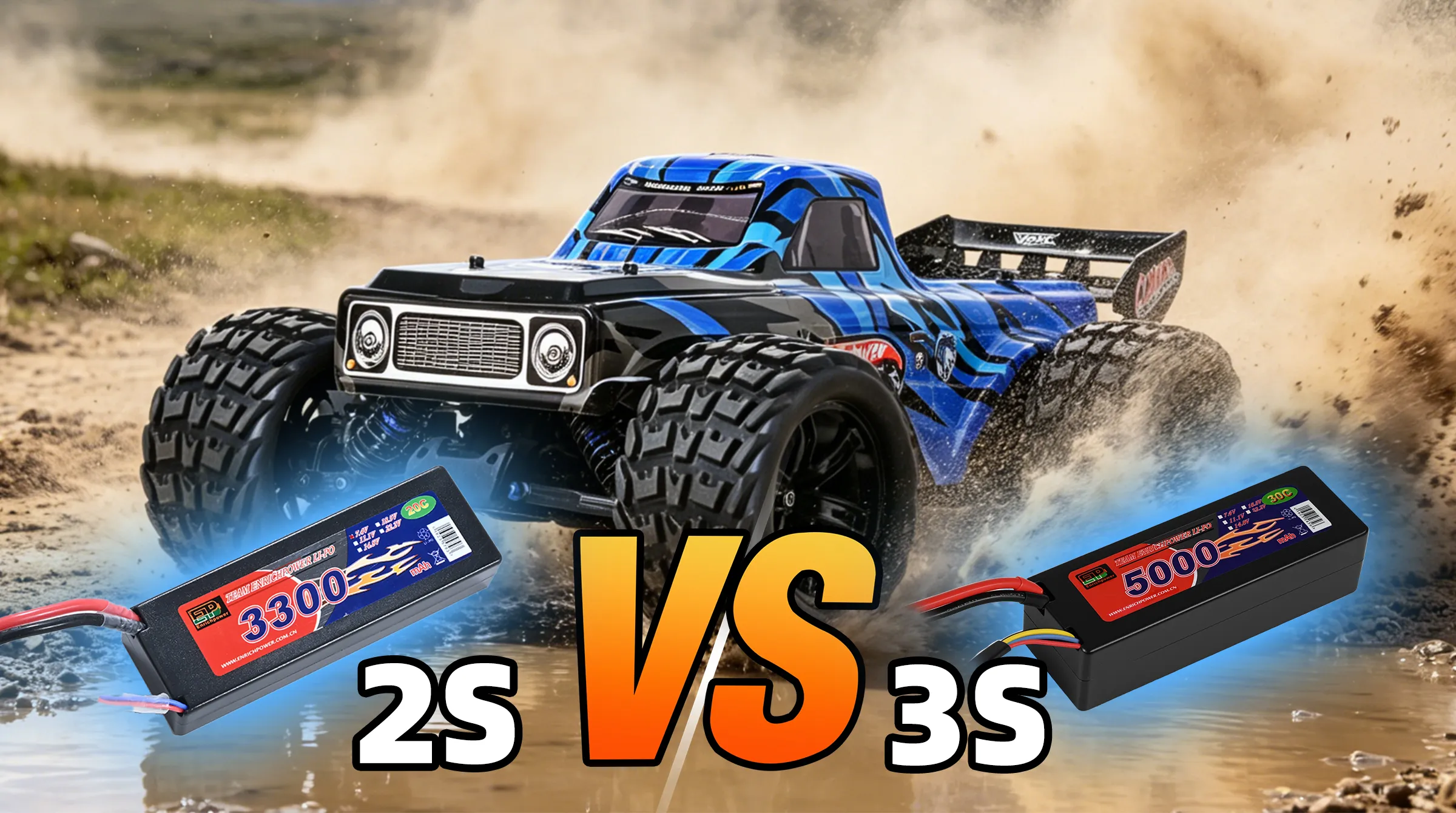
Each individual LiPo cell has a nominal voltage of 3.7V (or 3.8V for High-Voltage HV batteries). Manufacturers connect multiple cells in series to create higher voltage packs. The “S” number tells you how many cells are inside.
Designation | Number of Cells | Nominal Voltage | Typical Use |
2S | 2 | 7.4V | Beginners & casual bashing |
3S | 3 | 11.1V | Most enthusiasts & weekend racing |
4S | 4 | 14.8V | High-performance & speed runs |
6S | 6 | 22.2V | Extreme performance setups |
Higher voltage directly translates to more speed and power, but your ESC and motor must be rated to handle that voltage safely.
Capacity tells you how much energy the RC car battery can store. It is measured in milliampere-hours (mAh). A higher mAh rating means longer possible runtime. In the RC world, 4000–6000mAh is very common. Some high-capacity packs go up to 8000mAh or even 12000mAh for long-run applications.
Keep in mind that larger capacity batteries are physically bigger and heavier, so always check that the battery will fit properly inside your car’s battery compartment.
The C-rating indicates the maximum safe continuous discharge current. For example, a 5000mAh 50C battery can theoretically deliver up to 250 amps continuously (5000 × 50 = 250A). Higher C-ratings allow the battery to supply more power without overheating or voltage sag.
Always choose a C-rating that is comfortably higher than your car’s maximum current draw. Using a battery with too low a C-rating can cause overheating, reduced performance, and shortened battery life.
Never use a swollen, punctured, or physically damaged LiPo battery. Dispose of it immediately at a proper hazardous waste facility.
After a hard crash, remove the battery from the car, place it in a safe open area away from anything flammable, and observe it for at least 30 minutes.
Never leave LiPo batteries in a hot car or in direct sunlight for extended periods.
If a LiPo catches fire, do not use water. Use sand or a Class D fire extinguisher.
Always use a dedicated LiPo balance charger. New LiPo batteries usually ship at around 40% charge (storage voltage). Before first use, charge them fully, but avoid using the fast-charge mode during the initial few cycles. Never discharge a LiPo below 3.0–3.2V per cell, as this can permanently damage the cells and reduce lifespan.
The ideal storage voltage is approximately 3.8V per cell. Most modern chargers have a “Storage” mode specifically for this purpose. Store batteries in a cool, dry, well-ventilated place between 5°C and 27°C. Using a fireproof LiPo safe bag is highly recommended for both charging and long-term storage.
At VRX Racing, nearly all our electric models are optimized for LiPo batteries. Most of our brushless RC cars work excellently with 2S and 3S LiPo packs, while many high-performance models support 4S for extra power. We strongly recommend using reputable hard-case LiPo batteries with at least 30C–50C rating to ensure both safety and consistent power delivery.
For beginners, we suggest starting with a 2S or 3S 4000–6000mAh LiPo paired with a quality balance charger. Once you gain more experience and want more speed, stepping up to higher voltage and capacity packs will give you a very noticeable performance upgrade while our robust electronics handle the extra power safely and reliably.
Browse VRX Recommended LiPo Batteries & Chargers
LiPo batteries currently offer the best balance of power, weight, and performance for the majority of RC enthusiasts. While they demand more careful handling than NiMH, the rewards in speed, acceleration, and driving enjoyment are substantial. NiMH batteries remain a safe, simple choice for very young users or ultra-budget setups, but most drivers quickly upgrade to LiPo once they experience the difference.
Invest in a good balance charger, follow proper charging and storage habits, and treat your batteries with respect. Done correctly, they will reward you with hundreds of exciting runs and years of reliable service. At VRX Racing, we engineer our vehicles to work perfectly with quality LiPo batteries so you can focus on what matters most — having fun on the track or in the backyard.