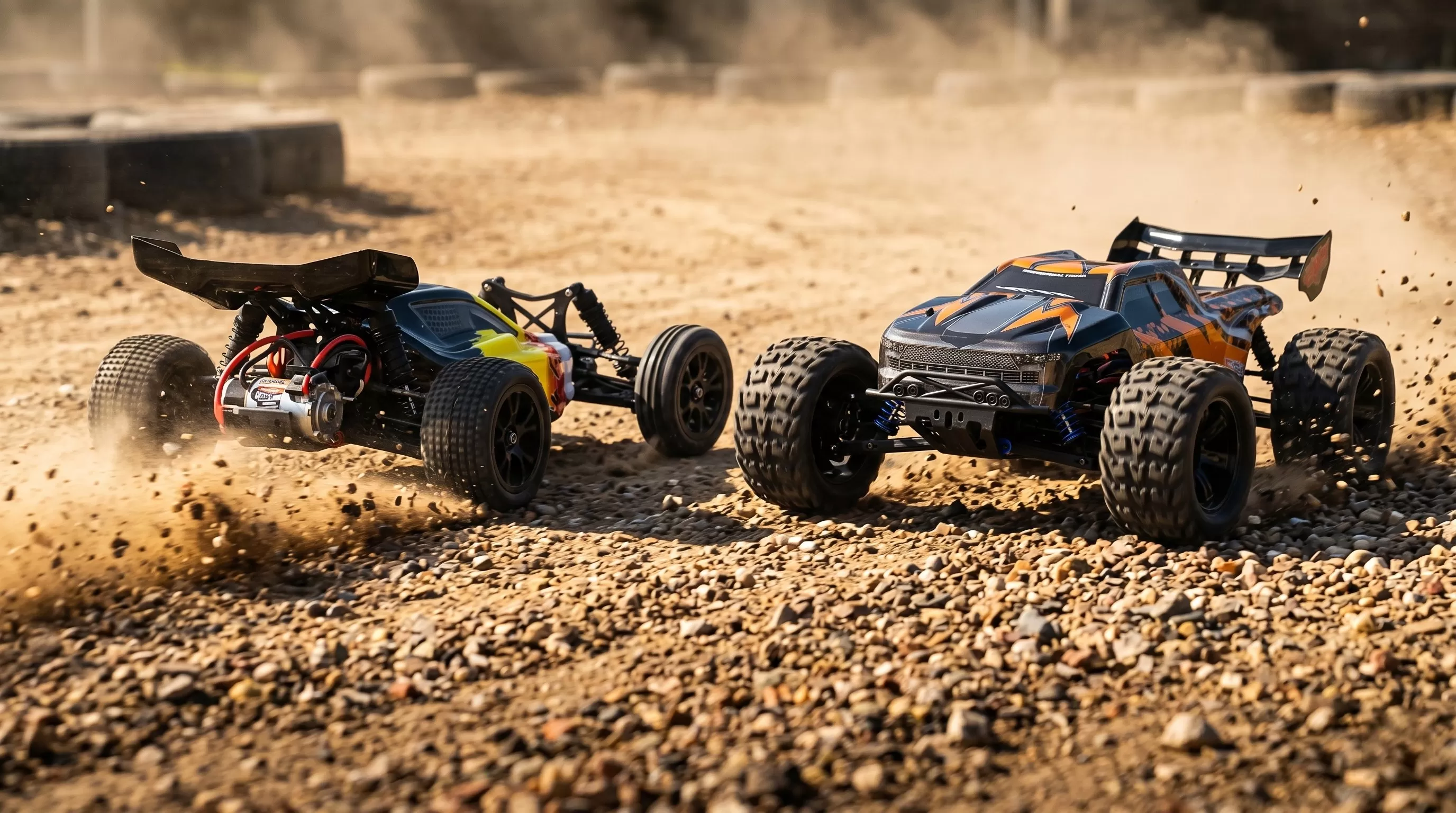
Imagine lining up your RC car for a high-speed run or a massive dirt jump. You've just installed a massive brushless motor, upgraded the suspension, and dropped in a high-discharge LiPo battery. You pull the throttle trigger, expecting a rocket launch, but instead, your car just spins its wheels in a cloud of dust, fishtails wildly, or slides uncontrollably into the nearest curb. What went wrong?
When looking to upgrade or optimize an RC car, most drivers immediately look under the body shell. They obsess over electronics, focusing on raw horsepower, steering servos, and gear ratios, operating under the assumption that more power automatically equals better performance. But there is one foundational component that frequently gets overlooked, acting as the ultimate bottleneck for all that engineering: the tires.
The undeniable truth of radio-controlled vehicles is that your tires are the only part of the car that actually touches the ground. All the speed, torque, and precision in the world mean absolutely nothing if you cannot effectively transfer that power down to the surface. Selecting the right isn't just a minor cosmetic tweak or an afterthought; it is the single most transformative upgrade you can make.
Whether you are a weekend hobbyist looking to conquer the local backyard, a competitive racer fighting for tenths of a second on a clay track, or an RC distributor looking to source high-performance RTR (Ready-To-Run) platforms that impress customers right out of the box, understanding tire dynamics is absolutely vital. In this comprehensive guide, we will break down everything you need to know about rubber compounds, tread patterns, foam inserts, and terrains, helping you choose the perfect RC car tires to unlock the true potential of your model.
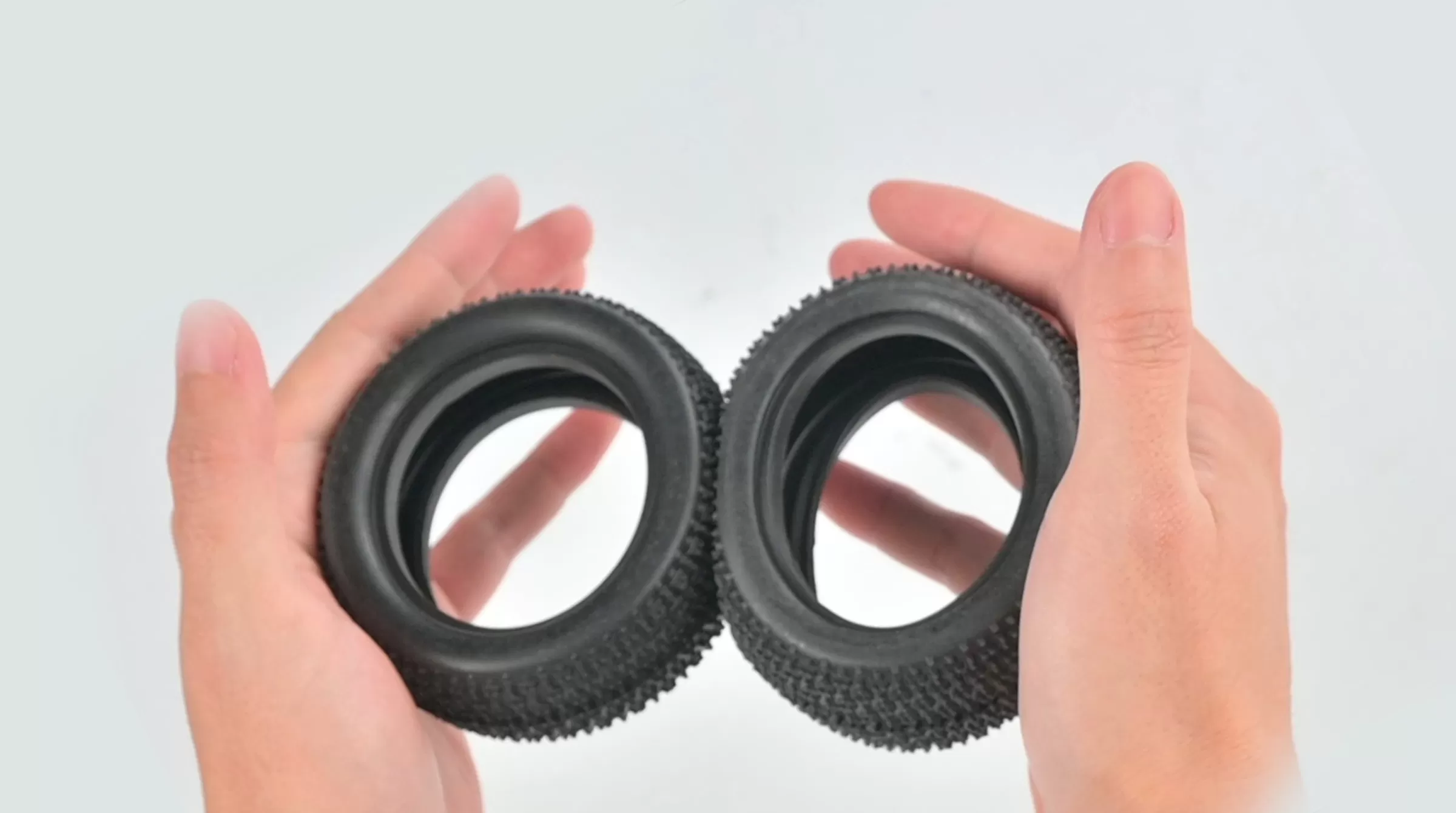
Many players spend hundreds of dollars on electronics, only to realize their car still handles poorly. The truth is, your tires are the only part of your RC car that actually touches the ground. All the horsepower in the world means nothing if you can't put it down to the surface.
Your RC tires directly determine:
Traction and Grip: How well the car bites into the surface.
Steering Response: How quickly and sharply the car turns.
Braking Distance: How fast you can stop without skidding.
Acceleration Efficiency: Preventing wheel-spin off the starting line.
Jump Landing Stability: Absorbing impact without bottoming out.
Motor Load & Battery Runtime: The heavier or grippier the tire, the harder your electronics work.
In short: Wrong tires can make a fast RC car feel slow. The right tires unlock true performance.
Before choosing a set, it is important to know that an RC tire is actually a three-part system. Changing any one of these parts alters how the car drives.
This is the outer rubber shell. The compound (softness) and the tread pattern dictate how much mechanical grip the car generates.
Located inside the rubber tire, the foam insert acts as the tire's air pressure. It provides sidewall support, controls how much the tire deforms under load, and prevents the tire from going flat during hard cornering.
The plastic or nylon wheel is what mounts the tire to the car's hex hub. It determines the overall size, offset, and aesthetic of the wheel setup.
Part | Primary Function |
Tire | Generates grip and traction based on tread and compound. |
Insert | Provides stability, cushioning, and sidewall support. |
Wheel | Handles mounting to the chassis and defines the look. |
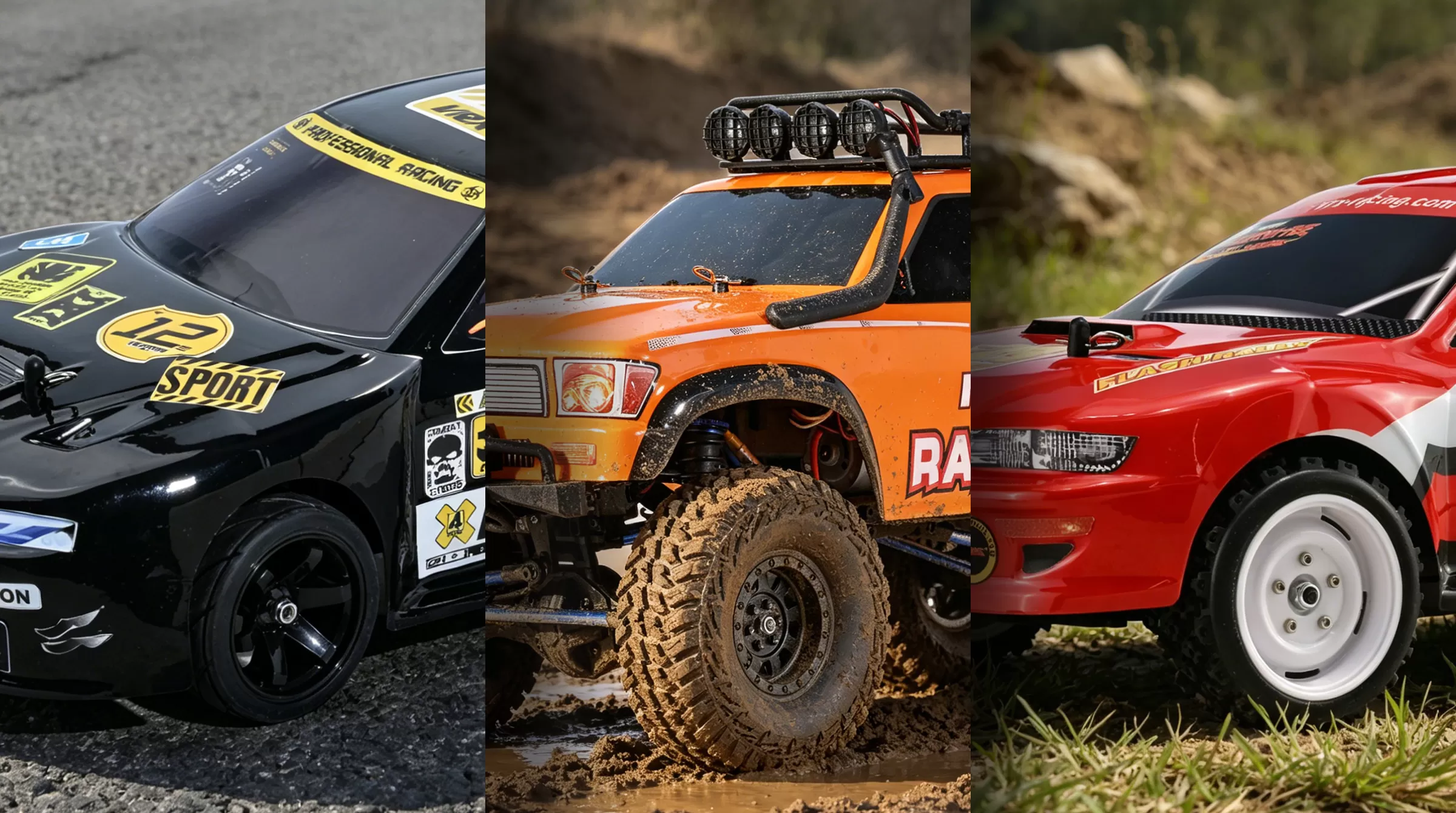
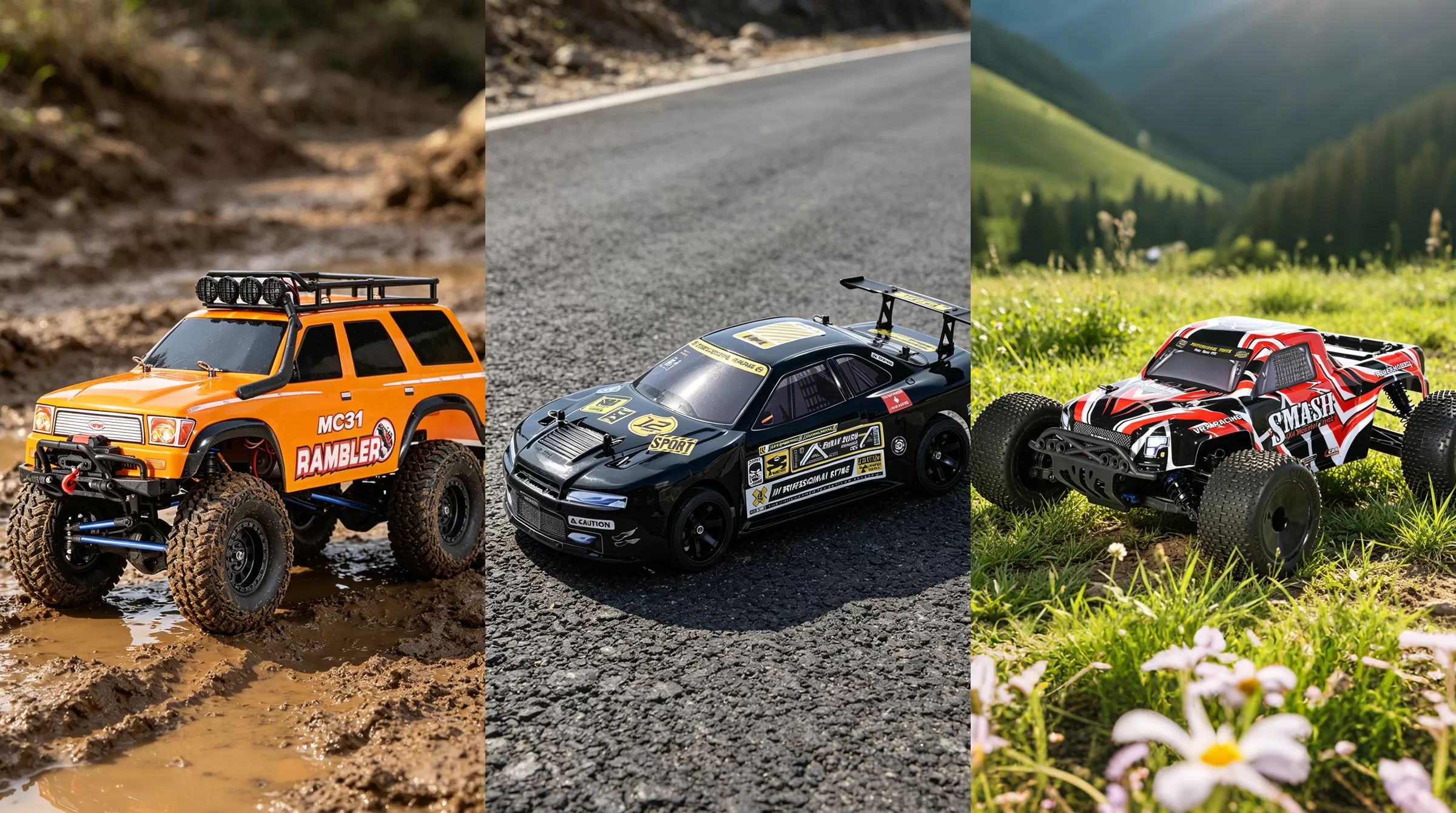
The golden rule of RC tires is to look at where you drive first, and choose your tire second.
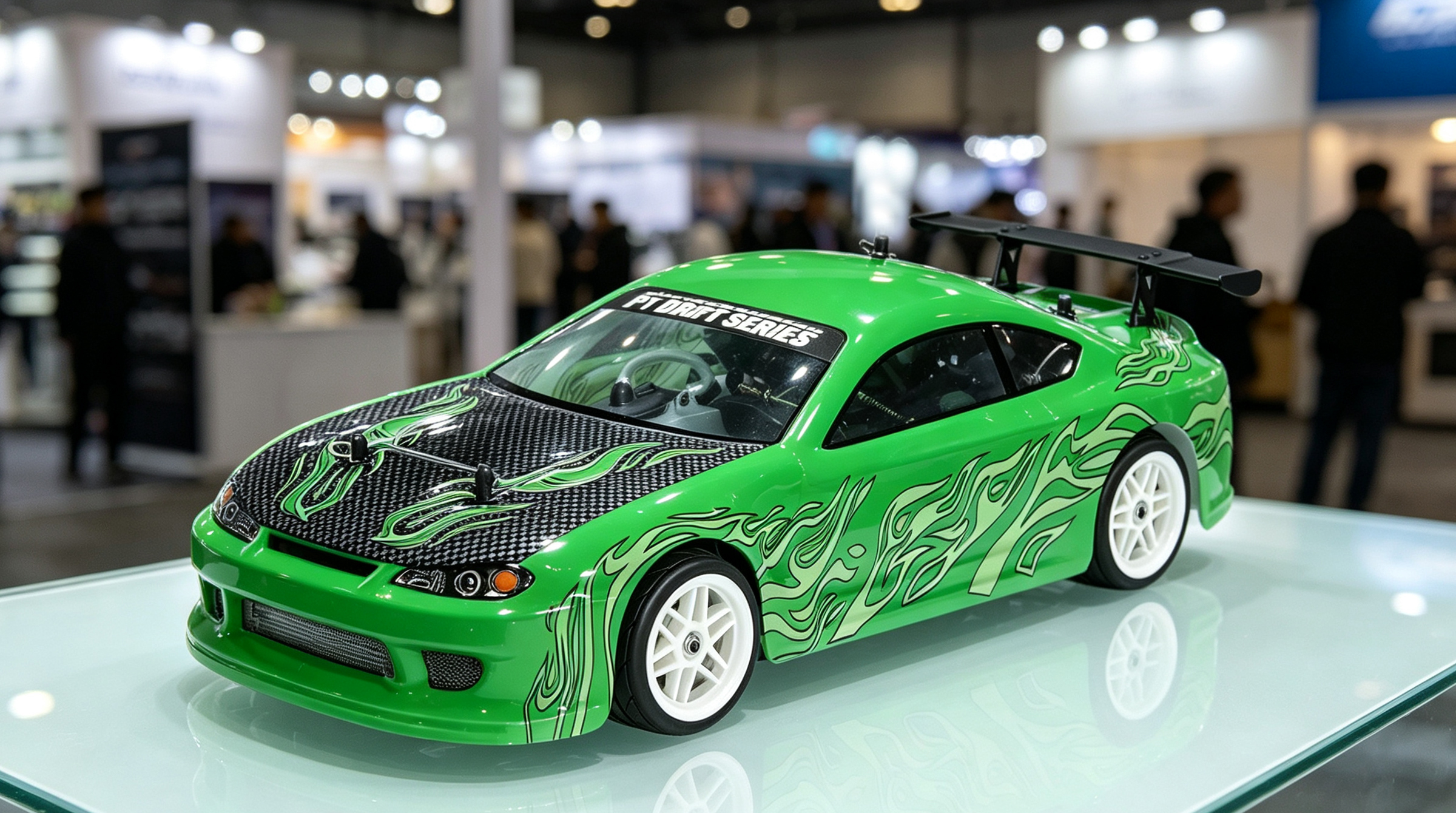
Recommended: Slick tires or low-profile street tread.
Characteristics: High-speed stability, precise steering response, and low rolling resistance.
Best For: Electric touring cars, drift chassis, and on-road rally cars.
Recommended: Pin tires, step-pins, or small block treads.
Characteristics: The small pins dig deep into loose dirt for maximum forward bite, allowing for lightning-fast acceleration out of corners.
Best For: Electric RC buggies and truggies on racing tracks.
Recommended: Deep tread all-terrain (AT) tires or block tires.
Characteristics: Highly versatile, offering decent grip across grass, gravel, and pavement without wearing down instantly.
Best For: Bashers and everyday backyard hobbyists.
Recommended: Extremely soft compound crawler tires with large, flexible sidewalls.
Characteristics: Designed to deform and wrap around jagged rocks to find traction where normal tires would slip.
Best For: 1/10 and 1/8 scale RC rock crawlers and trail trucks.
The shape of the rubber directly impacts how the tire interacts with the ground.
Tread Type | Best Surface | Handling Character |
Slick | Asphalt / Concrete | Maximum contact patch for top speed and cornering. |
Pin / Mini-Pin | Dirt Tracks | Balanced racing grip; pins penetrate loose dust. |
Paddle | Sand / Snow | Acts like shovels, digging forward to prevent sinking. |
Block / AT | Mixed Terrain | Great all-around performance and high durability. |
Rock Tread | Boulders / Trails | Deep lugs and sipes for maximum climbing bite |
Tread isn't everything; the actual chemical makeup of the rubber (the compound) is just as critical.
Pros: Incredible grip, razor-sharp cornering, and fast lap times.
Cons: Wears out very quickly, especially on abrasive surfaces.
Pros: Highly durable, lasts significantly longer, and holds up well on extremely hot pavement.
Cons: Less overall grip, prone to sliding on slippery surfaces.
Pro Tip: If you are racing, choose soft. If you are bashing in the backyard, choose medium. If you are driving in extreme heat or want maximum lifespan, choose hard.
A common beginner assumption is that a bigger tire will automatically make the car faster and better. However, tire size drastically alters the physics of your RC car.
Provide higher ground clearance to roll over rocks and grass.
Increase the potential top speed of the vehicle.
BUT: They add rotational mass, put heavy strain on the steering servo, and can cause the motor/ESC to overheat if not geared properly.
Provide lightning-fast acceleration.
Keep the center of gravity low for nimble cornering.
Are highly energy-efficient, saving battery life.
Tire Size | Primary Benefit | Best For |
Small | Quick response & acceleration | Racing Buggies, Touring Cars |
Medium | Perfect balance of speed/handling | Short Course Trucks, Daily Bashers |
Large | Ground clearance & rough terrain | Monster Trucks, Mud Boggers |
Different vehicle classes require vastly different tire setups:
Electric RC Buggy: Narrow front tires, wider rear tires, low center of gravity, usually running pin treads for tracks.
Electric RC Truggy: Wide racing tires with aggressive pins for high grip and supreme mid-air jump stability. For example, on a 1/8 scale Cobra Truggy (like our RH818), pairing high-grip tires with a rigid carbon fiber chassis plate ensures the massive power translates directly into forward momentum rather than chassis flex.
Monster Truck: Massive tires with tall sidewalls and chevron/block treads for all-terrain crushing power.
Electric RC Short Course Truck (SCT): Scale-looking tires fitted under closed wheel wells, designed to slide predictably and land stably.
Rally Car: Multi-purpose street or gravel tires designed for drifting around mixed-surface corners.
Crawler: Tall, ultra-soft rubber with deep lugs to slowly conquer vertical obstacles.
Many hobbyists upgrade their rubber but reuse old, worn-out foam inserts. This is a massive mistake. The foam dictates how RC car tires behave under pressure.
Foam affects: Steering support, jump landing stability, tread deformation, and chassis body roll.
Soft Inserts: Allow the tire to flatten out, ideal for low-speed rock crawling where deformation equals grip.
Firm/Closed-Cell Inserts: Prevent the tire from folding over during high-speed cornering and absorb the shock of massive jumps. Essential for racing and bashing.
Even the best tires have a lifespan. You should replace your tires if you notice:
Bald Treads: The pins or blocks are completely worn flat.
Cracked Rubber: Dry rot or tearing along the sidewalls.
Unglued Beads: The rubber is pulling away from the plastic wheel.
High-Speed Wobble: The tire "balloons" unevenly or the inner foam has disintegrated.
Loss of Grip: The car suddenly spins out where it used to hook up perfectly.
Avoid these classic pitfalls to save money and protect your RC car:
Mistake 1: Buying for looks only. A cool-looking tread might perform terribly on your local terrain.
Mistake 2: Running slicks on grass. Your car will just spin its wheels and overheat.
Mistake 3: Putting massive tires on a small car. This over-gears the car and will rapidly burn out the motor and ESC.
Mistake 4: Mismatching front and rear profiles. Putting high-grip rears with zero-grip fronts will result in a car that cannot steer.
For distributors, hobby shops, and brands, supplying the right tire on an RTR (Ready-To-Run) vehicle is the difference between a satisfied customer and a returned product. VRX Racing understands that tire performance must flawlessly match the vehicle platform.
Our comprehensive RC lineup is equipped with precision-engineered tires right out of the box, including:
1/10 electric buggy tires for supreme track handling.
Massive, reinforced Monster truck tires for aggressive bashing.
Short course truck tires tuned for dirt-sliding realism.
Truggy off-road tires designed for heavy jumps.
Rally mixed-surface tires for versatile pavement-to-dirt transitions.
The VRX Racing B2B Advantage:
OEM Tire Patterns Available: We can manufacture custom RC car wheels tailored to your brand's specific market needs.
Matching Wheels + Tire Packages: Factory-glued, perfectly balanced setups ready for retail.
Bulk Supply for Distributors: Reliable, high-volume manufacturing with strict quality control.
Complete RTR Platform Solutions: We don't just supply tires; we deliver complete, perfectly tuned RC vehicles.
For distributors, this is critical: We are not just selling tires—we are delivering matched RC vehicle solutions engineered for success.
Driving Style | Best Tire Choice |
Street Speed / Drifting | Slick / Low-Profile Street |
Dirt Track Racing | Mini-Pin / Step-Pin |
Backyard / Park Bashing | All-Terrain / Block Tread |
Beach / Sand Dunes | Paddle Tires |
Rock Crawling | Ultra-Soft Crawler Tires |
Big Air Jumps | Reinforced Monster Truck Tires |
1. What tires are best for off-road RC cars?
Pin or small block tread tires are best for loose dirt, while larger all-terrain block tires are better for grass and gravel.
2. Do bigger tires make RC cars faster?
They can increase top speed due to a larger rollout, but they will reduce acceleration and can cause your motor to overheat if you don't adjust your gearing.
3. Are soft tires always better?
Not always. While they offer the best grip, they wear out incredibly fast on hard surfaces like concrete.
4. How often should I replace RC tires?
This depends heavily on your terrain and driving frequency. Racers may replace tires every few track days, while casual bashers might get a full year out of a set of medium-compound AT tires.
5. Can I use different front and rear tires?
Yes, advanced drivers often do. For example, 2WD buggies run ribbed tires in the front for steering and pin tires in the rear for acceleration.
Choosing the right RC tires is one of the easiest, smartest, and most impactful upgrades you can make. The correct rubber can drastically improve your vehicle's speed, control, durability, and most importantly, your confidence and fun behind the wheel. Whether you are racing for a trophy, bashing in the backyard, or crawling up a mountain, your tire choice changes everything.
And for brands and distributors, offering RC vehicles with properly engineered, terrain-matched tires is what defines product success. Looking for high-quality, OEM-ready RC vehicles with perfectly matched tire setups? Partner with VRX Racing today to bring elite performance to your customers.