For nitro-powered RC racing vehicles, proper engine break-in is critical for performance and longevity. This guide details the core preparatory steps—tool familiarization, fuel system priming, and initial startup—following professional protocols.
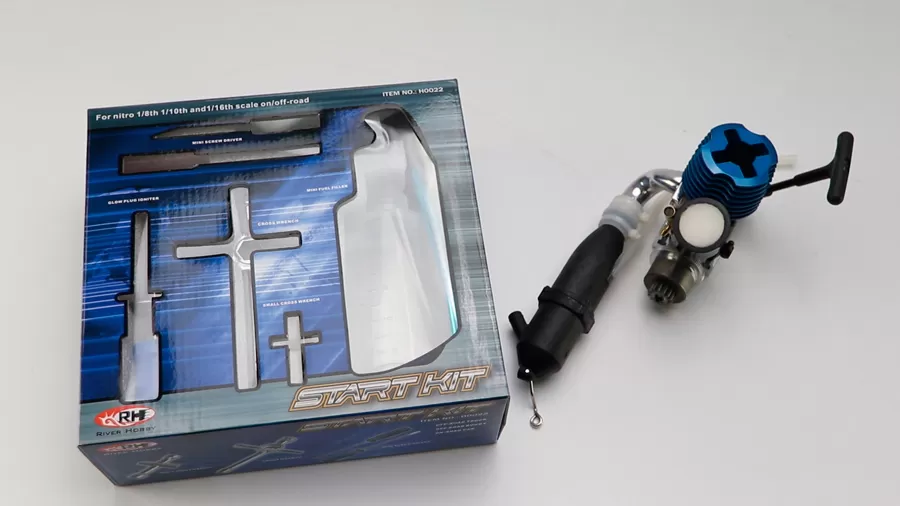
Proper tools are essential:
Engine Sockets: Cross-head (Phillips) sizes large/small for precision removal of glow plugs and engine screws.
Glow Igniter: Supplies current to ignite the plug. Always verify charge (~5 hours charging time).
Screwdriver Set: Cross-head and flat-head for carburetor needle adjustments.
Micro Fuel Bottle: Ensures spill-free fuel filling.
Establishing fuel flow for startup:
Fuel Filling: Fill the tank to ~80% capacity with nitro fuel (overfilling risks leaks).
Manual Priming:
Press firmly on the exhaust port with your left hand to create a seal.
Pull the starter cord repeatedly with your right hand until fuel visibly enters the carburetor via the clear fuel line.
Completion: Fuel in the carburetor confirms successful priming.
Key Tip: Incomplete sealing prevents priming—ensure airtight contact on the exhaust.
Pre-start Electronics Check:
Turn off the receiver, install receiver batteries.
Power on the transmitter first, then the receiver. Confirm signal link.
When closing the compartment, switch off the receiver and avoid pinching the antenna under the battery tray.
Glow Igniter Installation:
Press down vertically on the igniter before inserting it into the glow plug for full electrode contact.
Startup Readiness:
The engine is now prepped for starting, initiating the break-in phase (low-to-mid speed heat cycles in rich mixture).
A properly tuned nitro engine is the heart of any high-performance RC vehicle, and understanding its characteristics is key to a successful break-in process. Unlike electric systems, a rc car engine relies on precise fuel-air mixture, compression, and temperature control to operate efficiently. During the initial runs, keeping the rc engine slightly rich (more fuel than air) helps reduce friction, improve lubrication, and protect internal components such as the piston and sleeve. This careful approach not only prevents premature wear but also ensures smoother power delivery and longer engine lifespan as performance increases over time.
Need expert support with your nitro engine setup or maintenance? Contact our team today for professional guidance, product recommendations, and technical assistance—we’re here to help you get the best out of your RC engine.
Safety First: Operate away from flammables; wear safety goggles.
Follow Manual Specifications: Break-in duration, RPM limits, and load requirements vary—strictly adhere to manufacturer guidelines.
Tool Maintenance: Regularly clean sockets and screwdriver tips to prevent slippage and damage.
Precise priming and standardized startup protocols unlock the full potential of nitro RC engines. Mastering these fundamentals not only ensures successful break-in but also paves the way for peak performance and extended engine life.