Every RC enthusiast who enters the hobby eventually entertains the same hardcore fantasy: "I'm going to build a custom rig entirely from scratch."
There is no denying that building a DIY electric RC car is a fantastic educational journey. It teaches you the intricate mechanics of differentials, how to solder electronics, and how gear ratios work. But after spending three late nights hunched over a workbench, hunting for a dropped 2mm grub screw, only to have a suspension arm snap on your very first jump—you have to ask yourself a serious question: Are you in this hobby to experience the thrill of driving, or are you just looking for a reason to constantly fix things?
This dilemma highlights a universal truth in the RC world: The isolated efforts of a home workshop simply cannot compete with the sheer engineering might of modern industrial manufacturing.
When you are finally ready to graduate from the workbench and experience blistering speeds, flawless aerial dynamics, and bulletproof durability, factory-built, professional hobby-grade platforms—like those engineered by VRX Racing—deliver a level of performance that DIY builds simply cannot replicate.
Here is exactly why the professional platforms will always own the track.
When building a DIY car from scratch or piecing together entry-level kits, hobbyists are often forced to rely on standard plastics or 3D-printed components to keep costs down. At 10 mph, loose tolerances are fine. But when you are pushing 50+ mph, the slightest microscopic wobble or structural weakness is magnified, leading to catastrophic failure.
Professional hobby-grade brands operate on a completely different level. A manufacturer like VRX Racing utilizes modern industrial supply chains to produce parts with micrometer precision. We are talking about CNC-machined aerospace-grade aluminum chassis parts, hardened steel drivetrains, and proprietary heavy-duty composite plastics. The factory-level assembly ensures that gear meshes are absolutely perfect straight out of the box. This level of mechanical harmony and structural rigidity is virtually impossible to achieve with hand tools in a home garage.
A common trap for DIY builders is thinking that bolting on a set of expensive, shiny shock absorbers will magically make their car handle well. In reality, how an RC car corners, grips, and lands jumps is dictated by highly complex "suspension geometry.
This involves calculating the perfect harmony of Camber, Caster, Toe, Ackermann steering angles, and Roll Centers. It is pure physics and fluid dynamics. Professional engineering teams use advanced computer simulations to optimize these angles long before the first prototype is ever built.
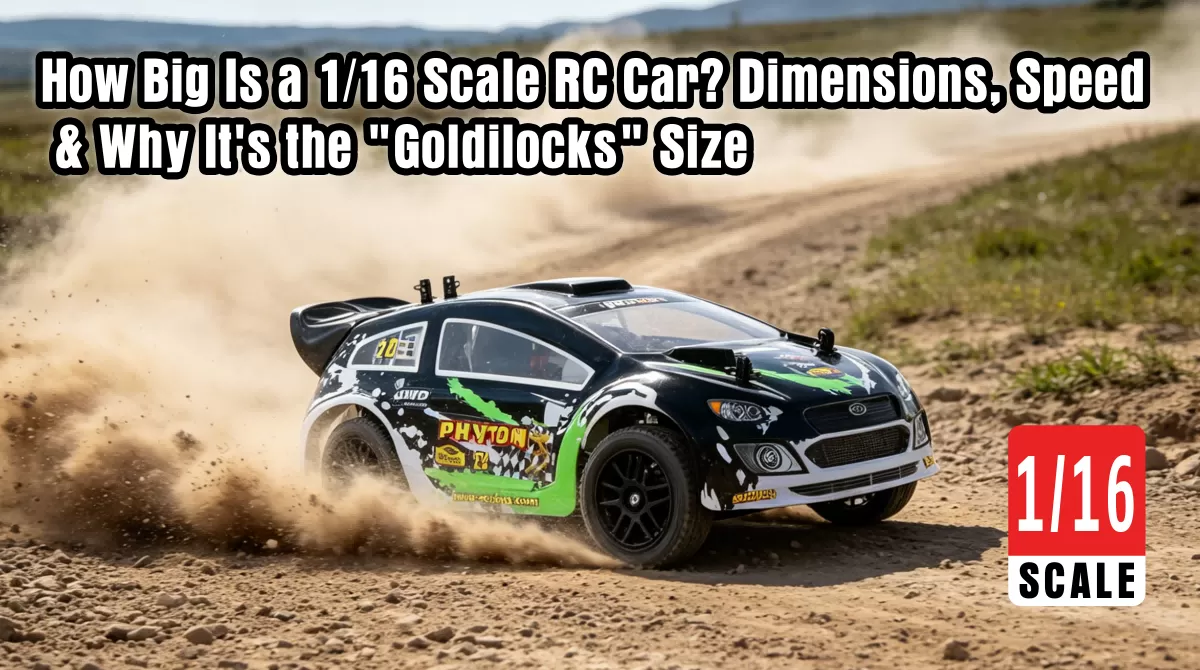
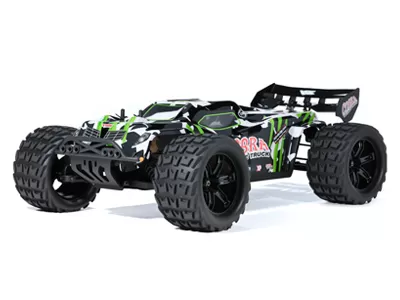
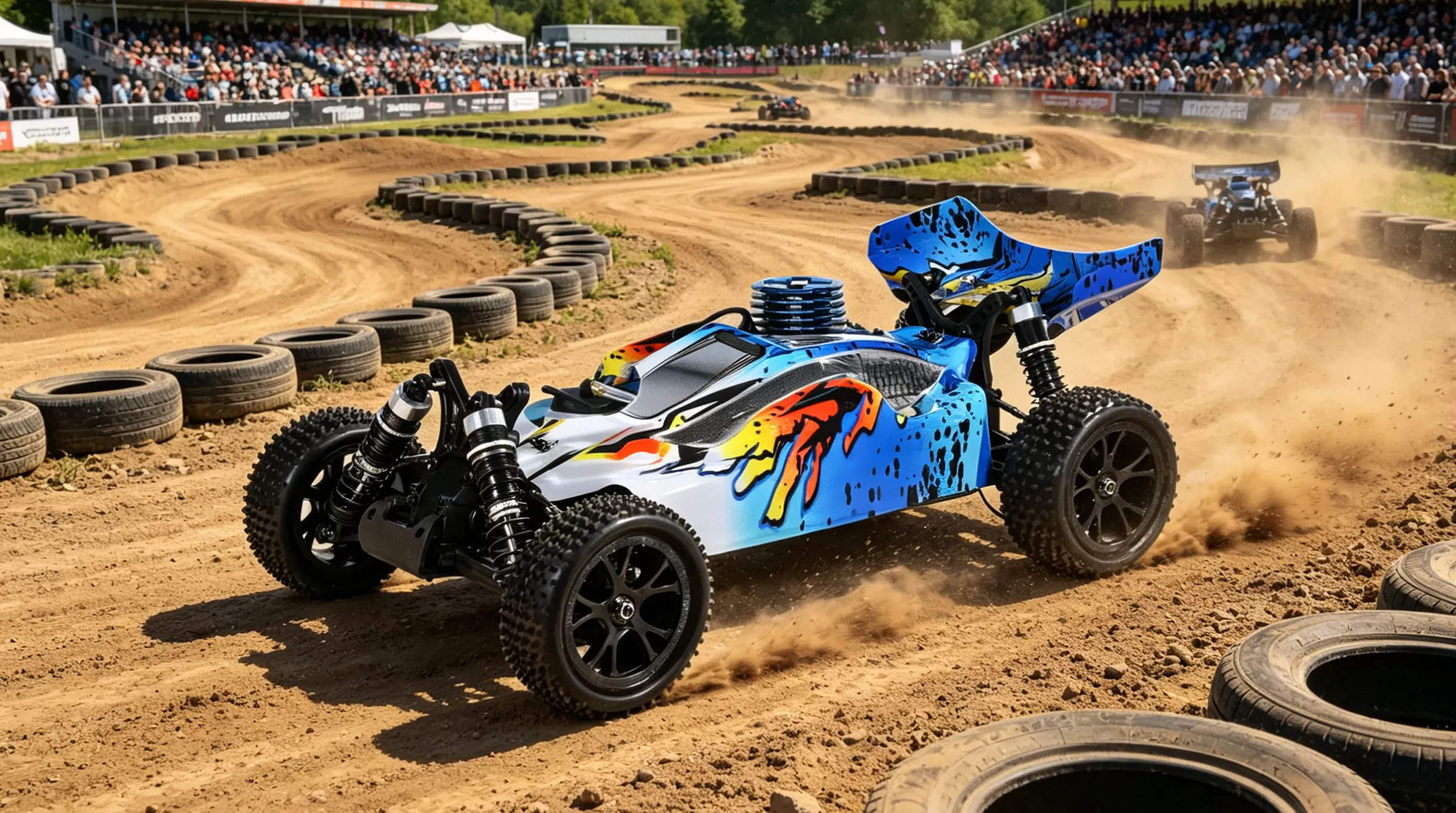
Take a buggy or electric RC truggy, for example. The suspension geometry is race-optimized right out of the box. It tracks perfectly straight at high speeds, digs into corners without rolling over, and stays perfectly level in the air off massive dirt jumps. This is race-tested engineering—not something you can just "eyeball" into existence in your living room.
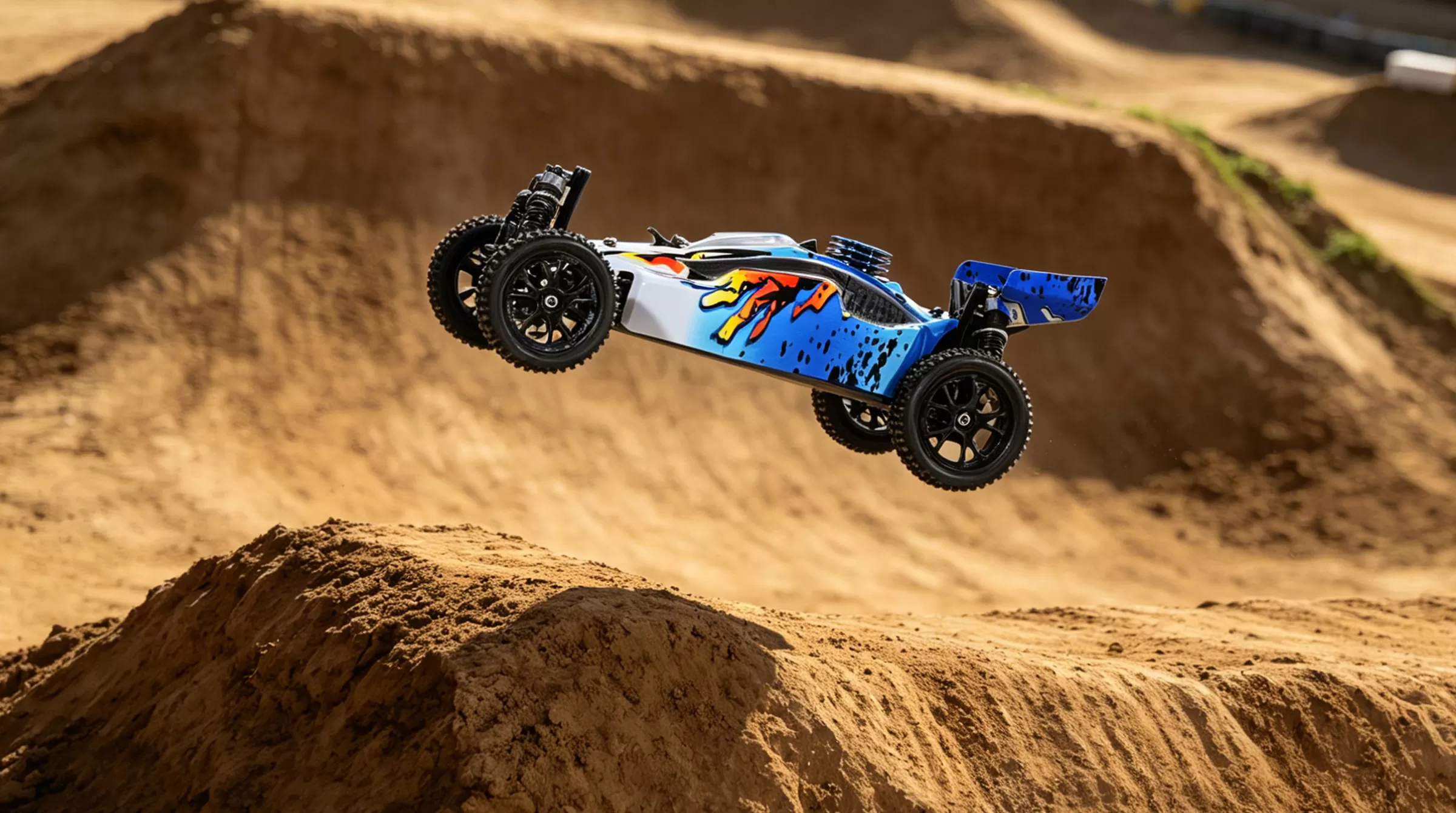
How many high-speed crash tests has your DIY build survived before its maiden voyage? The answer is usually zero. You just cross your fingers and hope it holds together.
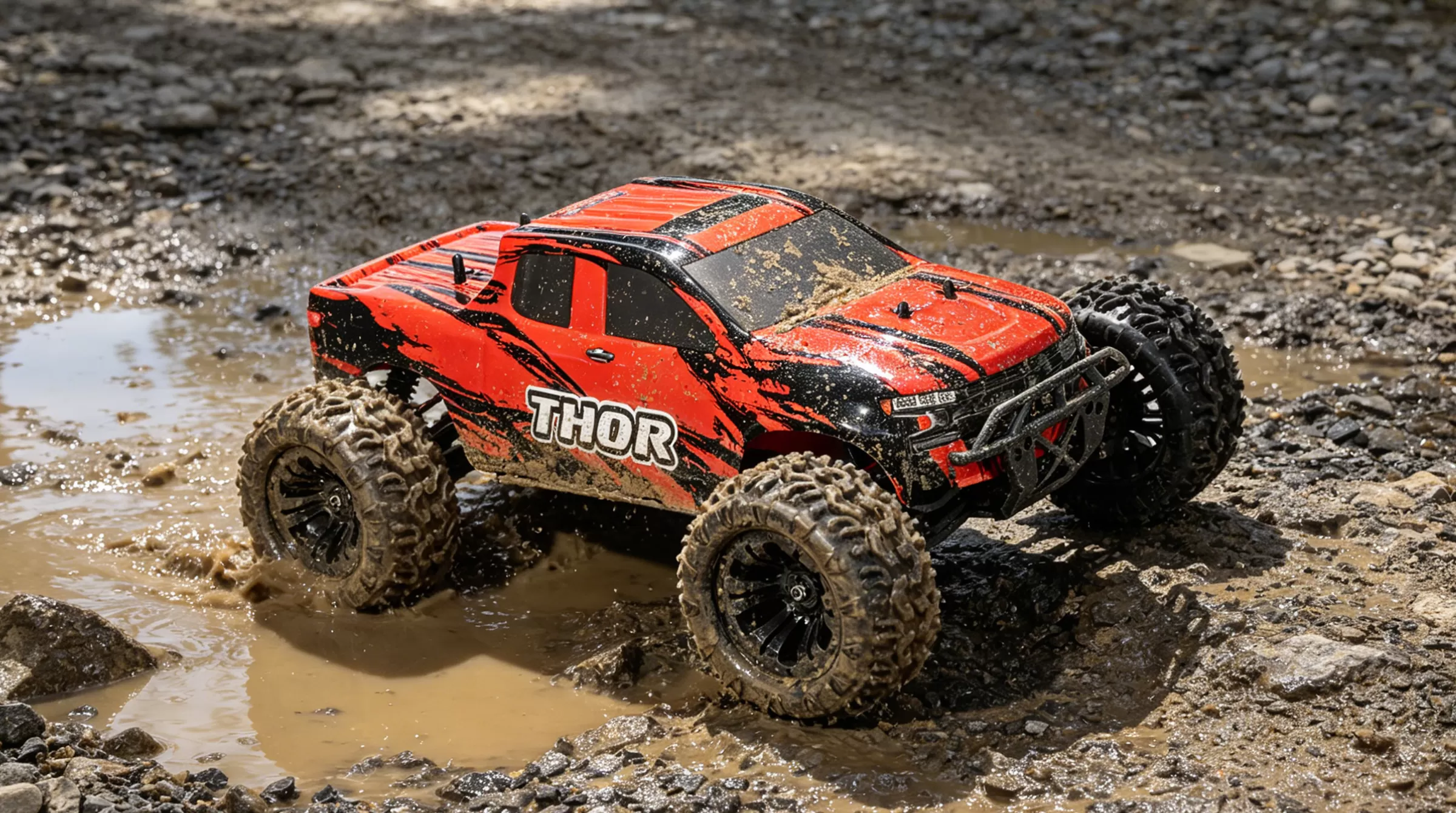
Before a professional hobby-grade chassis ever reaches the public, it undergoes brutal, destructive testing. RC car makers deliberately put their prototype vehicles through absolute hell—running them full speed into concrete blocks, launching them off 15-foot ramps, and driving them through freezing mud and blistering heat.
By the time a brand like VRX Racing packages a vehicle, engineers have already found the weak points and reinforced them. Combine this with strict, consistent Quality Control (QC) lines in the factory, and the result is a vehicle with proven, repeatable reliability. You aren't just buying an RC car; you are buying peace of mind.
We will never tell you not to build a kit—it is a rite of passage for any RC lover. But when you are ready for raw, unadulterated power, breathtaking handling, and a car that can take a severe beating and ask for more, a professional factory platform is the only logical choice.
Professional hobby-grade vehicles eliminate the guesswork. They offer superior materials, flawless geometric design, and world-class reliability right out of the box. The next time you feel the need for adrenaline, put down the hex driver, pick up your transmitter, and let a platform like VRX Racing show you what true, track-dominating performance really feels like.
Because at the end of the day, the best RC model car is the one that stays on the track, not the workbench.