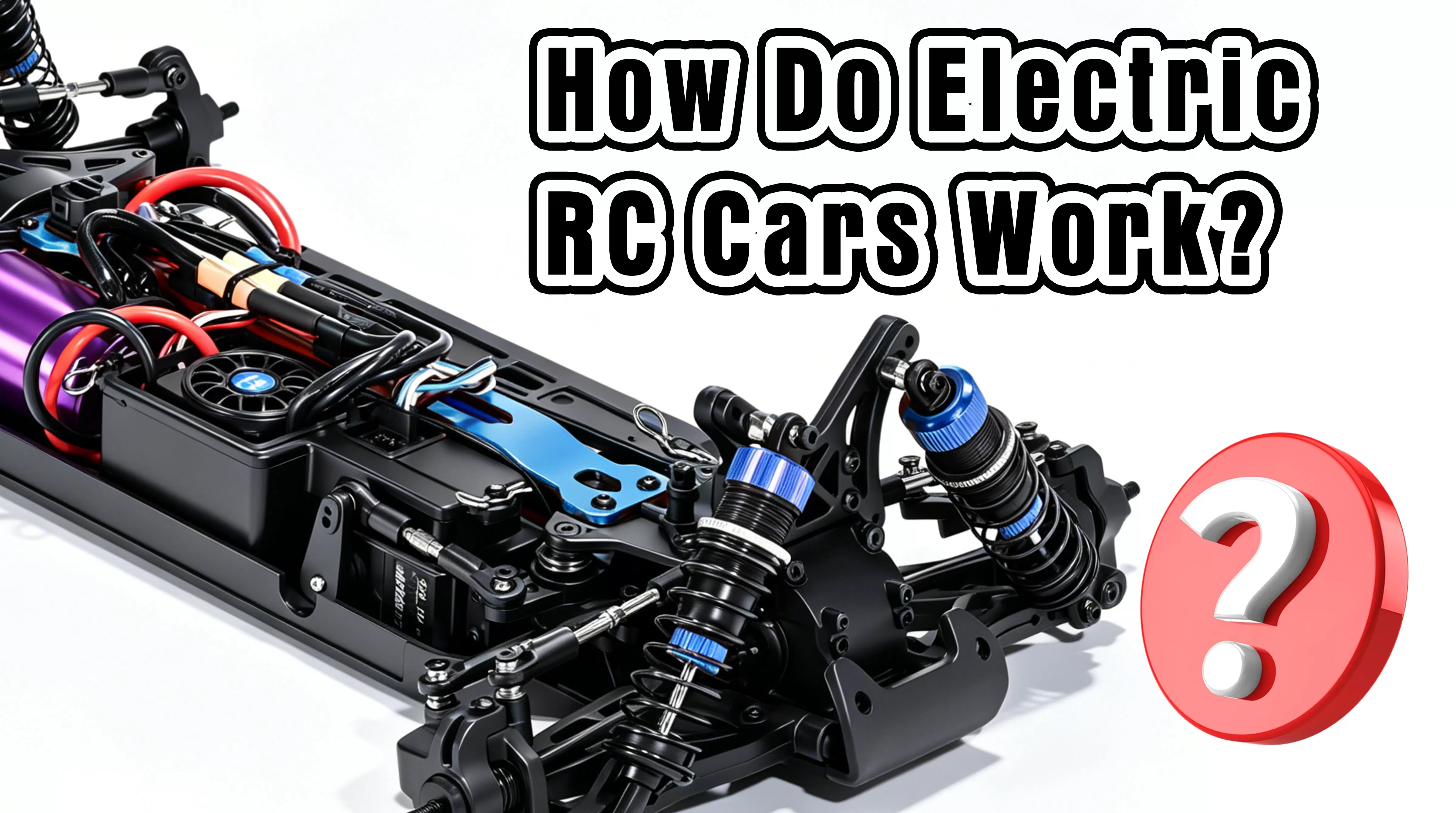
Suspension tuning is one of the most powerful ways to transform how your RC car drives. The same vehicle can feel completely different — stable and planted on one track, loose and unpredictable on another — simply by adjusting shock oil, spring rates, ride height, and mounting positions. For hobby-grade RC cars, suspension is not just about absorbing bumps; it is the core system that controls cornering grip, jump landings, steering response, and overall confidence at speed. Mastering suspension setup separates casual drivers from those who truly understand their machine.
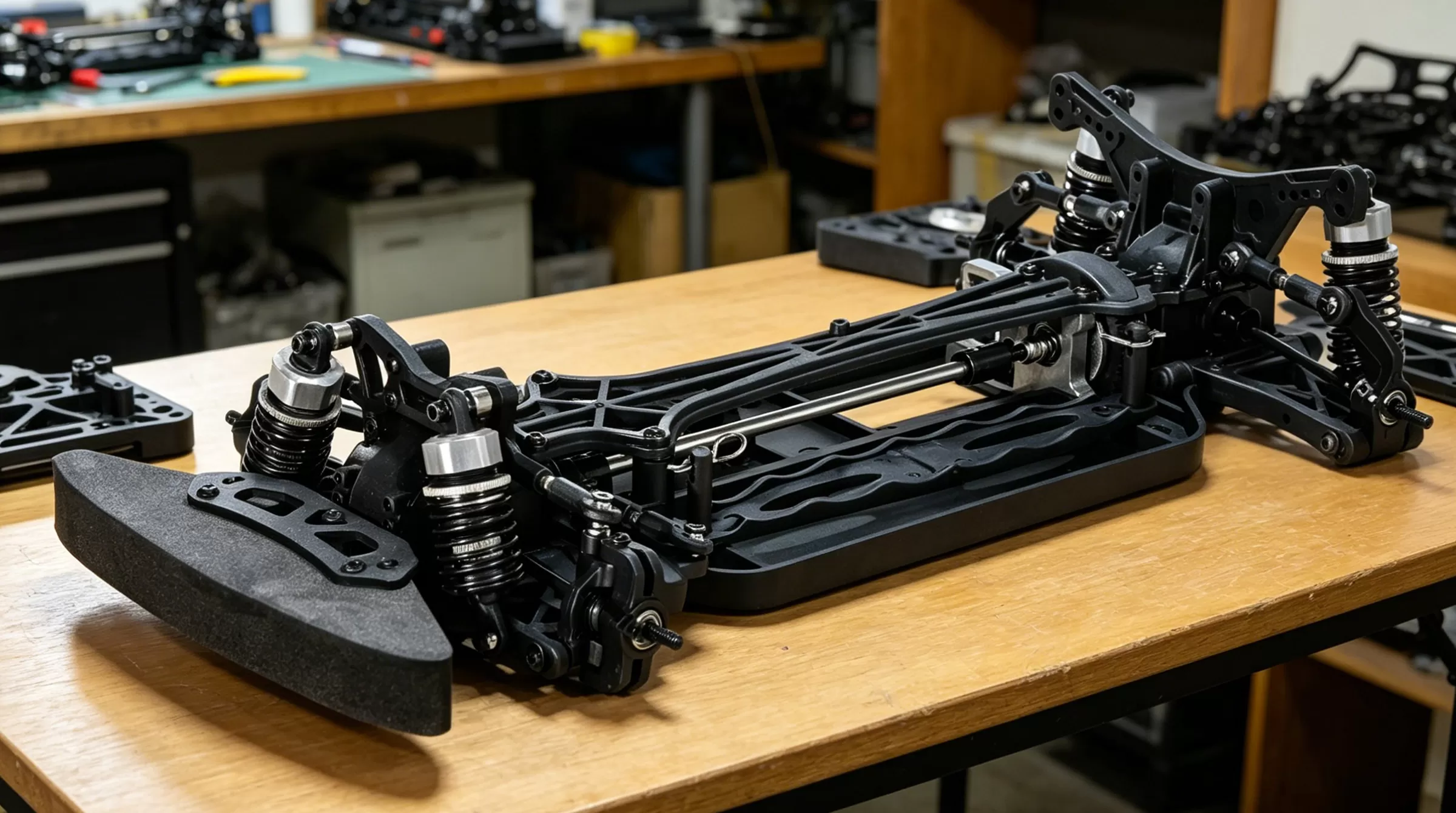
In hobby-grade RC cars, suspension is the single most influential system affecting real-world performance. Unlike toy-grade vehicles with fixed, non-adjustable suspension, hobby-grade platforms are designed with extensive tuning capability because small changes can produce dramatic improvements in handling.
Proper suspension tuning directly impacts:
Cornering Grip — How well the car holds a line through turns without pushing or sliding unpredictably.
Stability — Especially important at high speeds and during direction changes.
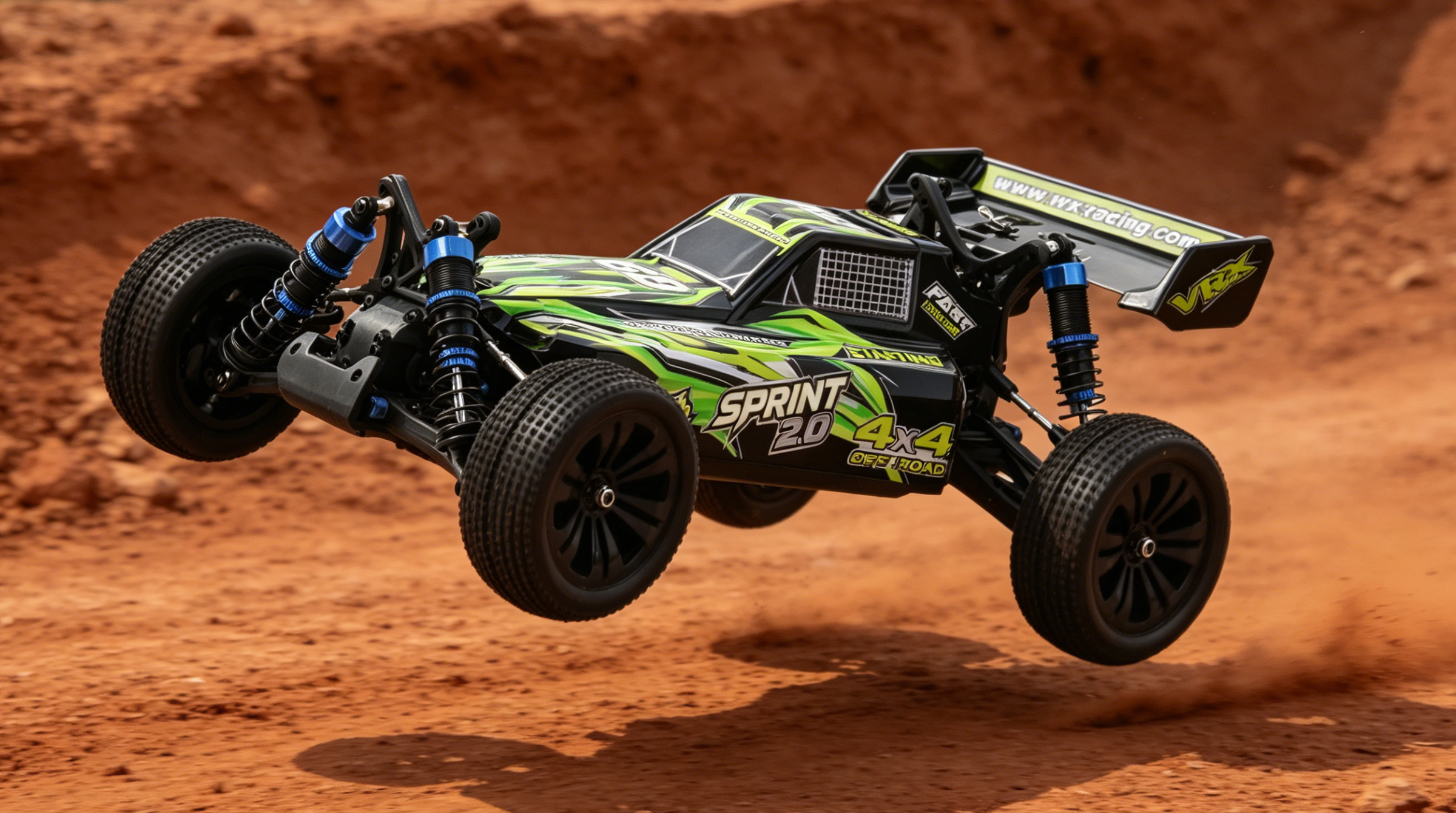
Jump Landing — Preventing bottoming out or bouncing after big airs.
Tire Traction — Maintaining consistent contact patch with the surface.
Steering Response — Making the car feel sharp and responsive without becoming twitchy.
Different RC car types demand completely different suspension setups. A rc racing buggy needs quick, responsive damping, while a rock crawler requires maximum articulation and soft springs. Understanding these differences allows you to extract the full potential from your VRX Racing or any hobby-grade chassis.
A hobby-grade electric RC car's suspension system does much more than just absorb bumps. Its primary job is to keep all four tires planted firmly on the ground, maximizing traction, steering response, and power delivery. If a car is bouncing, it isn't accelerating.
Unlike toy-grade RC cars—which often rely on simple, bouncy friction springs—hobby-grade systems are complex, tunable, and modeled after full-scale automotive racing suspensions.
Here is a breakdown of the key components that make up a hobby-grade RC suspension system.
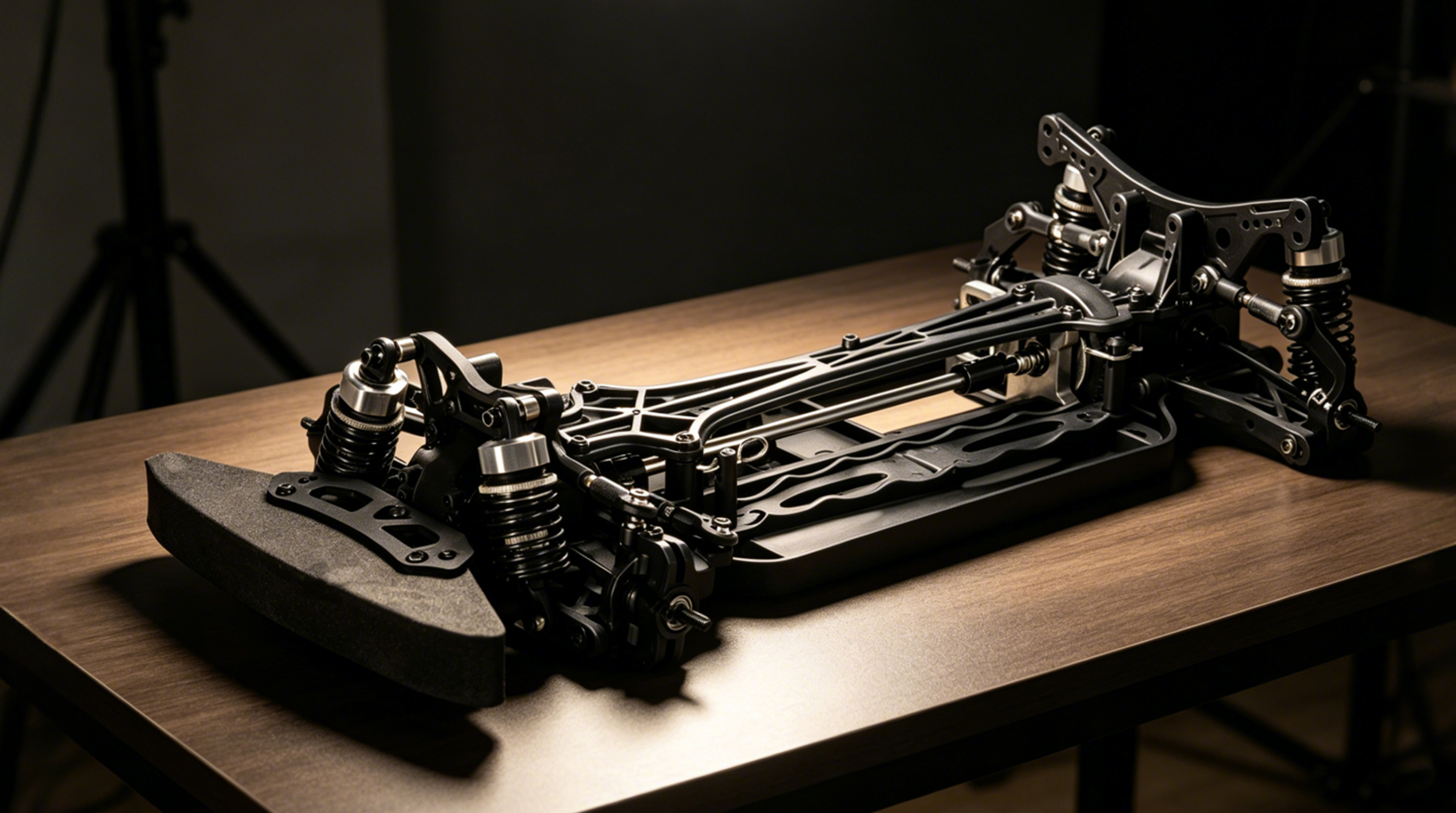
The shock absorbers are the heart of the suspension system. Hobby-grade shocks are "oil-filled coil-overs," meaning the spring sits over a cylinder filled with silicone fluid. They consist of several micro-components:
Shock Body: The main cylinder, usually made of composite plastic or threaded CNC-machined aluminum.
Silicone Shock Oil: The fluid inside the shock body. It comes in different "weights" (viscosities). Thicker oil slows the suspension movement down, while thinner oil allows it to react faster.
Piston: A small disc inside the shock body attached to the shock shaft. It has tiny holes in it. As the suspension compresses, the piston forces the oil through these holes, creating the "damping" effect that stops the car from bouncing like a pogo stick.
Springs: The metal coils that support the weight of the vehicle and push the wheels back down after hitting a bump. Different spring rates (stiffness) are used depending on the weight of the car and the terrain.
Preload Collars: Rings on the outside of the shock body used to compress the spring. Adjusting the collar changes the vehicle's ride height.
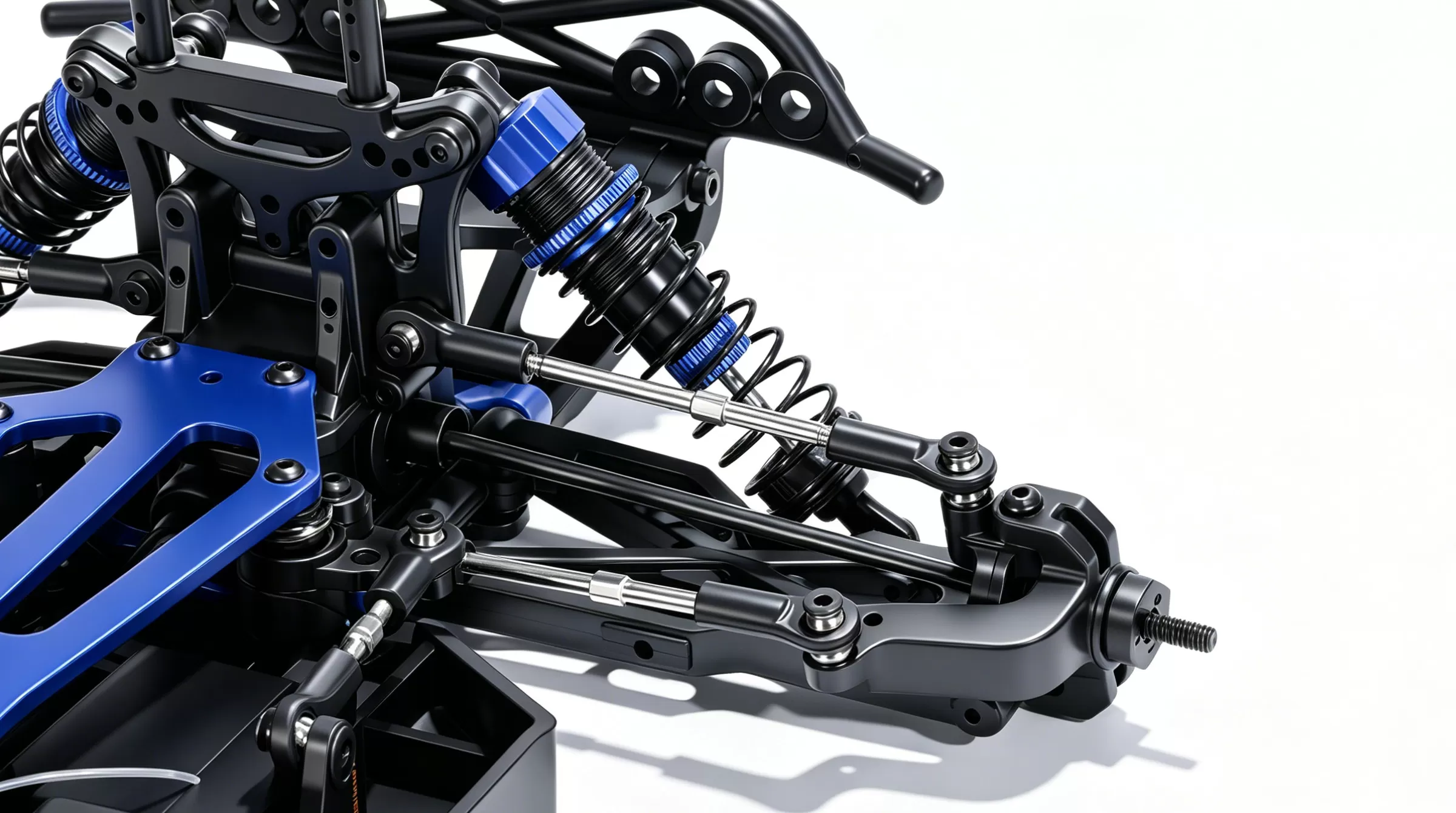
These are the structural "bones" connecting the chassis to the wheels. They are typically shaped like an "A" or an "H".
Lower Arms: Thick, heavy-duty arms that bear the brunt of impacts. In hobby-grade cars, these are usually made from a specialized composite nylon. Note: While aluminum arms look cool, professional racers prefer plastic because it flexes during a crash; aluminum bends and stays bent, which ruins the geometry.
Upper Arms: Some platforms use upper A-arms, while others use adjustable turnbuckles (see below) to secure the top of the wheel hub.
Turnbuckles are adjustable metal rods connecting the top of the wheel hubs to the chassis, as well as the steering servo to the front wheels.
The Magic Threading: A turnbuckle has a standard thread on one end and a reverse thread on the other. This allows you to place a wrench in the middle and twist it to lengthen or shorten the rod without removing it from the car.
Function: Adjusting these changes your Camber (the inward or outward tilt of the wheels when viewed from the front) and Toe (the inward or outward pointing of the wheels when viewed from above).
This group of parts sits at the very end of the suspension arms and actually holds the wheels.
Steering Knuckles (Spindles): Found on the front of the car. These hold the wheel bearings and axles, and pivot left and right to steer the car.
Caster Blocks (C-Hubs): The C-shaped blocks that hold the steering knuckles. They hold the knuckle at a specific angle (the Caster angle), which determines how aggressively the car steers and how well it centers itself after a turn.
Rear Hub Carriers: Because the rear wheels usually don't steer, they use solid hub carriers instead of pivoting knuckles. They hold the rear axles and bearings in place.
Hinge Pins: Thick steel rods that attach the suspension arms to the chassis, acting as the pivot point for the arms to swing up and down.
Suspension Mounts (Toe Blocks): Metal or plastic blocks bolted directly to the chassis that hold the hinge pins. In high-end hobby-grade cars, you can change the inserts inside these blocks to alter the "Anti-Squat" (how much the rear end dips during acceleration) and rear Toe angles.
These are vertical plates bolted to the front and rear of the chassis. The top of the shock absorbers mount to these towers.
Hobby-grade shock towers have multiple mounting holes. Moving the top of the shock inward or outward changes the angle of the shock, which radically alters how progressive or linear the suspension feels as it compresses.
Usually found on track-focused buggies, short course trucks, and on-road cars. A sway bar is a U-shaped piece of spring steel that connects the left suspension arm to the right suspension arm.
Function: When the car takes a high-speed corner, weight shifts to the outside tires, causing the chassis to "roll" or lean. The sway bar fights this motion by transferring some of that force to the inside tire, keeping the chassis flat and planted.
Shock oil weight (viscosity) is one of the most powerful and cost-effective tuning tools available to an RC driver. While the physical springs support the weight of the vehicle and determine its ride height, the shock oil controls the speed at which the suspension compresses and rebounds.
Measured either in “wt” (weight) or “cSt” (centistokes), the viscosity of the silicone fluid inside the shock cylinder dictates how much resistance the internal piston faces as it moves up and down. Understanding how to manipulate this resistance is the key to unlocking your car's true handling potential.
When your car hits a bump, the shock shaft pushes a piston (a small disc with tiny holes) through the oil.
Thicker oil forces its way through those holes slowly, creating heavy damping.
Thinner oil flows through the holes quickly, creating light damping.
In RC tuning, there is a crucial concept called "Pack." When a car lands a massive jump, the shock compresses so fast that the oil simply cannot flow through the piston holes quickly enough. This creates a temporary "hydraulic lock" or pack, which stops the chassis from violently slapping the ground. Tuning your oil weight is largely about finding the perfect amount of pack for your driving style.
Thicker oils (generally 40wt to 60wt, or even up to 80wt+ for massive 1/5 scale trucks) slow down the suspension's reaction time.
The Benefits: Thicker oil provides excellent "pack" to prevent the chassis from bottoming out during huge jumps. It also slows down weight transfer during hard cornering, reducing chassis roll and making the car feel more stable and predictable on high-grip surfaces (like street pavement, carpet, or astroturf).
The Drawbacks: If the oil is too thick for the terrain, the suspension cannot react fast enough to small bumps. Instead of absorbing a series of small ruts, the tires will skip and bounce over them, causing a massive loss of traction.
Best Used For: Skate park bashing, massive jumps, smooth high-traction race tracks, heavy monster trucks, and speed-run cars.
Lighter oils (generally 15wt to 35wt) allow the suspension to move very freely and quickly.
The Benefits: Thin oil allows the tires to rapidly drop into ruts and pop back out, keeping the rubber glued to the surface over highly uneven, bumpy terrain. This maximizes traction on loose dirt and gravel. It also allows for maximum axle articulation.
The Drawbacks: Because the damping is so light, the car will easily bottom out on large jumps. On high-speed corners, the chassis will lean (roll) dramatically, which can cause the vehicle to flip over.
Best Used For: Rock crawlers, rutted and bumpy off-road dirt tracks, and technical driving where maximum grip is more important than big air.
One of the most overlooked aspects of shock oil is how ambient temperature affects it. Silicone fluid changes viscosity based on the weather.
In Hot Summer Weather: Heat thins out the oil. A 40wt oil might feel like a 30wt oil on a 95°F (35°C) day. Racers usually go up 5wt in the summer.
In Cold Winter Weather: Cold thickens the oil, making the suspension feel stiff and sluggish. If you are driving in freezing temperatures, dropping your oil weight by 5wt to 10wt will restore proper suspension movement.
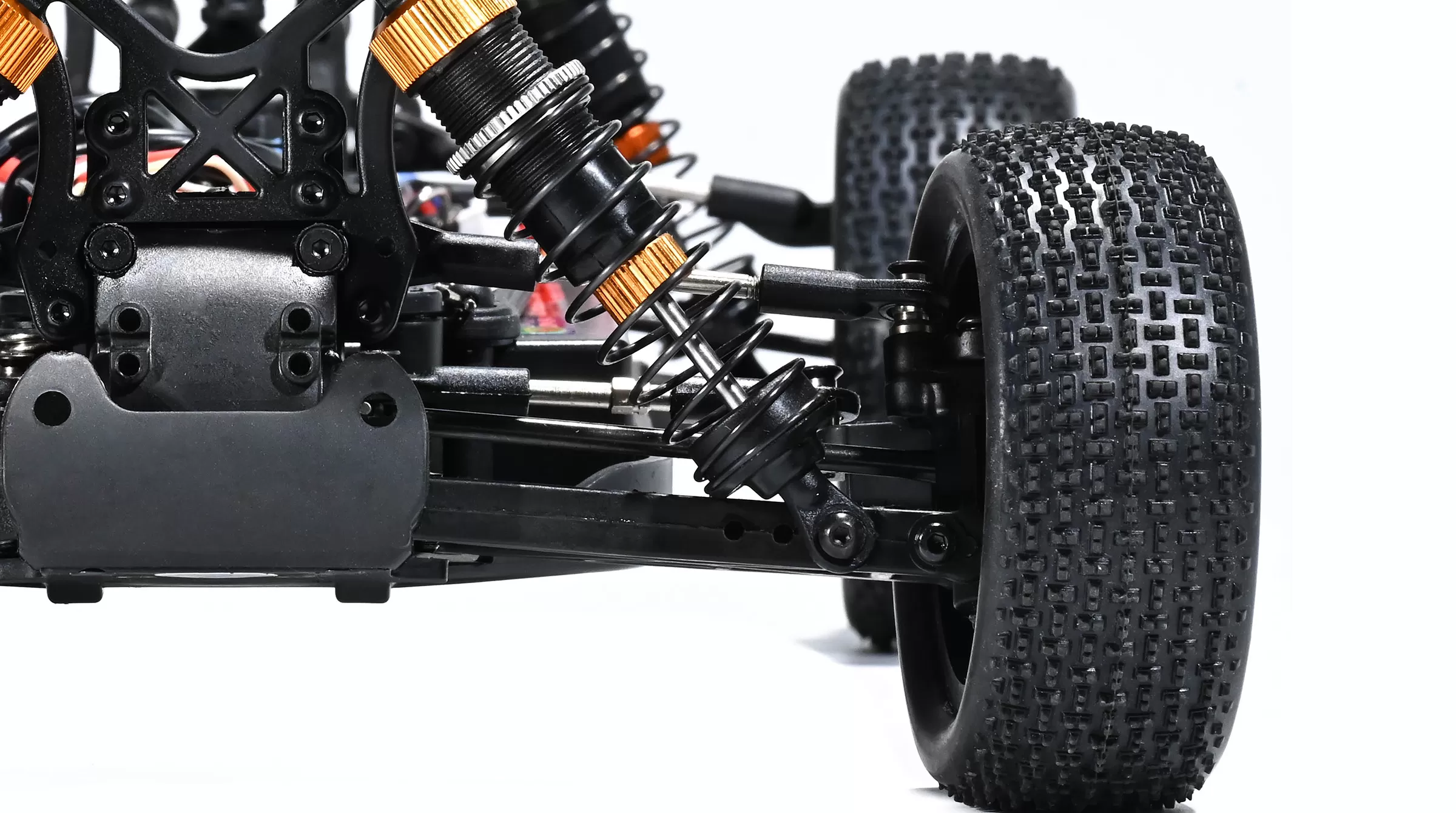
Professional drivers rarely run the exact same oil weight in all four shocks. Weight distribution and driving dynamics require different damping front and back.
Typically, remote control RC cars use slightly thicker oil in the front shocks and slightly thinner oil in the rear.
Thicker Front: Supports the nose of the car during hard braking (preventing nosedives) and absorbs the initial impact of jump landings.
Thinner Rear: Allows the rear of the car to squat slightly under hard acceleration, transferring weight to the rear tires for maximum forward traction.
Viscosity Range (wt) | Viscosity (cSt approx.) | Best Terrain / Driving Style | Handling Characteristics |
10wt – 25wt | 100 – 275 cSt | Rock Crawling, Winter driving | Maximum articulation, rapid response, zero jump support. |
30wt – 35wt | 350 – 425 cSt | Rutted dirt tracks, light bashing | Excellent bump handling, keeps tires planted on loose dirt. |
40wt – 45wt | 500 – 600 cSt | General Bashing, mixed off-road | The "sweet spot" for most RTR cars. Good balance of jump support and bump handling. |
50wt – 60wt | 650 – 800 cSt | Carpet racing, skate parks | Resists chassis roll, stiff feel, excellent "pack" for big jump landings. |
70wt+ | 900+ cSt | Massive 1/8 & 1/5 Monster Trucks | Required to dampen extremely heavy vehicles; prevents violent bottoming out. |
Changing your shock mounting positions is one of the most effective—and completely free—ways to dramatically alter your RC car's handling. You don't need to buy new springs or different oil; all you need is a hex wrench and a couple of minutes.
By moving where the shock attaches to the Shock Tower (Top Mount) or the Suspension Arm (Bottom Mount), you are fundamentally changing the suspension's mechanical leverage and its "progression" (how stiff the shock feels as it compresses).
Understanding whether to "stand the shocks up" or "lay them down" will help you tune your vehicle for any track condition.
The angle of the shock determines how linear or progressive the damping feels.
Standing the Shock Up (Outer Mounts): When the shock is mounted perfectly vertical (outer holes on the tower), the suspension is linear. The stiffness feels the exact same at the beginning of the compression as it does at the end. The control remoto car will react instantly to your steering inputs, but it will be less forgiving over bumps.
Laying the Shock Down (Inner Mounts): When the shock is mounted at an angle (leaning inward toward the center of the chassis), the suspension becomes progressive. It will feel very soft at the beginning of the travel (absorbing tiny bumps beautifully) but will stiffen up significantly as the suspension compresses fully, helping prevent the chassis from bottoming out on big jumps.
The front shocks dictate how the car enters a corner (turn-in) and how it handles steering over bumpy surfaces.
Front Outer Mounts (Stand-Up): Moving the top of the shocks outward creates highly aggressive, razor-sharp steering. The car will change direction instantly and resist chassis roll.
Best Used For: Smooth, high-grip surfaces like carpet, clay, or street pavement where you want lightning-fast steering response.
Front Inner Mounts (Lay-Down): Moving the top of the shocks inward produces smoother, much more forgiving handling. It slows down the steering response slightly, making the car less "twitchy."
Best Used For: Bumpy, rutted dirt tracks or loose gravel. The softer initial stroke allows the front tires to soak up the bumps without bouncing the car off its driving line.
The rear shocks control how the car accelerates out of a corner, how much forward traction it generates, and how the rear end slides (rotates).
Rear Outer Mounts (Stand-Up): Standing the rear shocks up stiffens the rear end and increases the car's rotation. The rear end will step out and slide more easily, allowing the car to "square up" quickly to exit sharp corners.
Best Used For: Tight, technical tracks with sharp turns where you need the rear end to pivot quickly.
Rear Inner Mounts (Lay-Down): Leaning the rear shocks inward "plants" the rear of the car. It allows the chassis to squat under heavy acceleration, transferring the vehicle's weight directly over the rear tires.
Best Used For: Loose, slippery conditions where maximum forward traction is required, or wide-open tracks with sweeping turns.
While the top mounts change the angle (progression), moving the bottom mount on the suspension arm changes the leverage.
Inner Arm Hole: Gives the wheel more leverage over the shock. This effectively makes your spring and oil feel softer, increasing suspension travel and chassis roll.
Outer Arm Hole: Gives the wheel less leverage. This makes the spring and oil feel stiffer, reducing chassis roll and speeding up the suspension's reaction time.
Adjustment Point | Position Change | Visual Angle | Primary Handling Characteristic | Best Track Condition |
Front Tower (Top) | Move Outward | Vertical (Stand-up) | Aggressive, twitchy steering; fast response. | Smooth, high-grip (Carpet/Street) |
Front Tower (Top) | Move Inward | Angled (Lay-down) | Smooth steering; forgiving over bumps. | Rough, bumpy, loose dirt |
Rear Tower (Top) | Move Outward | Vertical (Stand-up) | Faster rotation; rear end slides easier. | Tight, technical tracks |
Rear Tower (Top) | Move Inward | Angled (Lay-down) | Maximum forward traction; planted feel. | Slippery, low-grip tracks |
Suspension Arm (Bottom) | Move Inner | N/A | Increases leverage (feels softer, more roll). | Low traction, bumpy terrain |
Suspension Arm (Bottom) | Move Outer | N/A | Decreases leverage (feels stiffer, less roll). | High traction, big jumps |
Ride height significantly affects handling balance. Lower ride height lowers the center of gravity for better cornering and high-speed stability, making it ideal for on-road, drift, and smooth dirt tracks. Higher ride height increases ground clearance and suspension travel, which is essential for rock crawling, rally, truggy bashing, and rough off-road conditions.
Different vehicles require completely different suspension setups:
RC Buggy: Medium-stiff setup with quick damping for fast steering and jump control.
RC Electric Truggy: Stiffer damping and stronger springs to handle big-air landings and high impacts.
RC Crawler: Very soft springs with maximum articulation for technical climbing.
Electric RC Drift Cars: Low ride height and stiff suspension to minimize body roll.
RC Rally Car: Balanced medium setup for mixed terrain performance.
Common errors include using extremely thick shock oil that makes the car bounce, over-tightening preload collars, setting left and right sides unevenly, ignoring tire pressure and compound, and changing too many variables at once. Always make small, single adjustments and test thoroughly before making further changes.
At VRX Racing, suspension design is a core part of our engineering process. Our platforms feature adjustable oil shocks, durable suspension arms, and carefully optimized geometry developed through extensive real-world testing. We offer custom suspension solutions for OEM partners, including spring rate customization, shock tuning, and geometry adjustments tailored to specific racing classes or market requirements.
Whether you need entry-level RTR platforms or high-performance brushless competition vehicles, VRX Racing delivers suspension systems engineered for reliability, adjustability, and consistent performance across different terrains and conditions.
There is no universal “perfect” suspension setup. The best tuning depends on your car type, driving style, track conditions, and personal preference. Small adjustments often produce noticeable improvements, and the most valuable skill is learning how to test systematically and interpret what the car is telling you.
At VRX Racing, we believe that great performance starts with great engineering. Our hobby-grade RC platforms are designed with extensive adjustability so both individual enthusiasts and professional partners can achieve their desired handling characteristics. Whether you are fine-tuning your personal car or developing custom vehicles for the market, the right suspension setup makes all the difference.