Building an electric RC car from scratch is one of the most educational and rewarding experiences in the RC hobby. Unlike toy-grade cars that come fully assembled with limited performance, building a hobby-grade RC car gives you complete understanding of how every component works together. You learn mechanical principles, electronics, weight distribution, and tuning — knowledge that dramatically improves your driving skill and long-term enjoyment. For brands and distributors, having the ability to build or customize from proven platforms is also a key competitive advantage in today's market.
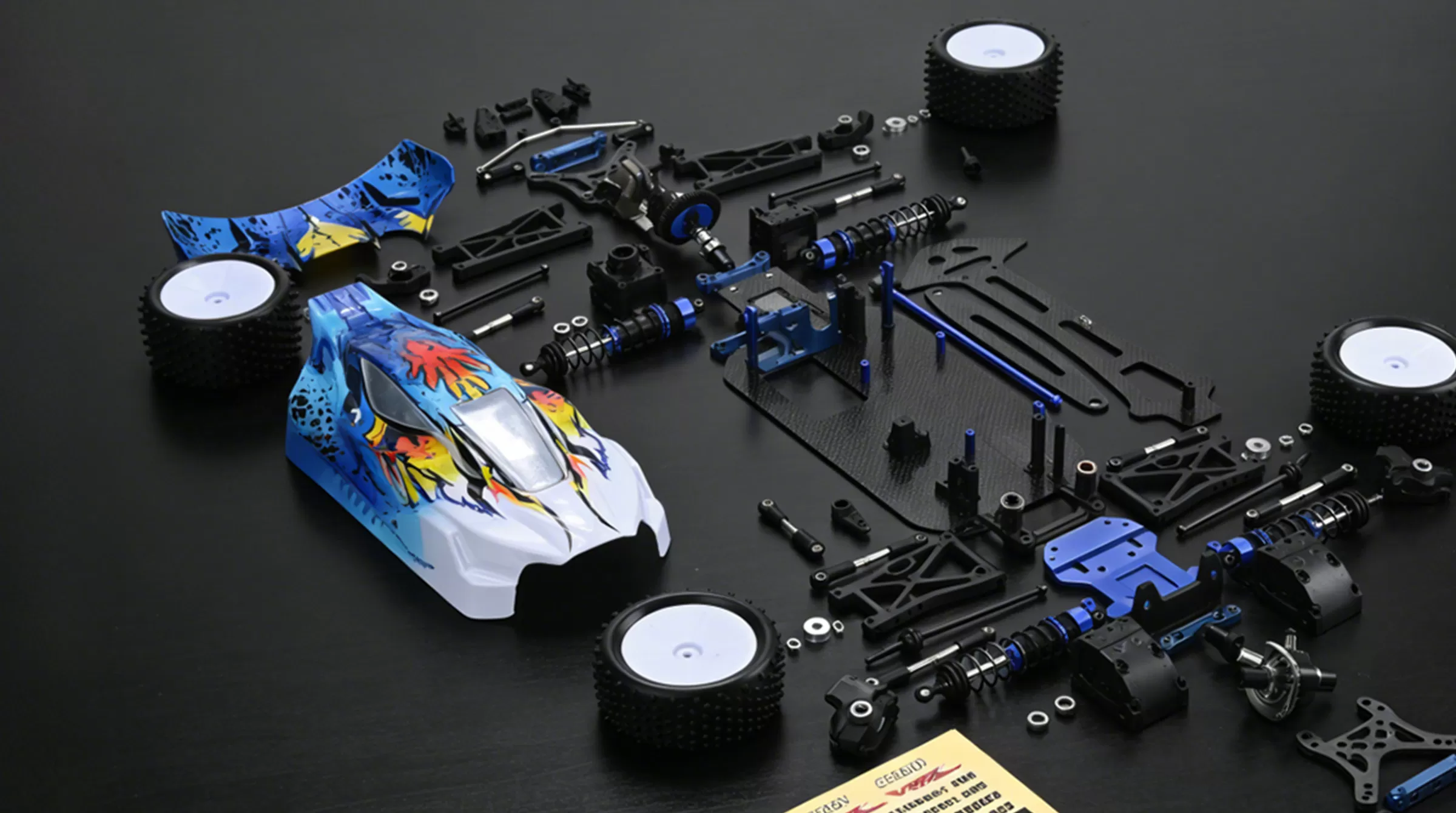
Before touching any tools, it is essential to understand the major systems that make up a modern electric RC car. Each component plays a specific role, and how they interact determines the vehicle's overall character and performance.
The chassis is the structural backbone. 2WD platforms are lighter and more agile on smooth surfaces, making them popular for beginners and track racing. 4WD platforms provide superior traction and stability, especially in off-road or high-power applications. Different chassis types — buggies for agility, truggies for balanced performance, electric RC crawlers for extreme articulation — each require different engineering considerations for strength, weight, and geometry.
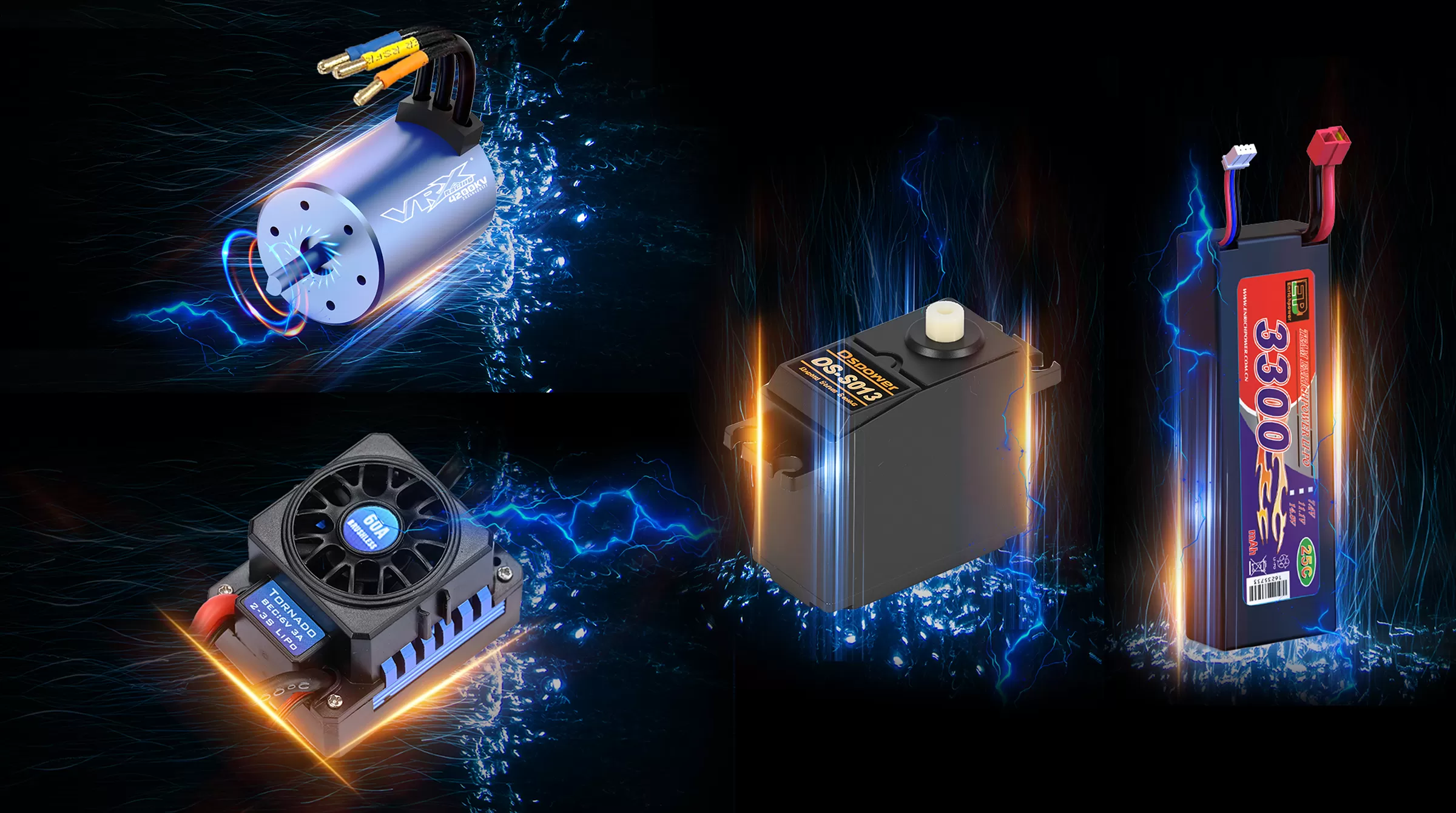
The motor converts electrical energy into mechanical power. Brushless motors have become the standard in hobby-grade builds due to their high efficiency, powerful torque, and long lifespan. The ESC (Electronic Speed Controller) acts as the brain of the system, regulating power delivery, managing braking, and often offering programmable settings for fine-tuning throttle response and timing.
Independent suspension with adjustable shocks determines how the car absorbs bumps and maintains traction. The drivetrain — including gears, differentials, and drive shafts — transfers power from the motor to the wheels. Proper setup here is critical: poor gear mesh causes inefficiency and premature wear, while a well-tuned differential improves cornering and durability.
The RC car transmitter and receiver provide precise control inputs. A high-quality steering servo with metal gears is essential, especially in powerful vehicles, as it must deliver fast and strong steering response under load.
| Component | Function | Beginner Recommendation |
| Brushless Motor | Power output | 3650-size 3300KV |
| ESC | Speed & braking control | Waterproof 60A+ ESC |
| Chassis | Vehicle foundation | 4WD buggy platform |
| Servo | Steering control | Metal gear digital servo |
The platform you choose will largely determine the final personality and capability of your build. On-road touring cars focus on low center of gravity and precision steering, while off-road buggies emphasize suspension travel and agility. RC truggies offer a balance between speed and toughness, short course trucks provide realistic styling with strong durability, and electric rock crawlers prioritize extreme articulation for technical terrain.
| Platform | Best Terrain | Speed & Handling | Durability | Ground Clearance | Best Used For |
| Buggy | Dirt tracks, short grass | Very High / Precise | Moderate | Low | Track racing, light bashing |
| Truggy | Rough dirt, grass, gravel | High / Very Stable | High | Medium | All-around bashing, off-road racing |
| Monster Truck | Tall grass, skate parks, mud | Moderate / Sloppy | Very High | Very High | Extreme bashing, jumps, stunts |
| Short Course (SCT) | Dirt tracks, gravel, street | High / Tends to roll | High | Medium | Spec racing, scale realism, bashing |
| Rock Crawler | Rocks, trails, hiking paths | Very Low / Technical | Extreme | Extreme | Trail walking, technical climbing |
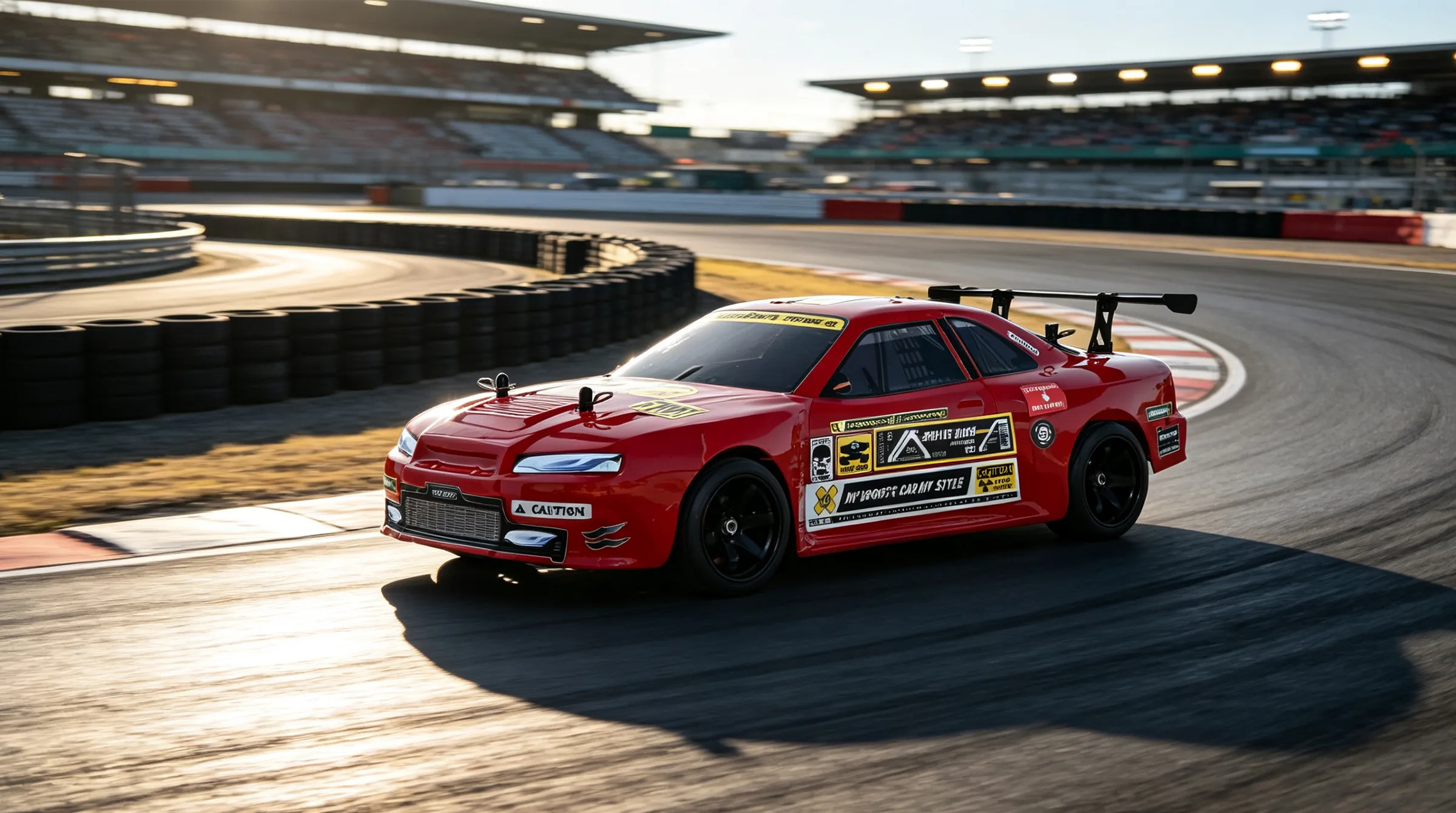
| On-Road / Drift | Pavement, concrete, carpet | Extreme / Glued to road | Low | Very Low | Speed runs, drift events, street |
1.Buggy (The Precision Racer)
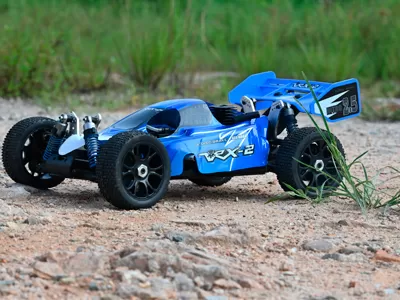
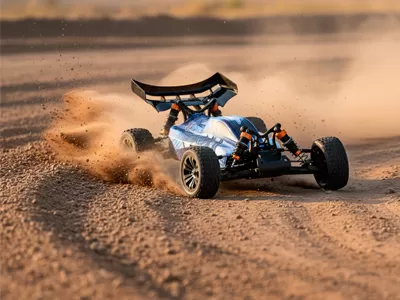
Buggies are the traditional kings of the RC dirt track. They feature exposed wheels, a narrow chassis, and a large rear wing for downforce.
Pros: Incredible handling, lightning-fast acceleration, and perfectly balanced in the air over jumps.
Cons: Low ground clearance means they get stuck in tall grass easily. The exposed suspension arms are vulnerable in crashes.
Best For: Drivers who want to race on groomed dirt/clay tracks, or people with access to flat dirt lots.
Popular Examples: Arrma Typhon, Traxxas Bandit, Team Associated B6.
2. Truggy (The Ultimate Hybrid)
A "Truggy" is a cross between a Truck and a Buggy. They use a lengthened buggy chassis but feature much wider suspension arms and larger, truck-style tires.
Pros: The "Goldilocks" platform. They have the high-speed stability of a buggy, but the larger tires allow them to blast through grass and rough terrain like a monster truck.
Cons: They are wide, which makes them a bit clumsy in tight spaces compared to a buggy.
Best For: The ultimate "basher" who wants to do 60+ MPH, hit huge jumps, and drive on almost any surface.
Popular Examples: Arrma Kraton, Traxxas Sledge, Corally Kronos.
3. Monster Truck (The Stunt Brawler)
Characterized by a short wheelbase, high center of gravity, and massive tires.
Pros: Unstoppable in tall grass, mud, and snow. They are built to take massive abuse, do backflips off ramps, and pull wheelies on command.
Cons: Because they sit so high, they flip over easily when taking corners at high speeds. They are not meant for precision driving.
Best For: Backyard bashing, skate parks, BMX tracks, and drivers who want maximum chaotic fun.
Popular Examples: Traxxas X-Maxx / Stampede, Arrma Granite / Outcast, Losi LMT.
4. Short Course Truck / SCT (The Scale Brawler)
Modeled after real-life Baja and stadium super trucks. Unlike buggies or monster trucks, the wheels are completely enclosed by the body shell.
Pros: Highly realistic looks. The large body acts like a bumper, making them incredibly durable and allowing "rubbing is racing" action without tires tangling together.
Cons: The "Parachute Effect"—air catches under the massive body shell during big jumps, which can cause the truck to flip backward in the air.
Best For: Side-by-side racing with friends, driving on dirt, gravel, and asphalt.
Popular Examples: Traxxas Slash (the most popular RC car ever made), Arrma Senton, Team Losi Tenacity.
5. Rock Crawler / Trail Truck (The Slow Mountaineer)
These look like incredibly detailed, real-life Jeeps, Broncos, and Tacomas. They are geared incredibly low for torque rather than speed.
Pros: Unbelievable battery life (often 2+ hours). They can climb over rocks, roots, and stairs that would stop any other RC car. Very relaxing to drive and highly customizable with scale accessories (winches, lights, roof racks).
Cons: Very slow (usually a top speed of 5 to 10 MPH).
Best For: Hiking, taking walks in the woods, driving indoors over couch cushions, and hobbyists who love scale modeling.
Popular Examples: Traxxas TRX-4, Axial SCX10, Element Enduro.
6. On-Road / Touring / Drift (The Pavement Missile)
These are built strictly for flat, hard surfaces. This category includes hyper-fast speed-run cars and specialized drift cars with hard plastic tires.
Pros: Capable of insane speeds (some out-of-the-box cars can hit 100+ MPH). Drift variants offer incredibly satisfying, technical driving mechanics.
Cons: Entirely useless off-road. Even a small pebble or crack in the pavement can send a high-speed on-road car flying.
Best For: Empty parking lots, dedicated carpet tracks, and smooth asphalt.
Popular Examples: Traxxas 4-Tec, Arrma Infraction, Tamiya TT-02, MST RMX (Drift).
VRX Racing offers multiple proven chassis platforms that serve as excellent foundations for custom builds, allowing builders and OEM partners to focus on personalization rather than solving basic engineering challenges.
Start with the lower deck as your foundation. Install suspension arms, shock towers, and differential housing carefully. Pay close attention to screw tension — over-tightening can cause binding, while under-tightening leads to vibration and parts loosening during runs. This stage establishes the vehicle's basic geometry and handling characteristics.
Proper gear mesh is one of the most important adjustments in the entire build. Too tight and the gears will bind and overheat; too loose and they will strip under load. Install center shafts and differentials with care, ensuring everything rotates smoothly. A well-tuned drivetrain significantly improves acceleration, efficiency, and long-term durability.
Secure the brushless motor firmly in its mount and connect it to the ESC. Proper positioning affects weight distribution and cooling. Route wires neatly and use heat shrink tubing to protect against chafing. Correct motor and ESC setup is critical for smooth power delivery and preventing overheating during extended runs.
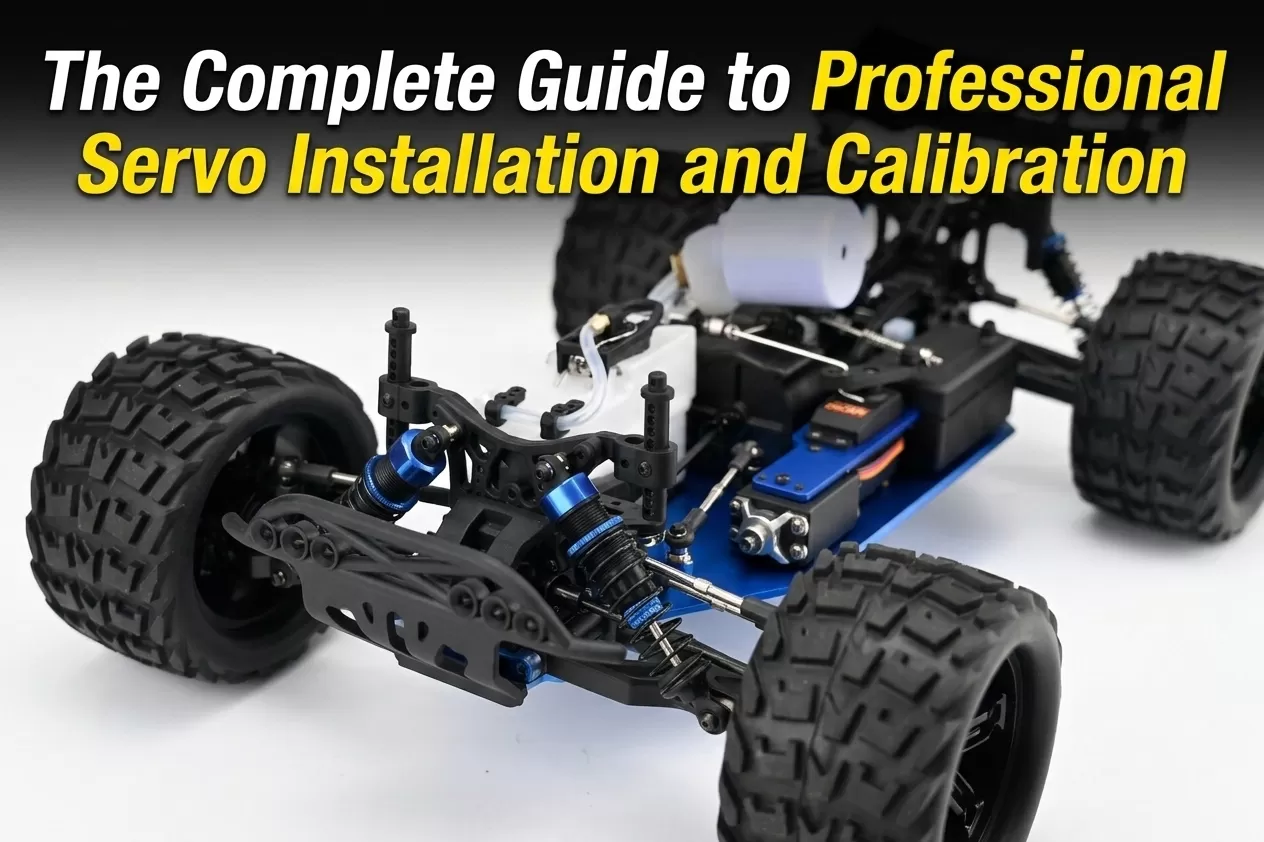
Mount the servo and connect the steering linkage with proper geometry. Bind the receiver to the transmitter and perform initial calibration. A strong, precise servo is essential for responsive handling, especially in powerful or high-speed builds.
Properly glue tires to wheels for maximum reliability. Choose body shells that balance aerodynamics, weight, and aesthetics. Secure the body without restricting suspension travel. Final assembly should result in a car that looks professional and performs consistently.
Building an electric RC car from a kit (or entirely from scratch) is deeply rewarding. It teaches you exactly how the vehicle works, making future repairs a breeze. However, it requires patience, and even minor assembly errors can lead to major breakages or poor performance.Here are the most common mistakes people make when building DIY electric RC cars, categorized by the build phase, and how to avoid them.
Using Cheap Hex Wrenches (Stripping Screws): RC cars use tiny metric hex screws (1.5mm, 2.0mm, 2.5mm). Cheap L-keys or low-quality drivers will round off the screw heads, turning a fun build into a nightmare.
The Fix: Invest in a high-quality set of machined RC hex drivers (like MIP, Hudy, or Wera).
The Threadlocker (Loctite) Disaster: There are two major mistakes here. First, applying threadlocker to plastic parts (the chemicals in threadlocker actually melt and shatter plastic). Second, using "Red" threadlocker, which requires a blowtorch to remove.
The Fix: Only use Blue (removable) threadlocker, and only on metal-to-metal connections (like a screw going into an aluminum motor mount).
Overtightening Screws into Plastic: Power drills or heavy hands will rip the threads right out of the plastic chassis parts, ruining them instantly.
The Fix: When screwing into plastic, turn the screw backward until you feel it "click" into the existing thread, then drive it in. Stop the moment it feels snug.
Improper Gear Mesh: The connection between the motor's pinion gear (metal) and the main spur gear (often plastic) must be perfect. Too loose, and you will strip the plastic gear in seconds. Too tight, and you will create excess friction, which will overheat and permanently damage the motor or ESC (Electronic Speed Controller).
The Fix (The Paper Trick): Cut a thin strip of standard printer paper. Place it between the two gears, push the gears firmly together, tighten the motor mount, and then roll the paper out. This leaves a tiny, perfect microscopic gap.
Binding in the Suspension: Suspension arms should drop freely under their own weight. Beginners often tighten the suspension hinge pins so much that the arms get physically wedged in place.
The Fix: If the suspension doesn't drop smoothly, slightly loosen the hinge pin screws or lightly sand the edges of the suspension arm until it moves freely.
Incorrect Shock Assembly (Air Bubbles): Building oil-filled shock absorbers takes finesse. Rushing the process traps air bubbles in the silicone oil, resulting in a "squishy" shock that bounces unpredictably.
The Fix: Fill the shock body with oil, slowly pump the piston up and down to release trapped air, and then let it sit for 10-15 minutes so all the microscopic bubbles rise to the top before screwing on the cap.
Attaching the Servo Horn Before Centering: The steering servo has a splined gear that connects to the steering linkage (the "horn"). If you just screw it on during assembly, your car's wheels will likely be turned hard to the left or right when you finally power it up.
The Fix: Before attaching the horn to the servo, plug the servo into the receiver, turn on the radio transmitter, and power on the car. Ensure the steering trim on the controller is at "zero." The servo will snap to its true center. Then attach the horn.
Cold Solder Joints: Many DIY kits require you to solder your own battery connectors or motor wires. A "cold" solder joint (where the solder doesn't melt fully into the wire) creates high resistance. In high-power RC cars, a cold joint can melt the connector or even start a fire.
The Fix: Use a high-wattage soldering iron (60W minimum), use flux, and ensure both the wire and the connector are heated enough that the solder flows smoothly like water, not clumpy like clay.
Cutting the Receiver Antenna: To make the wiring look "neat," some beginners trim the long, thin wire coming out of the receiver.
The Fix: Never cut the antenna wire! Its length is tuned specifically to the 2.4GHz radio frequency. Cutting it will destroy your radio range, leading to a runaway car.
Painting the Lexan Body on the Outside: RC bodies are made of clear polycarbonate (Lexan). Beginners often paint the outside of the body like they would a plastic model. The first time the car rolls over, the paint scrapes off.
The Fix: RC bodies must be painted on the inside. The clear plastic acts as a protective hard-coat over the paint. Also, remember to wash the inside with dish soap before painting to remove factory mold-release oils.
Using Standard Spray Paint: Regular hardware store spray paint (Krylon, Rust-Oleum) will dry rigid and flake right off the flexible RC body the first time it crashes.
The Fix: Only use paints specifically formulated for Polycarbonate/Lexan (like Tamiya PS-series). These paints etch into the plastic and flex with the body.
Forgetting to Peel the Overspray Film: Clear RC bodies come with a nearly invisible, thin plastic film on the outside to protect it from overspray while you paint the inside. Many beginners think their paint job looks dull or matte, not realizing the film is still there.
The Fix: Peel the satisfying plastic film off the outside of the body after all painting and cutting is complete, right before applying decals.
The "invisible" mistake is building on a cluttered desk or a carpet. RC kits feature tiny E-clips, shims, and grub screws. If you drop a 2mm black screw on a dark, messy carpet, it is gone forever. Build on a light-colored, clean towel or a magnetic pit mat—this prevents parts from bouncing or rolling away if dropped.
Factory-built hobby-grade RC cars from manufacturers like VRX Racing benefit from CNC-machined precision parts, optimized suspension geometry, extensive real-world testing, and consistent quality control. While building from scratch teaches valuable skills, professional platforms offer proven reliability, better material choices, and race-tested performance that is difficult to replicate in a home workshop.
Many RC brands and distributors prefer to start with proven engineering platforms rather than developing everything from scratch. VRX Racing offers comprehensive OEM and ODM services including custom chassis design, electronics configuration, branding solutions, and performance tuning tailored to specific market needs.
| OEM Service | Customization Options |
| Chassis Design | Wheelbase, suspension geometry, material selection |
| Electronics Configuration | Motor, ESC, and servo matching |
| Branding Service | Custom body shells, decals, and packaging |
| Performance Tuning | Speed and handling optimization |
Developing a completely new RC car platform requires substantial investment in engineering, testing, and tooling. Using a mature, race-proven platform from VRX Racing significantly reduces development time and risk while ensuring consistent quality and parts availability across global markets. VRX Racing supports OEM/ODM electric RC car projects with scalable hobby-grade platforms, helping global distributors and RC brands bring reliable, competitive products to market faster.
Building an electric RC car from scratch is an excellent way to deeply understand vehicle engineering and develop valuable technical skills. However, success depends heavily on choosing the right platform as your foundation. Whether you are an individual hobbyist pursuing a personal project or a brand looking to develop custom RC vehicles, starting with a well-engineered base platform saves time and delivers superior results. VRX Racing provides professional chassis platforms, customization services, and full OEM/ODM support to help both enthusiasts and businesses build high-performance electric RC cars with confidence.