1. High-Speed Needle (HSN):
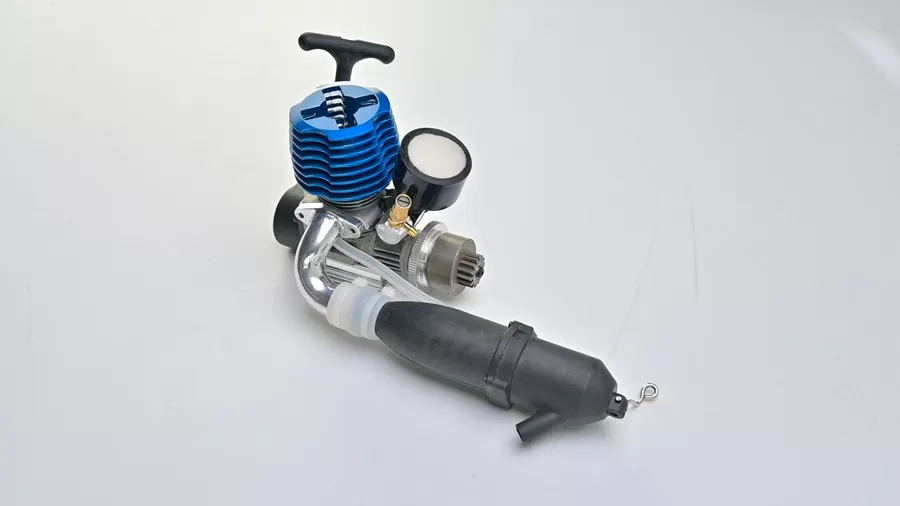
Location: Side of the carburetor, typically a flat-head brass screw.
Function: Precisely regulates the fuel-to-air mixture from mid-throttle to full throttle, directly impacting top speed, power output, and engine temperature.
2. Low-Speed Needle (LSN):
Location: On the carburetor body, usually near the throttle linkage connection point.
Function: Fine-tunes the mixture for transitions from idle to mid-throttle, governing low-end throttle response, smooth acceleration, and transition stability.
3. Idle Screw:
Location: Acts as a stop for the carburetor's throttle arm.
Function: Sets the minimum throttle opening to prevent stalling during startup, braking, or when off-throttle, ensuring consistent idle.
Follow this sequence and methodology strictly:
1. Reset High-Speed Needle (HSN):
Gently turn the HSN clockwise until it lightly seats at the bottom (do not force or overtighten).
Turn the HSN counter-clockwise 2.5 to 3 full turns (900° - 1080°). This is the baseline for most engines (e.g., OS engines often use 2.5 turns, SH engines use 3 turns – always consult your engine manual for specifics).
2. Reset Low-Speed Needle (LSN):
Gently turn the LSN clockwise until it lightly seats.
Turn the LSN counter-clockwise 0.5 turns (180°). This establishes the base low-speed mixture.
3. Set Idle Screw:
Manually position the carburetor throttle slide/arm to leave an approximately 1mm gap.
Turn the idle screw clockwise until it just makes contact with the throttle arm.
Then, turn the idle screw clockwise an additional 1/4 turn (90°) to provide the initial idle opening.
Getting the baseline right is especially important for any nitro engine, as even small deviations in needle settings can significantly impact performance and durability.
A well-adjusted rc car engine will deliver smooth throttle response, stable idling, and consistent power across the entire RPM range.
On the other hand, incorrect settings—especially running too lean—can quickly lead to overheating, loss of lubrication, and internal damage.
That’s why starting from reliable factory settings and making precise, incremental adjustments is essential for maintaining engine health and achieving optimal performance in real driving conditions. Need help dialing in your nitro engine or selecting the right setup for your RC car engine?
Contact our team today for expert technical support, tuning advice, and product recommendations—we're here to keep your engine running at its best.
Baseline, Not Final: Factory reset provides a starting point only. Essential fine-tuning must be performed after the engine is fully warmed up and under actual driving load conditions.
Fine-Tuning Principles:
HSN/LSN Adjustments: Make minute changes of approximately 5° increments per adjustment (akin to the spacing between minute marks on a clock).
Idle Screw: Adjust incrementally based on observed starting reliability, off-throttle behavior, and braking stability to prevent stalling.
Critical Safety:
Wear nitrile gloves when handling corrosive Nitro fuel (methanol/nitromethane blend).
Work in a well-ventilated area, clear of flammables, with a fire extinguisher readily available.
After reset, always initiate tuning with a slightly rich mixture setting and perform a brief rich break-in run. Avoid lean runs to prevent catastrophic engine damage (e.g., piston/cylinder scoring or seizure).
Accurate needle resetting is fundamental to Nitro engine tuning. Mastering the location, function, and reset procedure for the HSN (high-speed), LSN (low-speed transition), and idle screw, combined with meticulous load-based fine-tuning, is essential for unlocking peak engine performance, responsiveness, and reliability. It is strongly recommended to perform resets after the engine's initial break-in period, and always prioritize the specific factory settings outlined in your engine manufacturer's manual.