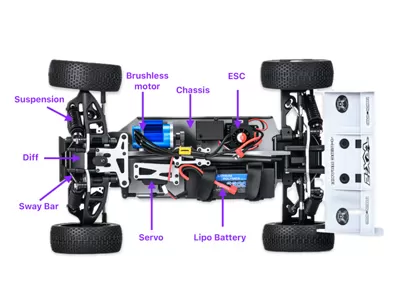
An RC car can have a powerful motor and still perform poorly if the rest of its power system cannot keep up. Acceleration, speed, runtime, heat management, and drivetrain reliability are not determined by the motor alone. They are the result of how the motor, ESC, battery, gearing, drivetrain, tires, and chassis work together.
This is particularly important when moving between 1/10 scale brushless RC cars, larger 1/8 platforms, and nitro-powered models. A motor that works well in a lightweight buggy may require a completely different electronic setup in a heavier truck or truggy.
Understanding this relationship makes it easier to choose an RC vehicle based on its complete power system rather than one impressive specification.
When shoppers see a specification such as “3300KV,” it is tempting to assume that a higher number automatically means a faster RC car. In practice, KV describes the motor's approximate unloaded revolutions per volt, not the complete performance of the vehicle.
For example, a 3650 brushless motor 3300KV can be a practical power unit for a 1/10 electric platform. VRX Racing lists a 3650 3300KV motor for its 1/10 electric RC cars, alongside a 3650 4200KV option. Its 1/10 brushless vehicles use these motor configurations with a 45A ESC and can reach speeds of up to 60 km/h depending on the model and setup.
The important point is that the motor must be matched to the vehicle.
A lightweight buggy, a heavy truck, and a 4WD truggy place different demands on the same motor because their weight, gearing, tires, and drivetrain resistance are different.
The electronic speed controller, or ESC, manages the electrical power delivered from the battery to the motor. It controls acceleration, braking, and often reverse, depending on the system.
This is why an ESC should not be selected separately from the motor.
A brushed setup might use a 40A brushed ESC with a conventional 540 or 550 motor. VRX Racing's 1/10 brushed models use 550 15T or 540 motors with a 40A ESC and are designed for accessible performance at speeds of up to approximately 35 km/h.
A brushless system requires a different controller because the motor architecture is different. VRX Racing's 1/10 brushless configurations use a 45A ESC with 3650-series motors.
The difference illustrates an important principle:
The ESC must be capable of handling the motor's electrical demands under the conditions in which the vehicle will actually operate.
A mismatch can create excessive heat, inconsistent performance, or premature component failure.
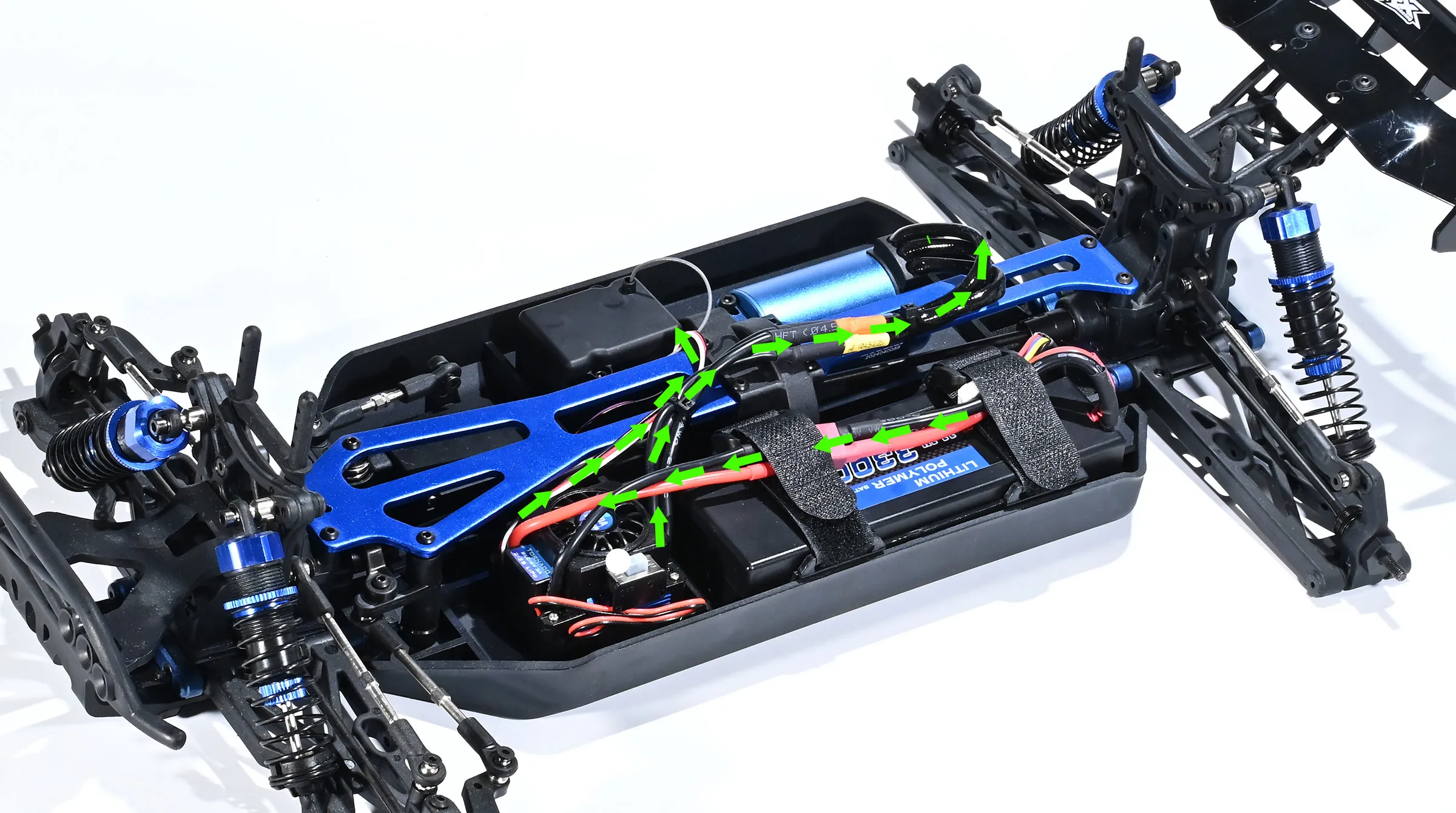
The move from brushed to brushless power can significantly change how an RC vehicle feels.
A brushless 1/10 RC generally offers stronger acceleration, higher efficiency, and less mechanical wear inside the motor because it does not use physical brushes for commutation.
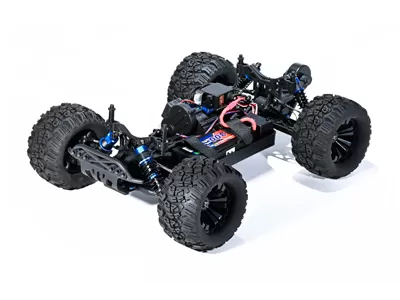
VRX Racing's brushless range includes 1/10 trucks, buggies, truggies, rally cars, and other platforms. Its product lineup includes models such as the BLX10 PRO 1/10 4WD brushless truck, SPRINT 1/10 brushless buggy, MEGREZ 1/10 brushless truggy, and several other configurations.
However, greater motor output creates another requirement: the drivetrain needs to handle the additional torque.
That means gears, differentials, driveshafts, tires, and axles become part of the performance equation.
Imagine installing a high-output motor in a lightweight vehicle but retaining components designed for lower torque. The motor may produce impressive acceleration, but the drivetrain can become the limiting factor.
This is particularly relevant to a 1/10 brushless RC truck.
Trucks often use larger tires than buggies, and larger tires can increase the load placed on the drivetrain. At the same time, trucks may be driven over grass, dirt, gravel, and other surfaces that create additional rolling resistance.
VRX Racing specifically notes that its brushless models use heavy-duty steel gears, hardened driveshafts, and robust differentials to handle increased torque.
Therefore, “more motor power” should always be considered alongside drivetrain strength.
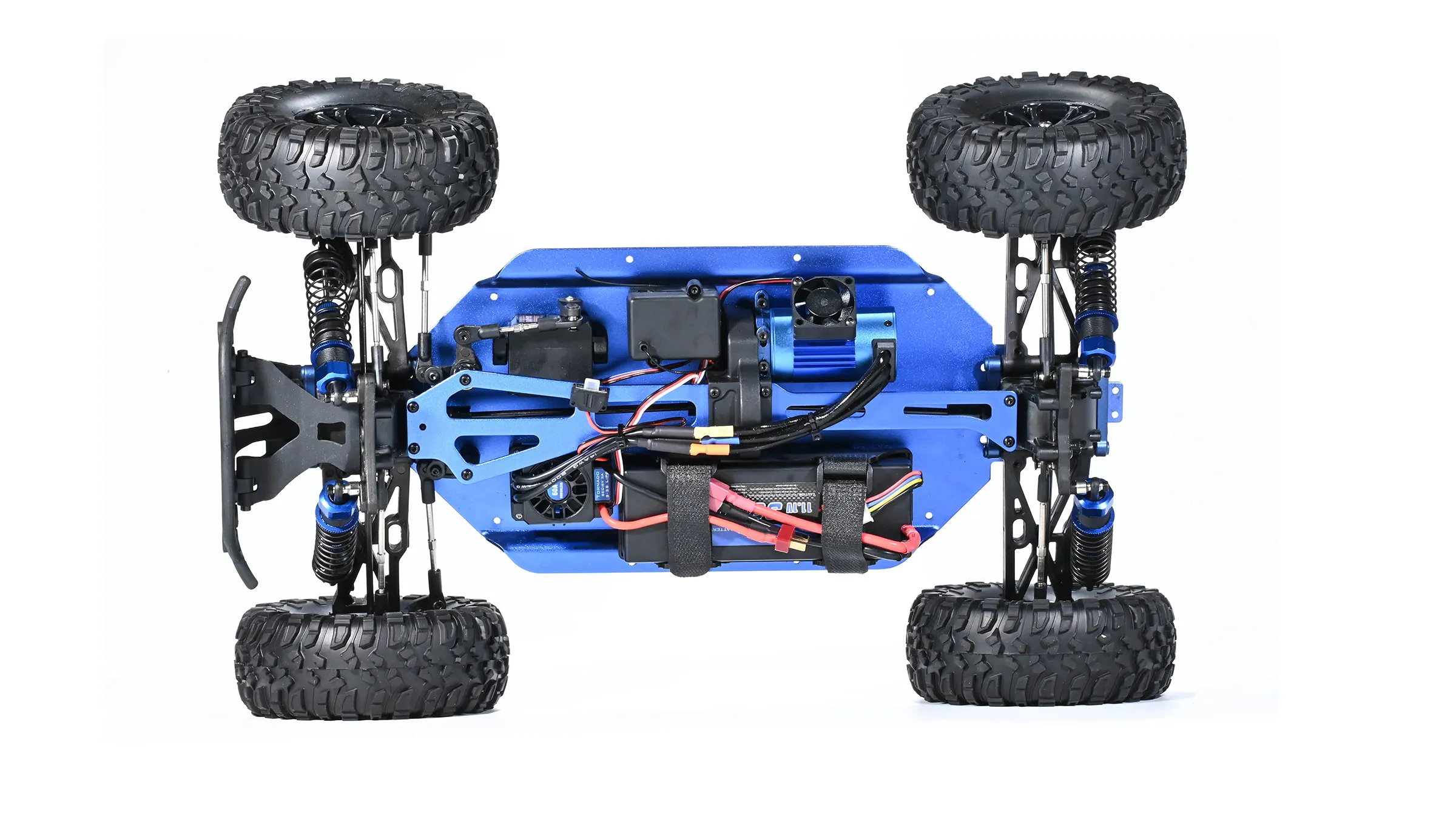
A 4WD RC truggy provides another useful example.
Four-wheel drive allows torque to be distributed across all four wheels, improving traction on loose or uneven surfaces. But it also introduces additional drivetrain components and mechanical resistance.
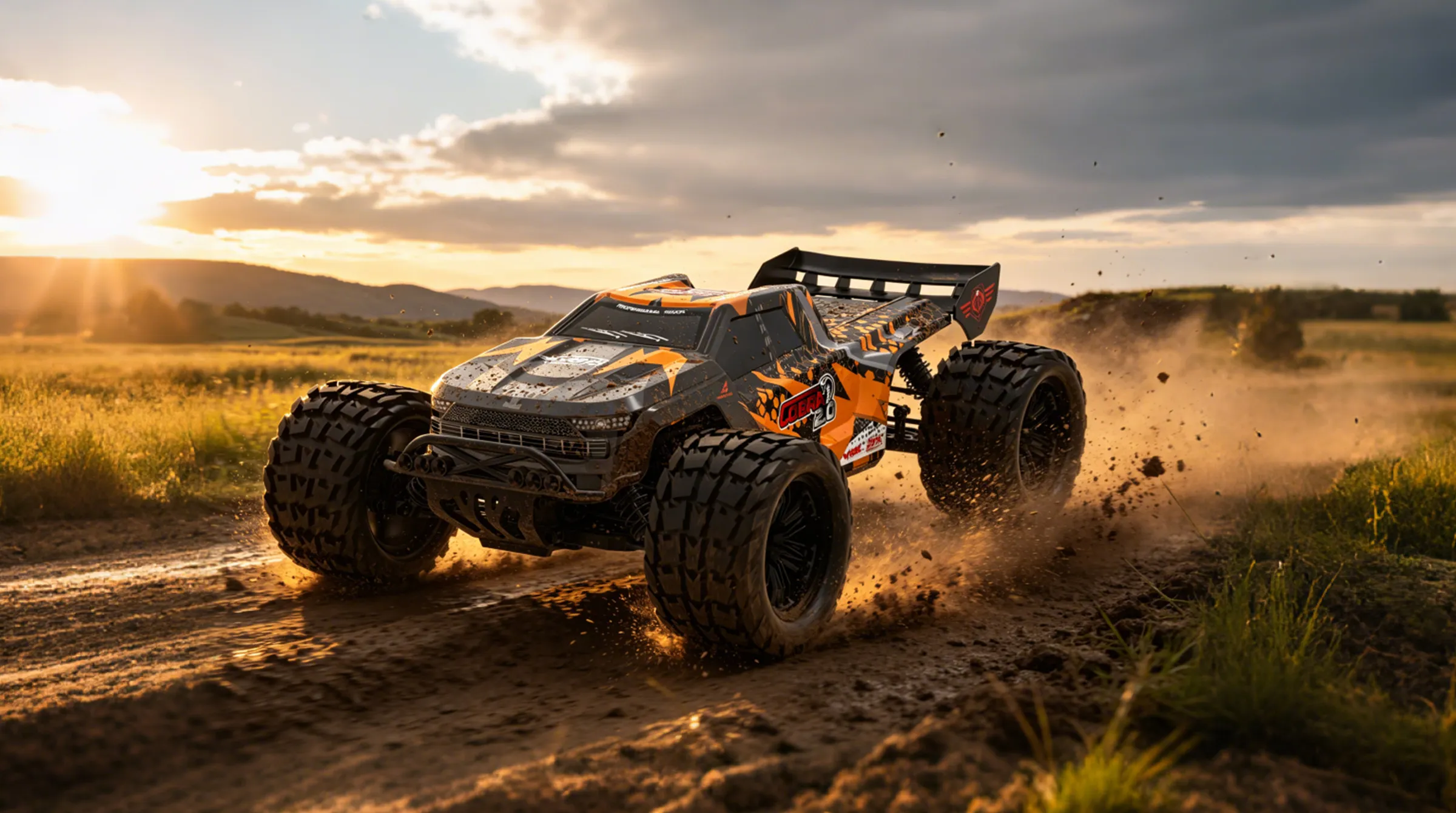
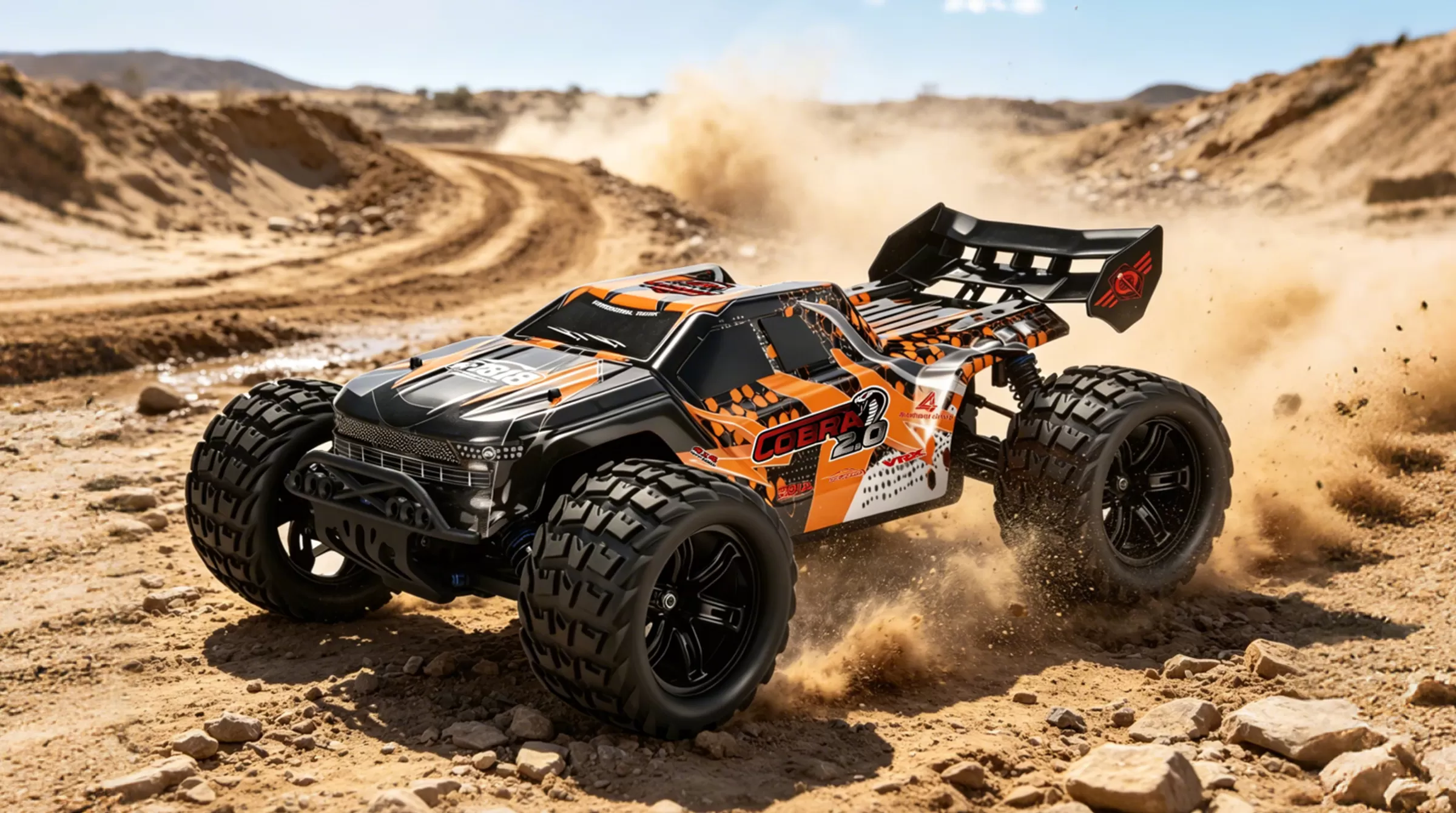
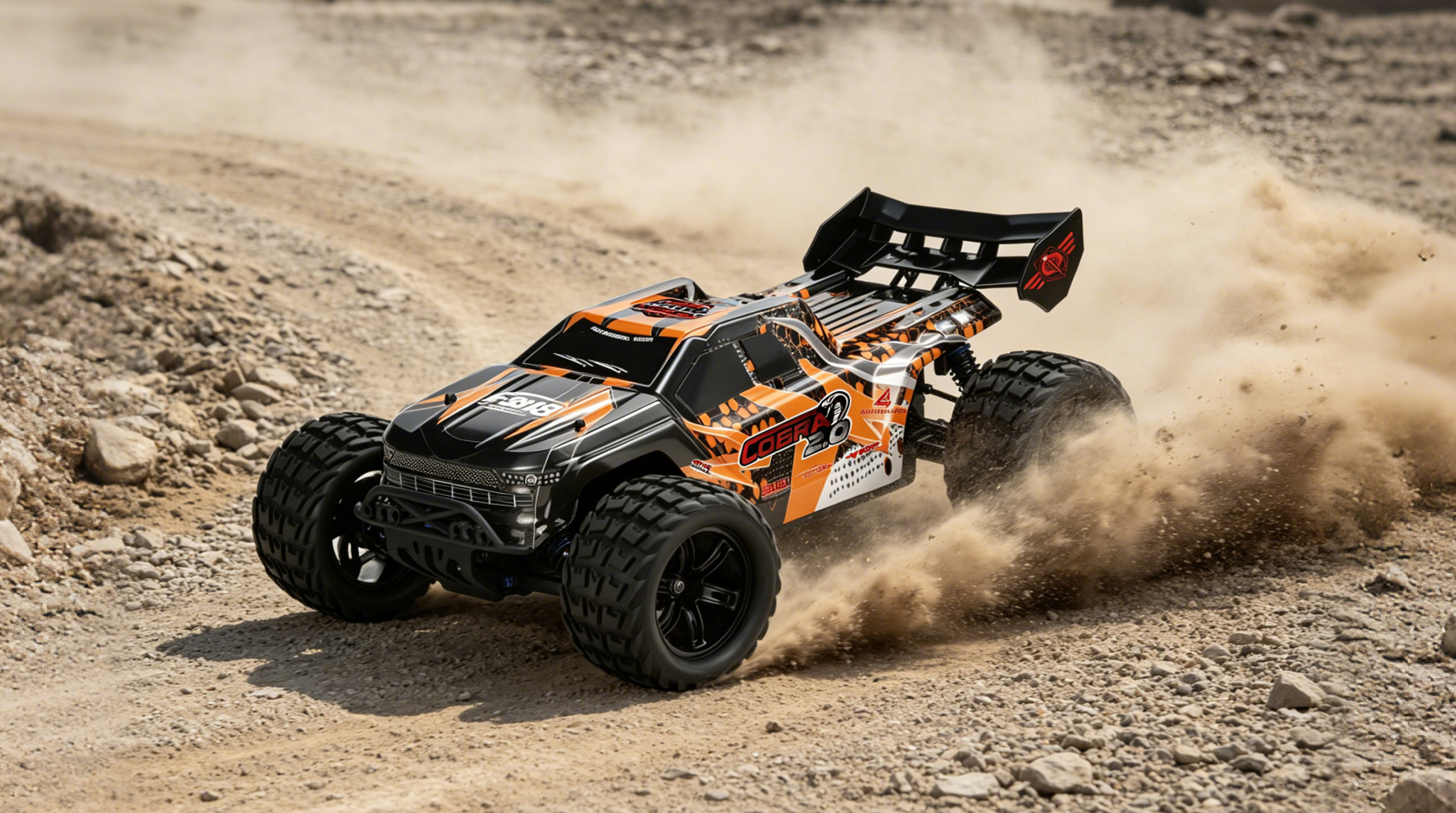
VRX Racing's 1/8 electric truggies use 4WD chassis layouts, wider stances, longer wheelbases, and larger tires. The COBRA platform is designed around the idea of combining buggy-style agility with greater stability and durability.
The larger the vehicle and the more demanding the terrain, the more important this complete system becomes.
This is why a 4WD truggy cannot be evaluated simply by looking at motor KV.
Moving from a 1/10 to a 1/8 electric platform changes the requirements again.
A larger vehicle has greater mass and often larger tires. It therefore needs more torque to accelerate effectively and maintain performance over rough terrain.
VRX Racing's 1/8 electric lineup uses 3660 2000KV or 3674 2440KV brushless motors, paired with 60A–120A ESCs depending on configuration. The platform also supports 2S–4S LiPo battery setups.
This provides a useful lesson about motor specifications:
A lower KV motor can still be part of a much more powerful system.
KV should never be interpreted independently from motor size, battery voltage, gearing, vehicle weight, and intended use.
A larger motor running at a lower KV can provide the torque characteristics needed for a larger RC platform.
A 1/8 brushless RC truck places even greater demands on its power system.
The larger chassis can accommodate stronger electronics and drivetrain components, but it also needs to move more mass. Large tires can further increase the load during acceleration.
For this reason, a suitable 1/8 system often combines a physically larger brushless motor, higher-current ESC, appropriate battery capacity, and reinforced drivetrain.
VRX Racing's 1/8 electric range includes short-course trucks, truggies, and buggies. The company lists brushless configurations with large-bore suspension, 4WD drivetrains, steel gears, and high-current ESCs to support demanding off-road operation.
The result is a power system designed around the entire vehicle rather than a single headline specification.
Nitro RC cars approach power delivery from another direction.
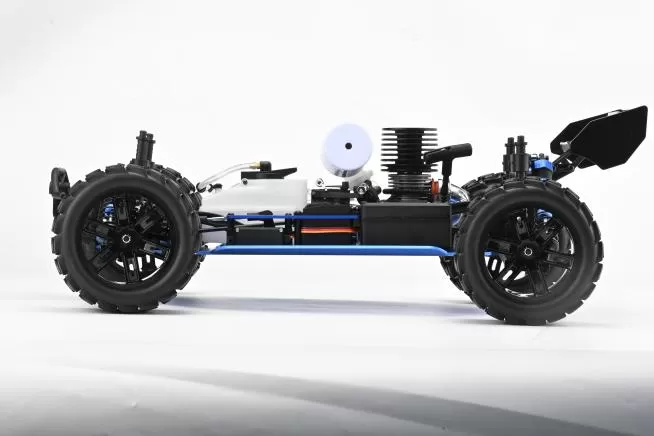
A 1/8 scale RC nitro buggy uses an internal-combustion engine, fuel system, clutch, exhaust, and mechanical drivetrain rather than a battery, motor, and ESC combination.
VRX Racing's 1/8 nitro lineup includes the VRX-2 4WD nitro buggy and VRX-1 nitro truck, with SH 21 or SH 28 engines and 6061/T6 aluminum chassis construction.
For 1/8 nitro buggy racing, engine tuning, clutch engagement, fuel mixture, gearing, and tire selection become part of the performance equation.
A nitro vehicle therefore demonstrates the same fundamental principle as an electric model:
Performance comes from system compatibility.
The components are simply different.
Instead of comparing RC cars by one specification, consider the complete chain:
Component | Key Question |
Motor | Is the output suitable for the vehicle's weight? |
ESC | Can it safely handle the motor and battery? |
Battery | Does voltage and capacity match the system? |
Gearing | Is acceleration balanced with motor temperature? |
Drivetrain | Can the gears and shafts handle the torque? |
Tires | Can available power actually reach the ground? |
Cooling | Can the system remain within a safe temperature range? |
This approach is more useful than simply choosing the highest KV motor or largest battery.
The most interesting part of RC engineering is that no single specification tells the whole story.
A 3650 3300KV brushless motor can be an effective solution for a 1/10 platform when paired with an appropriate ESC, battery, gearing, and drivetrain. A larger 1/8 system needs different electrical and mechanical support. A nitro buggy uses an entirely different power architecture but still depends on careful matching between engine, clutch, gearing, tires, and chassis.
VRX Racing's product range demonstrates this system-based approach across brushed and brushless electric models, 1/10 and 1/8 platforms, buggies, trucks, and truggies.
For RC enthusiasts, the better question is therefore not simply “Which motor is the fastest?”
It is:
“Which power system is properly matched to the vehicle I want to drive?”
Once motor, ESC, battery, drivetrain, and chassis are treated as one system, RC specifications become much easier to understand—and choosing the right vehicle becomes a much more informed decision.