Are you confused by the numbers stamped on RC motors? Whether you are upgrading your VRX Racing buggy or tuning a drift car, choosing the right motor is the single most important decision for performance.
One of the most critical specs you'll encounter is the Motor Turn (T). But what does 13.5T or 4.5T actually mean? Does a lower number mean more power?
In this guide, we break down the physics of RC motor turns, the relationship between Torque and RPM, and how to choose the perfect motor for your specific RC model.
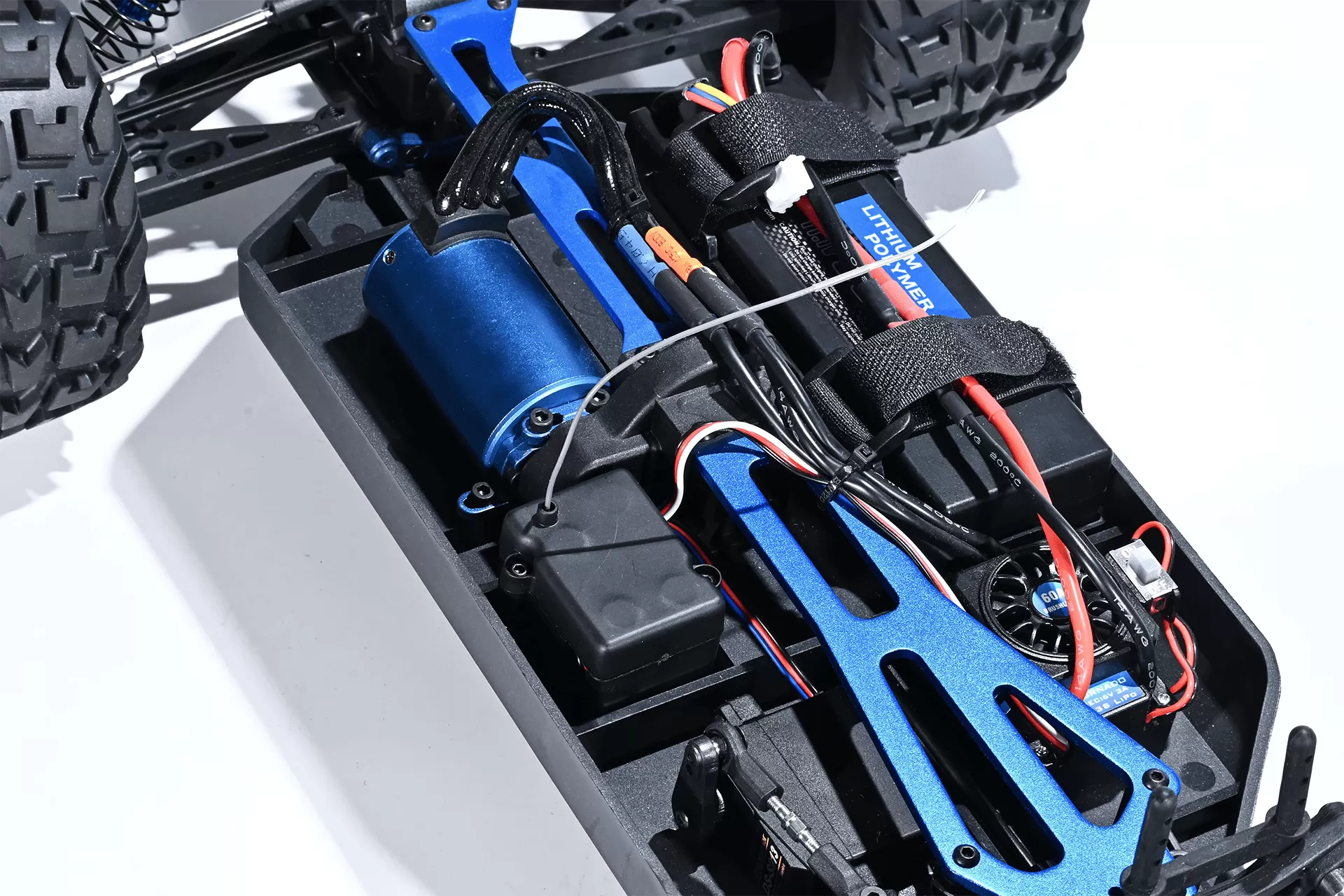
At its core, the "T" number stands for Turns. It refers to the number of times the copper wire is wound around the motor's armature (in brushed motors) or the stator (in brushless motors).
This physical characteristic directly dictates the motor's electromagnetic properties, influencing three key factors:
RPM (Revolutions Per Minute): Top speed potential.
Torque: Acceleration and pulling power.
Power Consumption: How fast it drains your LiPo battery.
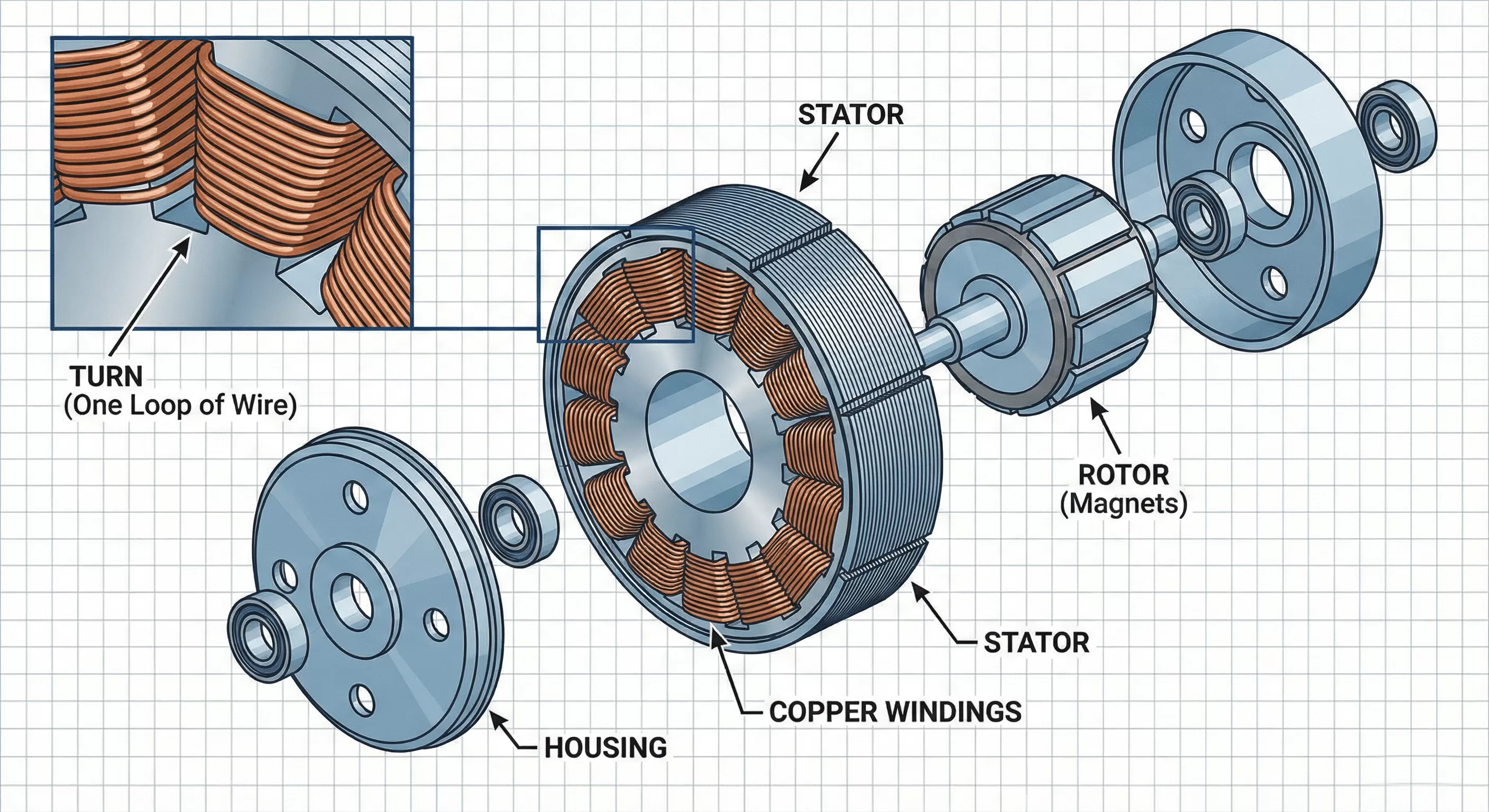
If you remember only one thing from this article, let it be this general rule of thumb:
The Lower the T-Number = The Higher the Top Speed (RPM)
The Higher the T-Number = The Higher the Torque
These two factors generally work in an inverse relationship. You trade torque for speed, and vice versa.
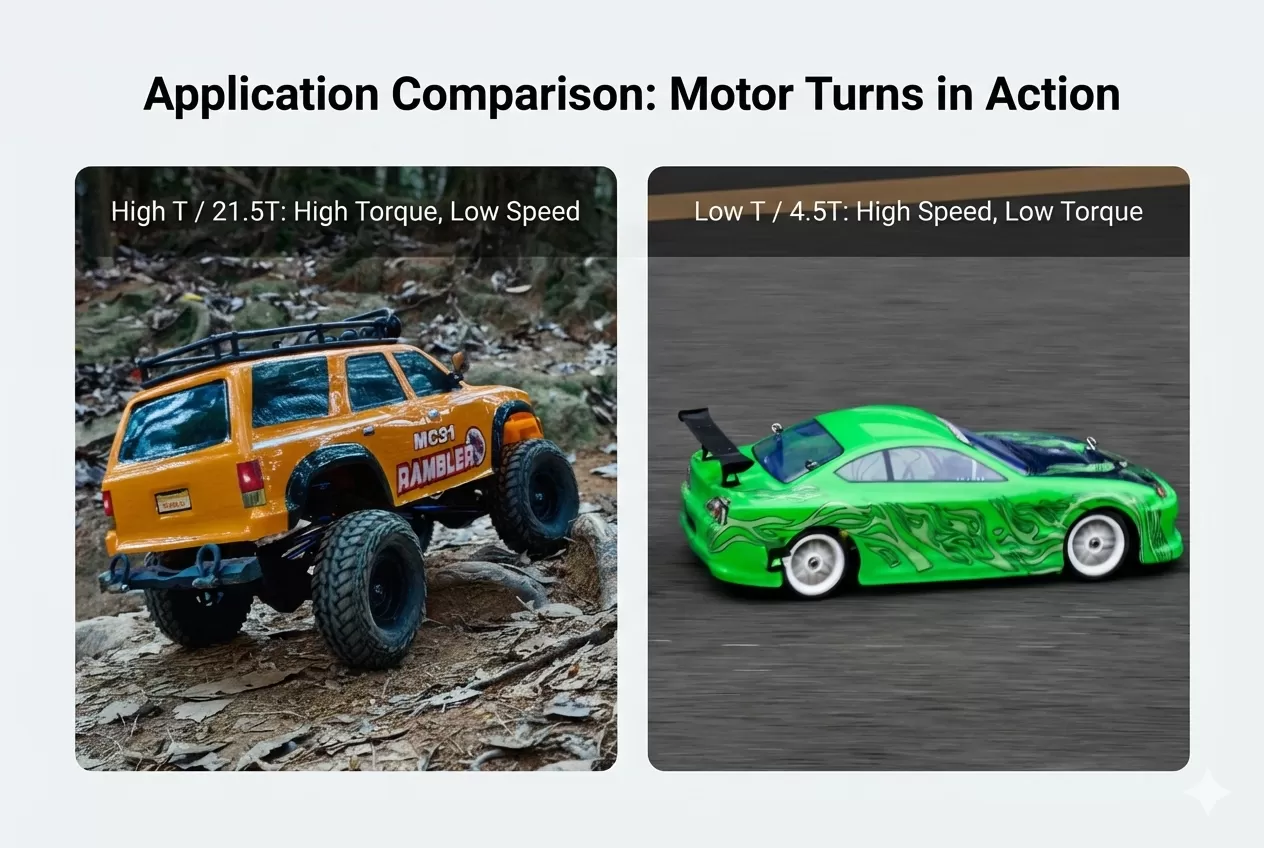
These motors have more wire wound around the poles, creating a stronger magnetic field but lower rotational speed.
Characteristics: Lower RPM, High Torque, and strong acceleration.
Advantages:
Explosive punch out of corners.
Excellent throttle linearity (smoother control).
Lower current draw (longer run times and less heat).
Best For:
Crawlers & Trail Trucks: Where low-speed control is vital.
Drift Cars: Requiring precise throttle manipulation.
"Stock" Class Racing: Classes regulated by organizations like ROAR or IFMAR (often 13.5T or 17.5T).
These motors have fewer windings, allowing electricity to flow with less resistance, resulting in massive RPM.
Characteristics: Extremely High RPM, but relatively lower torque compared to high-turn variants.
Advantages: Maximum top speed potential.
Disadvantages: High power consumption (Amp draw), significant heat generation, and a more aggressive (harder to control) power band.
Best For:
Modified (Mod) Touring Cars: Large tracks with long straights.
Speed Runs: Drivers chasing triple-digit speed records.
To tune your VRX Racing car like a pro, you need to look beyond just the "T" number.
A. Brushed vs. Brushless Terminology
The concept of "Turns" originated with old-school brushed motors. Modern brushless motors (Sensored and Sensorless) still use the "T" naming convention to help hobbyists understand the performance class, but the internal construction is different. In brushless systems, "T" is often an equivalent rating rather than a literal wire count.
B. The Size Factor Exception
The "Low T = High Speed" rule applies when comparing motors of the same size (e.g., 540-size vs. 540-size). A massive 1/8 scale high-turn motor will still produce more torque and power than a tiny 1/10 scale low-turn motor.
C. ESC Requirements
Low-turn motors (e.g., 4.5T) draw massive amounts of current. You must ensure your Electronic Speed Controller (ESC) is rated to handle the load. Always check the ESC's spec sheet for the "Motor Limit" (e.g., "Supports > 3.5T").
D. Gearing is Everything
You cannot simply drop a low-turn motor in and go fast.
Low T Motors: Require a higher numeric Gear Ratio (smaller pinion) to reduce load and heat.
High T Motors: Can handle a lower numeric Gear Ratio (larger pinion) to gain back some top speed.
Tip: Incorrect gearing is the #1 cause of motor overheating.
E. KV Rating vs. Turns
For brushless motors, you will often see KV (RPM per Volt).
Low T ≈ High KV (Speed focused)
High T ≈ Low KV (Torque focused)
KV offers a more mathematical way to calculate theoretical top speed based on your battery voltage.
Here is a quick reference guide to matching motor turns to your driving style:
Motor Class | Turn Range (T) | Characteristics | Typical Application |
Low Turn | 3.5T – 8.5T | High RPM, High Speed | On-road Modified Racing, Speed Runs |
Mid Turn | 10.5T – 13.5T | Balanced | Stock Touring Cars, Buggies, Bashers |
High Turn | 17.5T+ | High Torque, Control | Crawlers, Drifters, Entry-level |
Our Advice for Beginners:
Unless you are entering a specific competition class, start with a Mid-Turn Brushless System (10.5T – 13.5T). This "sweet spot" offers a perfect balance of speed and run-time, is easier to control, and puts less stress on your electronics—allowing you to focus on improving your driving skills.