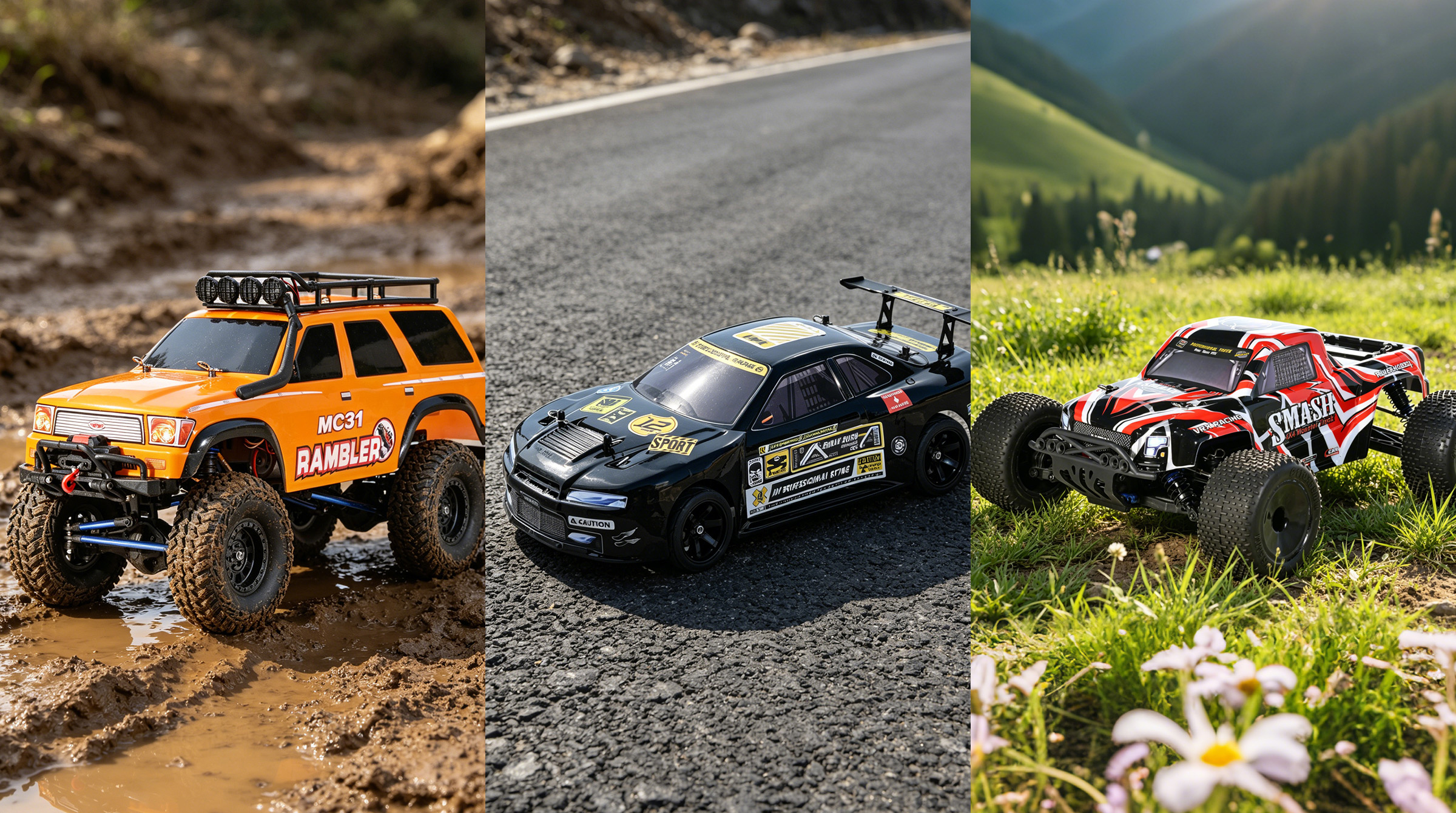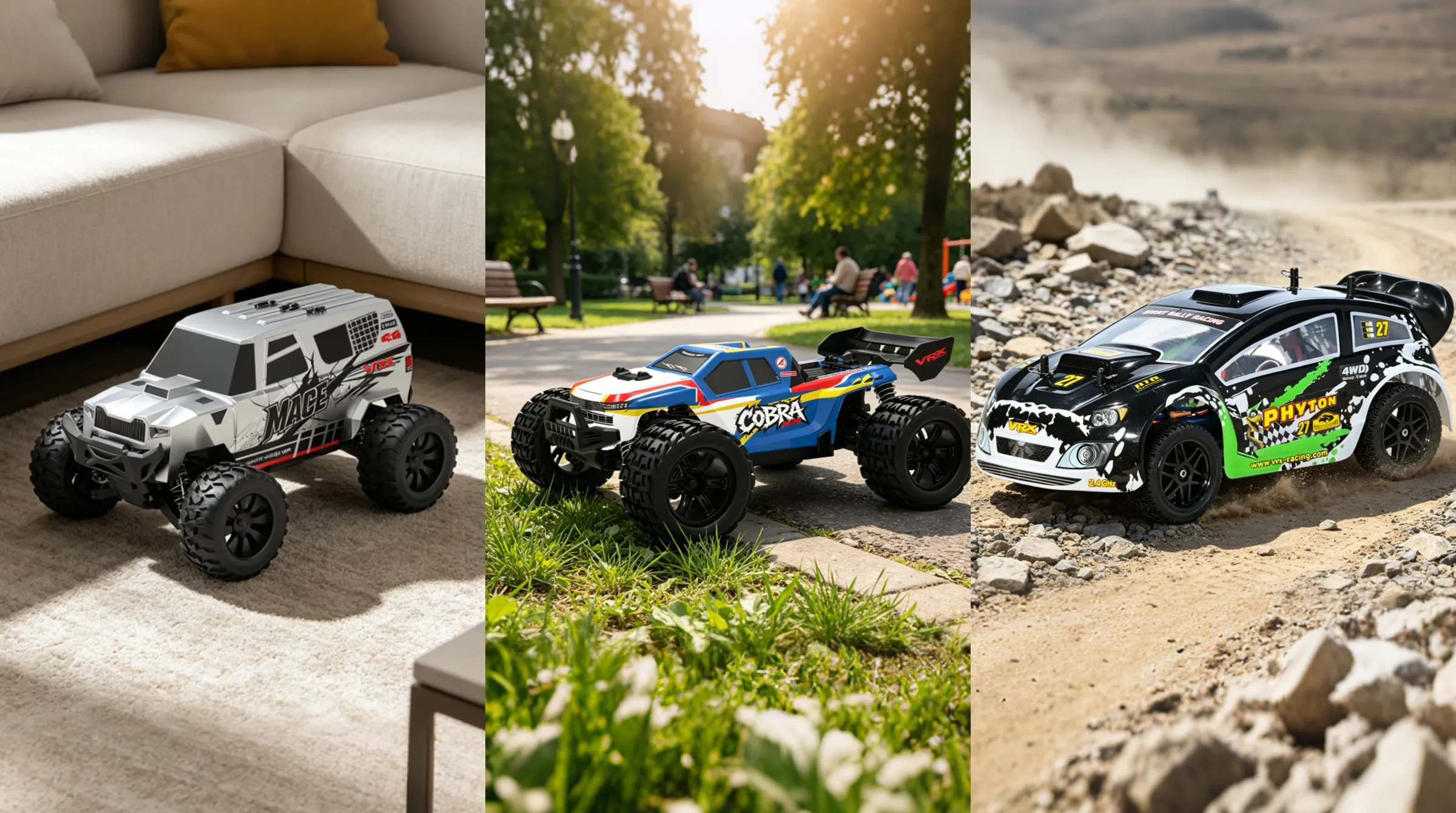
Choosing a new RC vehicle is about more than selecting the fastest model. For many enthusiasts, the biggest decision is choosing the platform that best matches their driving style, favorite terrain, and long-term upgrade plans. Among modern off-road RC vehicles, the 1/8 RC buggy vs truggy debate remains one of the most common topics for beginners and experienced drivers alike.
Although both platforms share many design principles, they are built with different priorities. A buggy is typically optimized for speed, agility, and racing precision, while a truggy focuses on stability, durability, and versatility across challenging terrain. Understanding these differences helps drivers invest in a vehicle that delivers the best experience instead of simply chasing higher specifications.
Manufacturers such as VRX Racing offer both electric RC buggy and electric RC truggy platforms, giving hobbyists options that suit recreational driving, club racing, or weekend off-road adventures. Rather than asking which platform is better, the more useful question is which one best fits your driving style.
At first glance, a buggy and a truggy may appear similar. Both feature independent suspension, four-wheel drive, and powerful electric systems. However, several design differences significantly influence how they perform.
A 1/8 electric buggy is generally built with:
A lower chassis
Narrower track width
Smaller wheels and tires
Lightweight body design
Faster steering response
These characteristics make buggies highly responsive and well suited to prepared race tracks where precision and cornering speed are essential.
By comparison, an electric truggy usually features:
A wider chassis
Larger off-road tires
Increased ground clearance
Longer suspension travel
Greater overall stability
This configuration allows truggies to absorb rough terrain more effectively while remaining easier to control on uneven surfaces.
Although both platforms are capable of impressive performance, they deliver distinctly different driving experiences.
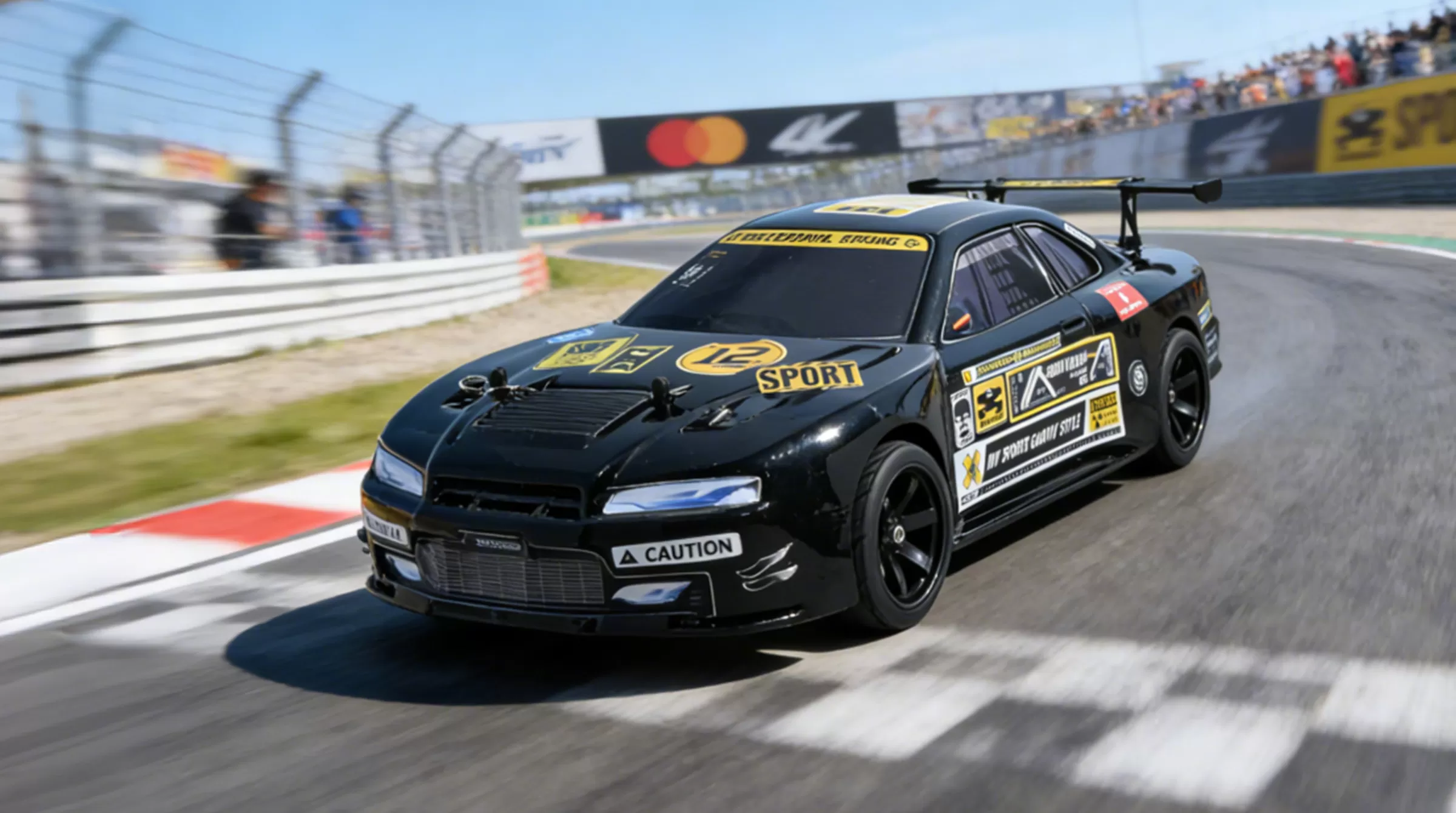
For drivers who enjoy technical circuits and competitive racing, a buggy often provides the most rewarding experience.
The lower center of gravity allows the chassis to change direction quickly while maintaining excellent cornering balance.
Advantages of a 1/8 brushless RC buggy include:
Faster corner entry
Quicker steering response
Lower vehicle weight
Efficient acceleration
Competitive race performance
These qualities explain why buggies remain the preferred choice in many organized off-road racing classes.
Prepared dirt tracks, clay circuits, and high-grip racing surfaces allow buggy drivers to fully utilize the platform's responsive handling.
Because less vehicle weight must be accelerated, electric systems often operate efficiently without sacrificing performance.
For hobbyists interested in improving driving technique and learning racing lines, a buggy offers excellent feedback and precise vehicle control.
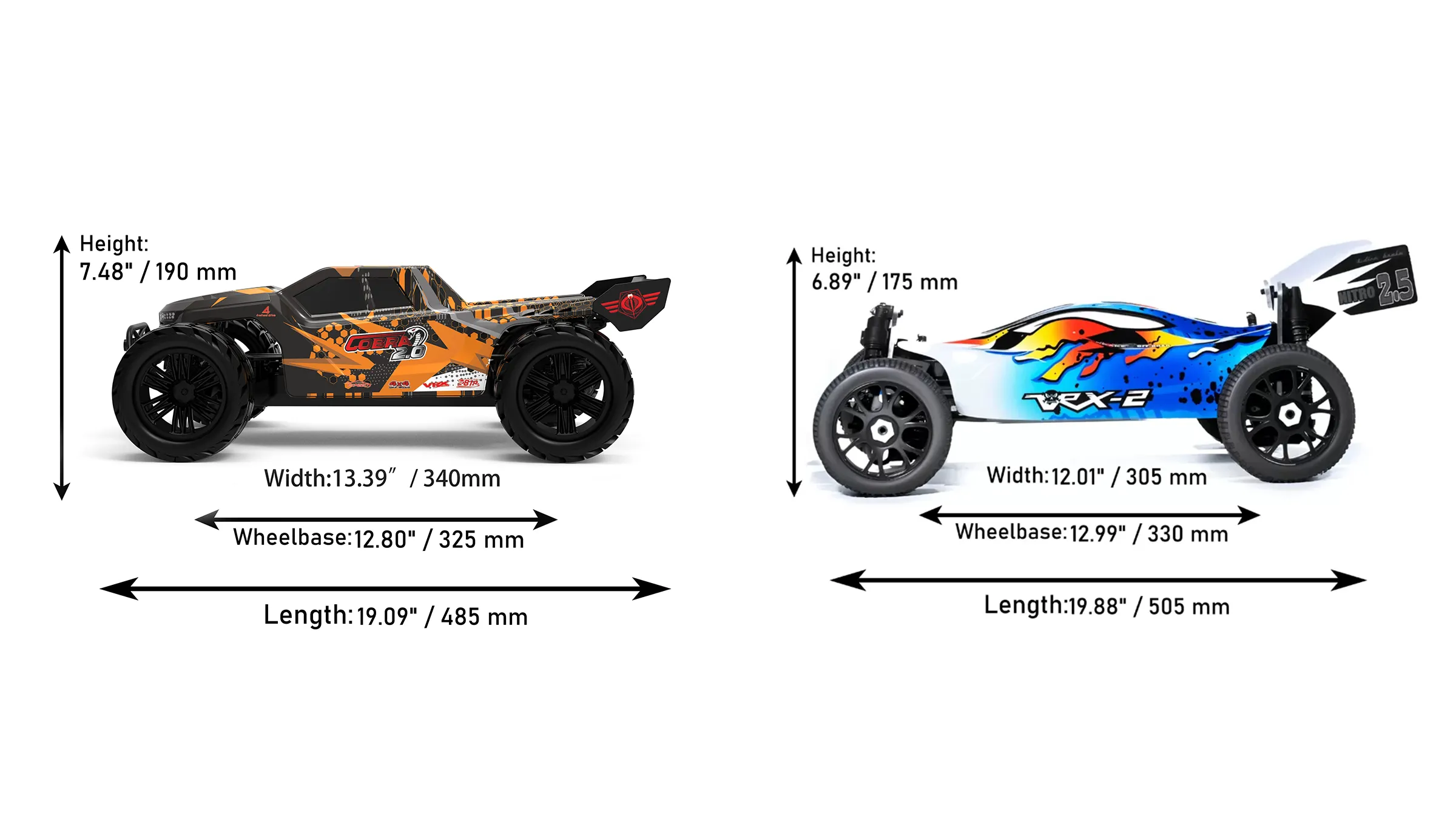
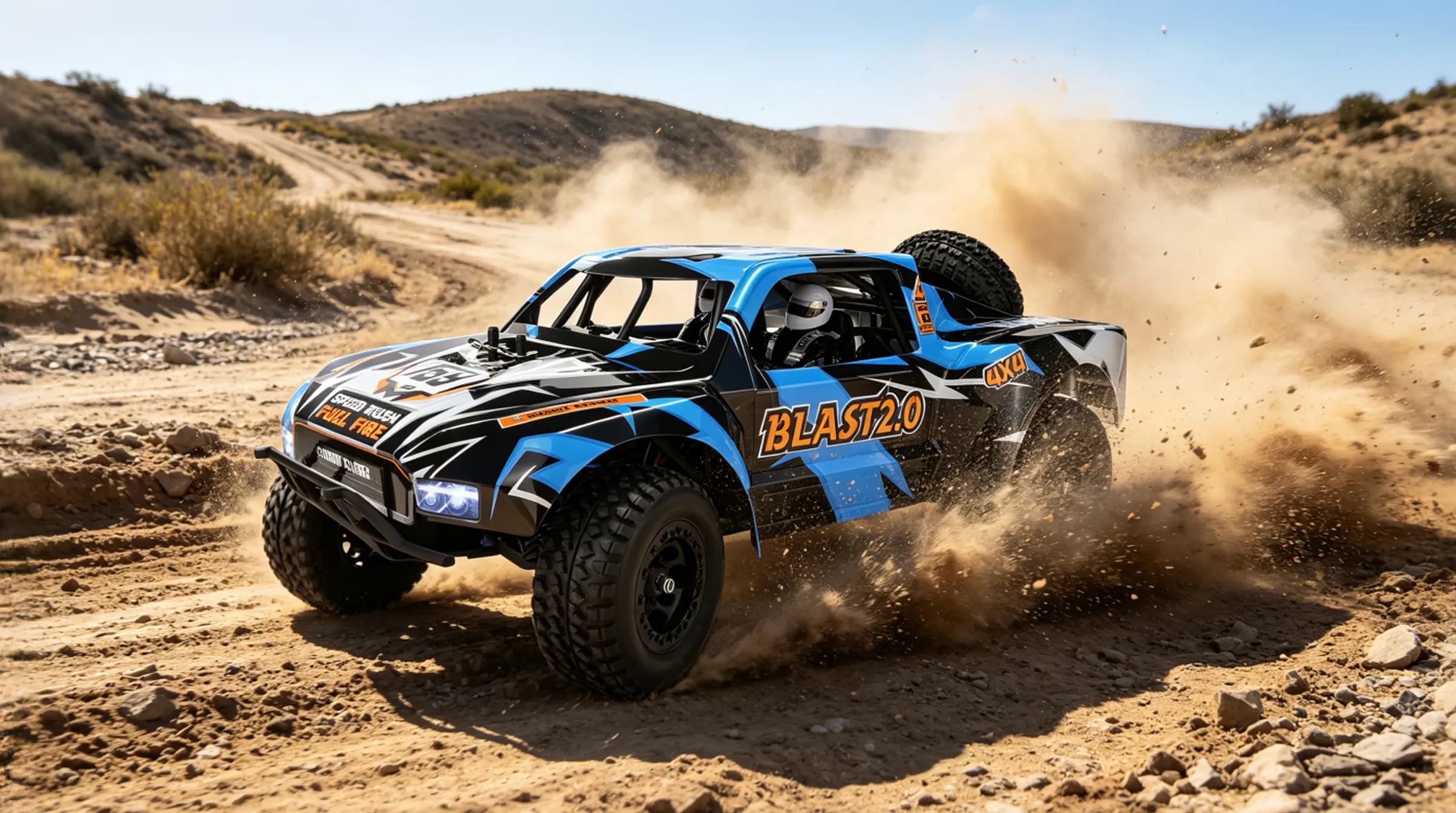
While buggies excel on smooth competition tracks, truggies shine when conditions become less predictable.
The larger tires and longer suspension allow a RC truggy brushless platform to maintain traction across rough surfaces that might unsettle a buggy.
Typical advantages include:
Improved stability
Better bump absorption
Higher ground clearance
Greater confidence over jumps
Easier handling on loose terrain
Drivers who frequently operate on gravel, grass, dirt trails, or mixed surfaces often appreciate the forgiving nature of a truggy.
Rather than reacting sharply to every steering input, the wider chassis provides a more stable driving experience, making it especially suitable for beginners or recreational drivers.
This additional stability also reduces driver fatigue during longer sessions because fewer steering corrections are required.
One of the biggest misconceptions is that one platform is simply faster than the other.
In reality, performance depends heavily on the driving environment.
On a smooth race circuit, a 1/8 electric buggy can often produce quicker lap times because its lighter weight and responsive steering allow it to carry more speed through corners.
However, once the terrain becomes rough, the advantages begin to shift.
An electric RC truggy maintains better control over:
Deep ruts
Loose gravel
Uneven dirt
Large jumps
Bumpy landing zones
Instead of slowing dramatically after obstacles, the larger suspension system allows the vehicle to maintain momentum.
For recreational drivers, this often creates a faster overall driving experience because the vehicle spends less time recovering from bumps or unstable landings.
Driving skill is another important consideration when comparing electric buggy vs truggy platforms.
A buggy rewards precise steering, accurate braking, and smooth throttle control. Small driving mistakes can have a greater effect on lap times because the chassis reacts quickly to driver inputs.
A truggy, on the other hand, is generally more forgiving.
Its wider stance and larger tires provide additional traction, helping the vehicle remain stable even when entering corners slightly too fast or landing imperfectly after jumps.
For newcomers to off-road RC driving, this forgiving nature often makes the learning process more enjoyable.
Experienced racers may still prefer the responsiveness of a buggy, but many hobbyists appreciate the confidence that a truggy provides during everyday driving.
Suspension design is another area where the differences between the two platforms become clear.
A 1/8 electric buggy typically uses lower-profile tires and a suspension setup optimized for high-speed cornering. The shorter suspension travel helps maintain chassis stability on prepared tracks, allowing the vehicle to respond quickly to steering inputs.
An electric truggy, however, is designed to handle rougher environments. Larger wheels, wider tires, and longer suspension travel enable it to absorb bumps, rocks, and uneven landings more effectively. The increased tire contact area also improves grip on loose surfaces.
When it comes to durability, both platforms are built for demanding off-road use, but the driving environment matters. A buggy performs exceptionally well on maintained race tracks, while a truggy is generally better suited for repeated driving on challenging outdoor terrain where impacts are more frequent.
Modern 1/8 brushless RC buggy and truggy models often share similar brushless motor and ESC technology. This means the difference in driving experience is usually created by the chassis rather than the electronics.
A brushless system offers several advantages:
High acceleration
Smooth throttle response
Excellent efficiency
Lower maintenance than brushed motors
Consistent power delivery
In a buggy, brushless power translates into rapid acceleration and precise corner exits. Because the vehicle is relatively lightweight, it responds immediately to throttle inputs.
In an RC truggy brushless platform, the same power system emphasizes torque and stability. The larger tires require more power to rotate, but they also provide better traction when accelerating over loose dirt, gravel, or grass.
As a result, the two vehicles can feel very different even when equipped with similar electronic systems.
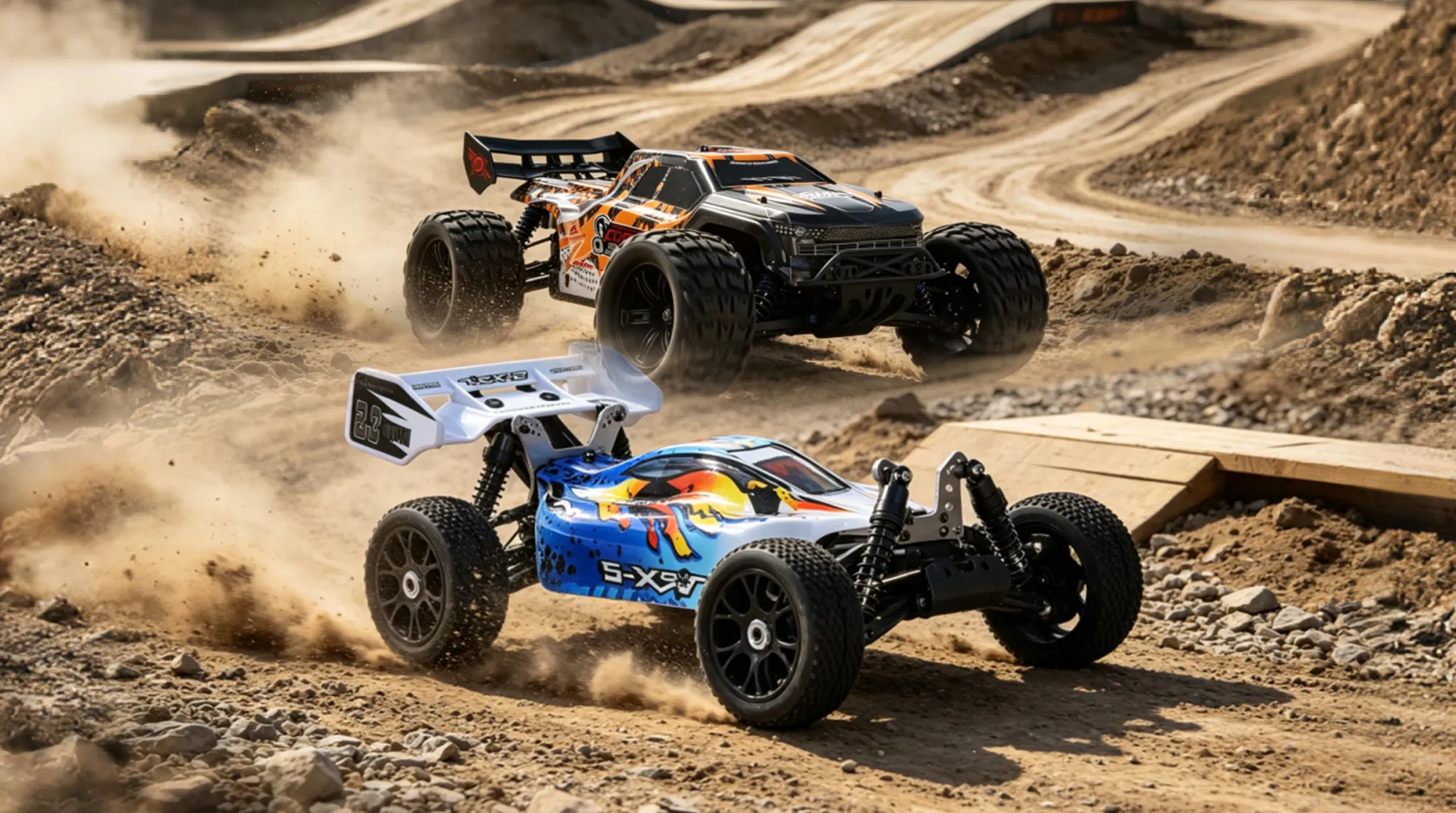
Choosing between a buggy and a truggy also means thinking about long-term ownership.
Both platforms require regular maintenance, including:
Cleaning dirt and debris after driving
Inspecting suspension components
Checking drivetrain wear
Maintaining bearings and gears
Monitoring motor and ESC temperatures
Replacement parts and upgrade components are widely available for quality platforms such as those offered by VRX Racing, making it easier to keep vehicles performing at their best.
Many hobbyists eventually upgrade items such as:
Brushless motor systems
High-performance ESCs
Adjustable suspension components
Stronger steering servos
Off-road tires
Aluminum chassis parts
Before upgrading, it is important to consider how the modifications support your intended driving style rather than simply increasing power.
If your primary goal is competitive driving on prepared tracks, a 1/8 electric buggy is usually the better choice.
Choose a buggy if you value:
Fast cornering
Responsive steering
Lightweight handling
Club racing performance
Technical driving precision
On the other hand, an electric RC truggy is ideal for drivers who enjoy exploring different outdoor environments.
Choose a truggy if you prefer:
Mixed-terrain driving
Better stability
Larger jumps
Greater ground clearance
Easier overall control
There is no universal winner in the electric buggy vs truggy comparison. The best platform depends on how and where you plan to drive.
Every RC enthusiast has different expectations. Some focus on improving lap times at local tracks, while others simply want a durable vehicle for weekend adventures.
That is why VRX Racing develops both electric buggy and electric truggy models. Each platform is engineered to deliver dependable performance while meeting different driving needs.
Whether you are looking for a responsive racing machine or a versatile off-road vehicle, VRX Racing's electric lineup combines durable construction, brushless-ready platforms, and upgrade-friendly designs to support hobbyists as their skills continue to grow.
The comparison between 1/8 RC buggy vs truggy is not about deciding which vehicle is objectively better. Instead, it is about selecting the platform that matches your driving preferences, favorite terrain, and future goals.
A 1/8 electric buggy delivers agile handling, precise steering, and excellent performance on prepared tracks, making it a strong choice for drivers who enjoy speed and technical control.
An electric truggy offers greater stability, improved bump absorption, and outstanding versatility across grass, gravel, dirt, and other uneven surfaces. Its forgiving handling also makes it an excellent option for beginners and recreational drivers.
Before making a purchase, consider where you drive most often, how much maintenance you are comfortable performing, and whether you value racing precision or all-terrain confidence. By matching the platform to your driving style, you will enjoy better performance and a more satisfying RC experience.
With a comprehensive range of electric buggies, electric truggies, and upgrade components, VRX Racing provides enthusiasts with reliable options for every stage of their RC journey. Whether you are entering your first race or tackling rugged off-road trails, choosing the right platform is the first step toward getting the most from every drive.