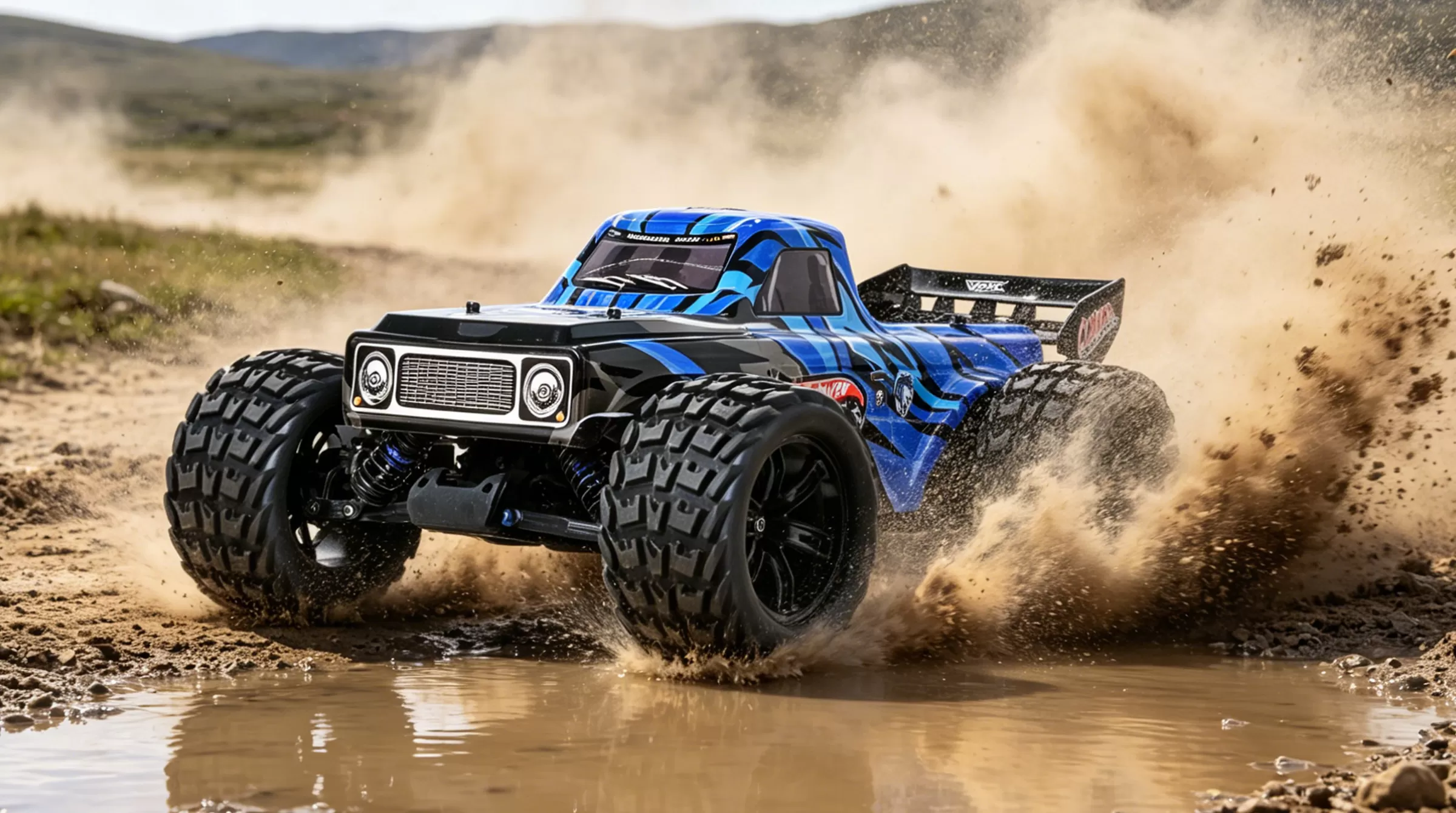
An RC car's performance is not determined by its motor alone. The electronic speed controller, battery, drivetrain, gearing and vehicle size all influence how power reaches the wheels. This is particularly important when comparing different RC car types, because a system designed for a 1/10 short course truck may have very different requirements from one used in a 1/8 truggy or electric monster truck.
For RC manufacturers and experienced hobbyists, the relationship between motor and ESC is therefore a useful way to understand why different platforms behave differently. Rather than simply selecting the highest-current ESC or highest-KV motor, the goal is to create a balanced power system for the vehicle's weight, tires, drivetrain and intended terrain.
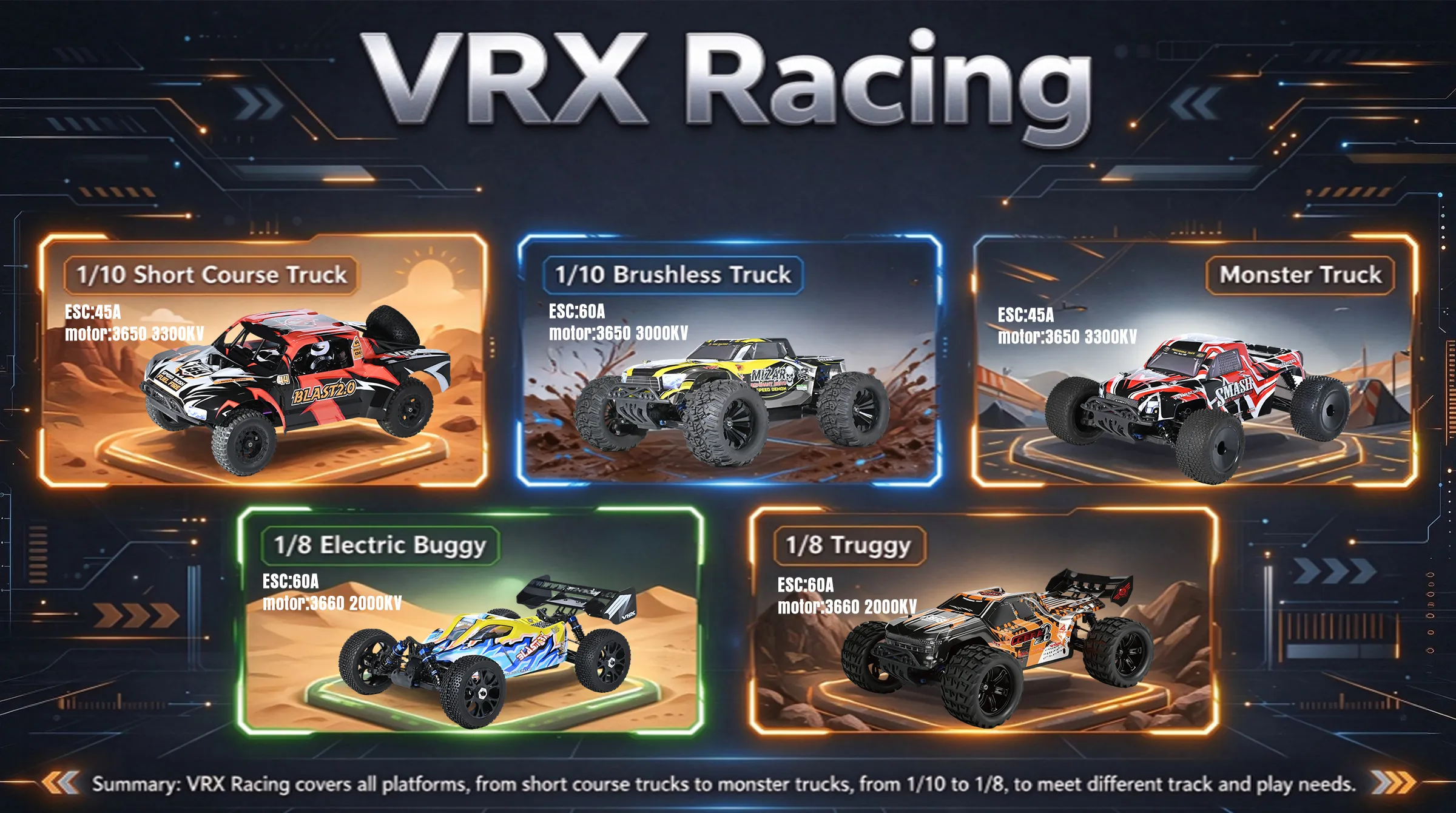
VRX Racing's electric range provides examples of these different configurations, from 1/10 brushless trucks and short course models to larger 1/8 electric truggies and SCTs.
The ESC controls how electrical energy is delivered to the motor. Its current rating is important, but it is not the only specification worth considering.
A 45A brushless ESC, for example, is commonly suited to 1/10-scale applications. VRX Racing's H0072 45A ESC provides 45A continuous and 250A burst current, supports 2S–3S LiPo batteries, and is designed for sensorless brushless motors. Its specifications also provide different motor-KV limits depending on battery voltage and whether the vehicle is used on-road or off-road.
This illustrates an important point: ESC selection is a system decision.
The same ESC can behave differently depending on motor size, KV rating, battery voltage, gearing and load. A high-current ESC does not automatically make a vehicle faster if the rest of the power system is not matched to it.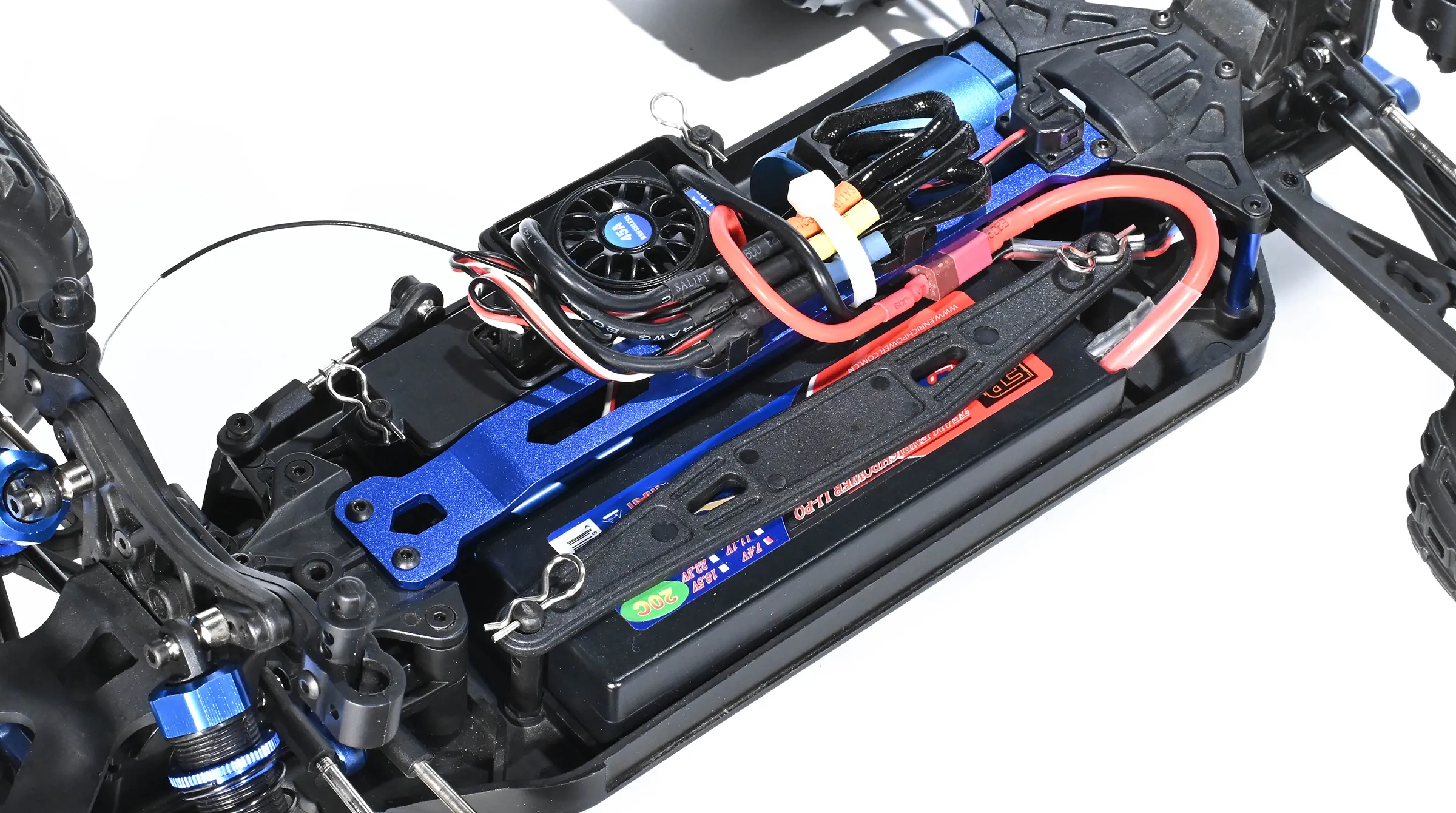
The 1/10 scale is widely used because it offers a useful compromise between physical size, performance and portability.
VRX Racing's 1/10 electric models include brushed and brushless configurations. Brushed models use 550 15T or 540 motors with 40A ESCs, while brushless versions use 3650 3300KV or 3650 4200KV motors with 45A ESCs. The brushless models are listed with speeds of up to approximately 60 km/h, depending on configuration.
This makes the 1/10 platform particularly flexible for trucks, buggies, truggies and short course vehicles.
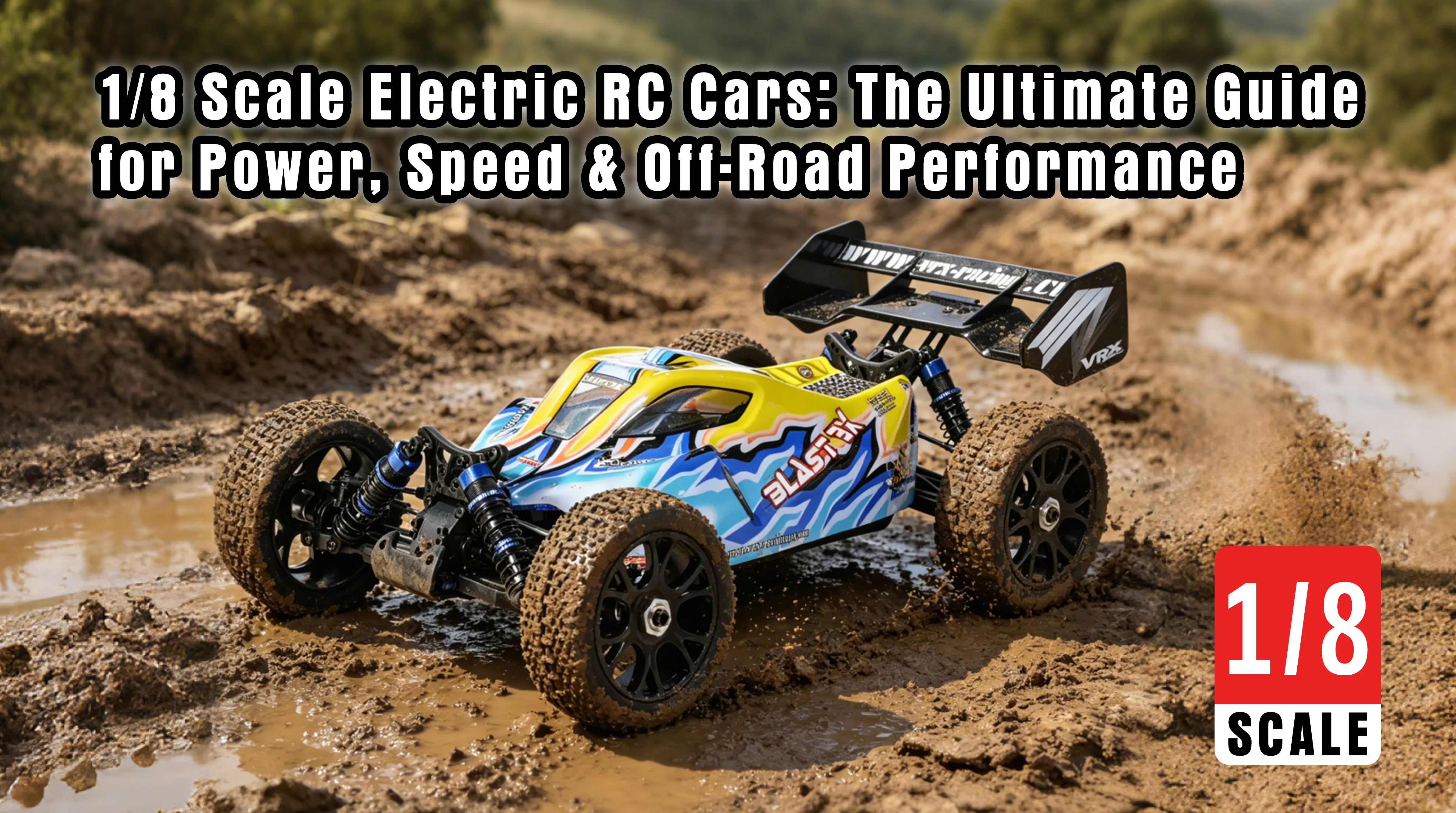
For example, the BLAST 2.0 1/10 short course truck uses a 3650 3300KV brushless motor and 45A ESC, together with a 2S 3300mAh LiPo battery and 4WD shaft drive.
The combination provides enough output for fast off-road driving without requiring the physical size and electrical capacity of a larger 1/8 platform.
The 3300KV brushless motor specification is often interpreted as a direct indicator of speed. In reality, KV describes the motor's approximate unloaded rotational speed per volt.
The actual operating speed depends on several variables:
· Battery voltage
· Gear ratio
· Tire diameter
· Vehicle weight
· Motor load
· ESC capability
· Terrain
A 3300KV motor running from a 2S LiPo therefore operates under different conditions from the same motor paired with a different battery and gearing configuration.
The BLAST 2.0 demonstrates how these components are integrated into a complete platform. Its 3650 3300KV motor works with a 45A ESC, 2S battery and 4WD drivetrain, while oil-filled shocks and reinforced suspension components help transfer the available power to uneven terrain.
Larger or more demanding 1/10 platforms may require greater electrical capacity.
A 60A brushless ESC from VRX Racing is rated for 60A continuous and 360A burst current. It supports 2S–3S LiPo batteries and provides different KV limits for on-road and off-road configurations. For off-road applications, the specified limits vary according to battery voltage.
This type of controller can therefore support configurations where the vehicle places greater sustained demand on the power system.
The distinction is particularly relevant for trucks and heavier off-road platforms. Larger tires, increased vehicle weight and higher rolling resistance can increase motor load, especially on loose surfaces.
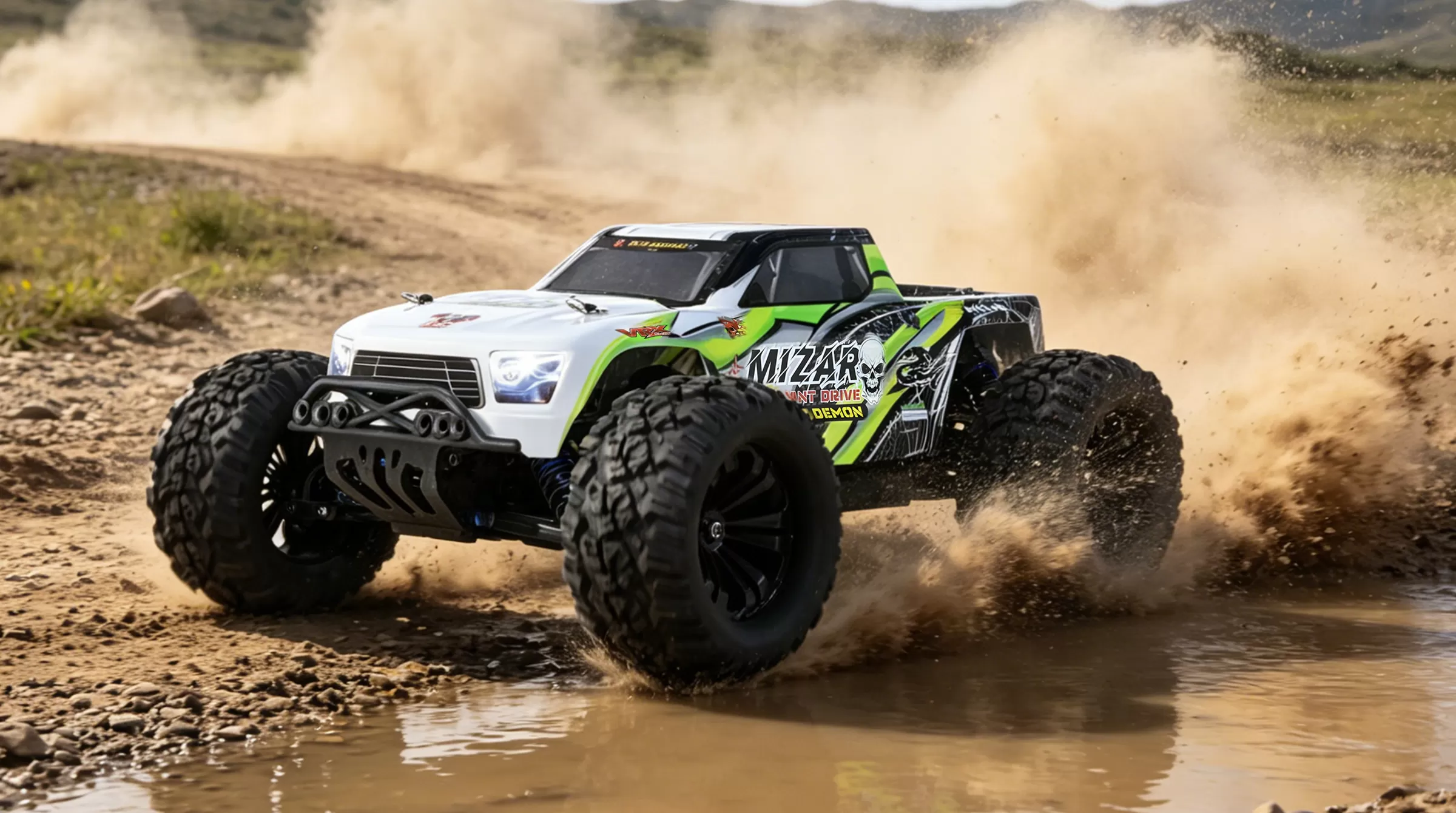
VRX Racing's MIZAR 1/10 brushless truck, for example, combines a waterproof 60A ESC with a 3650 brushless motor, 7.4V 3300mAh LiPo battery, all-metal internal differential gears and adjustable suspension.
The electronics are consequently part of a larger mechanical system rather than a standalone upgrade.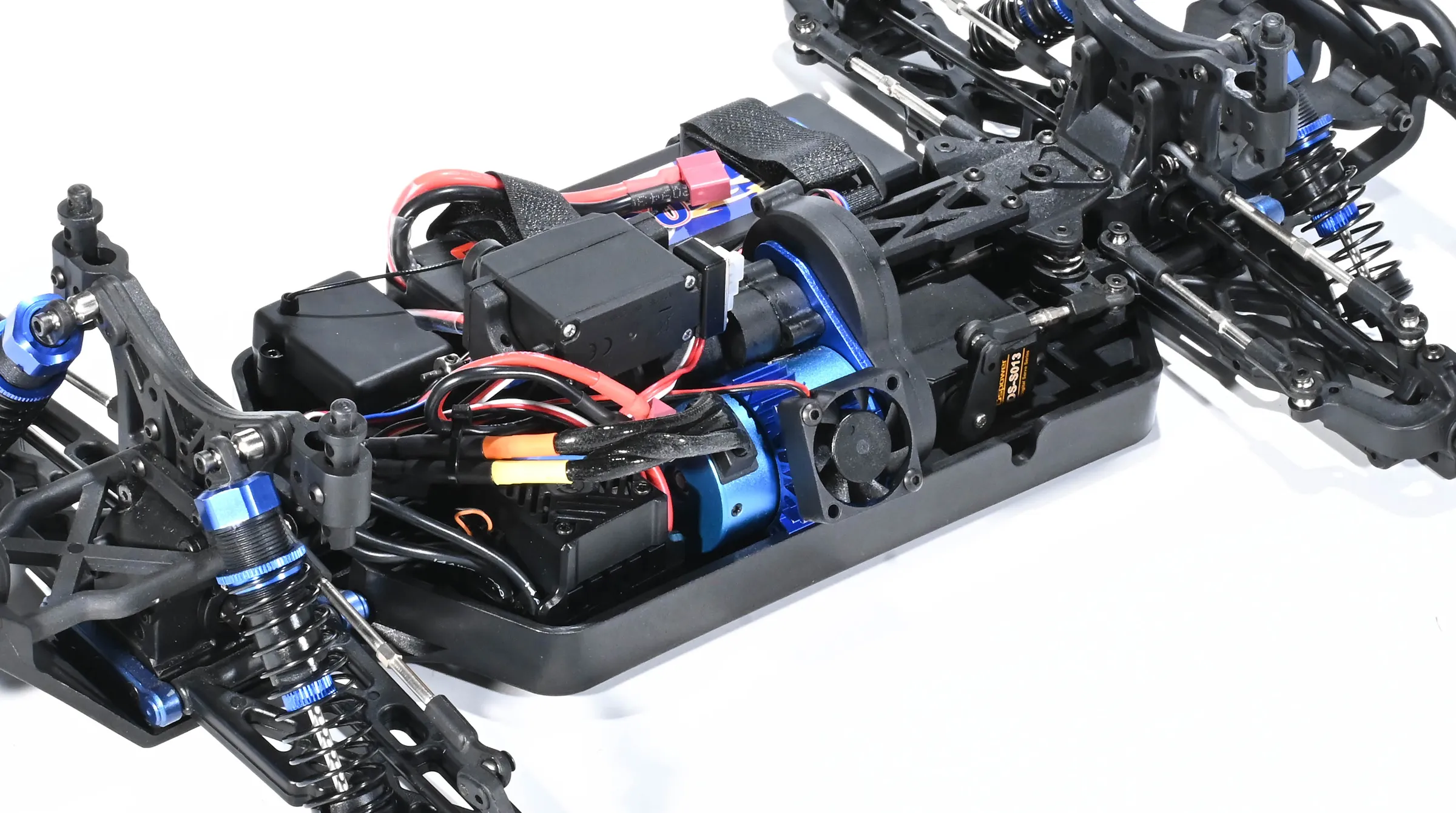
An RC car short course truck has a distinctive combination of weight, body shape and drivetrain requirements.
The wide chassis, enclosed wheels and full-fender body create stability and protection, but the vehicle can also place substantial load on the motor when accelerating on loose surfaces.
VRX Racing's short course range includes 1/10 brushed and brushless models as well as a 1/8 brushless SCT. The lineup is designed for packed dirt, clay and gravel, with 4WD drivetrains and independent suspension used across the range.
The RC SCT therefore needs more than a powerful motor. It needs an ESC capable of handling current demand, a drivetrain that can transfer torque reliably and suspension that can maintain tire contact with the ground.
The 1/10 BLAST 2.0 is a good example: its 45A ESC and 3650 3300KV motor are combined with a reinforced upper plate, sealed central transmission, high-impact suspension arms and big-bore oil-filled shocks.
Moving from 1/10 to 1/8 changes the electrical and mechanical requirements.
VRX Racing's 1/8 electric lineup uses 3660 2000KV or 3674 2440KV brushless motors with 60A–120A ESCs, depending on the model. These vehicles can support 2S–4S LiPo configurations and reach speeds of up to around 75 km/h in applicable setups.
The lower KV figures compared with many 1/10 systems do not mean the larger cars are necessarily slower. A larger motor, higher battery voltage and larger drivetrain can produce substantial torque and overall output.
This is why comparing KV values across different vehicle scales without considering the complete electrical system can be misleading.
A truggy sits between buggy and truck design concepts. Its wider stance and larger tires can improve stability and obstacle clearance, but they also influence rolling resistance and drivetrain load.
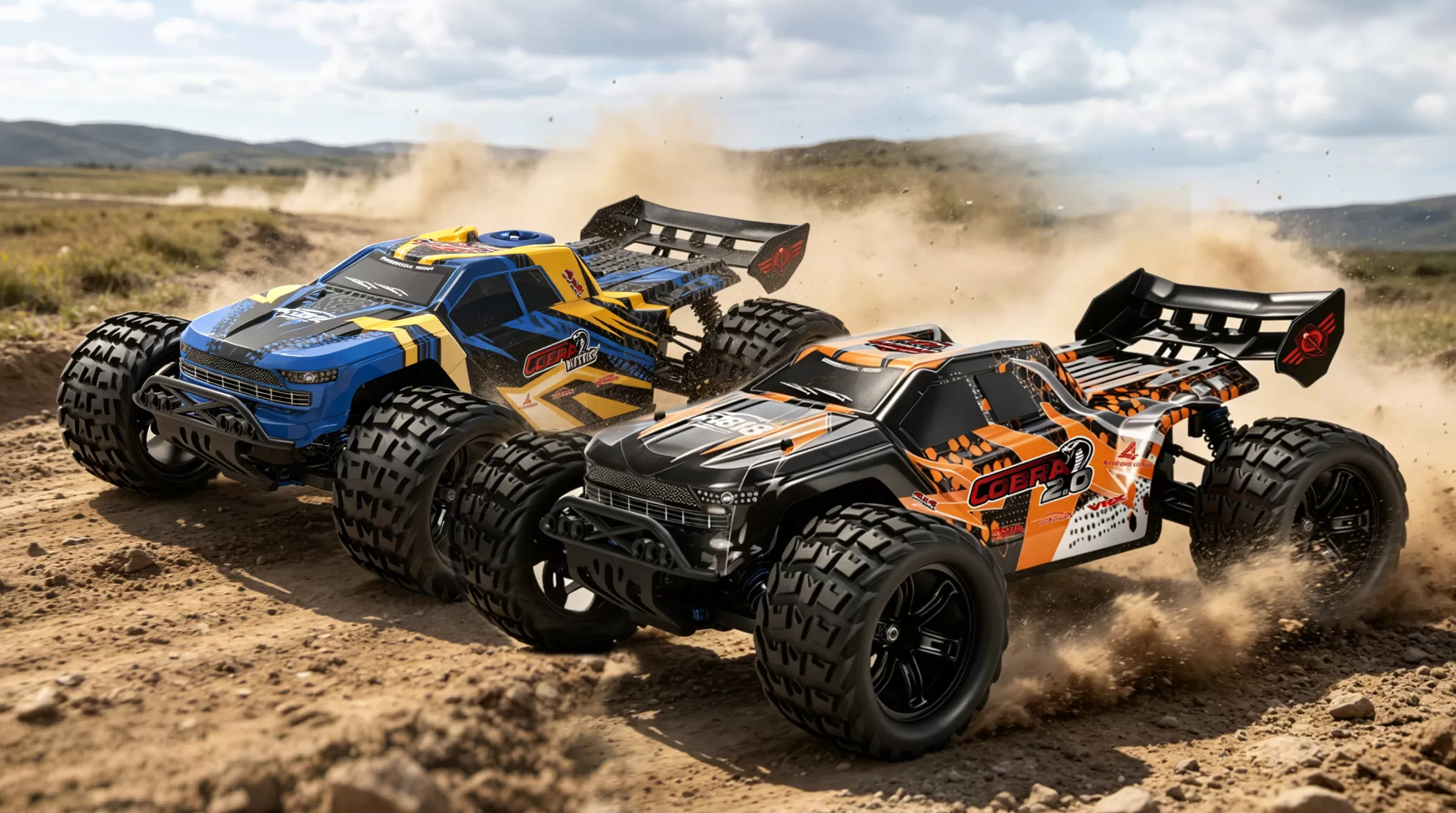
VRX Racing's electric truggy lineup includes 1/8 COBRA models and 1/10 MEGREZ models, with both brushed and brushless configurations. The 1/8 COBRA platform uses a wider stance, longer wheelbase, larger tires and a heavy-duty 4WD chassis.
For truggy RC racing, this means the power system must provide acceleration without overwhelming the tires. Too much wheelspin can reduce usable traction, especially on loose dirt.
A properly matched motor and ESC can therefore be more useful than simply increasing motor output.
A monster truck electric platform emphasizes ground clearance, large tires and obstacle capability.
Those large tires can increase the load placed on the motor during acceleration, particularly when the vehicle is climbing or operating on grass and loose terrain. A monster truck electric car therefore benefits from an ESC and motor combination that can tolerate repeated changes in load.
VRX Racing's 60A brushless ESC is specified for 1/10 off-road applications including buggy and monster configurations, with motor-KV limits adjusted according to battery voltage.
This demonstrates why ESC specifications should always be interpreted alongside the intended vehicle type.
Platform | Typical motor direction | ESC consideration | Main application |
1/10 brushed truck | 540 / 550 brushed | 40A–60A | Entry-level driving |
1/10 brushless buggy | 3650 brushless | Around 45A | Track/off-road |
1/10 short course truck | 3650 3300KV | 45A | SCT racing |
1/10 brushless truck | 3650 brushless | 45A–60A | Mixed terrain |
1/10 monster truck | Brushless | 60A class | Bashing/obstacles |
1/8 electric buggy | 3660/3674 brushless | 60A–120A | Larger off-road tracks |
1/8 electric truggy | Larger brushless system | Higher-capacity ESC | Rough terrain/racing |
Choosing an ESC should never begin with the question, “How many amps can I get?” The better question is whether the controller, motor, battery, gearing and drivetrain are designed to work together.
A 45A ESC can be highly effective in a lightweight 1/10 application. A 60A ESC may provide additional electrical capacity for heavier off-road configurations. Larger 1/8 vehicles can require still greater system capacity because of their increased mass, tire size and drivetrain demands.
The same principle applies to motor selection. A 3300KV brushless motor can be an effective choice for a 1/10 platform, but its real performance depends on voltage, gearing and vehicle load.
VRX Racing's range demonstrates how these relationships shape different platforms, from the 1/10 BLAST 2.0 short course truck to larger electric truggies and 1/8 off-road vehicles.
Ultimately, effective RC performance comes from balance. The motor creates the potential, the ESC manages electrical delivery, the battery supplies energy, and the drivetrain and chassis convert that energy into usable movement. When these components are properly matched, an RC car can deliver predictable acceleration, efficient operation and reliable performance without relying on a single oversized specification.