While many RC cars chase speed and big jumps, electric RC crawlers take a completely different approach. They are built for slow, technical driving — conquering rocks, steep inclines, and obstacles that would stop almost any other RC vehicle. With massive low-end torque and extreme suspension articulation, and precise control, crawlers turn difficult terrain into an addictive challenge. In this comprehensive guide, VRX Racing explores what makes crawlers unique, where they excel, and why they continue to grow in popularity among serious hobbyists.
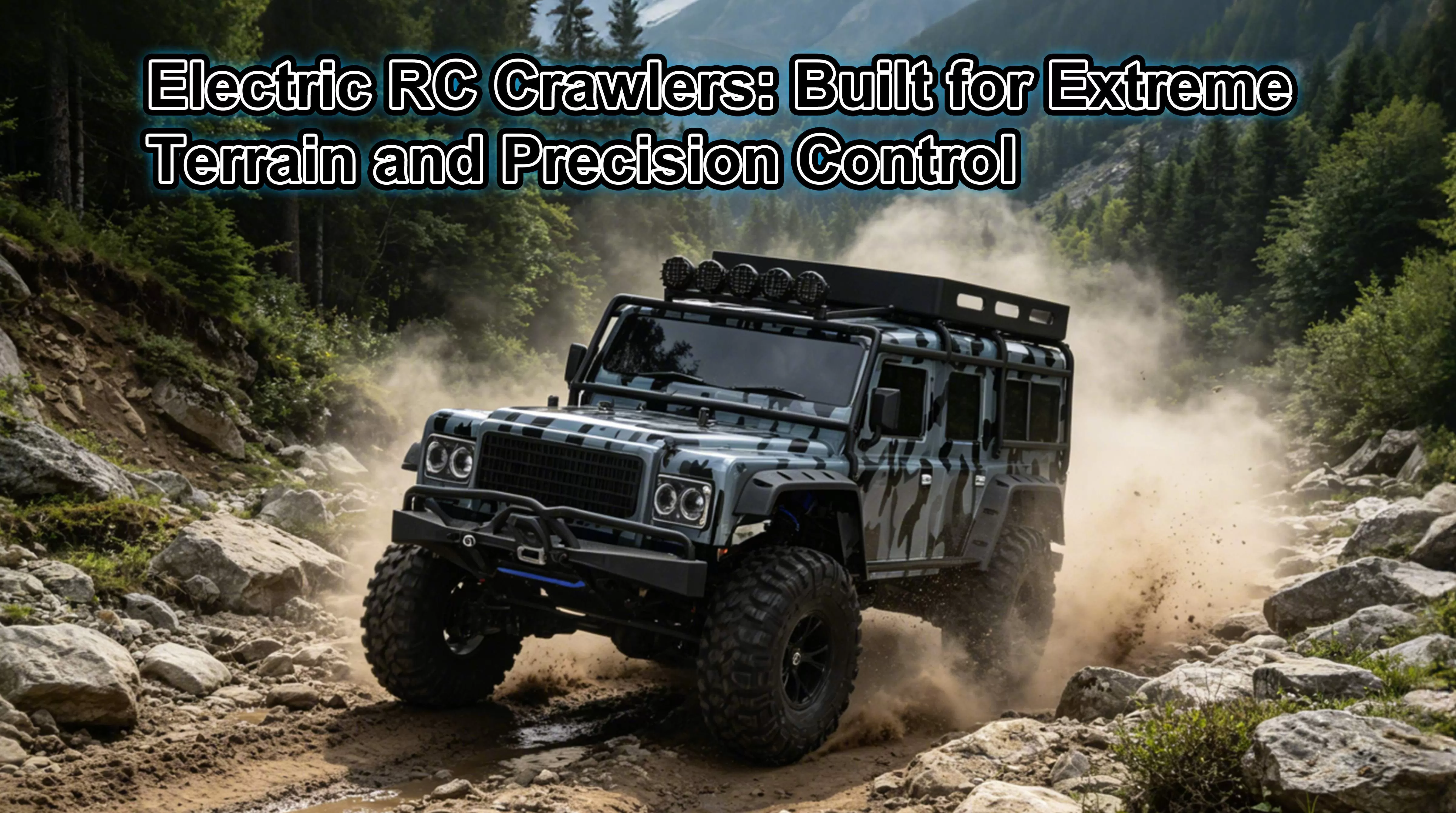
An electric RC crawler is a specialized off-road vehicle designed for low-speed, high-precision climbing over extremely challenging terrain. Unlike track-tuned buggies or backyard bashers, crawlers prioritize control, traction, and the ability to slowly navigate obstacles with minimal wheel spin.
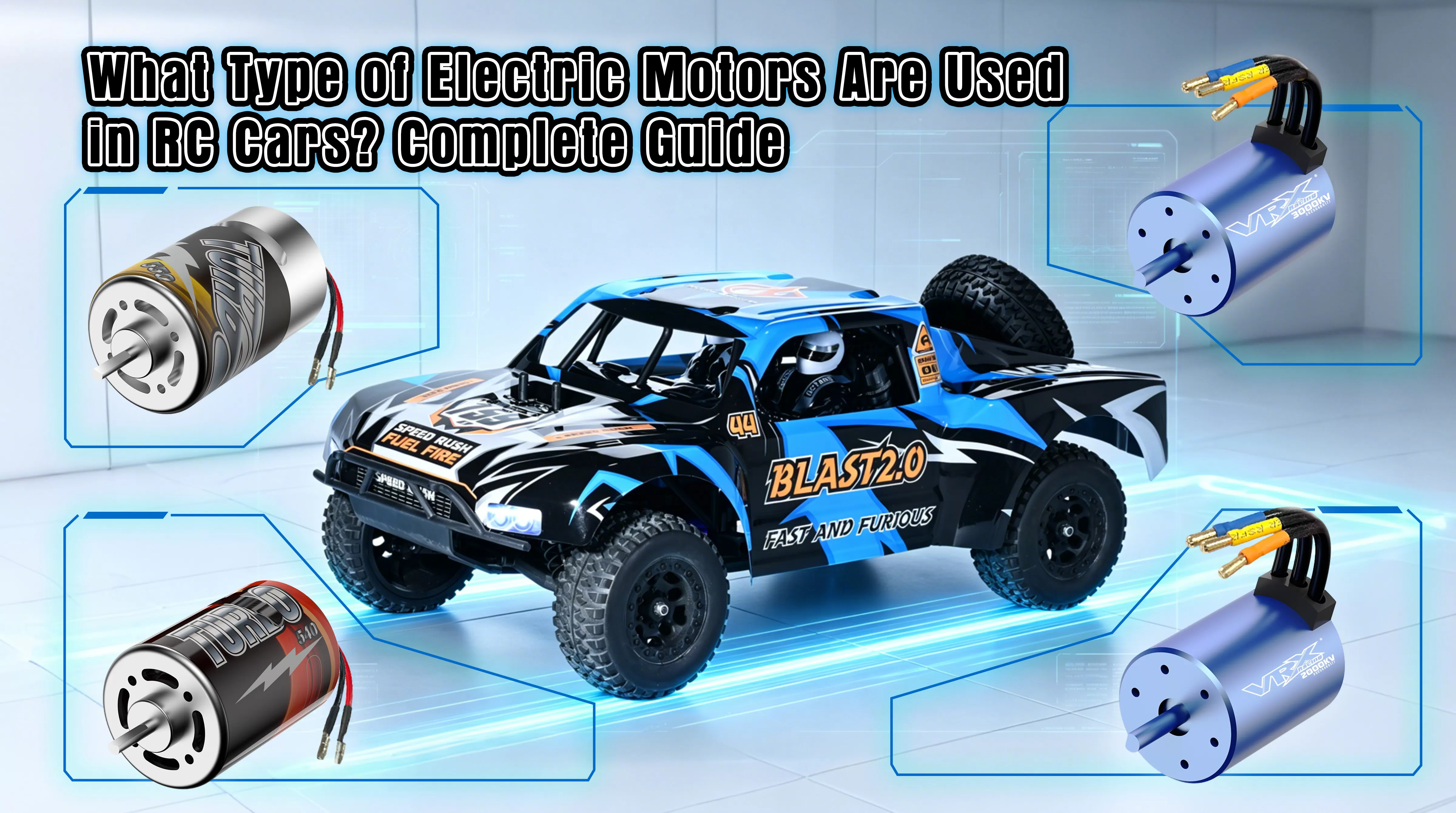
Key characteristics include High-Turn Brushed / Low-kV Sensored Brushless Motor, Extreme Gear Reduction, flexible articulated suspension that allows each wheel to move independently, and soft compound tires that grip rocks and uneven surfaces. Most electric RC crawlers are 4WD to maximize traction.
Compared to other RC types:
Vs Electric RC Monster Truck: Much slower but far more capable on technical rocks and steep angles.
Vs Electric RC Buggy: Not built for speed — crawlers sacrifice velocity for superior obstacle clearance and control.
Vs Electric RC Short Course Truck: Not designed for high-speed racing or big jumps — they focus on slow, deliberate movement.
One-sentence summary: Built for climbing, not racing.
Over the past few years, the crawling community has grown significantly, fueled by YouTube videos, dedicated events, and online forums where enthusiasts share technical lines and custom builds. Many drivers are drawn to the immersive, almost meditative style of crawling — it's less about raw speed and more about skill, patience, and problem-solving.
Crawlers appeal to people who enjoy building and tuning, as well as those who want a different kind of RC experience. They perform beautifully in natural outdoor settings (rock gardens, forest trails, riverbeds) and are also popular for backyard DIY obstacle courses. The challenge of finding the perfect line through difficult terrain creates a deeply satisfying “I did it!” moment that keeps drivers coming back.
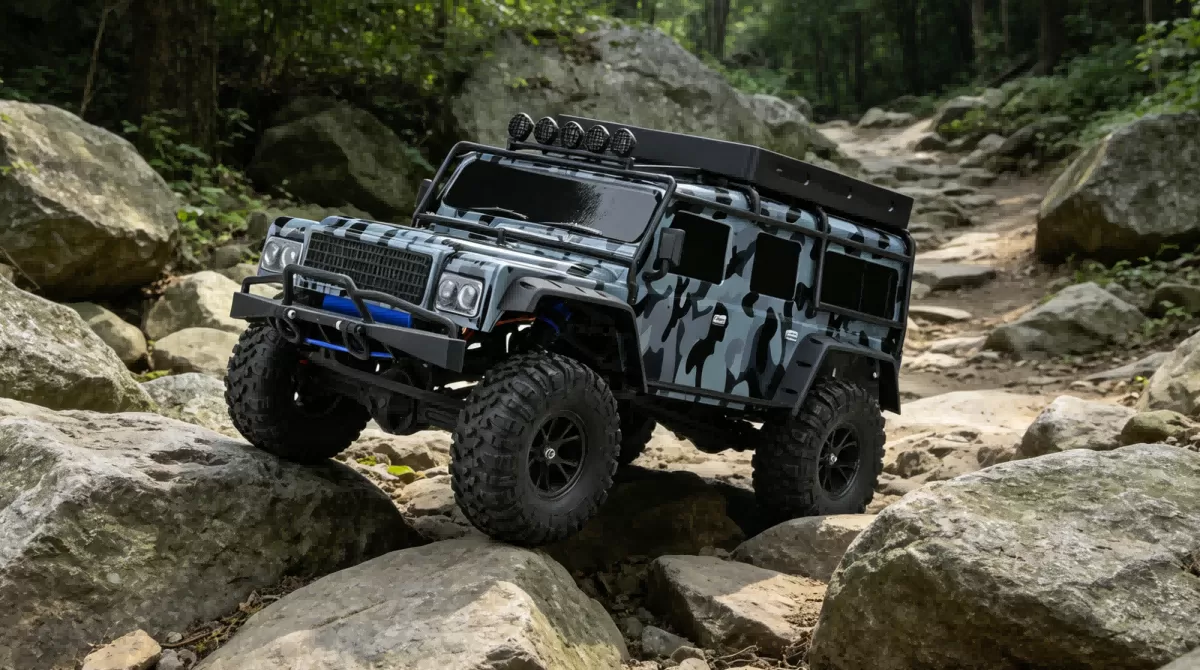
What makes a great crawler isn't just power — it's thoughtful engineering focused on control and traction:
Feature | Why It Matters |
High Torque Motor | Delivers strong pulling power at very low speeds |
Low Gear Ratio | Provides precise control and prevents wheel spin |
4WD Drivetrain | Maximum traction on all wheels |
Articulated Suspension | Each wheel can move independently for better obstacle clearance |
Soft Compound Tires | Excellent grip on rocks and uneven surfaces |
The best crawlers are not about stacking the highest numbers — they're about smart structural design that allows the vehicle to conform to the terrain rather than fight against it.
Crawlers truly shine on complex, technical terrain where other RC cars struggle or fail:
Rock Crawling — Steep rock faces, boulders, and technical lines are their natural habitat.
Mud and Wet Conditions — High torque and 4WD help maintain momentum through slippery surfaces.
Forest Trails and Roots — Articulated suspension allows the truck to crawl over roots and uneven ground.
DIY Obstacle Courses — Many enthusiasts build custom wooden or rock obstacles to test their rigs.
The more difficult and technical the terrain, the more a good crawler stands out.
Here's how crawlers compare to other popular RC categories:
Type | Speed | Control | Terrain Strength |
Crawler | Very Low | Extremely High | Extreme technical terrain |
Monster Truck | High | Medium | Rough but less technical |
Buggy | Very High | High on tracks | Smooth to moderate off-road |
Short Course Truck | Medium-High | High | Mixed racing terrain |
Crawlers trade speed for precision and the ability to conquer obstacles that would defeat faster vehicles.
Unlike racing cars where top speed matters most, crawler performance depends on a different set of factors:
Motor Torque — More important than KV rating; high torque at low RPM is essential.
Gear Ratio — Very low gearing provides precise control and prevents wheel spin.
Weight Bias & Center of Gravity (CG) — A forward weight bias (typically 60/40) and a low CG are crucial for vertical climbing.
Tire Compound — Soft tires provide superior grip on rocks.
Suspension Articulation — How much each wheel can move independently is critical.
Crawler tuning is completely different from speed or racing setups — it's all about slow, controlled movement.
Yes — with some important caveats. Crawlers are actually quite beginner-friendly in terms of operation because they run at low speeds and are less likely to lose control suddenly. The slow pace gives new drivers time to think and react.
However, crawling requires learning "line choice" — finding the best path through obstacles — which is a different skill from throttle control in faster RC cars. Beginners often start with a ready-to-run (RTR) model and gradually improve their technique. Many find the technical challenge deeply rewarding once they get the hang of it.
Crawlers are one of the most customization-heavy categories in RC. Popular upgrades include higher-torque motors, FOC (Field-Oriented Control) ESCs for ultra-smooth low-speed modulation, softer or more aggressive tires, additional weight for better balance, and upgraded suspension links. Many enthusiasts enjoy building highly modified “trail rigs” or competition crawlers. This deep customization culture is a big part of why crawling remains so engaging for long-term hobbyists.
The crawler segment continues to grow steadily as more people discover the unique satisfaction of technical off-road driving. Crawler enthusiasts tend to be highly engaged, often investing in multiple rigs and extensive upgrades, which creates strong aftermarket and accessory sales opportunities.
For retailers and distributors, crawlers are excellent for building customer loyalty. They appeal to a dedicated niche that values quality and performance, and they work well as both entry-level and premium offerings. The upgrade ecosystem also drives repeat business.
At VRX Racing, we understand that crawlers require a different approach than speed-oriented vehicles. Our crawler platforms are designed with strong torque delivery, excellent articulation, and durable construction that can handle both casual trail running and more technical competition use.
We offer multiple configurations — from ready-to-run entry-level models to more advanced chassis that support extensive customization. For distributors, this means you can offer a complete crawler lineup and other types of electric RC cars that covers different price points and customer needs. Our stable production, reliable quality, and comprehensive parts support make it easy to build a successful crawler category in your market.
We don't just supply products — we provide scalable crawler solutions that help you meet diverse customer demands while maintaining strong margins and customer satisfaction.
When selecting a crawler, consider these key factors:
Terrain — Light trail use vs technical rock crawling
Skill Level — RTR models for beginners vs highly tunable platforms for experienced drivers
Budget — Entry-level vs competition-grade setups
Upgrade Needs — How much customization you plan to do
Beginners should opt for a Ready-To-Run (RTR) rig that delivers trail-ready performance straight out of the box, complete with locked differentials.Advanced users usually prefer chassis with strong aftermarket support and high articulation. For distributors, offering a range of crawler models helps capture both new customers and serious enthusiasts.
1. Are RC crawlers better than trucks?
It depends on your goals. Crawlers excel at technical climbing and slow, precise driving, while trucks are better for speed and big jumps.
2. How fast are RC crawlers?
They are intentionally slow — usually 5–15 mph — because the focus is on control and obstacle navigation, not speed.
3. Are electric crawlers better than nitro?
For most users, yes. Electric crawlers offer smoother low-speed control, instant torque, and much easier maintenance.
4. What motor is best for crawling?
High-torque brushless motors with low KV ratings are preferred because they deliver strong pulling power at very low RPMs.
5. Can beginners use RC crawlers?
Yes — the slow speed makes them forgiving, though learning good line choice takes practice.
Electric RC crawlers offer a unique and deeply engaging experience that focuses on control, realism, and technical challenge rather than outright speed. They turn difficult terrain into a rewarding puzzle and have built a dedicated following among hobbyists who enjoy the satisfaction of mastering complex obstacles.
As the crawling community continues to grow, these specialized vehicles are becoming an important segment of the RC market. At VRX Racing, we are committed to providing high-quality crawler platforms that deliver excellent performance, durability, and customization potential — whether for casual trail running or serious competition use.
Interested in adding crawlers to your lineup or finding the right model for your needs? Contact our team to discuss product options, customization, and partnership opportunities.