Buying a ready-to-run RC car is often only the beginning of the experience. Once drivers become familiar with throttle control, cornering, jumps, braking, and chassis behavior, a new question appears: What makes an RTR platform suitable for serious racing?
The answer is rarely just a faster motor. Competitive RC driving depends on how efficiently a vehicle carries speed, responds to steering inputs, manages heat, absorbs impacts, and maintains traction. A well-designed chassis can therefore become more valuable than a higher headline speed.
This is where platforms such as electric buggies, short course trucks, and truggies begin to reveal their differences. For enthusiasts looking beyond casual bashing, understanding the transition from an RTR vehicle to a race-oriented setup can help identify which platform offers the most long-term potential.
An RTR model already includes most of the components needed to drive, but that does not mean it is locked into its factory configuration.
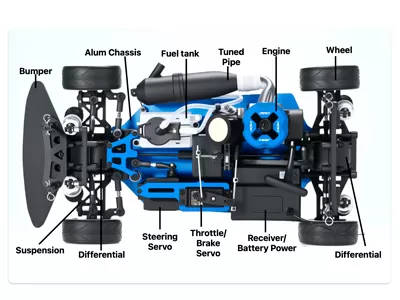
A typical RTR platform includes the chassis, motor or engine, ESC, steering servo, radio system, suspension, drivetrain, wheels, and body. As driving experience increases, individual components can be adjusted or upgraded according to track conditions and driving style.
VRX Racing offers RTR platforms across 1/10 and 1/8 scales, including brushless buggies, short course trucks, truggies, and other off-road models. Its electric range is designed around 2WD and 4WD configurations, with models covering different levels of performance and driving applications.
The important point is that a good RTR platform should provide a solid mechanical foundation for future development.
The RC buggy brushless format is one of the clearest examples of an RC vehicle designed around speed and handling.
A buggy typically uses an open-wheel body, relatively low weight, independent suspension, and a chassis designed to respond quickly to steering inputs. This allows the vehicle to maintain momentum through corners while remaining stable during jumps.
VRX Racing's electric buggy lineup ranges from smaller models to professional-grade 1/8 RC electric buggy platforms. The BLAST BX 1/8 and VRX-2E 1/8 use 4WD brushless configurations, adjustable suspension, oil-filled shocks, and reinforced drivetrains.
For drivers interested in competitive off-road driving, an 1/8 RTR electric buggy can therefore provide more than an immediately usable vehicle. It can serve as a foundation for experimenting with suspension settings, tires, gearing, and driving technique.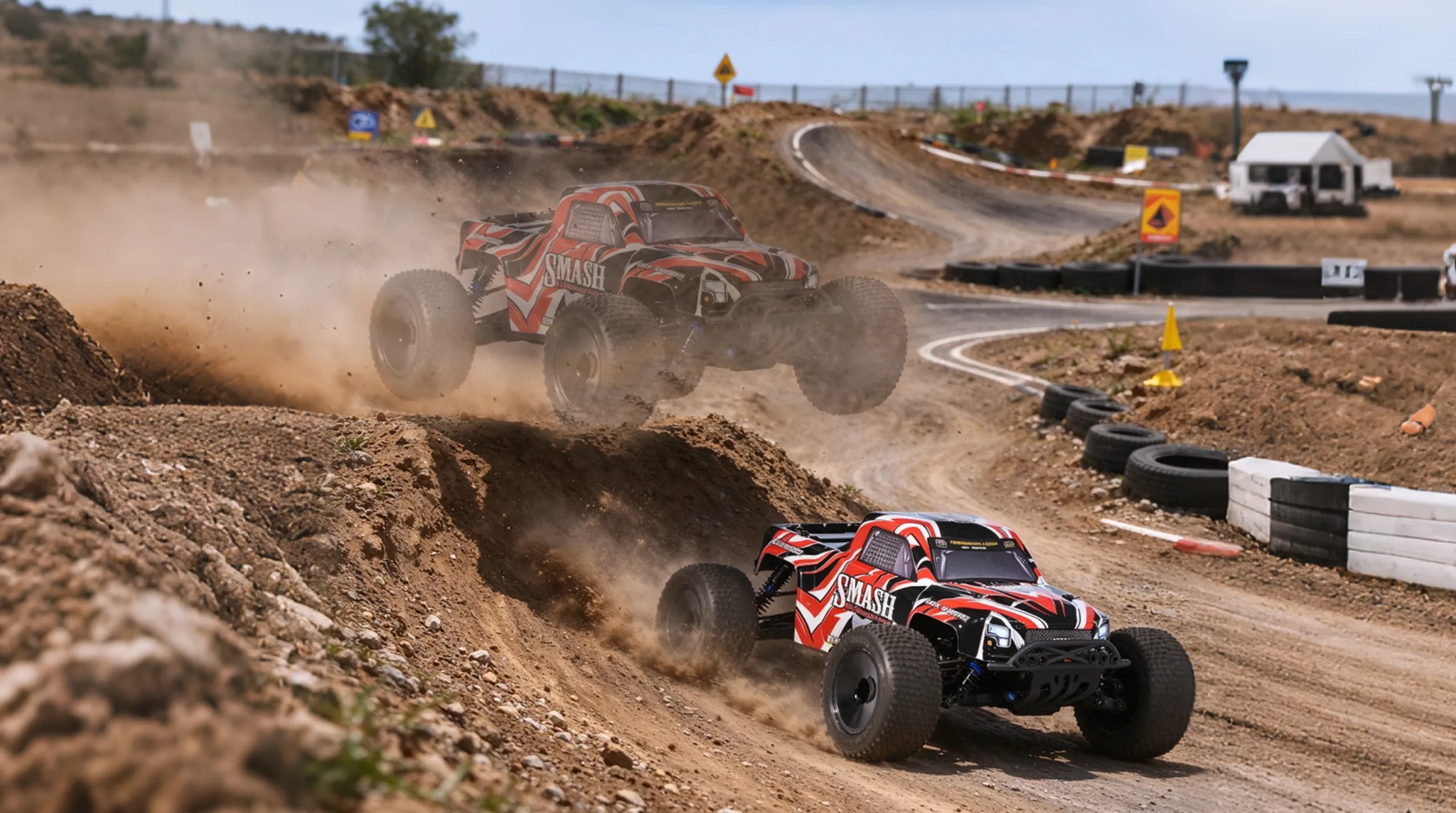
RC short course racing has a different visual identity from traditional buggy racing.
Short course trucks use enclosed truck-style bodies and wider stances inspired by full-size off-road racing vehicles. Their bodywork provides additional protection while their chassis remains focused on high-speed handling.
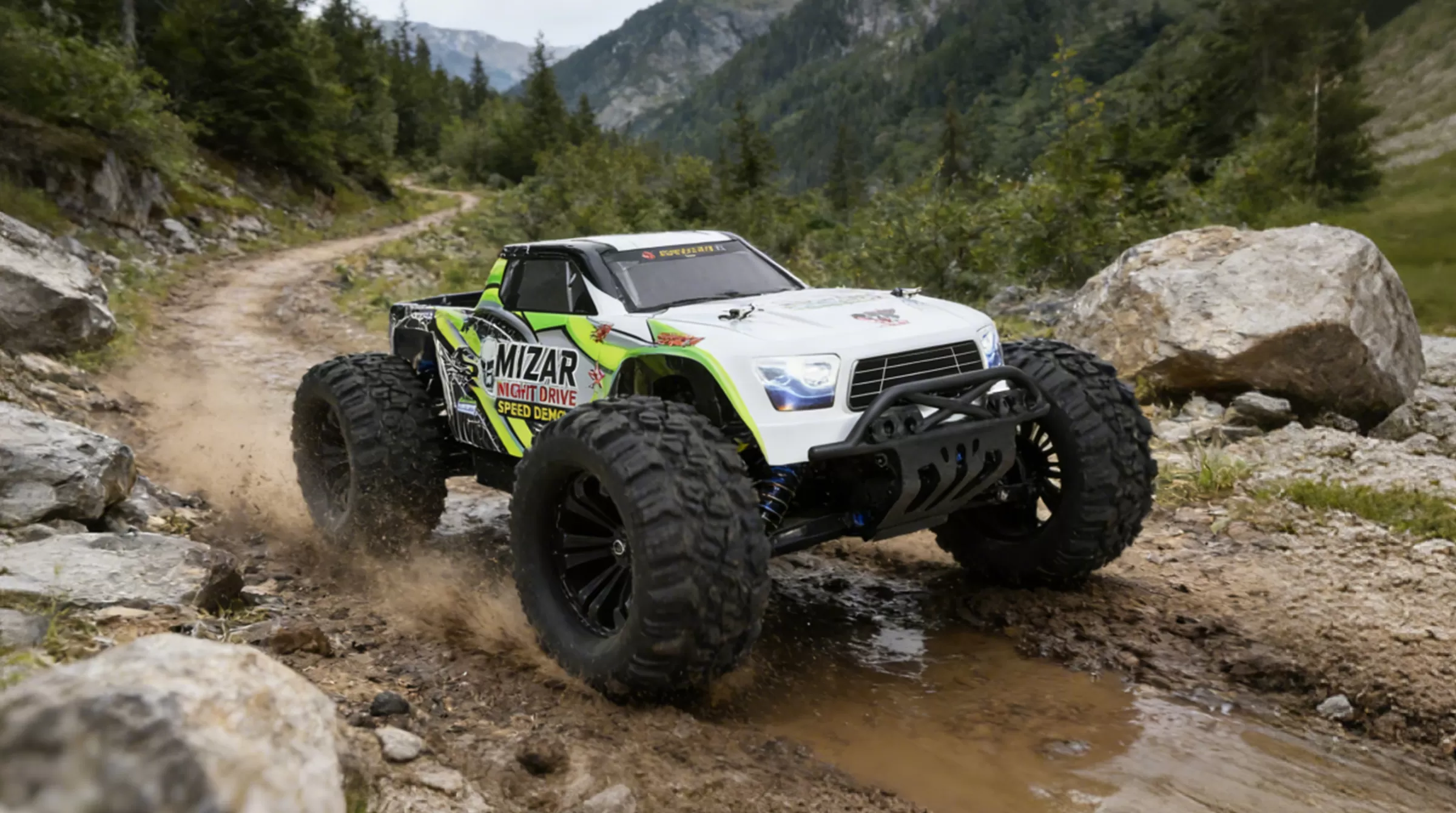
VRX Racing's electric SCT lineup includes the 1/8 BLAST and 1/10 BLAST 2.0. The 1/10 brushless version uses 4WD and a brushless power system, while the platform is designed for packed dirt, clay, gravel, jumps, and high-speed cornering.
This makes an RC sc truck an interesting choice for drivers who want the visual character of a racing truck while retaining the practical durability expected from an off-road RTR vehicle.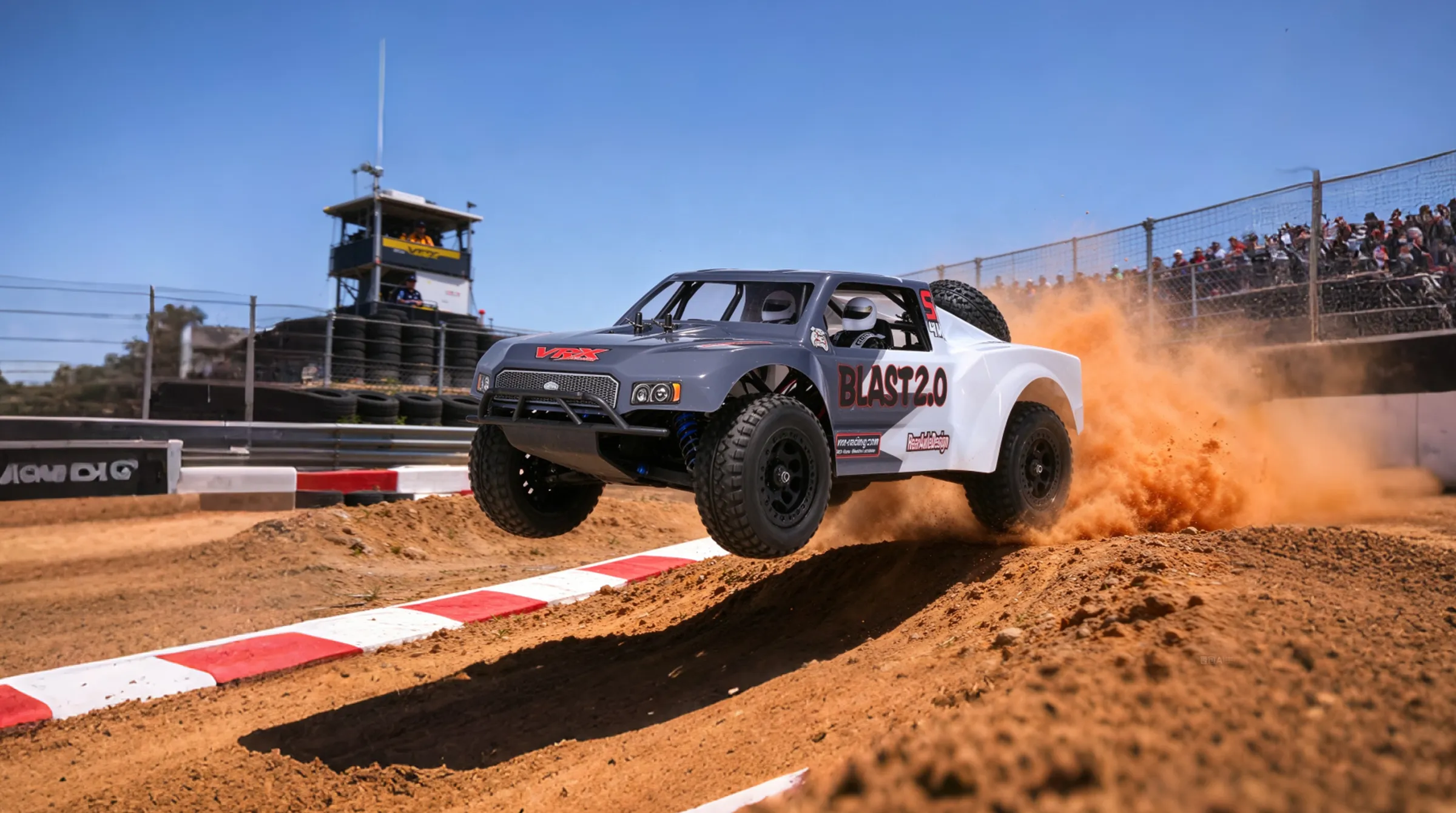
A race truggy occupies a useful position between a buggy and a larger off-road truck.
The wider stance, larger tires, longer wheelbase, and substantial suspension allow a truggy to carry speed over rougher surfaces while remaining responsive enough for aggressive driving.
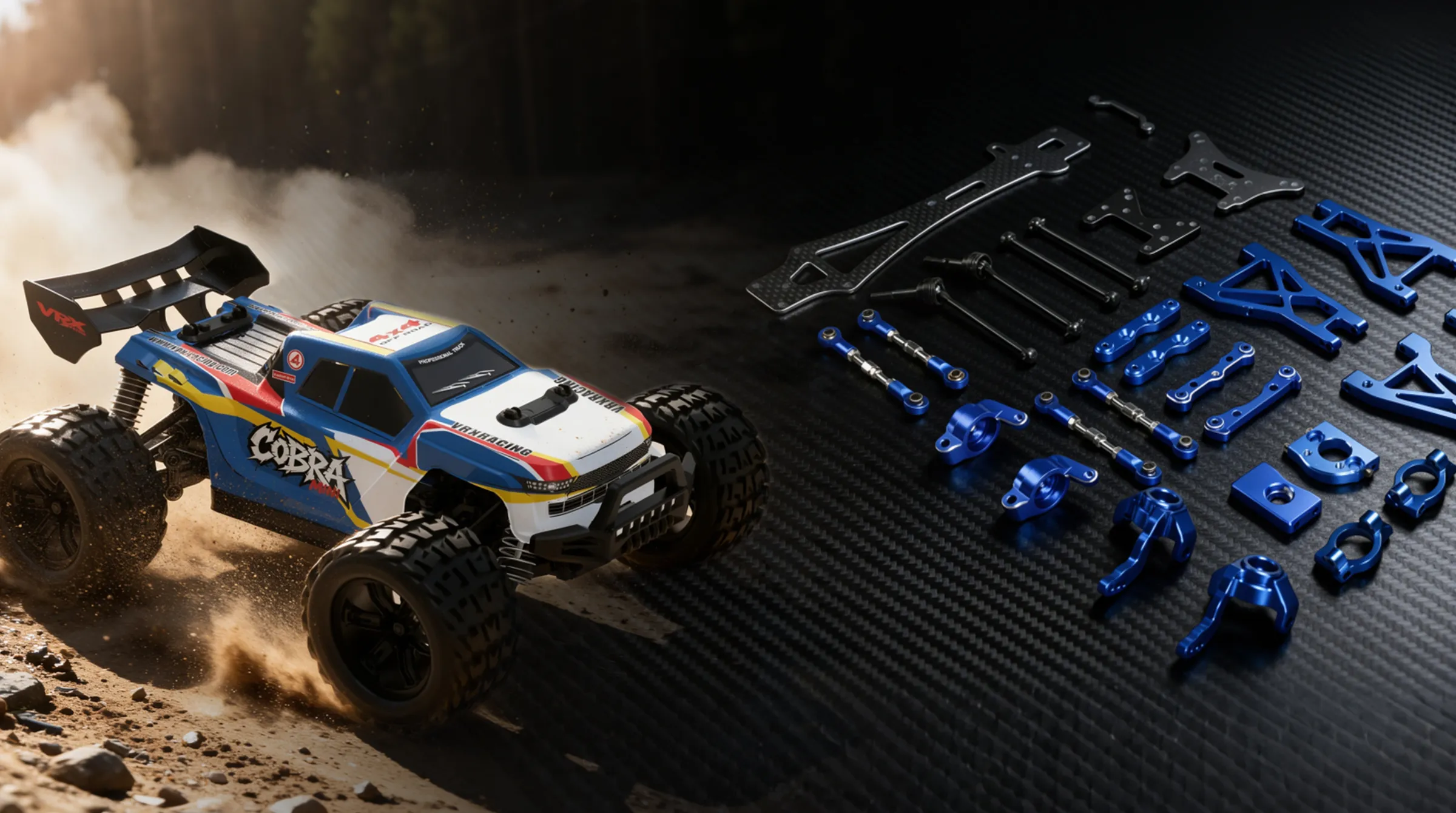
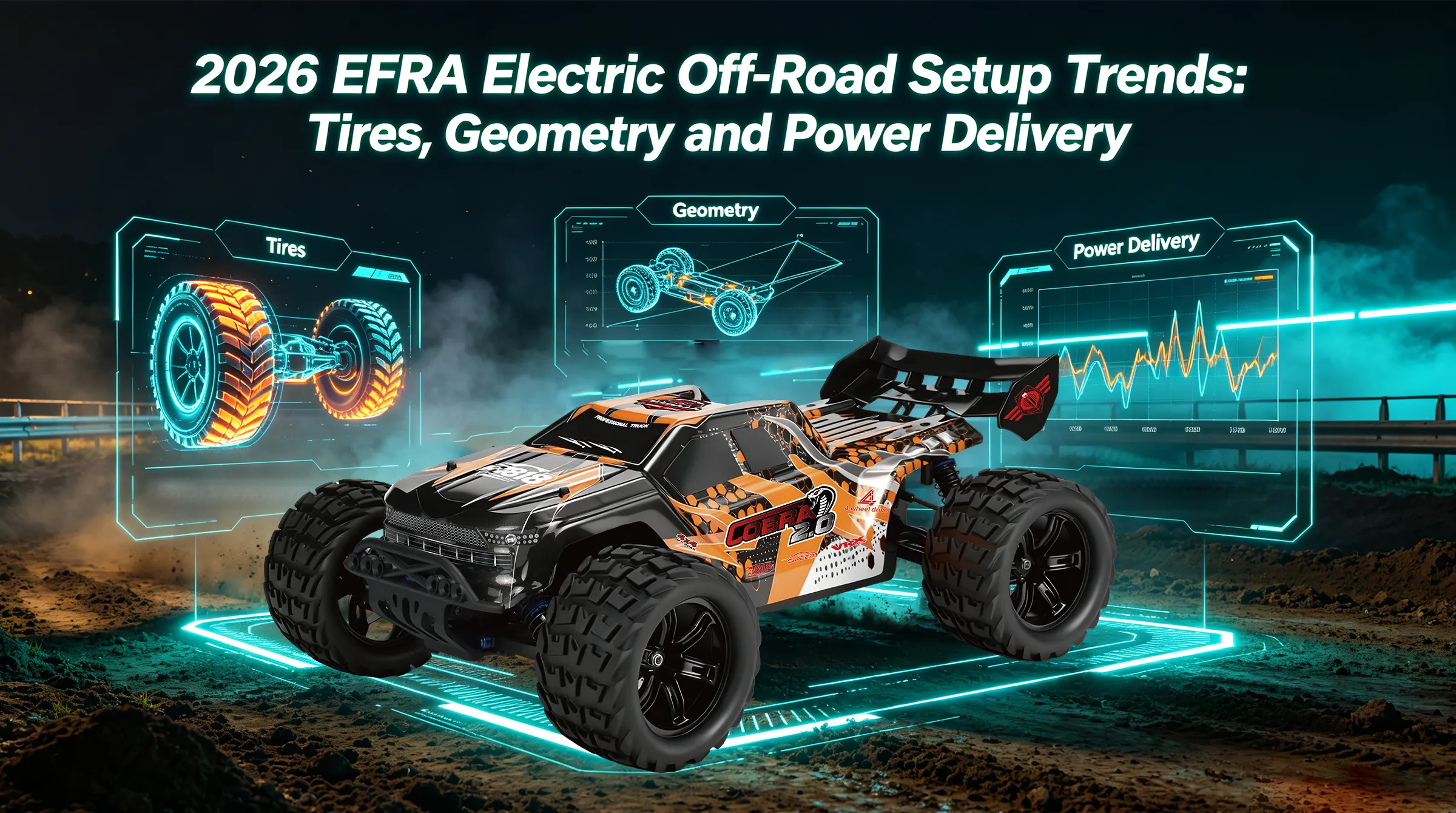
VRX Racing's COBRA 1/8 and VRX-1E 1/8 are examples of brushless electric truggies built around 4WD chassis, reinforced suspension, and large off-road tires. The COBRA is available as an RC truggy RTR with a brushless configuration, while the MEGREZ provides a 1/10 alternative.
For drivers who spend equal time on jumps, rough tracks, and open dirt surfaces, RC truggies can offer a broader performance window than a highly specialized racing buggy.
It is tempting to judge an electric RC car by its motor specification alone. In reality, motor characteristics only become meaningful when combined with gearing, ESC capability, battery voltage, tire diameter, and vehicle weight.
A common 1/10 brushless configuration uses a 3650 motor. VRX Racing's 1/10 brushless models use 3650 3300KV or 3650 4200KV motors paired with 45A ESCs, with selected configurations reaching speeds of up to about 60 km/h.
For anyone researching 3300KV brushless motor specs, the KV number should therefore not be treated as a direct measurement of vehicle speed. It represents the motor's approximate unloaded RPM per volt. Actual performance depends on the complete powertrain.
The same principle applies to an RC 1/10 brushless motor used in a truck, buggy, or truggy. The same motor can behave differently depending on gearing and vehicle load.
Brushless systems are associated with higher efficiency and performance, but brushed motors remain relevant for entry-level and cost-conscious applications.
VRX Racing's 1/10 brushed models use 550 15T or 540 motors paired with 40A ESCs, with speeds of up to approximately 35 km/h. The simpler powertrain provides predictable throttle response and lower system complexity.
The 550 15T brushed motor can therefore be a sensible choice when affordability, smooth control, and straightforward maintenance are more important than maximum acceleration.
For competitive drivers, however, moving from brushed to brushless can provide a significant performance step, particularly when the chassis and drivetrain are capable of handling the additional output.
A quality RC brushless RTR should not be evaluated only by its motor.
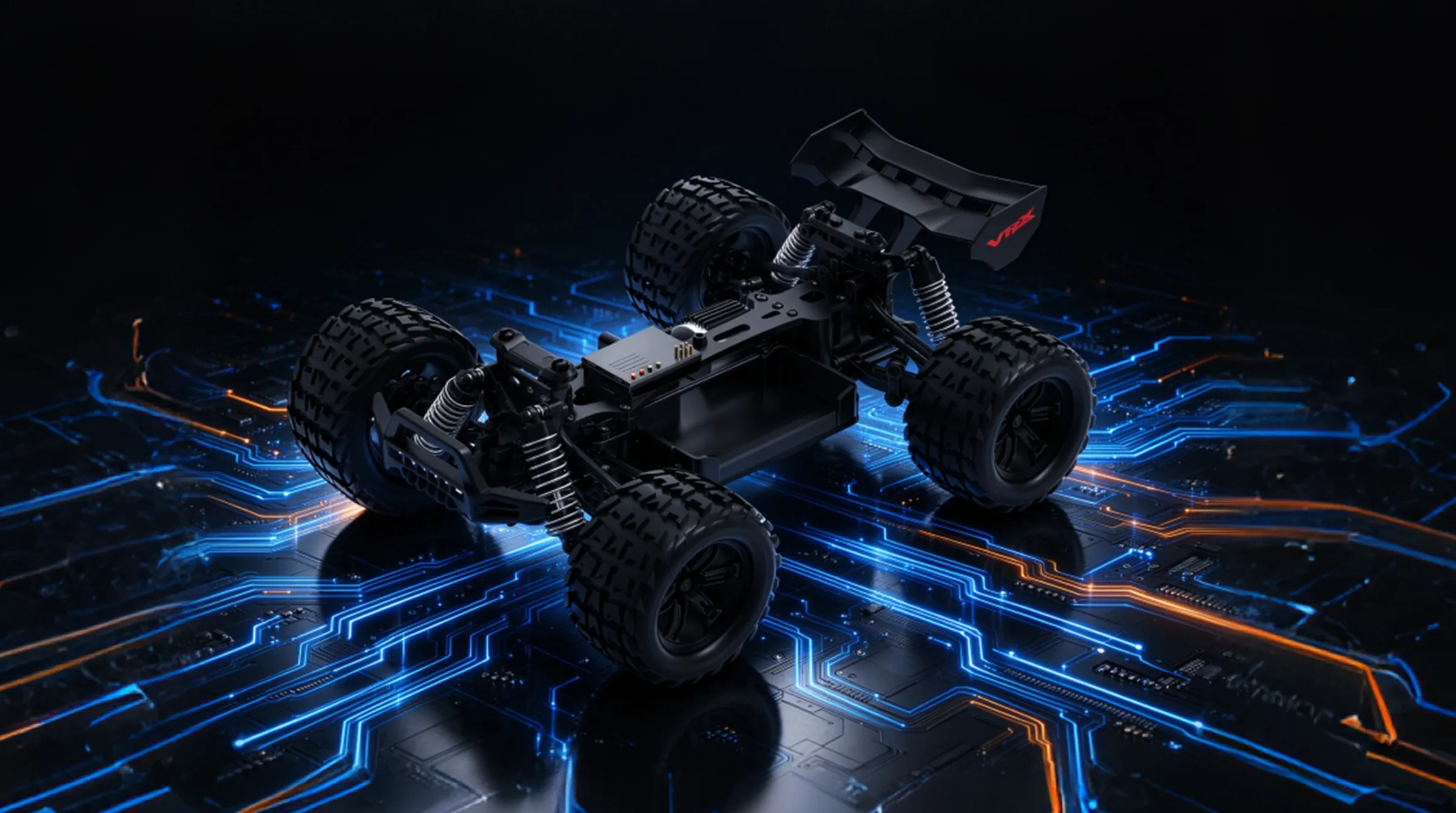
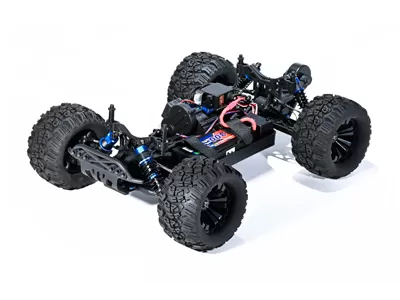
The supporting drivetrain is equally important. Higher motor output creates greater torque loads on gears, driveshafts, differentials, and suspension components.
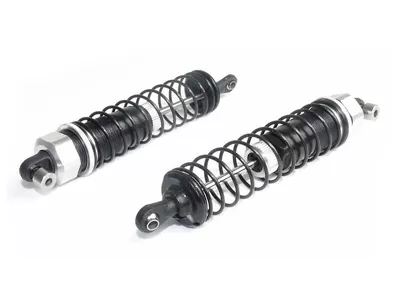
VRX Racing's brushless models use heavy-duty steel gears, hardened driveshafts, and robust differentials to support the increased output of brushless systems. Its 1/10 platforms also use independent suspension and adjustable oil-filled shocks for high-speed handling.
This is especially important for a brushless 1/10 RC truck, where larger tires and off-road impacts can place substantial loads on the drivetrain.
A larger 1/8 scale electric RC truck or buggy has more physical space for substantial components and a larger chassis structure.
VRX Racing's 1/8 electric models use 3660 2000KV or 3674 2440KV brushless motors with 60A–120A ESCs and support 2S–4S LiPo configurations. The platforms also feature 4WD drivetrains, steel gears, aluminum or reinforced-composite chassis structures, and large oil-filled shocks.
The result is a platform capable of handling higher loads while maintaining stability over rough surfaces.
For drivers who want a more substantial competition-oriented vehicle, an 1/8 RTR electric buggy can therefore offer a different level of chassis presence and mechanical robustness than a smaller platform.
Electric power is not the only route to competitive RC driving.
An 1/8 scale nitro buggy RTR introduces a mechanical powertrain with an engine, fuel system, clutch, and exhaust. VRX Racing's 1/8 nitro range includes the VRX-2 4WD buggy, while its wider nitro lineup also includes truggies, trucks, short course trucks, and touring models.
Nitro requires more preparation and tuning, but that is precisely what attracts many experienced hobbyists. Engine tuning, clutch setup, fuel selection, and temperature management become part of the driving experience.
The platform therefore appeals to users who want more mechanical involvement rather than simply maximum convenience.
Once an RC driver becomes more experienced, the goal often changes from “How fast can this car go?” to “How can I make it work better on this track?”
That shift leads to practical adjustments:
Performance Area | Typical Development |
Tires | Match compound and tread to track surface |
Suspension | Adjust damping and ride characteristics |
Gearing | Balance acceleration, speed, and motor temperature |
ESC | Optimize throttle response and braking |
Differential | Adjust power distribution and cornering behavior |
Battery | Select suitable voltage and discharge capability |
Chassis | Improve durability and weight distribution |
These changes can transform an ordinary RTR into a more personalized racing platform without replacing the entire vehicle.
The right starting point depends on the kind of racing experience a driver wants.
A 1/10 brushless RC truck offers versatility and manageable dimensions. A brushless buggy emphasizes responsive handling. An SCT provides a balance between racing character and body protection. A truggy adds stability and rough-terrain capability. A 1/8 platform offers greater mechanical scale, while a nitro buggy introduces engine tuning into the experience.
VRX Racing's broad lineup makes this progression possible because its range covers brushed and brushless electric platforms as well as nitro vehicles across multiple scales.
Moving from RTR driving toward competitive RC racing does not necessarily require buying a completely different vehicle.
The better approach is to start with a well-engineered platform and understand which components actually influence performance. Motor output matters, but so do tires, suspension, gearing, drivetrain strength, ESC response, and chassis design.
For some drivers, a brushless buggy will be the natural route. Others may prefer an SCT, a race truggy, or a larger 1/8 platform. Nitro remains another option for enthusiasts who enjoy mechanical tuning.
Ultimately, the best race-ready RC car is not simply the fastest RTR on the market. It is the platform that gives the driver enough control, durability, adjustability, and upgrade potential to keep improving.