Choosing an RC car is not only about scale, motor power, or top speed. Two vehicles with similar dimensions can behave completely differently because of their chassis layout, tire size, suspension geometry, drivetrain, and body design.
A lightweight electric RC buggy may feel sharp and responsive on a dirt track, while a truggy with a wider stance can feel more planted when landing from a jump. A brushless truck can deliver instant acceleration, whereas a nitro model adds engine tuning and a more mechanical driving experience.
This is why understanding the character of each RC platform can be more useful than simply comparing specifications. The different models in the VRX Racing range illustrate how chassis design and power systems can be combined to create distinct driving experiences.
An electric RC car buggy is generally built around a relatively lightweight chassis, open-wheel body design, and suspension geometry optimized for quick directional changes.
The objective is not simply to achieve high speed. A good buggy needs to accelerate out of corners, maintain traction over uneven surfaces, and remain predictable when landing jumps.
VRX Racing offers electric buggies across several scales, including 1/10 and 1/8 4WD models. Its lineup includes the SPRINT 1/10 brushless buggy, BLAST BX 1/8 brushless buggy, and VRX-2E 1/8 brushless buggy. These models use independent suspension and oil-filled shocks to support off-road control.
For drivers who spend most of their time on dirt tracks, gravel, or open off-road terrain, a buggy can provide a more direct connection between steering input and vehicle movement.
A 1/10 scale brushless RC is often chosen when a driver wants strong electric performance without moving to a larger platform.
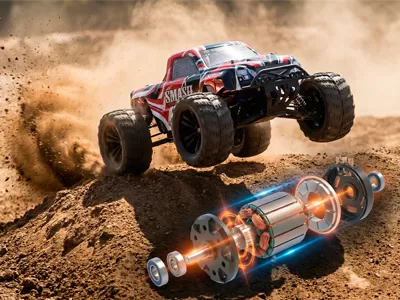
Brushless motors eliminate the physical brushes found in conventional brushed motors. This reduces mechanical friction and wear while allowing the motor to deliver efficient power and rapid acceleration. VRX Racing uses brushless motors in several of its platforms, with common motor sizes including 3650 and 3660 and KV ratings ranging from approximately 2000 to 4000KV.
The result is a brushless 1/10 RC that can feel considerably more responsive than a basic brushed model.
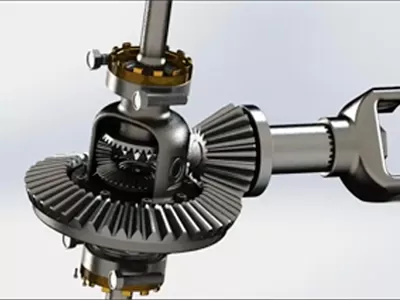
However, brushless power also places greater demands on the drivetrain. Stronger gears, driveshafts, differentials, and tires become important because the vehicle must transfer more torque to the ground.
This explains why choosing a brushless system is not simply a matter of installing a more powerful motor. The entire vehicle needs to support the additional output.
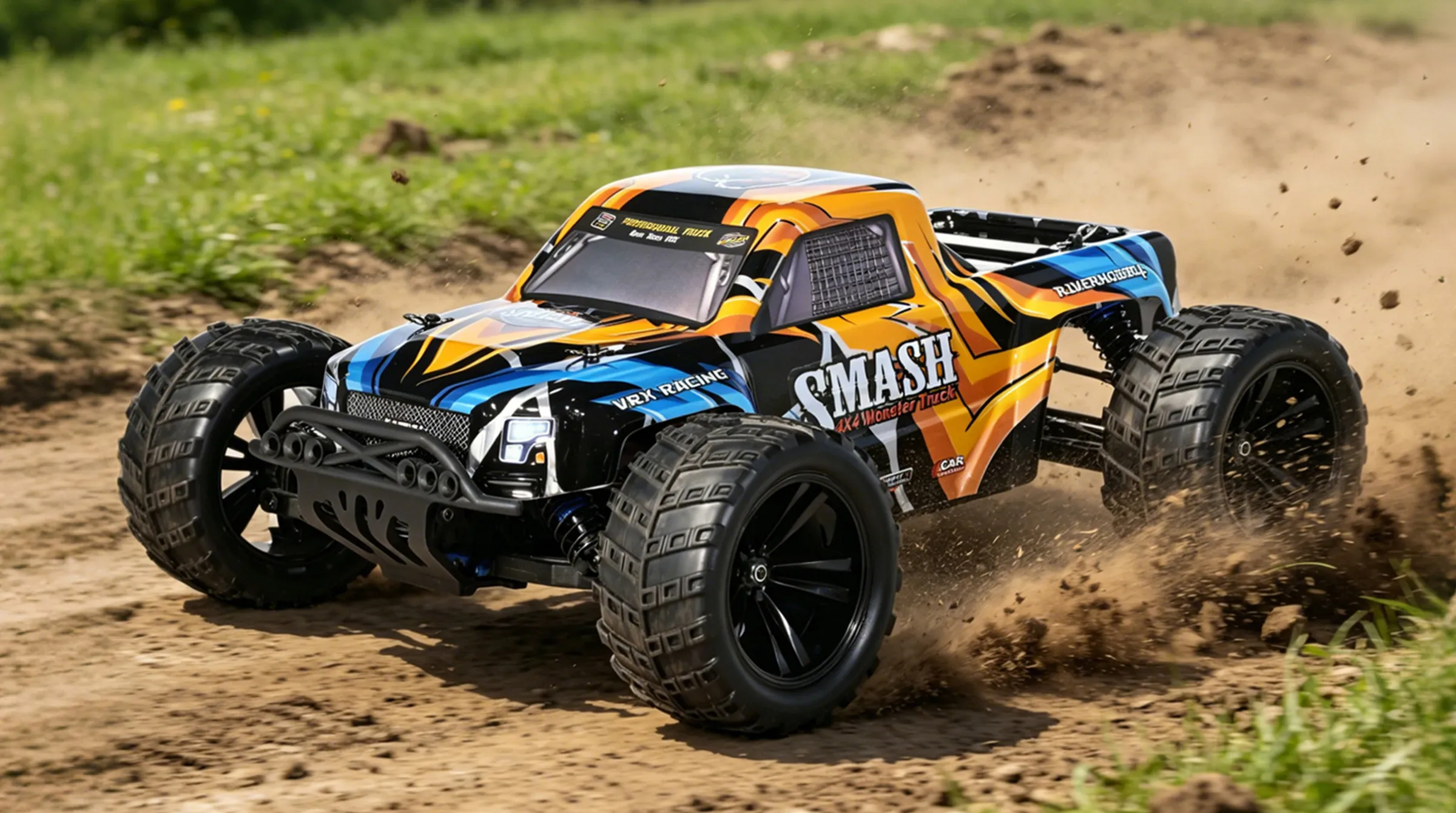
The truggy occupies an interesting position between a buggy and a truck.
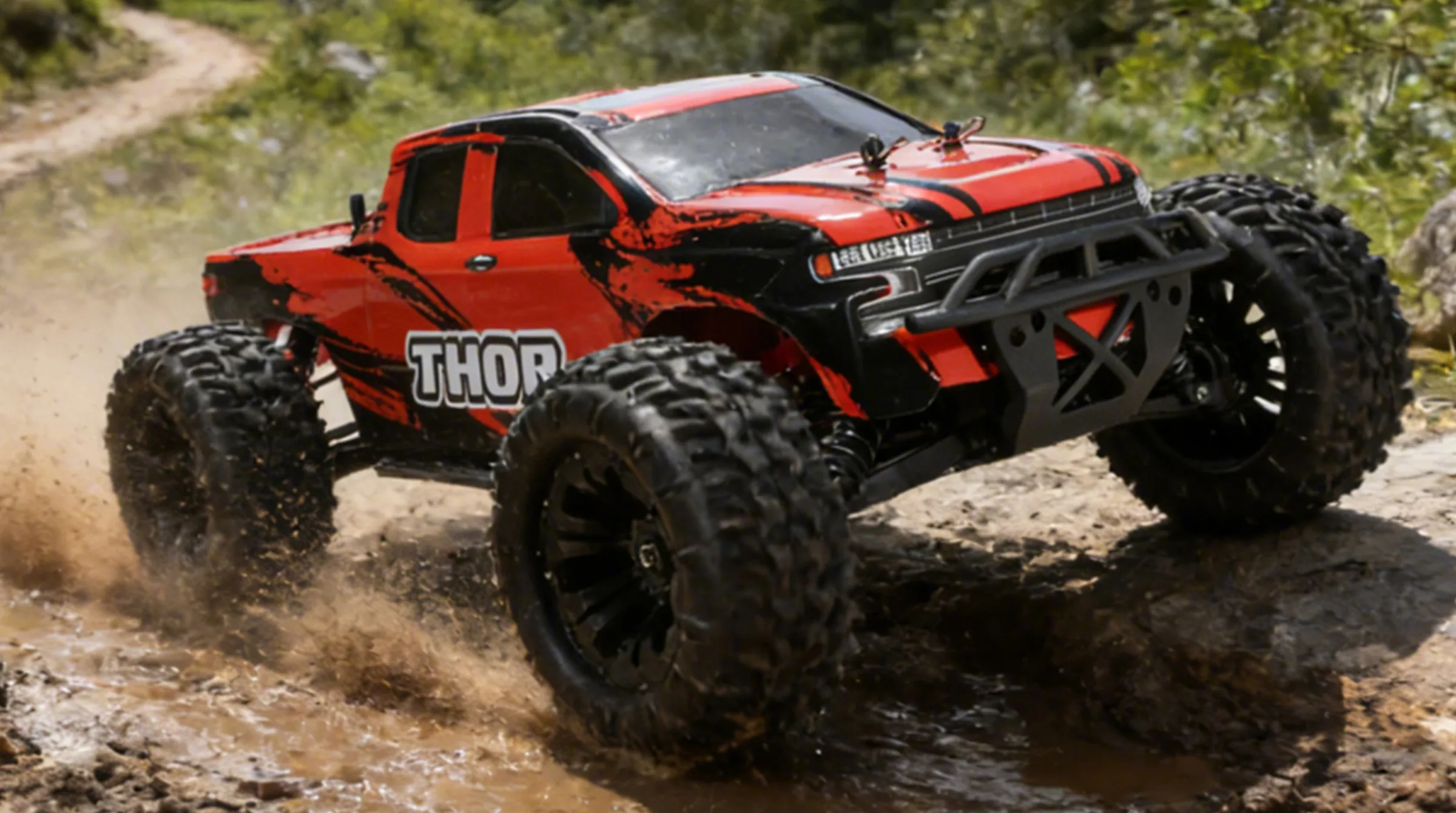
A nitro RC truggy 1/8 typically combines the handling characteristics of a buggy with wider suspension arms, larger tires, and a truck-style body. This gives it greater stability and impact tolerance while preserving much of the responsiveness associated with a buggy.
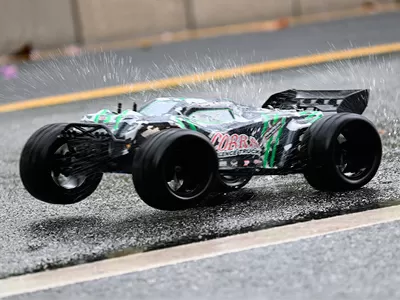
VRX Racing describes its 1/8 COBRA truggy as a hybrid platform with a wider stance, longer wheelbase, and larger tires than a conventional buggy. The design is intended for rough terrain, dirt tracks, gravel, and open fields.
That makes an RC truggy 1/8 nitro particularly attractive to drivers who do not want to choose strictly between agility and durability.
The same concept appears in electric form. VRX Racing's 1/8 COBRA electric truggy is available with both brushed and brushless power configurations, while the VRX-1E uses a 1/8 4WD brushless platform.
A 1/8 scale electric RC model can use a larger chassis to accommodate higher-capacity batteries, larger motors, stronger drivetrain components, and more substantial suspension hardware.
VRX Racing's 1/8 electric lineup includes buggies, truggies, and short-course trucks. Depending on the model, the vehicles use 3660 or 3674 brushless motors, 60A–120A ESCs, 2S–4S LiPo battery support, 4WD drivetrains, and aluminum or reinforced-composite chassis construction.
This combination gives the larger platform a distinctive feeling: it can carry considerable speed while remaining stable over rough terrain.
For an experienced driver, a 1/8 scale electric RC can therefore offer a different type of excitement from a lightweight 1/10 buggy. Instead of emphasizing only rapid direction changes, the larger vehicle can combine momentum, suspension movement, and high-speed stability.
Not every large RC car needs to be designed for dirt.
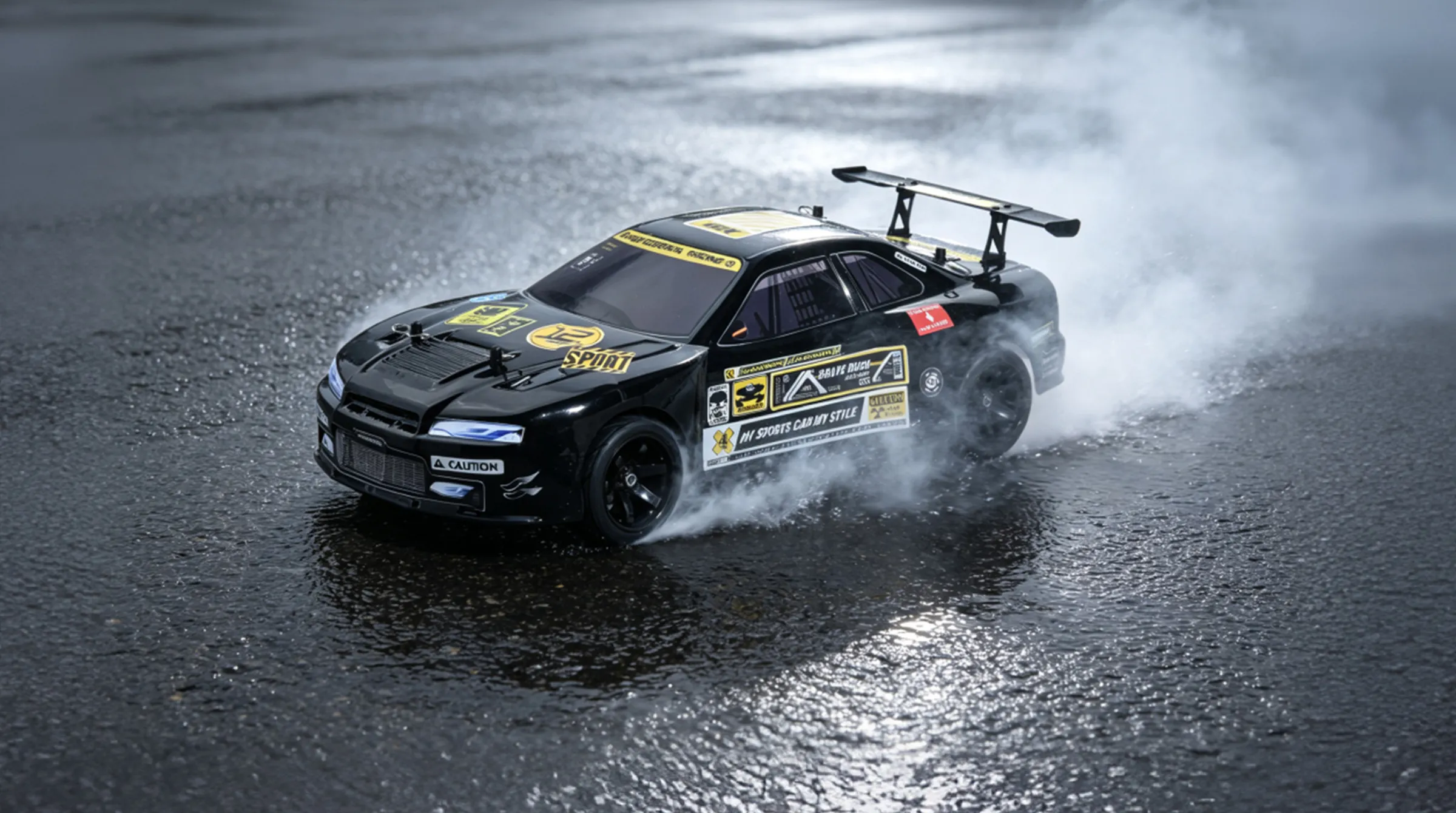
1/8 scale electric on road RC cars are built around a different set of priorities. On smooth asphalt, excessive suspension movement is less important than steering precision, traction, braking stability, and predictable weight transfer.
The vehicle can use a lower ride height and road-oriented tires because it does not need the same ground clearance required by an off-road buggy.
This highlights an important point about RC design: scale does not determine personality by itself.
Two 1/8 vehicles can feel completely different because one is designed for jumps and loose terrain while the other is optimized for smooth surfaces.
Electric power is convenient and responsive, but nitro introduces a mechanical dimension that many enthusiasts specifically enjoy.
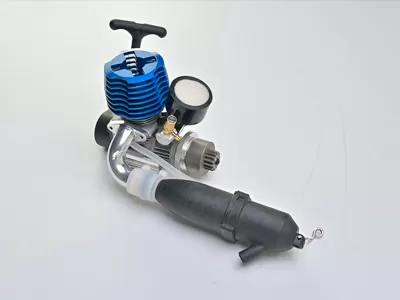
A 1/10 nitro RC car uses a combustion engine, fuel tank, exhaust system, clutch, and drivetrain. Instead of simply managing throttle and battery charge, the driver must also understand engine temperature, fuel mixture, glow plugs, and maintenance.
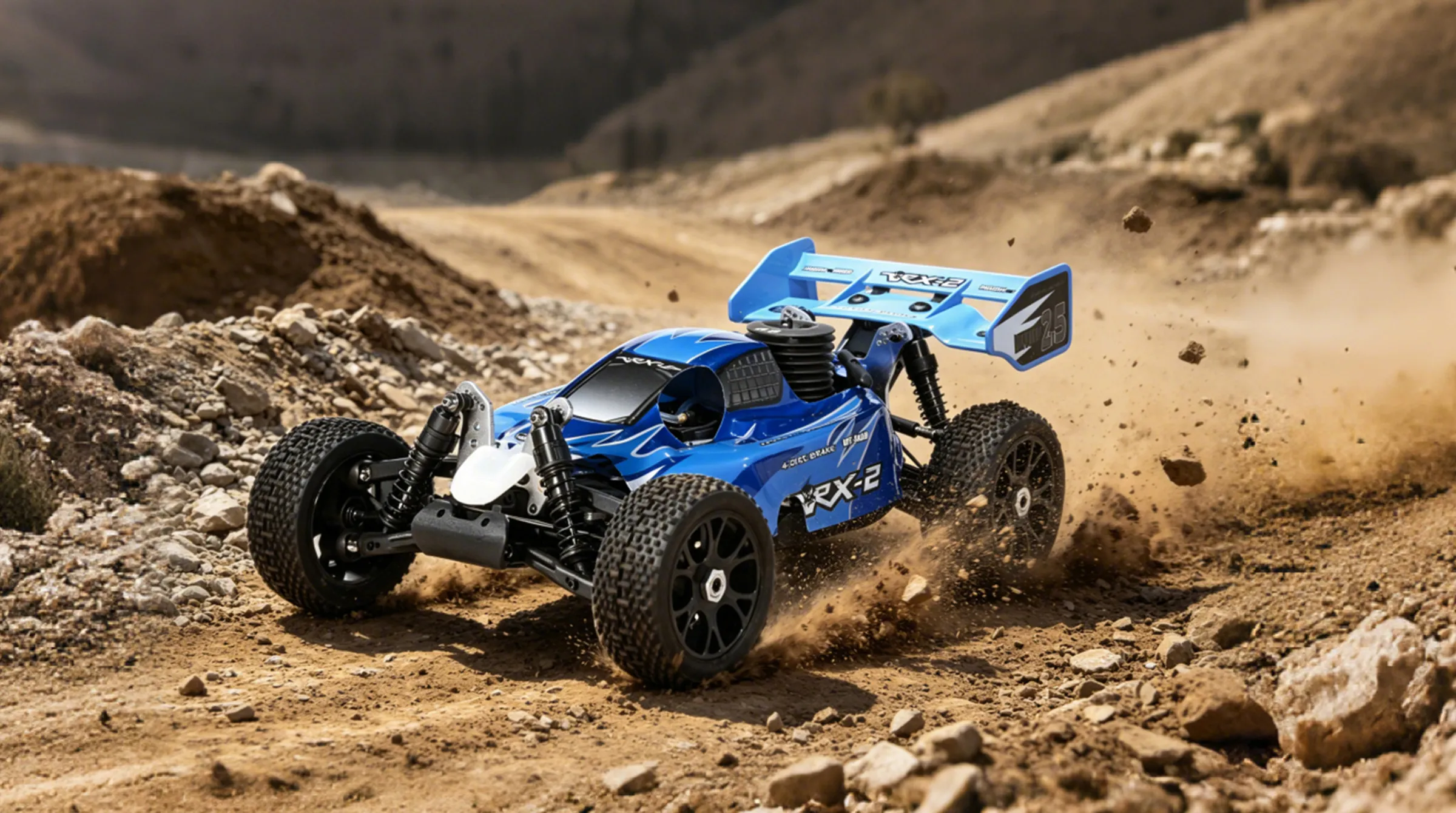
VRX Racing's nitro range covers both 1/10 and 1/8 platforms. Its 1/10 lineup includes buggies, truggies, short-course trucks, and on-road touring models, while its 1/8 range includes the VRX-2 buggy and VRX-1 truck.
For some drivers, this mechanical involvement is part of the attraction.
A nitro RC cars 1/10 scale model can also offer a useful middle ground for enthusiasts who want combustion-powered driving without moving immediately to the larger 1/8 category.
The differences become clearer when the three platforms are placed side by side.
Platform | Main Character | Best Suited To |
1/8 Nitro Buggy | Agile, responsive, lightweight | Dirt tracks, jumps, technical off-road driving |
1/8 Nitro Truggy | Stable, durable, versatile | Rough terrain, bashing, mixed off-road surfaces |
1/8 Nitro Truck | Substantial and impact-oriented | Open terrain and recreational driving |
1/8 Electric Buggy | Fast response and easy power delivery | Racing and high-speed off-road use |
1/8 Electric Truggy | Stability plus aggressive acceleration | Rough tracks, jumps, and high-speed bashing |
VRX Racing's 1/8 nitro models include the VRX-2 buggy and VRX-1 truck, while its electric range adds dedicated buggy and truggy platforms.
A 1 8 nitro truck is particularly interesting for drivers who prioritize durability and a more substantial driving feel.
Compared with a traditional buggy, a truck-oriented platform can emphasize larger tires, additional ground clearance, and a body configuration designed for recreational off-road use.
VRX Racing's VRX-1 is a 1/8 4WD nitro truck powered by an engine platform designed for high-speed off-road driving. The company also offers 1/8 electric short-course and truck-style models, giving buyers different power-system options within the larger scale category.
The most useful way to choose an RC car is to stop asking only, “How fast is it?”
Instead, ask:
How do I want the vehicle to behave?
Choose an electric RC car buggy when sharp response and off-road agility are priorities. Consider a 1/10 brushless RC when you want strong electric performance in a versatile platform. Move toward a truggy when stability, larger tires, and rough-terrain capability matter more.
For enthusiasts interested in combustion power, a 1/8th scale nitro RC cars platform offers a more mechanical experience, while a nitro RC truggy 1 8 can combine the handling of a buggy with greater stability and durability.
The appeal of VRX Racing is that these different personalities exist within one broader RC ecosystem. Its product range covers electric and nitro models, multiple scales, buggies, truggies, trucks, rally cars, drift cars, and other configurations.
Ultimately, the best RC car is not necessarily the largest, fastest, or most powerful. It is the one whose chassis, power system, and driving characteristics match the experience you actually want from the transmitter.