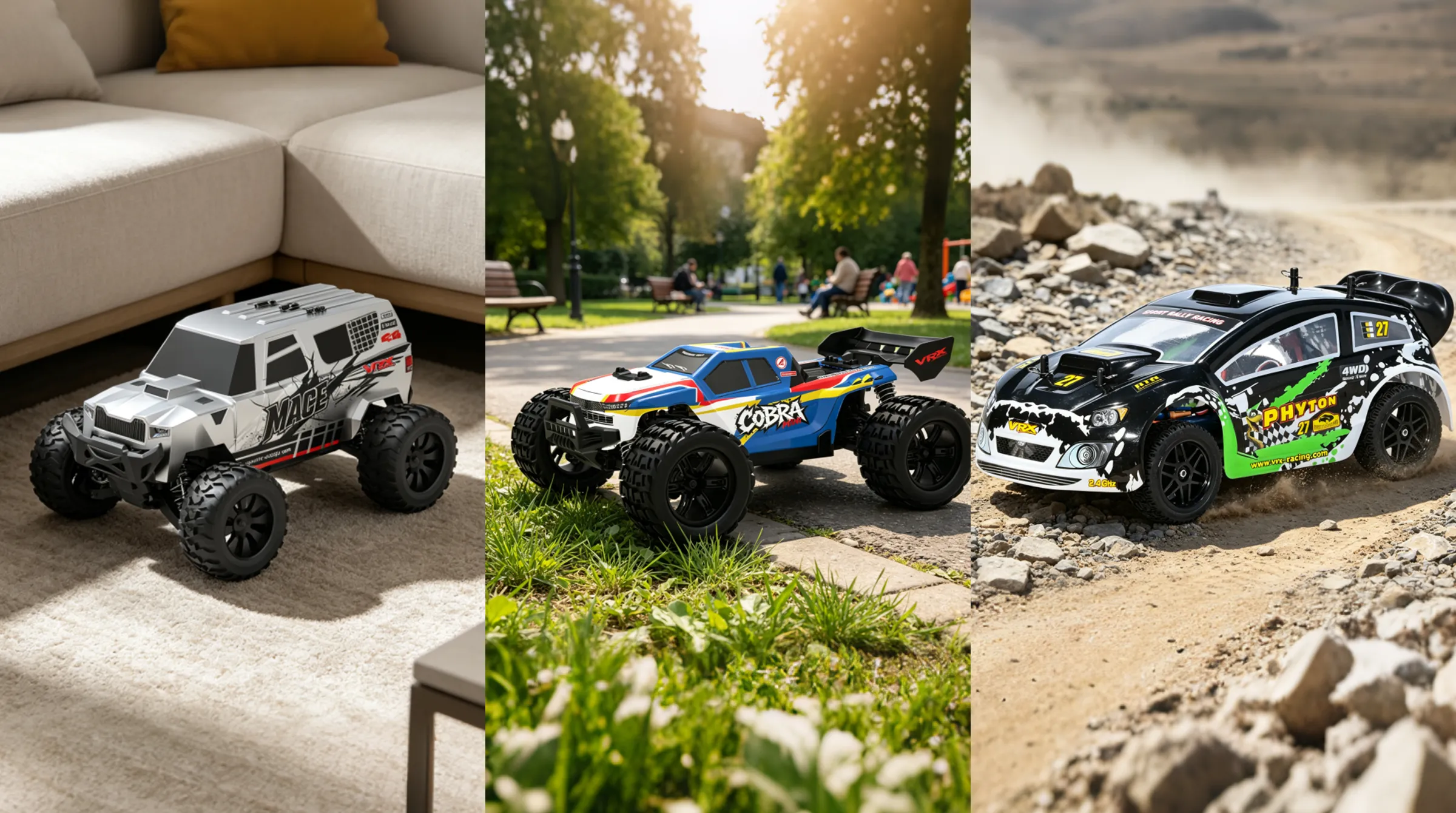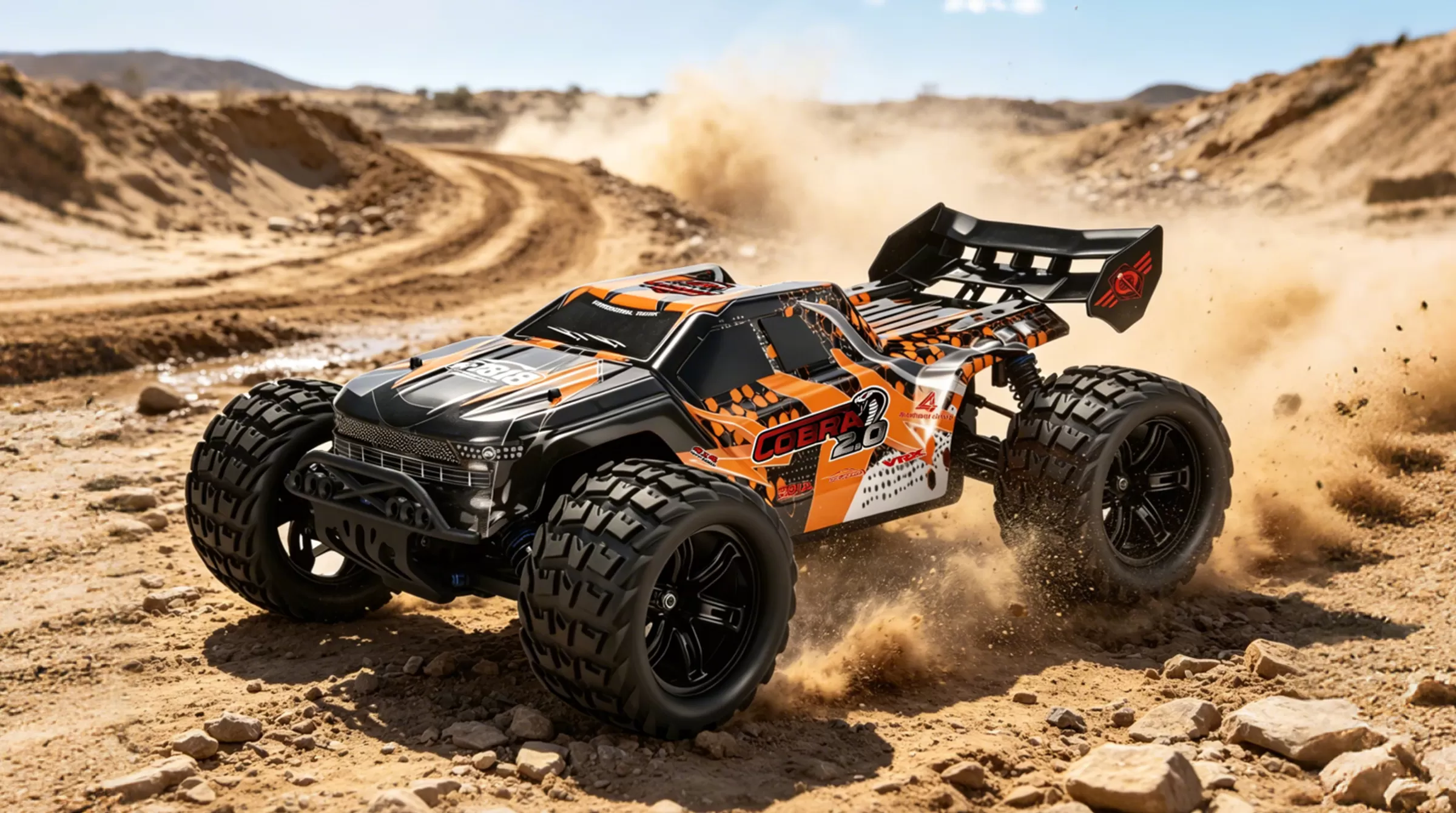
For retailers, distributors, and emerging RC brands, the right model depends on how unique the product needs to be and what resources your business can invest.
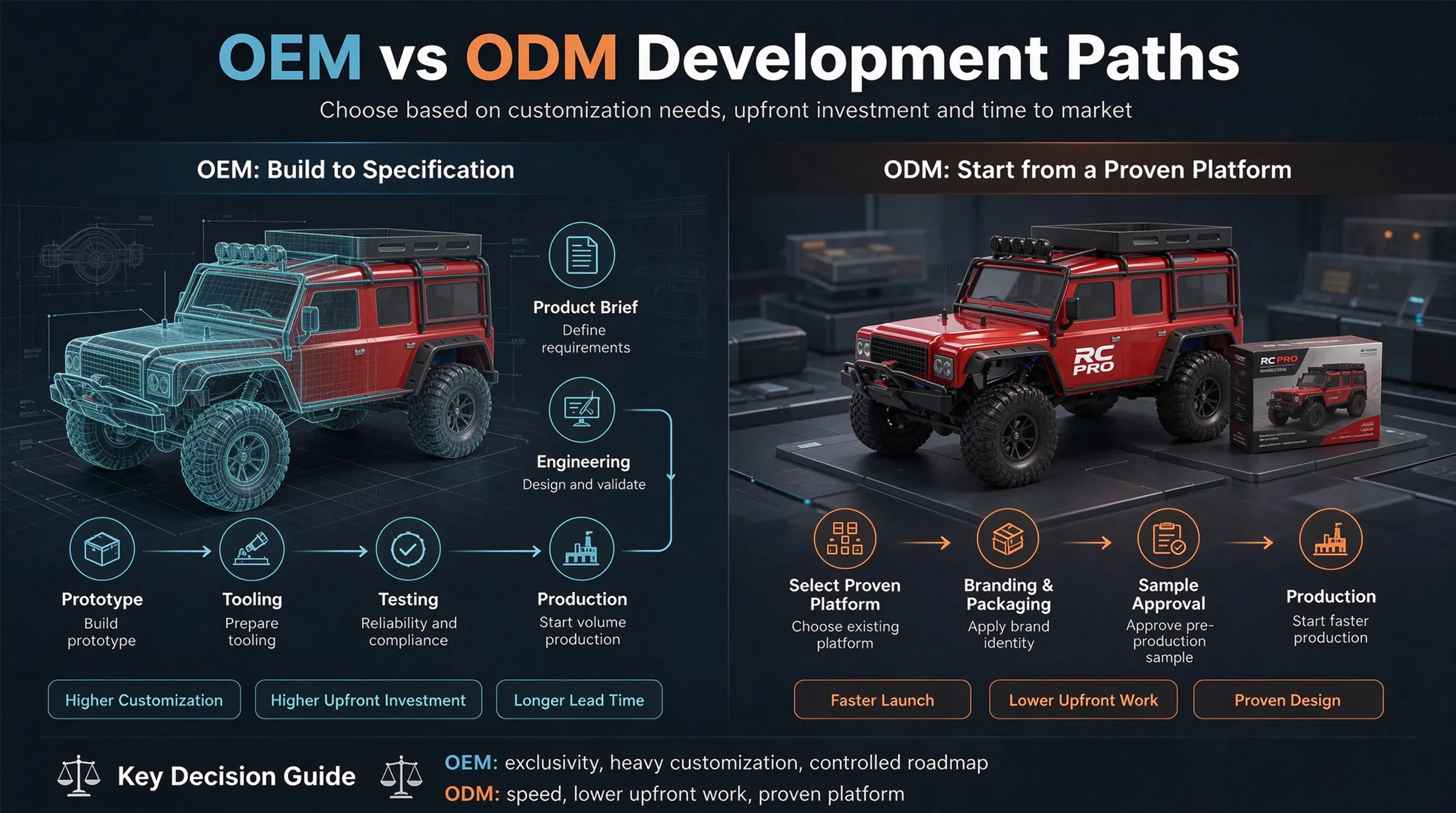
Suppliers do not always use the terms identically, so define the scope in writing. Generally, OEM manufacturing follows the buyer’s design or specifications, while ODM sourcing starts with a supplier-developed product that the buyer selects, brands, and may customize.
The difference between OEM and ODM is who defines the product.
With OEM (Original Equipment Manufacturer) production, the buyer usually brings the design, detailed specifications, or engineering requirements, and the manufacturer builds to them. The buyer control more things than in ODM, such as the chassis, components, electronics, body shell, packaging, and branding.
With ODM (Original Design Manufacturer) sourcing, the supplier already has a design or platform. The buyer picks a model and may customize colours, decals, packaging, accessories, or selected specifications. This can cut development work and shorten the launch, while the underlying design usually belongs to the supplier.
Factor | OEM RC cars | ODM RC cars |
Starting point | Buyer-led design or specification | Existing supplier-developed design |
Development effort | Usually higher | Usually lower |
Launch speed | Longer if engineering or tooling is needed | Often faster with a proven platform |
Customization | Potentially extensive | Usually within set options |
Upfront investment | May include engineering, prototypes, tooling, and testing | Often lower with a standard platform |
Differentiation | Greater scope for a unique product | Branding and selected changes may be sufficient |
Main risk | Cost, development time, and validation | Similar products may be sold to other buyers |
These are typical patterns, not rules appropriate to all the conditions. An ODM platform may allow major engineering changes, while OEM production may follow an existing buyer design with little development. Compare the actual scope, not just the label.
OEM is more meaningful to you when you need a product competitors cannot easily copy or buy from the same factory. It suits established brands with engineering resources, distributors looking for a distinct model, or businesses with enough expected volume to spread development costs across repeat orders. It also gives you more control over components, technical specifications, and product revisions—subject to the manufacturing agreement.
The trade-off is more work before mass production. A new design may need engineering reviews, prototypes, tooling, durability tests, and production validation. Costs thus come before the first sale.
Prepare a product brief with drawings or reference models, performance targets, materials, electronics, acceptance tests, and expected volumes. Separate mandatory features from optional changes. Define who approves prototypes and what happens if a test fails. Custom design is worth it only when it solves a clear customer problem or supports a viable business case.
ODM is more practical when launch speed, budget control, and a proven product architecture matter more than developing every component from scratch. The supplier has already developed the base platform, so you can focus on assortment, branding, pricing, and distribution.
ODM suits businesses testing a category: choose a proven vehicle, add branding or localized packaging, and measure demand before investing in a distinctive design.
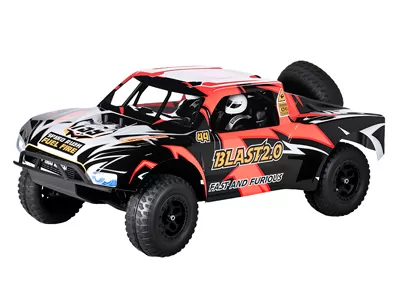
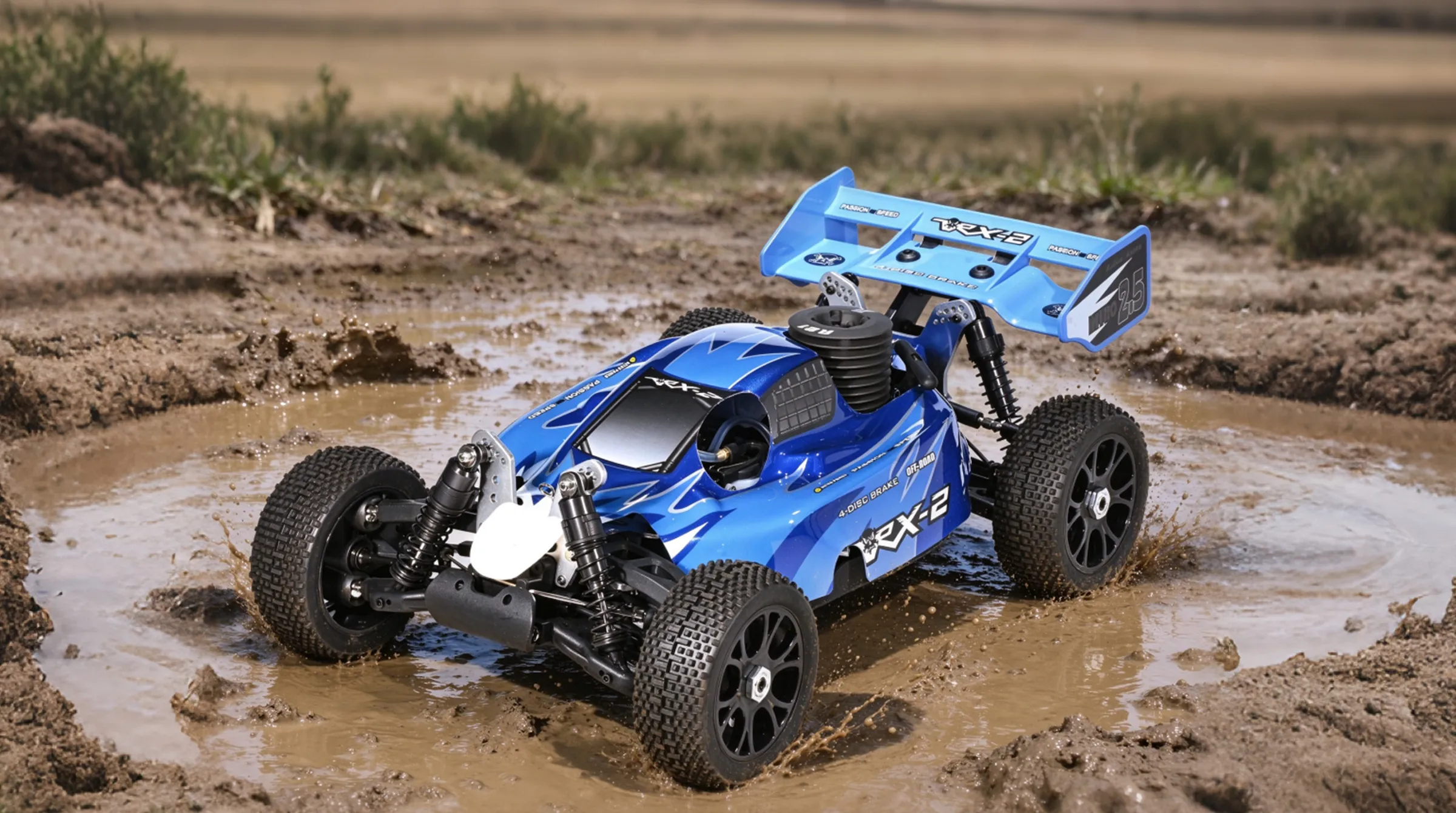
For example, an electric RC buggy may suit an off-road range, while an electric RC truggy offers a different stance and driving experience. Evaluate the base vehicle against customer expectations, local terrain, target retail price, and replacement-parts demand.
ODM still requires due diligence. Ask for the exact model specification, component list, relevant test records, packaging details, and a sample matching the planned order. Confirm which changes are available, whether they affect MOQ, and whether the same base model is offered to other brands.
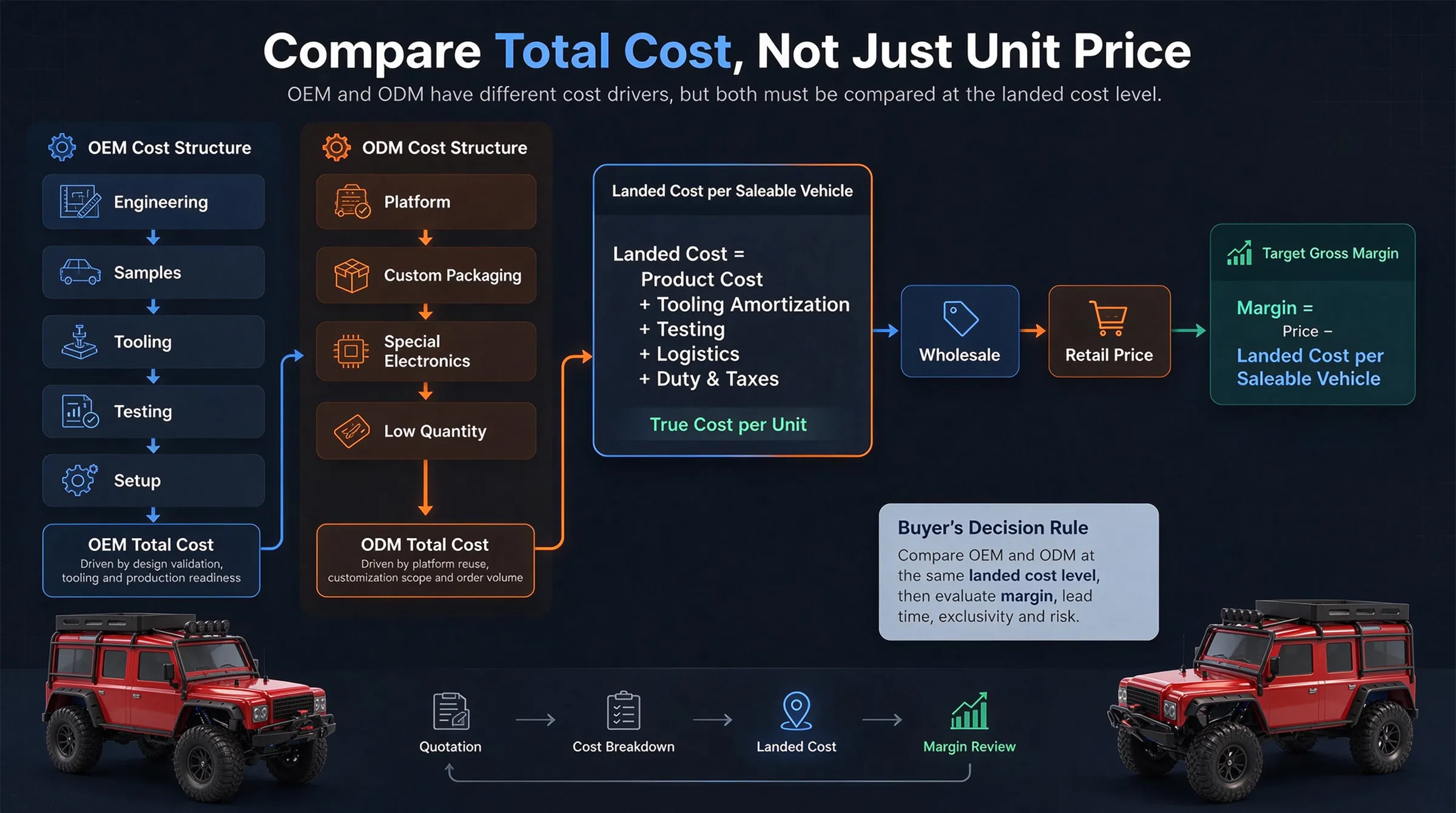
OEM and ODM quotations may cover different work. An OEM quote may list engineering, prototypes, tooling, testing, and production setup separately. An ODM quote can rise with customized packaging, special electronics, new colours, or low quantities.
Compare the full cost of:
Unit price at realistic order quantities.
Engineering, samples, tooling, and setup.
Testing and destination-market documentation.
Packaging, artwork, and translation.
Inspection, freight, import charges, and warehousing.
Spare parts, warranty replacements, and after-sales support.
Calculate landed cost per saleable vehicle, then estimate margin at planned wholesale and retail prices. Include an allowance for defects, returns, marketplace fees, and unsold stock. ODM may be commercially stronger if it launches earlier with less capital; OEM may be justified when differentiation supports higher demand or pricing.
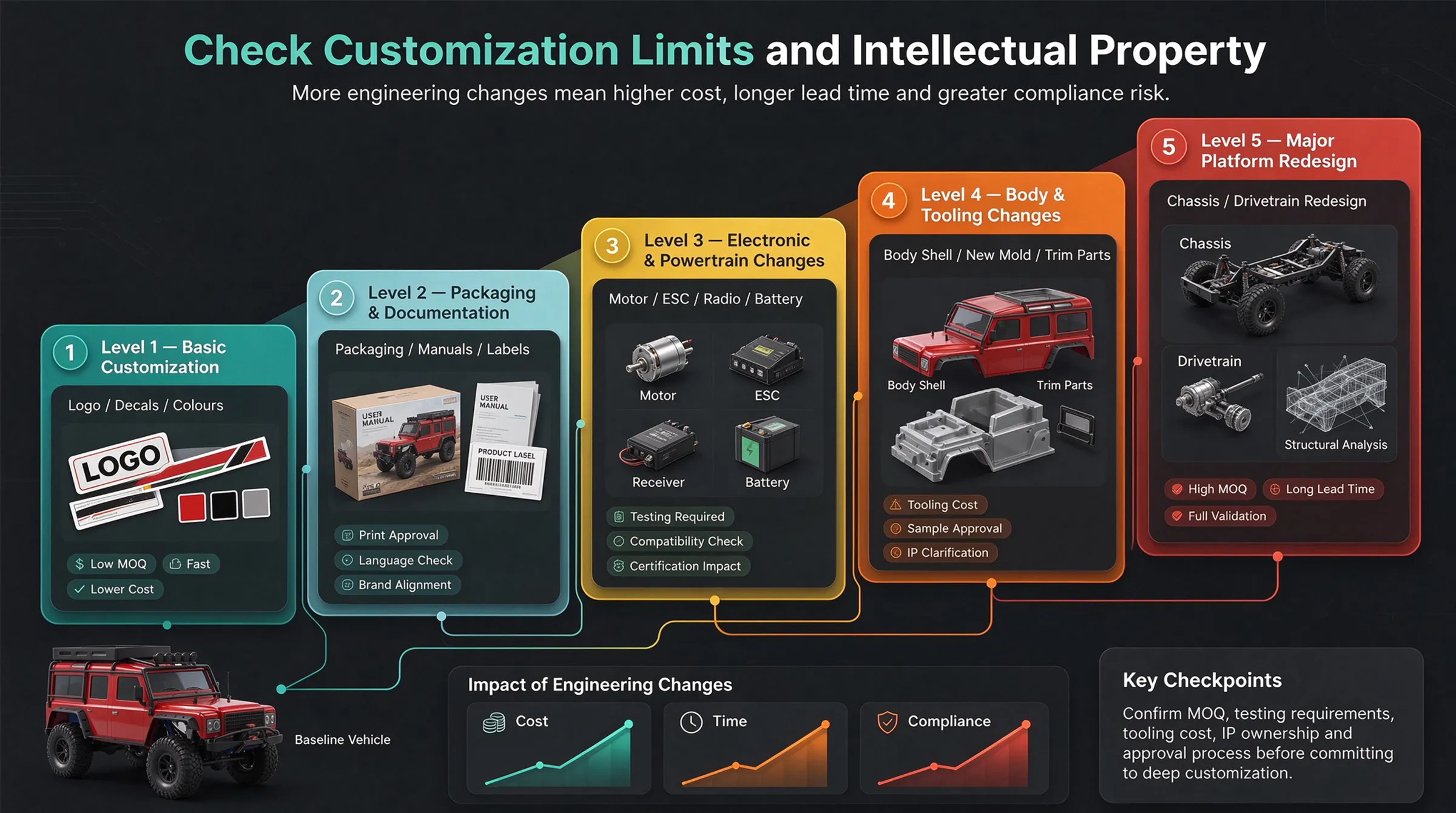
Create a feature-by-feature customization list before approving a project. Branding changes are usually simpler than engineering changes. Colours, decals, boxes, manuals, and accessories may be straightforward; chassis geometry, molds, drivetrain design, and electronics changes can affect cost, timing, and validation.
Customization | Typical complexity | Confirm before approval |
Logo, decals, colours | Low to medium | Artwork, colour matching, MOQ, sample approval |
Packaging and manuals | Low to medium | Languages, barcodes, warnings, print responsibility |
Motor, ESC, radio, or battery | Medium | Compatibility, supply continuity, testing, documents |
Body shell or mold changes | Medium to high | Tooling cost and ownership, approval, maintenance |
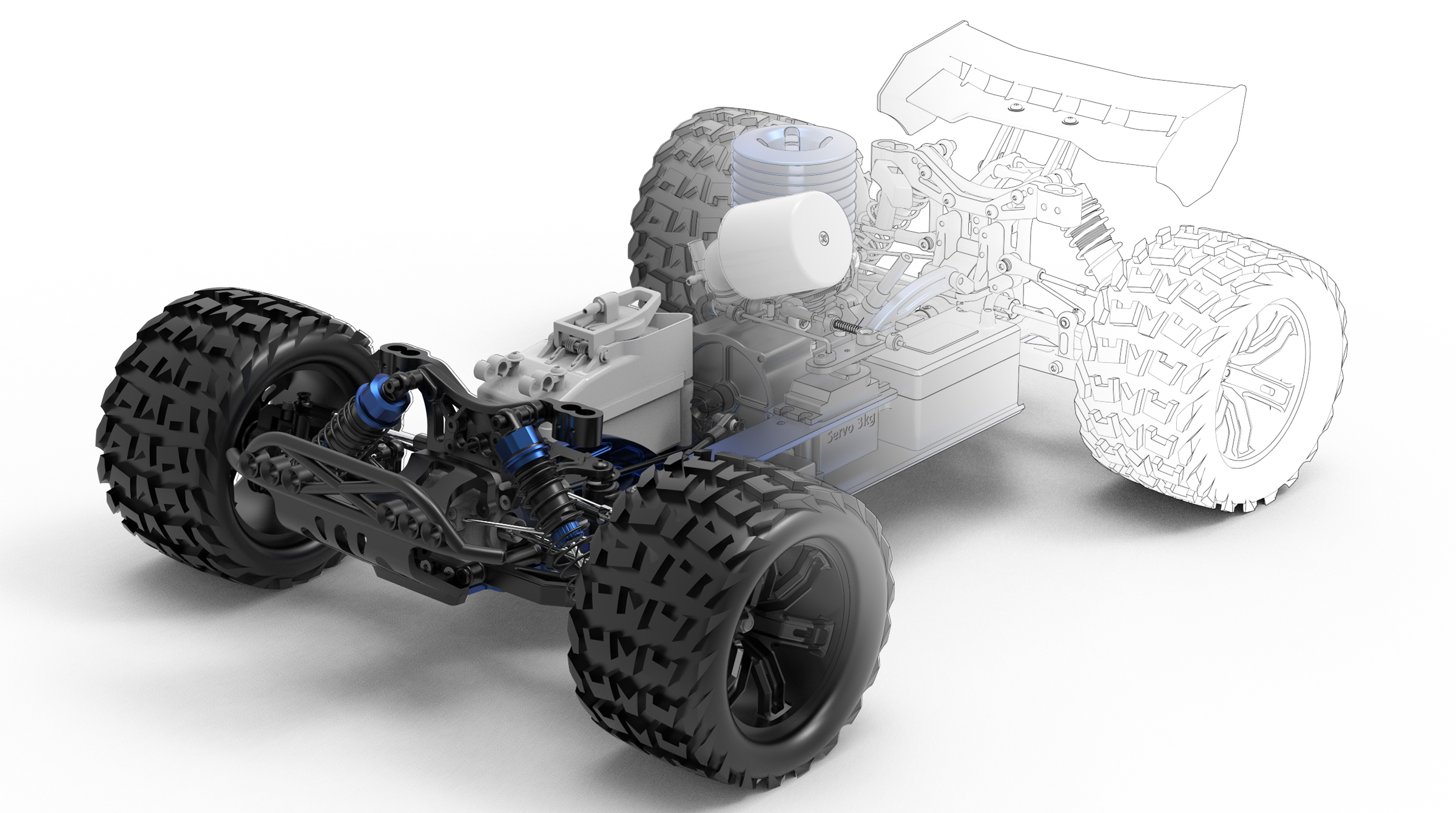
Chassis or drivetrain redesign | High | Engineering scope, prototypes, testing, IP, change control |
The contract should define ownership of existing designs, new drawings, molds, tooling, software or firmware where relevant, and custom artwork. State whether the manufacturer may reuse or sell the resulting design to other buyers. If exclusivity matters, specify its territory, duration, product scope, and any minimum purchase commitments. In addition, obtain professional legal advice if necessary.
Neither OEM nor ODM guarantees consistent quality. Ask how the supplier checks incoming components, assembly, electronics, final function, and packaging. Agree on measurable acceptance criteria covering the approved configuration, accessories, appearance, key functions, labels, and carton condition.
For OEM, plan prototype reviews and validation because a new design may have no production history. For ODM, confirm the bulk order will use the same components as the approved sample. Require written approval before substitutions, and agree on how defects or failed inspections will be resolved.
Compliance depends on the destination market and final configuration. Identify requirements for the vehicle, radio equipment, charger, battery, labels, warnings, and manuals before production. Request documents tied to the exact model and components, and clarify who prepares them and who pays for additional testing if the design changes.
Also verify spare-parts availability, warranty procedures, defect reporting, and replenishment lead times. A product’s business value depends on reliable after-sales support as well as the first shipment.
Use this guide as a starting point, then validate it against volume forecasts, budget, and launch deadlines.
Business situation | Likely starting point | Why |
New brand testing demand | ODM | Lower development burden and faster market feedback |
Retailer expanding an existing range | ODM | Adds products with limited engineering work |
Distributor wanting exclusivity | OEM or advanced ODM | Depends on required control and exclusivity scope |
Established brand with engineers | OEM | Better fit for buyer-led specifications |
Demand is uncertain | ODM pilot, then review | Tests the category before major investment |
Clear concept and forecasted scale | OEM feasibility study | Tests the return on engineering and tooling |
A hybrid route can also work. Launch with an ODM platform, gather customer feedback, then introduce selected engineering changes in later production runs. This staged approach reduces early risk, but has its own disadvantages: the modifications may require renewed tests, tooling, or compliance review.
Answer these questions during discussion between the suppliers before comparing final quotes:
Which design elements belong to the supplier, and which can be changed or owned by the buyer?
What are the MOQ and price breaks for the base model and each customization?
Which costs are one-time fees and which recur with every order?
What are the sample, tooling, testing, production, and shipping timelines?
Can the supplier provide an approved sample, component list, and written quality criteria?
How are substitutions, defects, delays, and failed inspections handled?
What documents are needed for the destination market, and who prepares them?
Which spare parts will remain available, and how long can repeat orders be supported?
What are the payment milestones, delivery terms, and named shipping location?
How is exclusivity defined if it is part of the agreement?
Before issuing a purchase order, keep four documents together: the approved product specification, commercial quotation, quality and compliance requirements, and signed manufacturing agreement. Date each revision and identify who approved it so design discussions do not become conflicting production instructions.
For ODM, approve the exact base model and list all permitted changes. For OEM, approve design milestones, prototype criteria, tooling terms, and the process for engineering changes. Align the launch date with realistic production and shipping lead times, then review defects, customer feedback, and reorder demand after the first sales cycle.
Businesses comparing established RC platforms and manufacturing capabilities can review product categories and discuss sourcing requirements with VRX Racing.