Buying RC cars in bulk can lower unit costs and help retailers, distributors, and online sellers build a consistent product range. But a low quote does not guarantee a profitable order. Model selection, sample quality, minimum order quantity (MOQ), compliance, shipping, and spare-parts support all affect the real cost of stocking RC vehicles.
Use this checklist before choosing a supplier or issuing a purchase order. It is bound to help buyers compare offers on the same basis, reduce avoidable risks, and plan a first order that can be replenished successfully.
Start with the people who will buy the cars:
Hobby shops may need easy-to-use ready-to-run (RTR) vehicles and replacement parts.
Specialist retailers prefer higher-performance models.
Online sellers must consider product photography, shipping dimensions, return rates, and clear specification pages.
The distributors need a range broad enough for different dealer budgets without tying up too much stock in slow-moving products.
Before requesting quotations, write down your target retail price, expected monthly sales, preferred scale, vehicle type, power system, and customer experience level. Decide whether you will sell complete vehicles, kits, accessories, or a mix. This brief helps suppliers recommend relevant models.
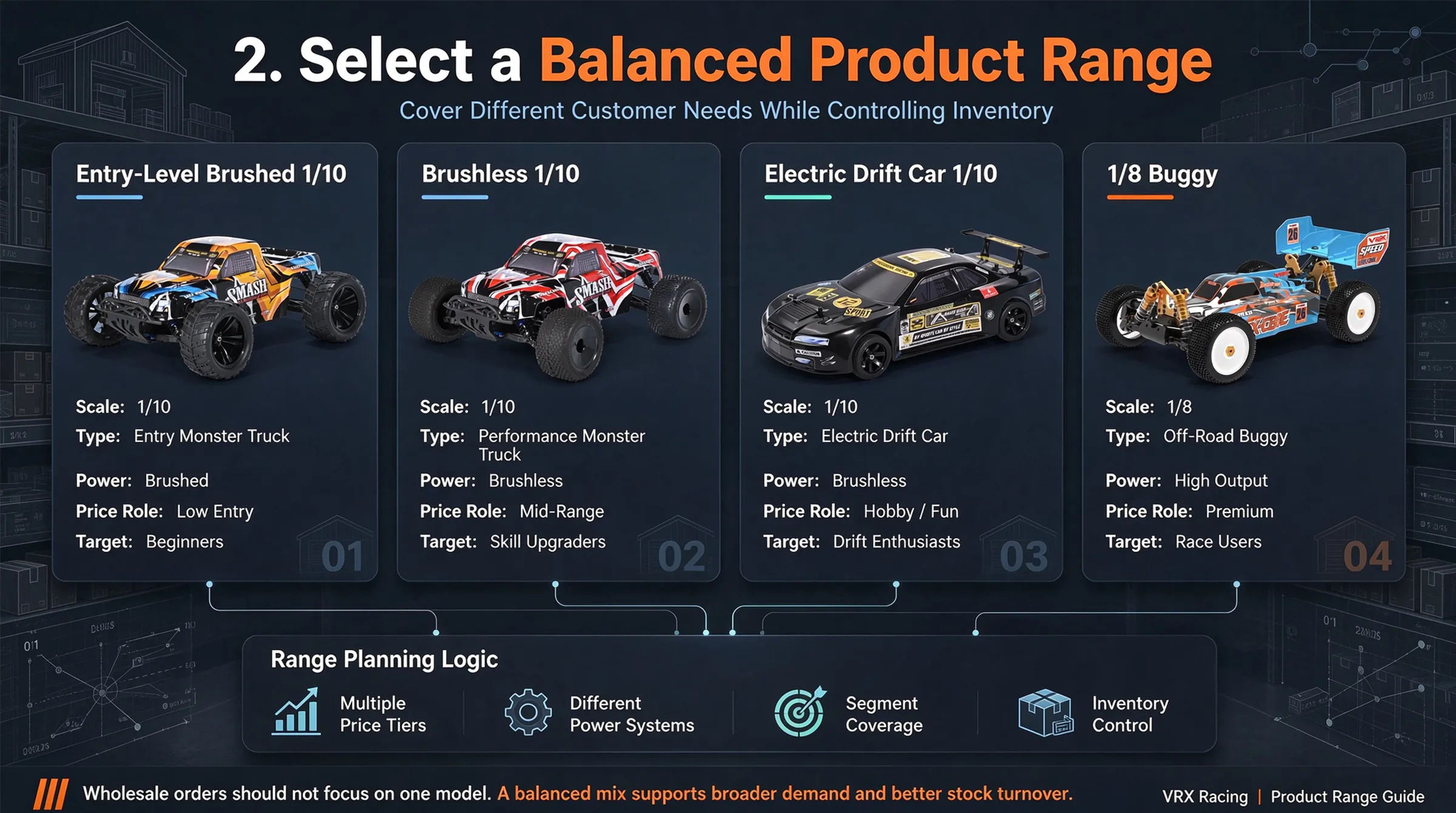
Avoid building a wholesale order around one model. A reasonable mix can test several customer needs while keeping inventory manageable. Compare scales, body styles, power systems, and price points, then choose a small number of products with clear roles in your range.
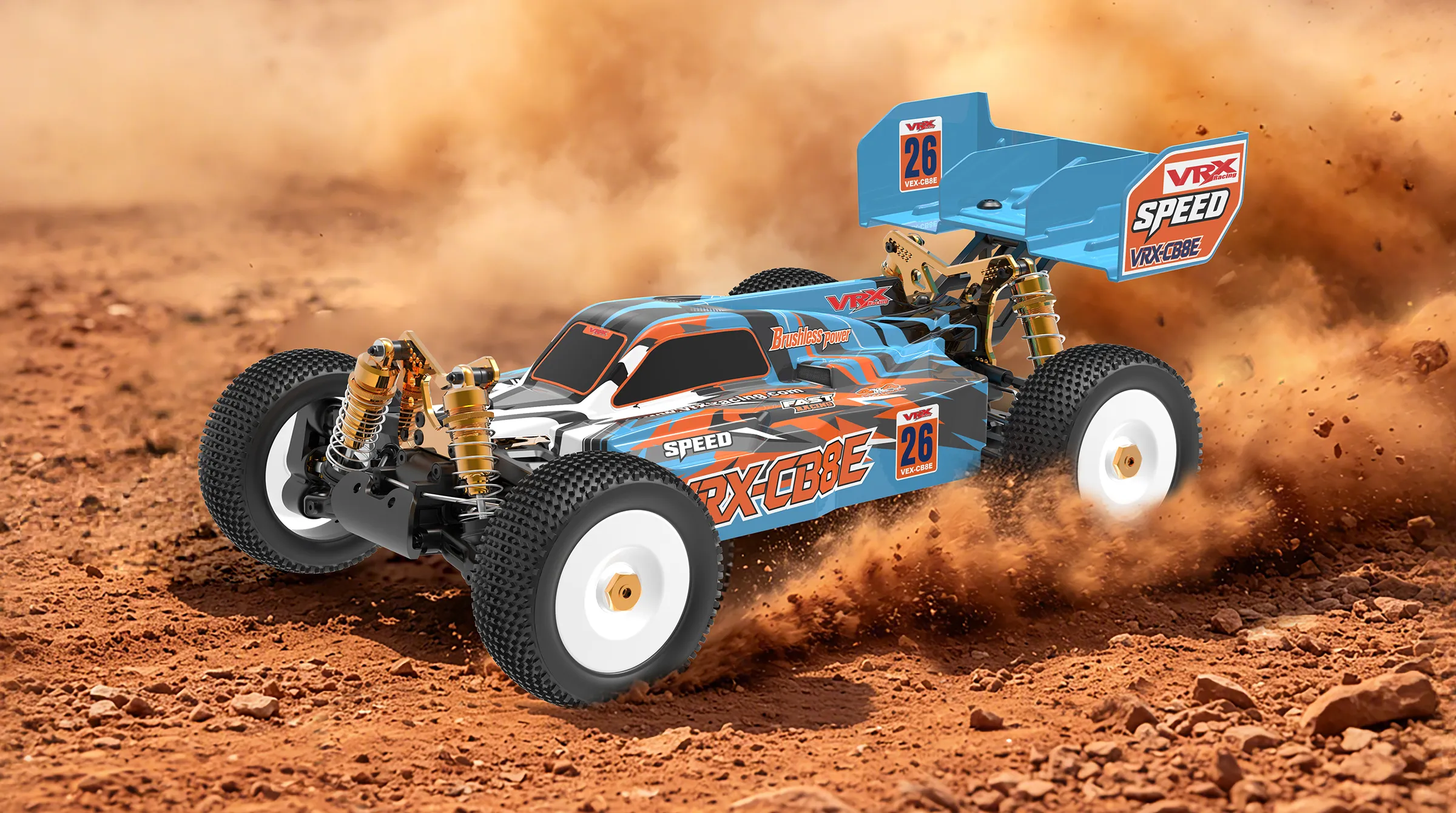
For example, a 1/10 brushless RC car may fit a performance-oriented range, while an entry-level brushed model may reach buyers with a tighter budget. If you also target larger off-road vehicles, compare options such as 1/8 Scale RC Buggy Wholesale using the same criteria. For an on-road segment, Electric RC Drift Car Wholesale may represent a different customer interest from buggies and trucks.
For every candidate, confirm:
The motor type.
The ESC rating.
The battery and charger.
The transmitter and receiver.
The drive system.
The Tires.
Other spare parts.
Similar model names do not mean the identical equipment. Request the exact model number and bill of materials before comparing prices.
Verify the company’s legal name, business address, export experience, and role in production. A supplier may be a manufacturer, trader, or both. Compare response time, technical knowledge, documentation, production capacity, and after-sales service.
Ask how the supplier checks incoming components, assembly quality, electronic function, and final packaging. Request recent photos or video of the actual model. For a substantial order, arrange a factory tour or independent inspection. Confirm the contract, invoice, and payment recipient refer to the agreed company.
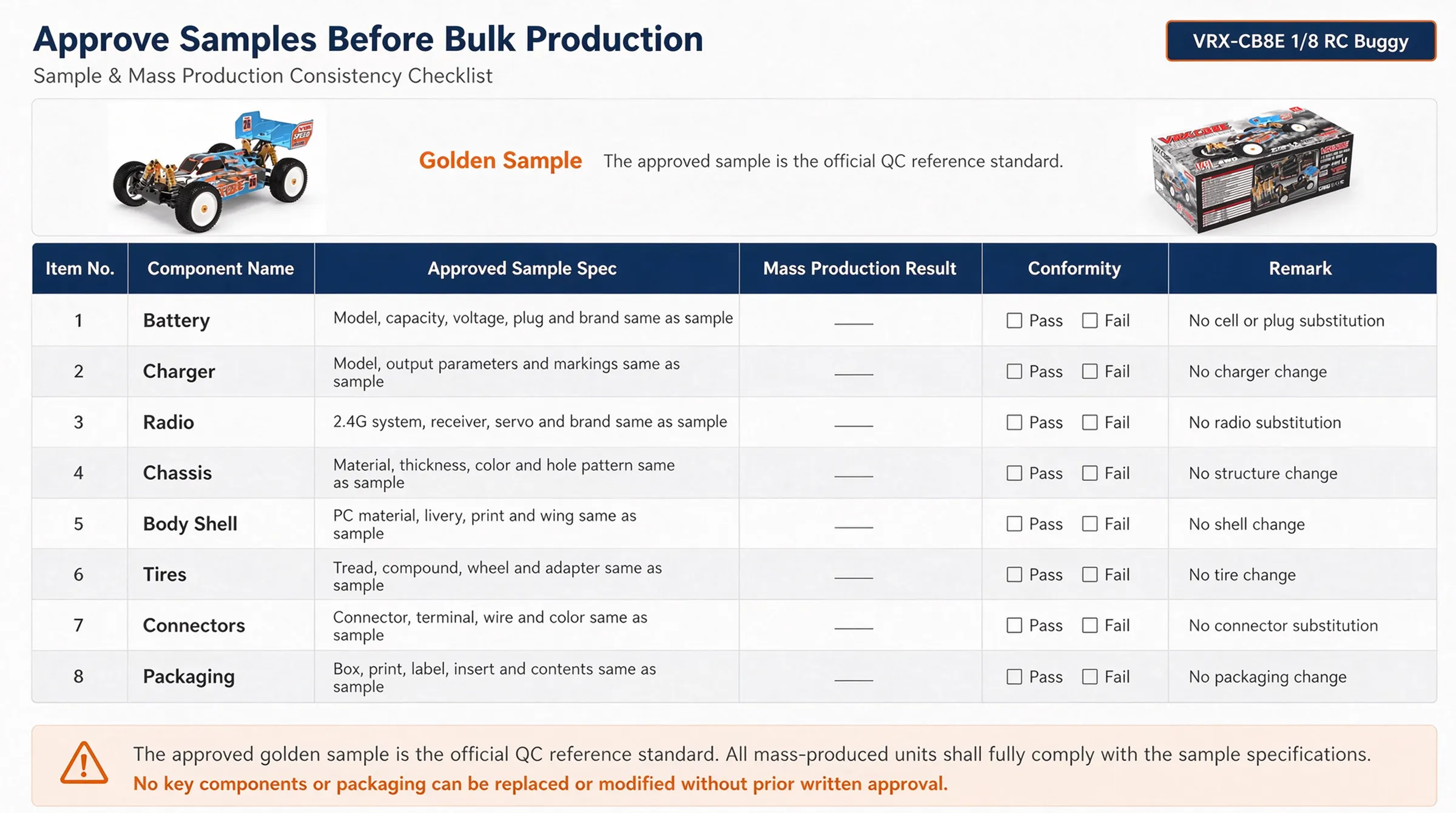
A sample is a quality check, not just a demonstration. Order the exact configuration planned for mass production, including the battery, charger, radio system, accessories, manuals, and retail packaging where applicable. Test acceleration, steering, suspension, drivetrain noise, run time, charging instructions, and basic maintenance.
Inspect the chassis, body shell, tires, screws, connectors, wiring, and moving parts. For high-value orders, test more than one sample. Check whether a new user can follow the manual without confusion.
Keep photos, test notes, and the approved sample reference. Record what must not change during production, including key components, colour, decals, included accessories, packaging, and label information. Agree in writing how defects, missing items, or a mismatch with the approved sample will be handled.
Ask for the minimum order quantity (MOQ) per model, colour, and configuration. Clarify whether mixed-model orders are allowed and whether custom graphics, branded boxes, language-specific manuals, or special accessories have separate minimum quantities. A low MOQ for standard vehicles does not necessarily apply to customized products or packaging.
Get written estimates for sample time, production lead time, inspection, and dispatch. Confirm the schedule, likely bottlenecks, and process for reporting delays before placing an order.
List each SKU, quantity, price, configuration, packaging standard, delivery term, and inspection requirement in the purchase order. Identify the approved sample and prohibit substitutions without written consent.
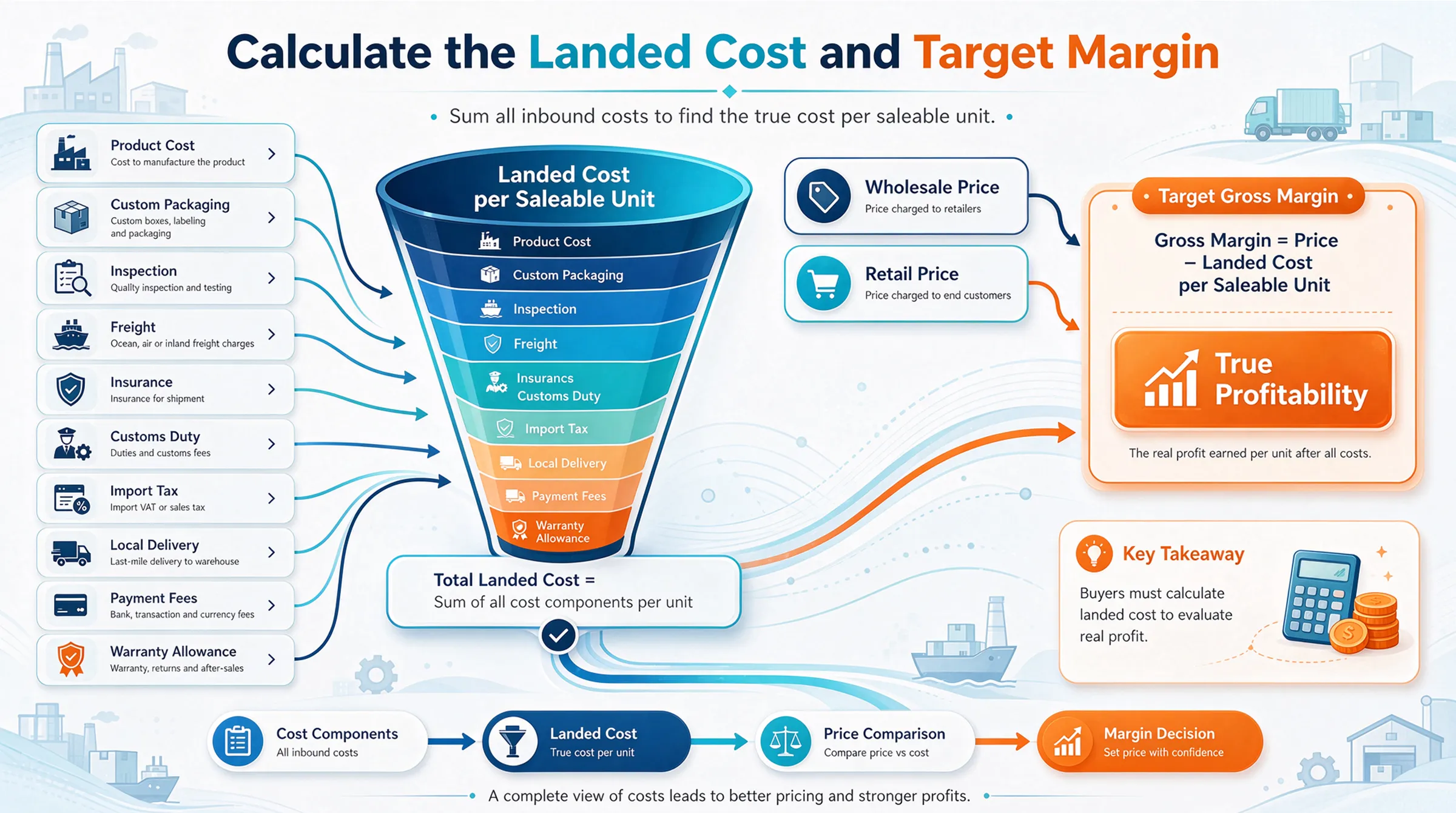
Compare suppliers using the total cost to get saleable units into your warehouse—not just the factory price. That include many aspects:
Product cost.
Custom packaging.
Inspection.
Export handling.
Freight.
Insurance.
Customs duty.
Import tax.
Customs brokerage.
Local delivery.
Payment fees.
An allowance for damage or warranty.
Use a simple calculation:
Landed cost per saleable unit = total order and import costs ÷ expected saleable units.
Expected saleable units should reflect any units reserved for testing, damaged in transit, or held for warranty replacement. Then compare the landed cost with your planned wholesale or retail price. Gross margin must also leave room for marketplace fees, promotions, warehousing, customer support, and returns.
Compare quotes using identical quantities, packaging, destination, and delivery terms. A higher unit price may offer better value through more consistent quality, available spare parts, or stronger packaging. Check exchange-rate exposure and quote expiry.
Before production, confirm which rules apply to the vehicle, transmitter, receiver, charger, battery, packaging, and intended age group. Do not rely on a generic certificate without checking the model number, component versions, test scope, and responsible company.
Request relevant test reports, declarations of conformity where required, product labels, warnings, manuals, and traceability details. For markets with language requirements, specify the required manual and packaging languages before artwork approval. If the product uses lithium batteries, confirm that the supplier can provide the required battery and transport documents for the intended shipping method.
Resolve compliance before production. Own-brand products, modifications, or sales across multiple markets may create additional obligations; confirm them with a qualified specialist before ordering in bulk.
Ask for a spare-parts catalogue with part numbers, prices, stock status, and typical replenishment times. Identify common wear or crash parts. Confirm whether the supplier can provide matched parts throughout the product’s planned sales life.
Packaging should protect the vehicle and suit your channel. Check carton strength, internal protection, labels, barcodes, dimensions, and weight. For e-commerce, test parcel durability; for retail, ensure the box is clear and easy to store.
Agree on the warranty process: evidence needed for a claim, response time, replacement parts, credit policy, and who pays transport for confirmed defects. A clear process makes it easier to control service costs and keep customers informed.
Before paying a deposit, confirm the bank details using a trusted channel and match the beneficiary to the contracted company. Avoid relying on last-minute bank-detail changes sent only by email. Link payment milestones to clear events. The exact schedule should reflect supplier risk, order size, and your negotiating position.
Confirm the Incoterms rule and named place in the contract. These terms allocate specific delivery tasks, costs, and risks. Ask your forwarder to itemize origin charges, freight, insurance, destination fees, customs clearance, and delivery.
If batteries are included, verify carrier acceptance and the required packaging and documents before booking.
Ensure the commercial invoice, packing list, transport documents, and declared goods descriptions match the actual shipment.
Before final payment or dispatch, use an agreed inspection plan. Define acceptable defect limits in advance and specify what happens if the inspection fails. For large orders, consider a third-party inspector rather than relying only on supplier photos.
At arrival, compare goods with the purchase order and packing list. Photograph damage, record shortages, and test sample units before distribution. Report discrepancies promptly and track sales, defects, and spare-parts demand by SKU to guide the next order.
Checkpoint | Confirm before approval |
Product | Model numbers, configurations, approved sample, and included accessories |
Supplier | Verified company details, communication, quality process, and parts support |
Quantity | MOQ by model, mixed-order rules, and realistic sales forecast |
Cost | Landed cost, target margin, taxes, freight, and warranty allowance |
Compliance | Required test reports, labels, manuals, and battery documents |
Contract | Lead time, inspection criteria, payment milestones, and defect remedies |
Logistics | Incoterms, named place, shipping method, insurance, and customs documents |
After-sales | Spare-parts list, warranty process, and reorder lead time |
Assign an owner to every open item before releasing the purchase order.