Choosing an RC car supplier is not a simple purchase decision; it is a partnership decision. The supplier you select will influence your product quality, your after-sales burden, your margins, and your ability to scale. Yet many buyers—especially those new to the category—repeat the same avoidable mistakes.
This article is to break down the most common errors, explains why each one causes damage, and show what to do instead.
The lowest quoted unit price is rarely the lowest total cost.
A supplier that shaves cost by using lower-grade polycarbonate, thinner chassis plastics, or uncertified electronics will possibly hand you a product that generates returns. Every warranty claim, every replacement body shell, and every frustrated customer erodes the margin advantage you thought you had.
Price also hides structural costs. A factory that quotes a low unit price but charges separately for mold maintenance, packaging design, and spare parts will end up costing more than a supplier with a higher upfront quote and a clearer cost structure.
Ask for a full cost breakdown before comparing quotes. Include tooling, sampling, packaging, shipping, and spare parts in the calculation.
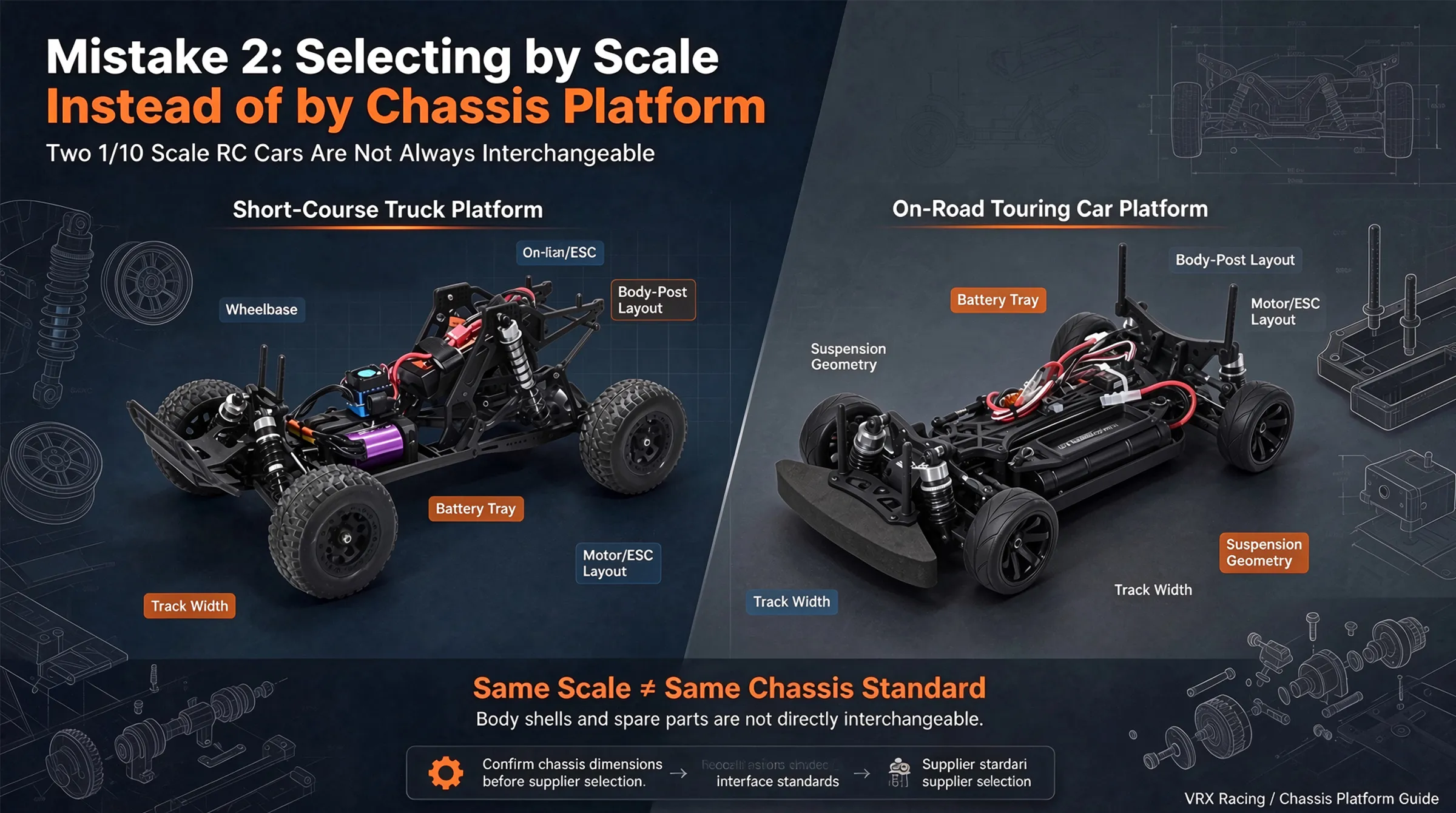
Two suppliers may both offer a car with the same scale. That does not mean their vehicles share a wheelbase, track width, or body-post layout. Scale is a marketing label, not an engineering standard.
A body shell designed for one 1/10 platform will not fit another without any modification. A battery tray positioned for a specific chassis will not accept a pack from a different supplier’s lineup.
This mistake is especially common with OEM projects. A buyer commissions a 1/10 Scale RC Car OEM platform assuming it will accept existing accessories, only to discover that the mounting points and electronics layout are proprietary.
Confirm the exact chassis dimensions, mounting points, and component interfaces before committing to a supplier. Treat the chassis as a fixed engineering reference, not a category label.
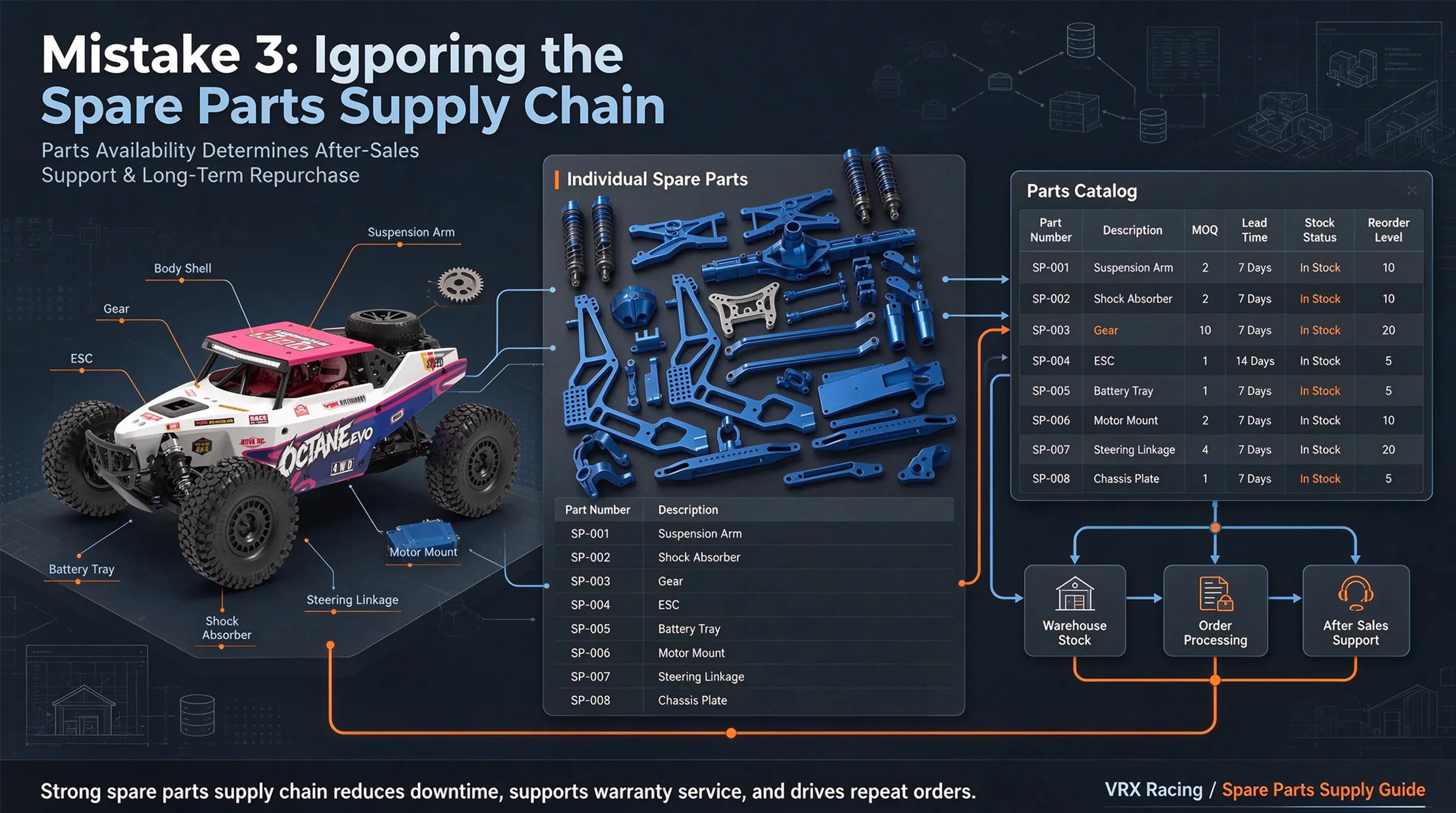
A vehicle without spare parts is a one-time sale. Customers who cannot replace a broken component will not buy from you again.
Many suppliers treat spare parts as an afterthought. They only stock completed vehicles with no individual components. When a customer needs a replacement part, the supplier either cannot provide it or quotes a lead time measured in months.
Before signing with any supplier, ask:
Which components are stocked as spare parts?
What is the typical lead time for a replacement order?
Are parts priced separately or bundled?
Does the supplier offer a parts catalog with part numbers?
A supplier that cannot answer these questions clearly is not prepared to support a long-term retail or distribution business.
RC cars contain lithium batteries, radio transmitters, and electronic speed controllers. Each of these components is subject to safety and compliance regulations in most markets.
Common certification gaps include:
Uncertified 2.4GHz transmitters that interfere with other devices.
LiPo packs without UN 38.3 transport documentation.
Battery chargers without overcharge protection certification.
Toys without age-appropriate safety warnings.
Request copies of all relevant certificates before placing a production order. Verify that the certificate matches the exact component being supplied, not a similar model from the same factory.
Even a proven platform can have production variances. A body shell molded on a worn tool may not fit the chassis the way the sample did. A batch of ESCs may have a firmware version that behaves differently under load.
The prototype and pilot run stages exist to catch these problems before they reach your customers. Skipping them saves weeks upfront and costs months in returns, replacements, and reputation damage.
A disciplined supplier will insist on sampling even when the buyer wants to move fast.
Minimum order quantities and tooling fees are the two most common sources of budget surprises in RC sourcing.
MOQs vary dramatically by product type. A graphics-only customization on an existing platform may start at 200 units. A new body shell requiring a dedicated steel mold may require 1,000 units or more. A full chassis development project with injection molds for structural components may push the MOQ higher still.
Tooling costs are separate from unit costs. A mold fee is a one-time capital expense that belongs to the buyer. Some suppliers amortize the tooling cost into the unit price; others charge it upfront. Either way, the cost exists and must be accounted for.
Ask for a written breakdown of tooling costs, MOQ thresholds, and amortization terms before agreeing to a development timeline.
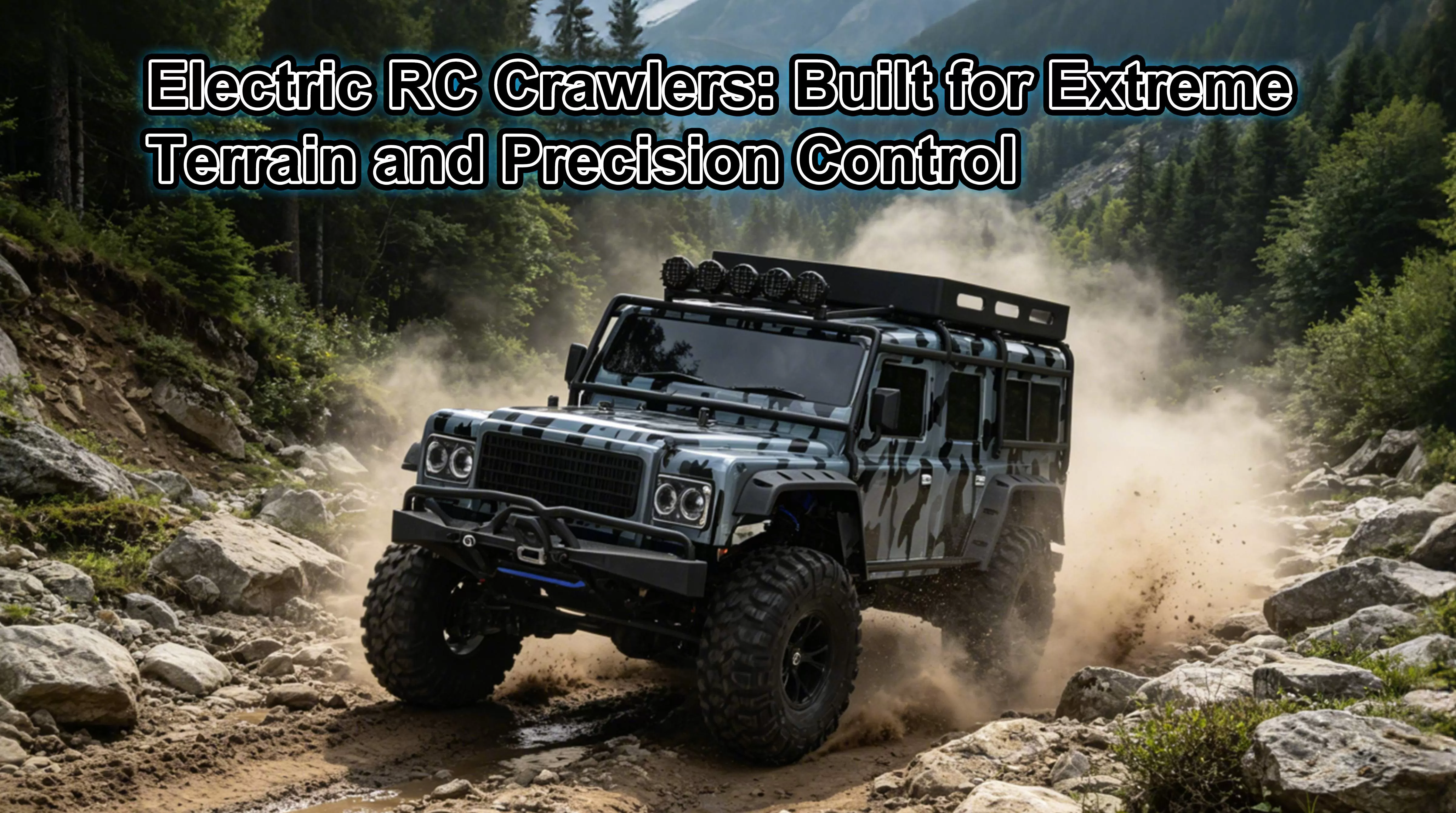
Not every RC factory is equally strong in every vehicle category. A supplier that excels at 1/10 brushless buggies may have limited experience with crawler suspension geometry. A factory that produces excellent Electric RC Crawler platforms may not have the tooling or expertise for high-speed on-road cars.
Product category fit matters because engineering knowledge is not transferable. Crawler suspension design, buggy aerodynamics, and drift car steering geometry are distinct disciplines. A supplier without experience in your target category will learn at your expense.
Ask for examples of current production in your specific category. Request references from buyers who have launched similar products. A 1/8 Scale RC Buggy Wholesale program requires different engineering support than a 1/18 crawler project, even if both are “RC cars.”
Development projects fail when files are confusing, versions are unclear, or feedback is not documented.
Set communication standards from the start:
Agree on a single file format for CAD, drawings, and artwork.
Use version numbers on every document.
Confirm approvals in writing, not in chat.
Maintain a change log that both parties can access.
Designate one technical contact on each side.
These habits cost nothing to implement and save enormous time over the course of a development project.
Payment terms reveal how a supplier views risk. A supplier that demands full payment upfront before tooling has either been burned by previous buyers or does not have the working capital to fund production.
Standard terms in the RC manufacturing industry typically follow a milestone structure:
Deposit on project approval (30–50%).
Payment on sample approval (20–30%).
Balance before shipment (20–50%).
Terms that deviate significantly from this pattern should be examined carefully. A supplier asking for 100% upfront may be undercapitalized. A supplier offering 100% payment on delivery may be inexperienced or desperate for orders.
Clarify what happens if the pilot run fails, if tooling is late, or if production quality does not match the approved sample. A clear risk allocation clause protects both parties.
Remote sourcing is convenient, but also risky: photos and videos can be staged. Certificates can be borrowed. A trading company can present itself as a factory.
An audit—whether in person or through a third-party inspection—verifies that the supplier actually has the equipment, staff, and processes it claims.
An audit should confirm:
Injection molding machines and vacuum-forming equipment are on site.
Assembly lines exist and are operational.
Quality control staff are present and follow documented procedures.
Warehouse space is adequate for raw materials and finished goods.
Spare parts inventory is physically present.
If an in-person visit is not practical, commission a third-party audit. The cost is minimal compared to the risk of partnering with a supplier that cannot deliver.
Before committing to any supplier, confirm the following:
Full cost breakdown provided, including tooling, sampling, packaging, and shipping.
Chassis dimensions and mounting points documented.
Spare parts catalog and lead times confirmed.
Certifications verified for batteries, transmitters, and chargers.
Sampling and pilot run process defined.
MOQ and tooling terms agreed in writing.
Category-specific production references available.
Communication protocol and file management standards established.
Payment milestones and risk allocation clauses reviewed.
Factory audit completed or scheduled.
A supplier that hesitates on any of these points is not necessarily a bad supplier. But a supplier that cannot provide clear answers is a supplier that has not thought through the partnership. The right partner will welcome scrutiny. It is a sign that you take the business seriously—and that you expect them to do the same.
For buyers exploring OEM and wholesale opportunities, VRX Racing publishes its manufacturing capabilities, product categories, and contact process openly. Reviewing how a supplier presents itself before the first conversation is one of the simplest ways to filter out the wrong partners early.