When RC enthusiasts talk about scale, 1/8 is often treated as simply a larger version of a 1/10 model. In reality, a 1/8 RC nitro car represents something more significant: a platform where engine power, chassis strength, suspension travel, drivetrain durability, and driver control work together.
This is why the 1/8 scale nitro car remains popular among serious hobbyists and off-road racing enthusiasts. The larger platform provides enough room for a powerful nitro engine, robust mechanical components, larger tires, and adjustable suspension without making the vehicle excessively difficult to control.
For manufacturers such as VRX Racing, the 1/8 platform is an opportunity to combine realistic combustion performance with the durability required for demanding off-road driving.
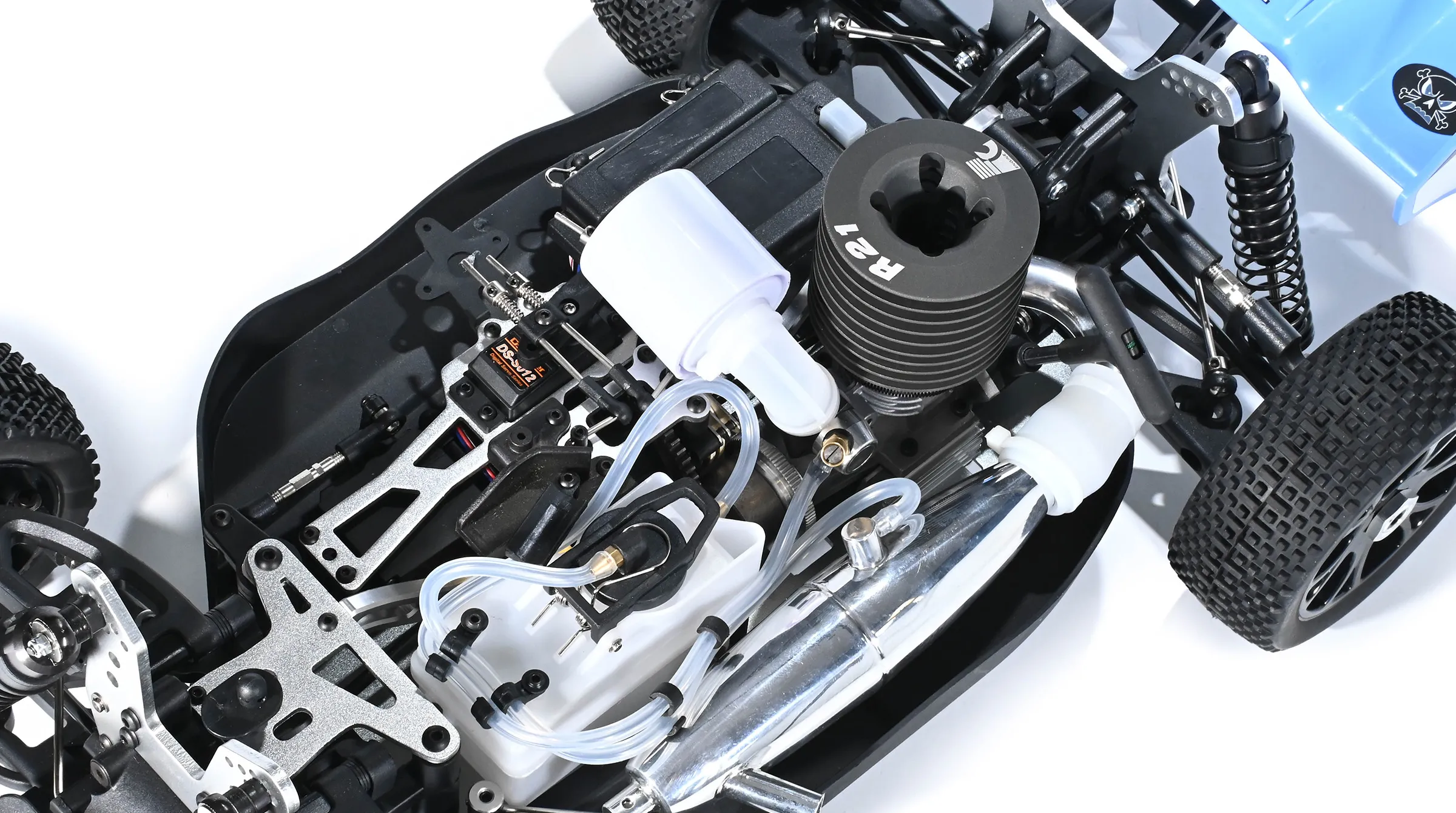
A 1/8 nitro rc model is powered by a combustion engine rather than an electric motor and battery system. This creates a very different driving experience. The engine produces a distinctive exhaust note, power delivery changes with throttle and tuning, and the vehicle requires fuel management and engine maintenance.
The physical size also matters. A typical 1/8 scale nitro RC platform has enough chassis space to accommodate larger drivetrain components and a substantial fuel tank while maintaining a balanced layout.
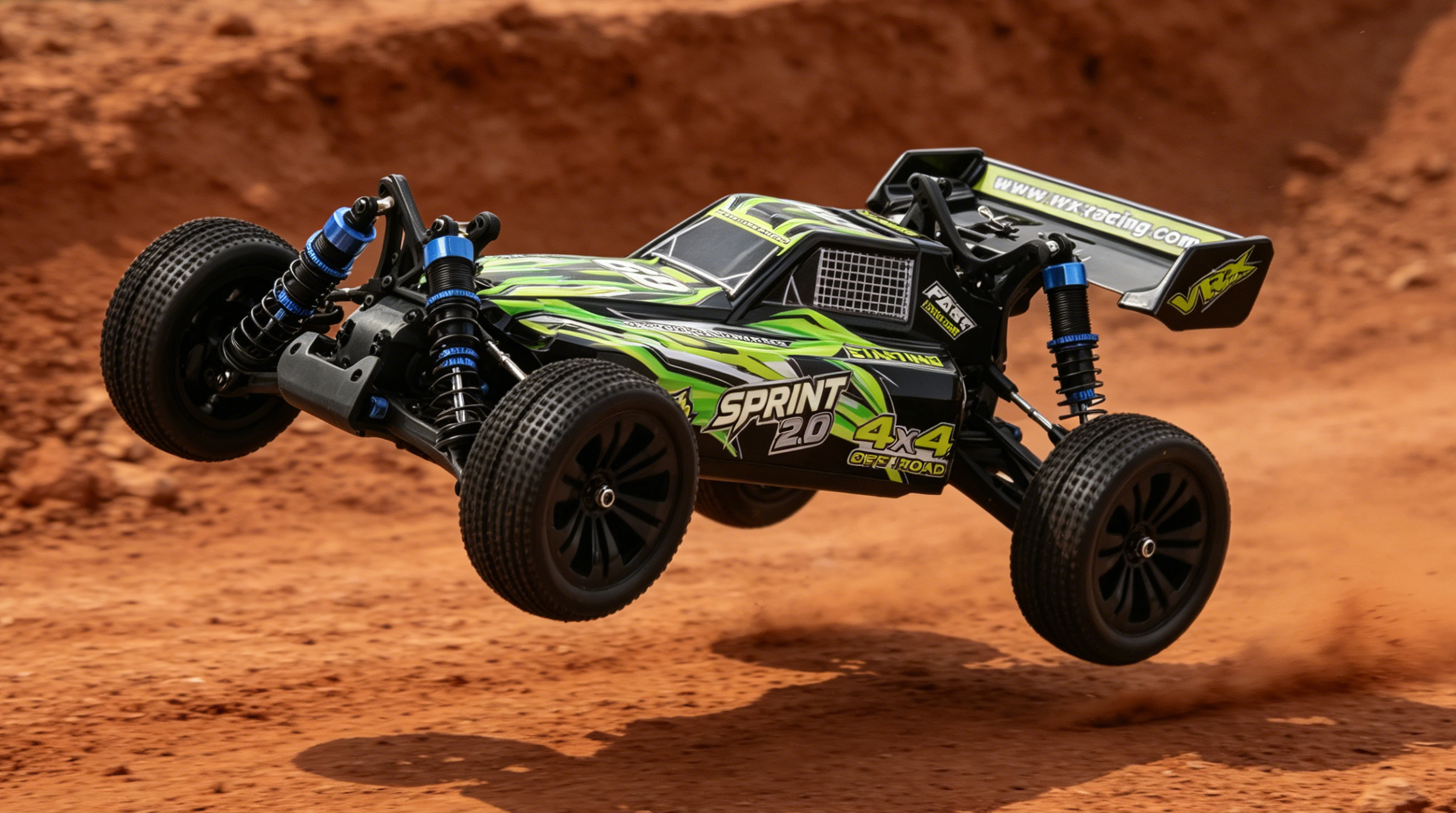
VRX Racing's 1/8 nitro range includes 4WD off-road models such as the VRX-1 and VRX-2. The lineup combines SH 21 or SH 28 engines with rugged chassis construction and suspension systems designed for demanding terrain. Depending on the model and configuration, speeds can reach around 60 km/h.
The result is not simply a bigger RC car. It is a mechanical system designed around sustained performance.
The biggest advantage of nitro RC cars 1/8 scale is the balance between size and performance.
A larger chassis can provide greater ground clearance, a longer wheelbase, and more room for suspension movement. These characteristics are particularly useful when driving over loose dirt, gravel, rocks, jumps, and uneven tracks.
For example, VRX Racing's 1/8 nitro models use 6061/T6 aluminum chassis construction, with ground clearance in the approximately 35–42 mm range depending on configuration. This helps the vehicle maintain clearance when moving across rough terrain.
The larger wheels and tires also contribute to stability. Instead of reacting sharply to every small obstacle, the vehicle can carry momentum across changing surfaces.
That makes a 1/8th scale nitro buggy especially interesting for drivers who want a combination of acceleration, suspension response, and off-road control.
The engine is one of the defining characteristics of a 1/8 scale nitro engine setup.
Unlike electric RC cars, where performance is strongly associated with motor KV ratings and battery voltage, nitro models depend on engine displacement, fuel mixture, exhaust tuning, clutch behavior, and drivetrain setup.
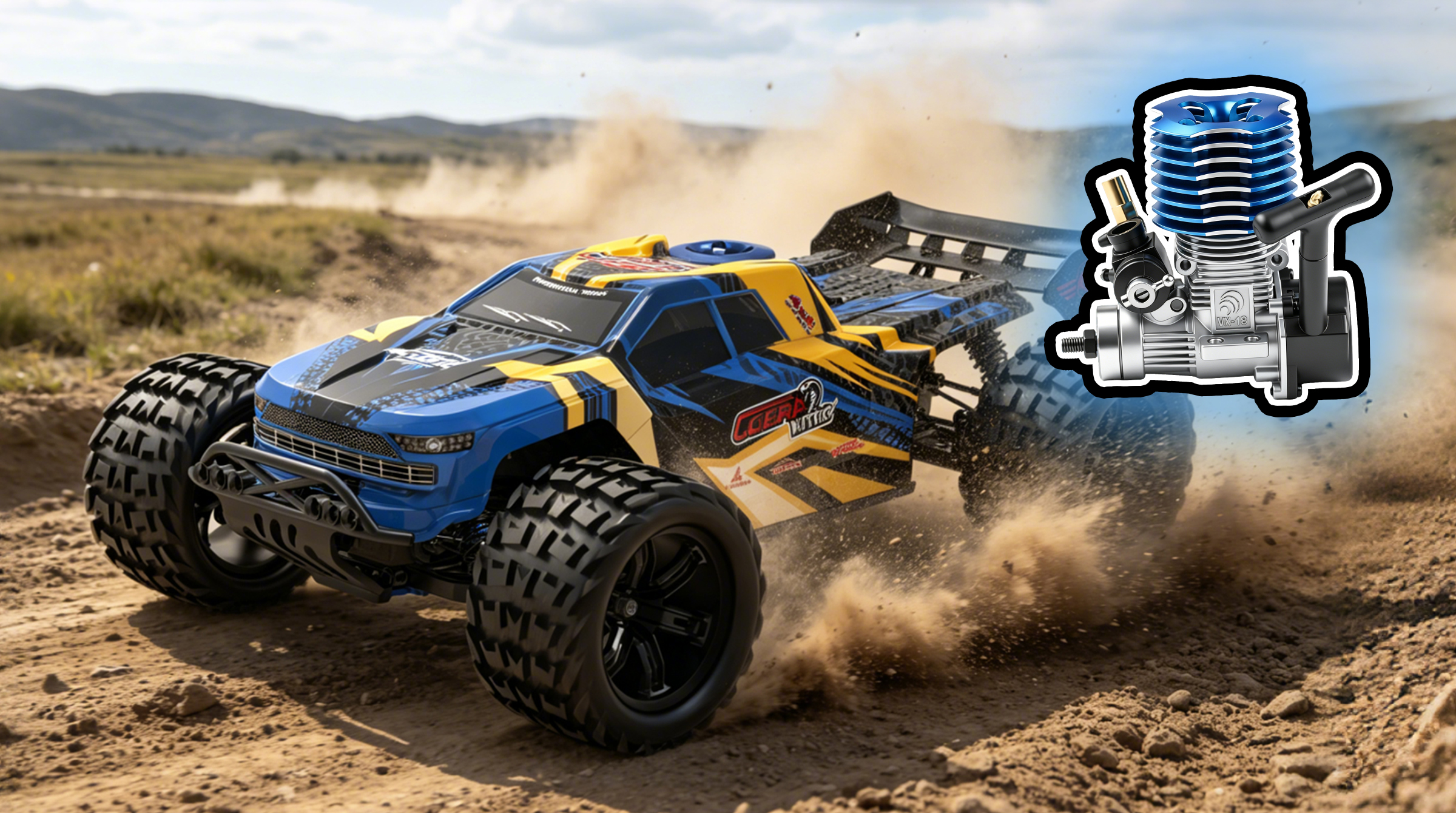
VRX Racing lists nitro engines in several displacement classes, including .18, .21, and .28 engines. The .21 class is approximately 3.48 cc, while the .28 class is approximately 4.57 cc. These engines are designed to provide strong power for demanding RC applications.
For a RC car 1/8 nitro configuration, engine selection should therefore be considered together with the chassis, intended terrain, gearing, and driving style.
A larger engine is not automatically the best choice. The objective is to create a power system that delivers controllable acceleration without placing unnecessary stress on the drivetrain.
The versatility of the 1/8 platform makes it suitable for several driving styles.
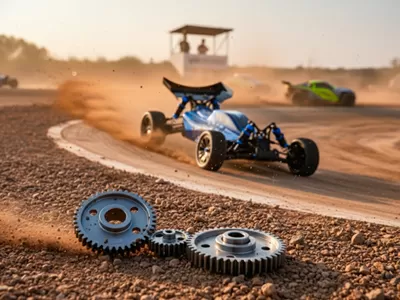
A 1/8 scale nitro RC buggy is typically focused on agility and off-road performance. Its suspension geometry and lighter body configuration make it well suited to jumps, corners, and technical tracks.
A truck-oriented platform emphasizes stability and durability. It can be a better choice for recreational bashing, rough terrain, and drivers who want a more substantial vehicle.
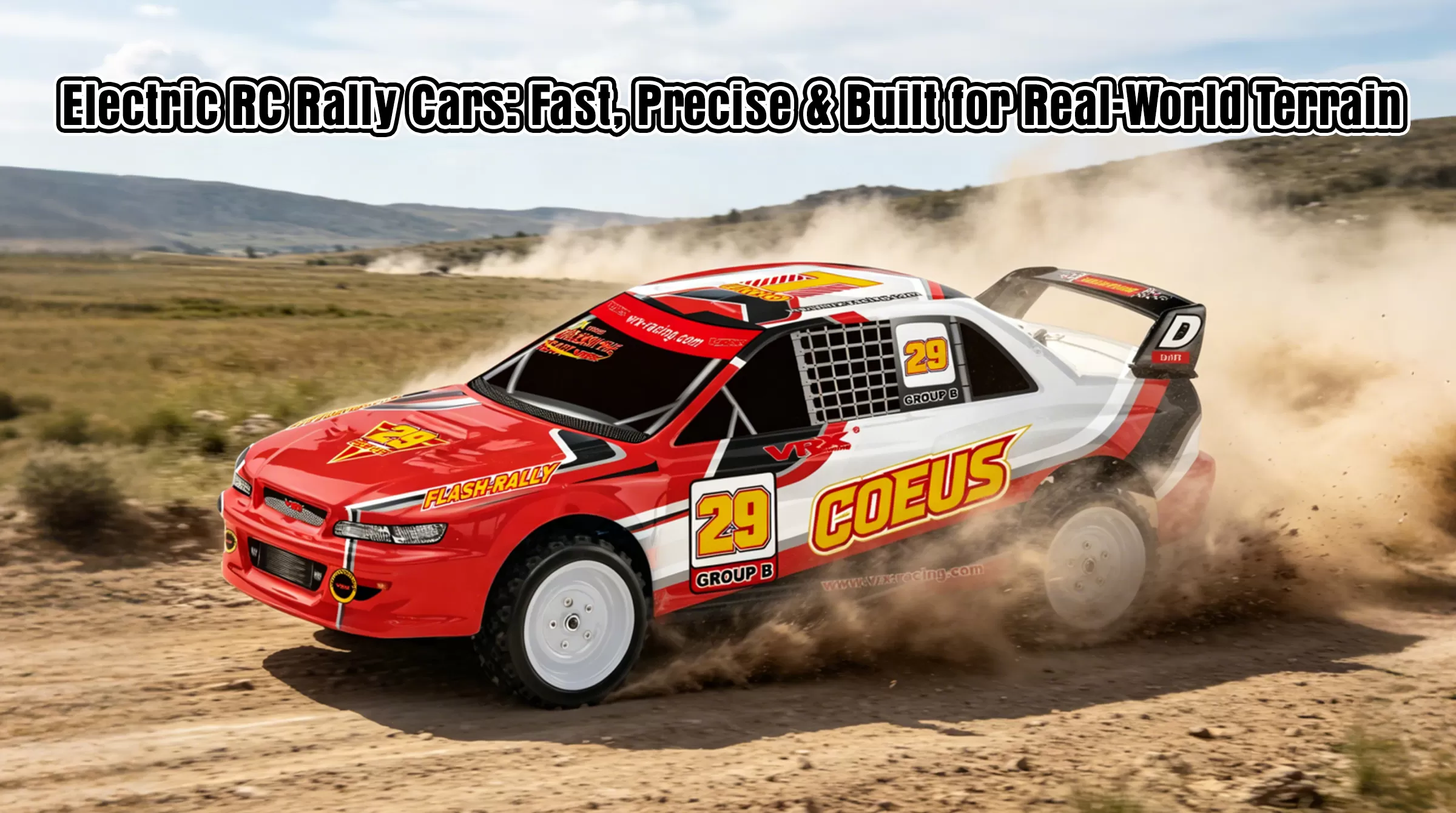
The concept of a nitro RC rally car 1/8 is different again. Rally-inspired driving combines speed with changing surfaces, requiring predictable handling and sufficient suspension performance. While not every 1/8 nitro platform is designed specifically as a rally car, the scale provides an excellent foundation for high-performance off-road builds.
This variety is one reason 1/8 remains an important category rather than simply a larger alternative to smaller RC cars.
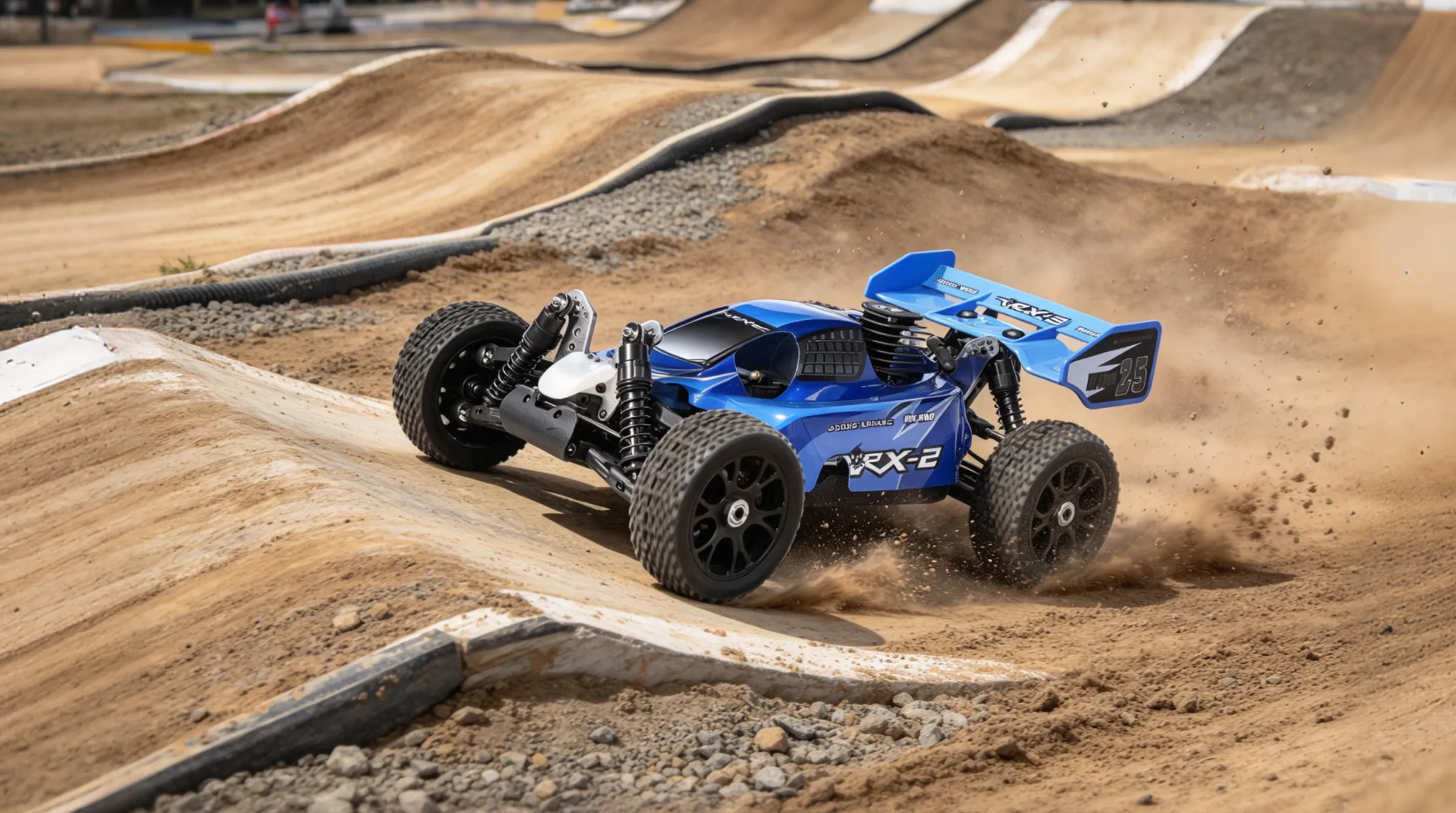
It is easy to focus on the advertised speed of an 1/8 rc nitro car, but top speed tells only part of the story.
A competitive RC vehicle must also accelerate consistently, corner without excessive body roll, absorb jumps, maintain traction, and survive repeated impacts.
VRX Racing's 1/8 nitro models use metal drivetrain components, adjustable suspension, oil-filled shock absorbers, and reinforced chassis structures to support these requirements. The VRX-2, for example, uses a triple-differential configuration designed to improve traction and cornering control.
This illustrates an important principle: performance comes from the complete system, not the engine alone.
One reason enthusiasts choose 1/8 rc nitro models is the mechanical involvement.
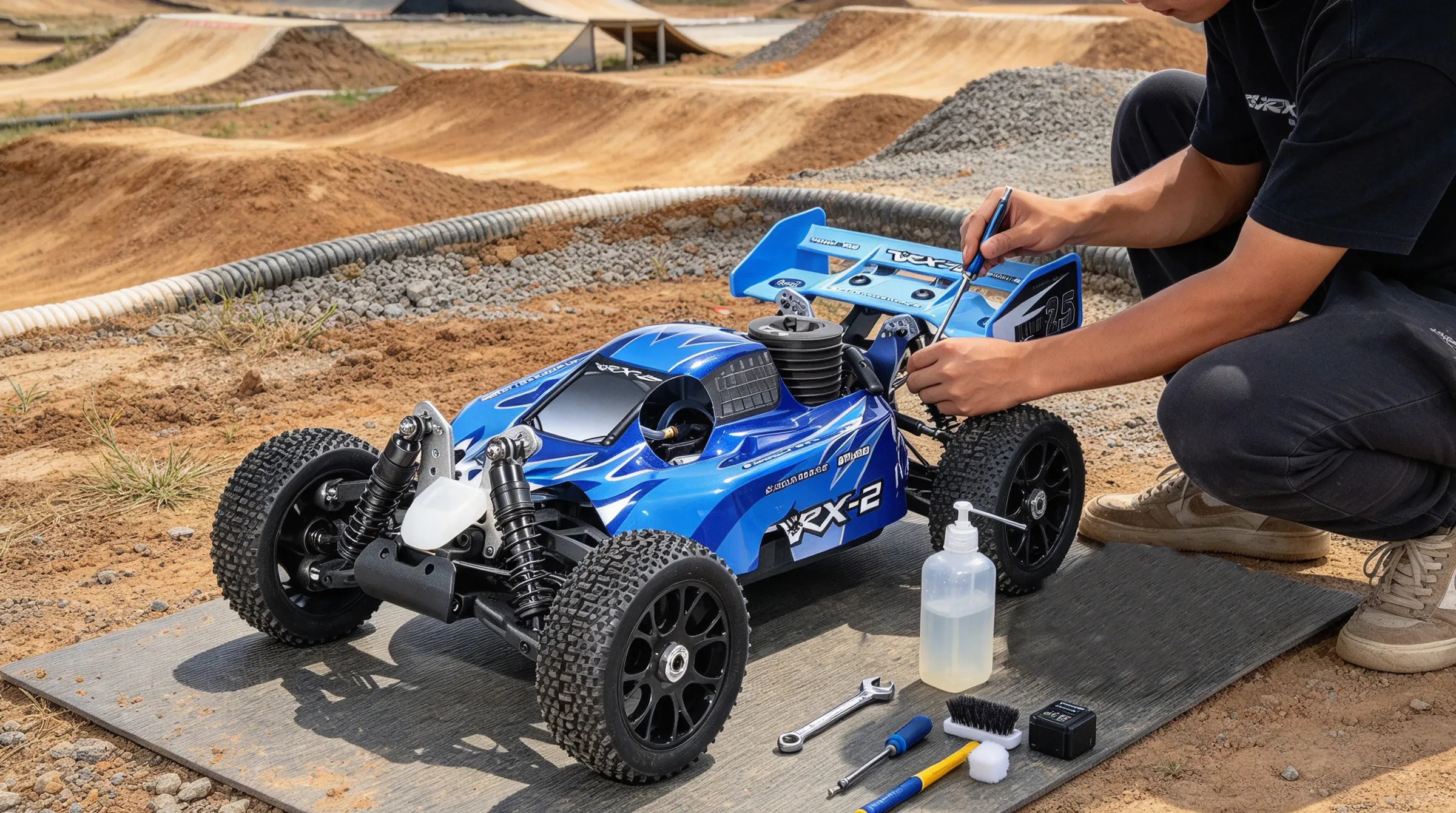
Nitro vehicles require more attention than many electric models. Drivers need to monitor fuel mixture, glow plug condition, air filtration, clutch wear, and engine temperature. Proper engine break-in is also important for achieving reliable performance and extending engine life.
Fuel mixture is particularly important. A mixture that is too rich can reduce performance, while an excessively lean setting can increase engine temperature and wear. Small tuning adjustments can therefore have a noticeable effect on throttle response.
For new drivers, an RTR configuration can simplify the initial setup. VRX Racing also provides instruction materials and technical information for its nitro models, helping users understand engine operation and maintenance.
Before purchasing 1/8 scale RC cars nitro, consider five factors:
Factor | What to Consider |
Engine | .21 or .28 class depending on desired power and application |
Chassis | Aluminum or reinforced construction for off-road durability |
Drivetrain | 4WD and durable differentials for improved traction |
Suspension | Adjustable shocks and sufficient travel for rough terrain |
Usage | Racing, bashing, trails, or mixed-surface driving |
The right choice should match the driver's experience and intended environment rather than focusing solely on maximum speed.
For beginners entering the nitro category, an RTR model can reduce the complexity of initial assembly. Experienced drivers may instead prioritize adjustable suspension, drivetrain configuration, and engine tuning potential.
Electric RC technology continues to advance rapidly, but nitro has an advantage that specifications alone cannot fully describe: mechanical character.
The sound of the engine, changing RPM, exhaust response, fuel management, and hands-on tuning create an experience that feels closer to operating a miniature motorsport machine.
That is the real appeal of 1/8 scale nitro car technology. The larger platform gives designers enough room to build a durable and adjustable vehicle, while the combustion power system adds another layer of interaction for the driver.
With its 1/8 4WD nitro buggy and truck platforms, VRX Racing demonstrates how this category can combine performance, durability, and tunability in a single RC package.
For hobbyists who want more than simply pressing the throttle and accelerating, the 1/8 nitro RC platform remains an engaging choice. It is not merely about being bigger. It is about having a complete mechanical system that gives the driver more to control, more to tune, and more to experience.