An RC car does not perform in isolation. The surface beneath the tires, the amount of available traction, the shape of the track and the driver's preferred style all influence how a vehicle should be configured. This becomes particularly interesting with larger platforms, where the same basic scale can support very different driving experiences.
A 1/8 scale nitro car can be built for aggressive off-road driving, while a 1/8 scale electric RC model can deliver high-speed control with a different maintenance routine. Meanwhile, rally-inspired designs focus on moving between paved and loose surfaces rather than concentrating on a single type of terrain.
VRX Racing offers both 1/8 electric and nitro platforms, alongside smaller rally and other electric models, providing a useful example of how RC vehicles can be designed around different driving environments.
A RC car scale chart is useful for understanding relative vehicle dimensions, but scale alone does not define driving behavior. Two 1/8 models can have completely different chassis layouts, suspension settings, tires and power systems.
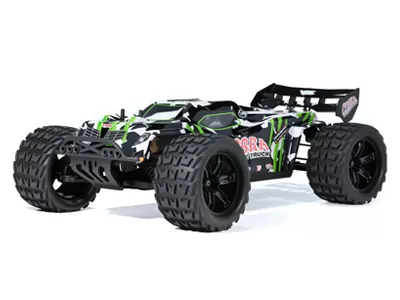
For example, VRX Racing's 1/8 electric lineup includes buggies, truggies and short course trucks. These models use 4WD drivetrains and different chassis configurations according to their intended applications.
The 1/8 nitro range takes another approach. VRX Racing's VRX-2 is a 4WD off-road buggy, while the VRX-1 is a larger nitro truck. The 1/8 nitro platform uses SH 21 or SH 28 engines, aluminum chassis construction and oil-filled suspension systems for demanding terrain.
This means the useful question is not simply how large the vehicle is, but what the platform is expected to do on the surface beneath it.
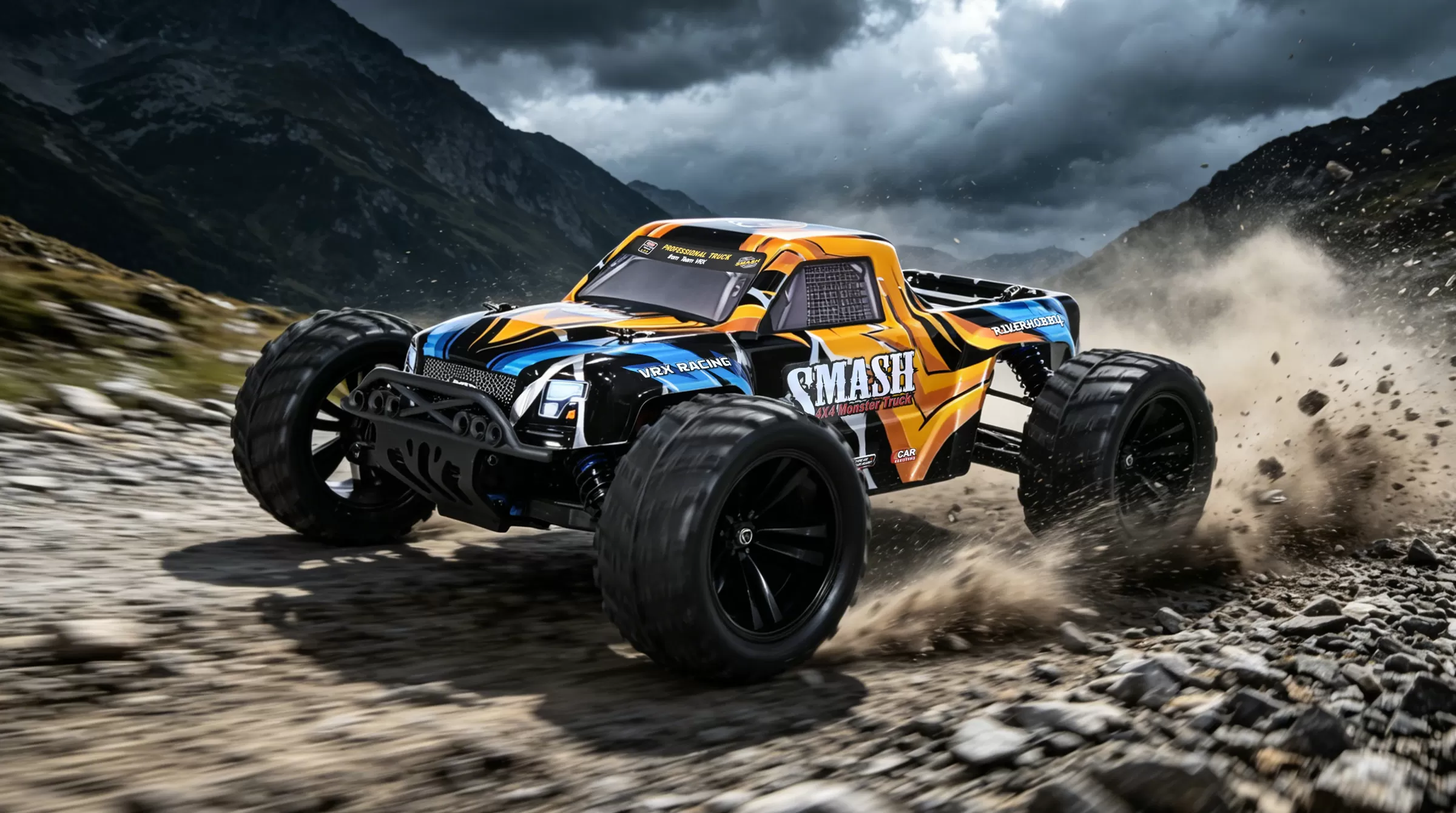
Loose dirt, gravel and uneven ground create constantly changing traction conditions. Tires can lose grip during acceleration, suspension components must follow irregular surfaces and the chassis needs enough clearance to avoid repeatedly contacting the ground.
This is where 1/8 scale nitro RC models can offer a substantial physical platform for off-road driving. VRX Racing's 1/8 nitro models provide around 35–42 mm of ground clearance, depending on the configuration, together with 4WD drivetrains and adjustable oil-filled shocks.
The larger format also allows components such as differentials, suspension arms and shock absorbers to be designed with demanding off-road use in mind.
For drivers who enjoy aggressive dirt tracks, a 1/8th scale nitro buggy can therefore provide a very different experience from a compact electric model.
A 1/8 electric RC car approaches the same type of terrain from another direction.
VRX Racing's 1/8 electric models use brushless motors such as 3660 2000KV and 3674 2440KV, combined with 60A–120A ESCs depending on the model. Applicable vehicles support 2S–4S LiPo configurations.
The benefit is not simply speed. Electric power allows the driver to manage acceleration through electronic throttle control, while waterproof or splash-resistant electronics can support operation in wet or muddy conditions on applicable models. VRX's 1/8 electric platforms also use adjustable oil-filled shocks and heavy-duty 4WD systems for rough terrain.
For drivers who prefer immediate electric response and less engine-related maintenance, this makes the 1/8 scale RC electric category particularly versatile.
Off-road racing and rally driving are not the same thing.
A pure off-road buggy is generally optimized for dirt tracks, jumps and aggressive changes in elevation. A rally car, by comparison, has to deal with transitions between different surfaces.
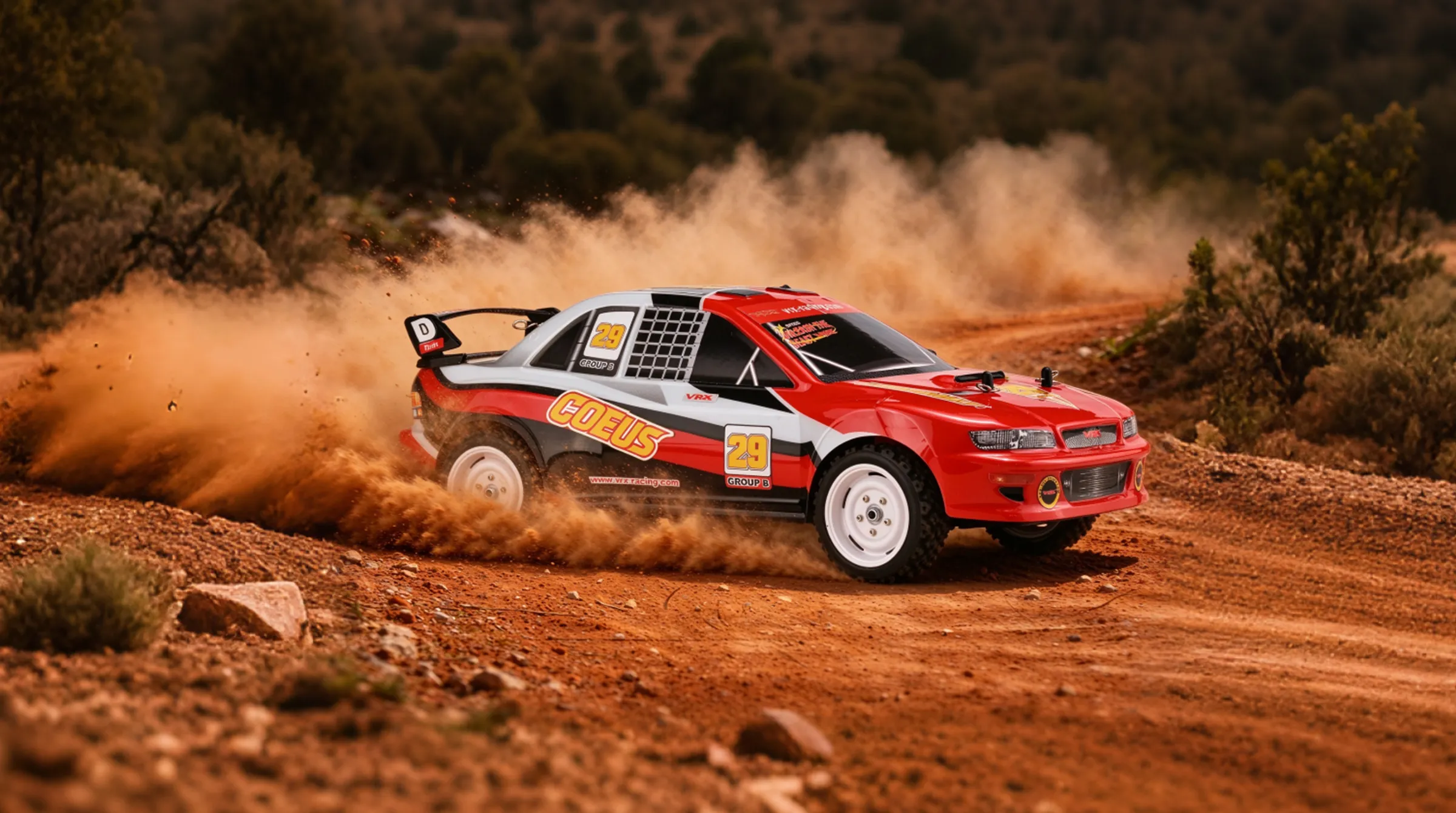
This is why an electric RC rally car normally sits between an on-road touring car and a high-clearance off-road vehicle. VRX Racing describes its rally models as being designed for asphalt, gravel, dirt and mixed surfaces, using 4WD drivetrains, rally-specific tires and suspension tuned between touring and buggy characteristics.
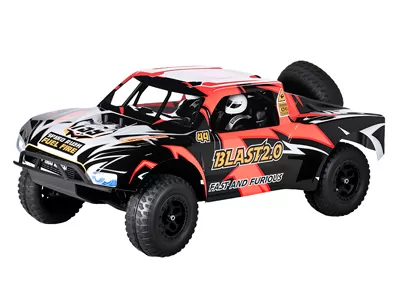
The COEUS 1/10 rally car, for example, combines 4WD, brushless power and an on-road rally chassis, while the XR16 provides a smaller 1/16 alternative.
This shows why a nitro RC rally car 1/8 concept would need more than simply putting a rally body on an existing buggy. Ride height, tire pattern, suspension travel, gearing and weight distribution would all influence how effectively the vehicle transitions between surfaces.
Tires are one of the easiest ways to alter how an RC car interacts with the ground.
On loose dirt, a tire needs tread that can generate forward bite. On asphalt, excessive tread or a soft off-road compound can reduce precision. Rally tires therefore need to balance grip on hard surfaces with traction on loose sections.
VRX Racing's electric rally platform uses specialized rally-block tread patterns to balance forward traction on loose surfaces with lateral grip on hard pavement.
This principle applies across RC categories. A nitro RC dune buggy designed for sand, for example, requires a different tire approach from a vehicle primarily used on compact clay.
The chassis may remain similar, but changing the tire and suspension setup can significantly alter the way the vehicle responds.
A larger chassis does not automatically make an RC car easier to drive. Suspension setup determines how effectively the tires remain connected to an uneven surface.
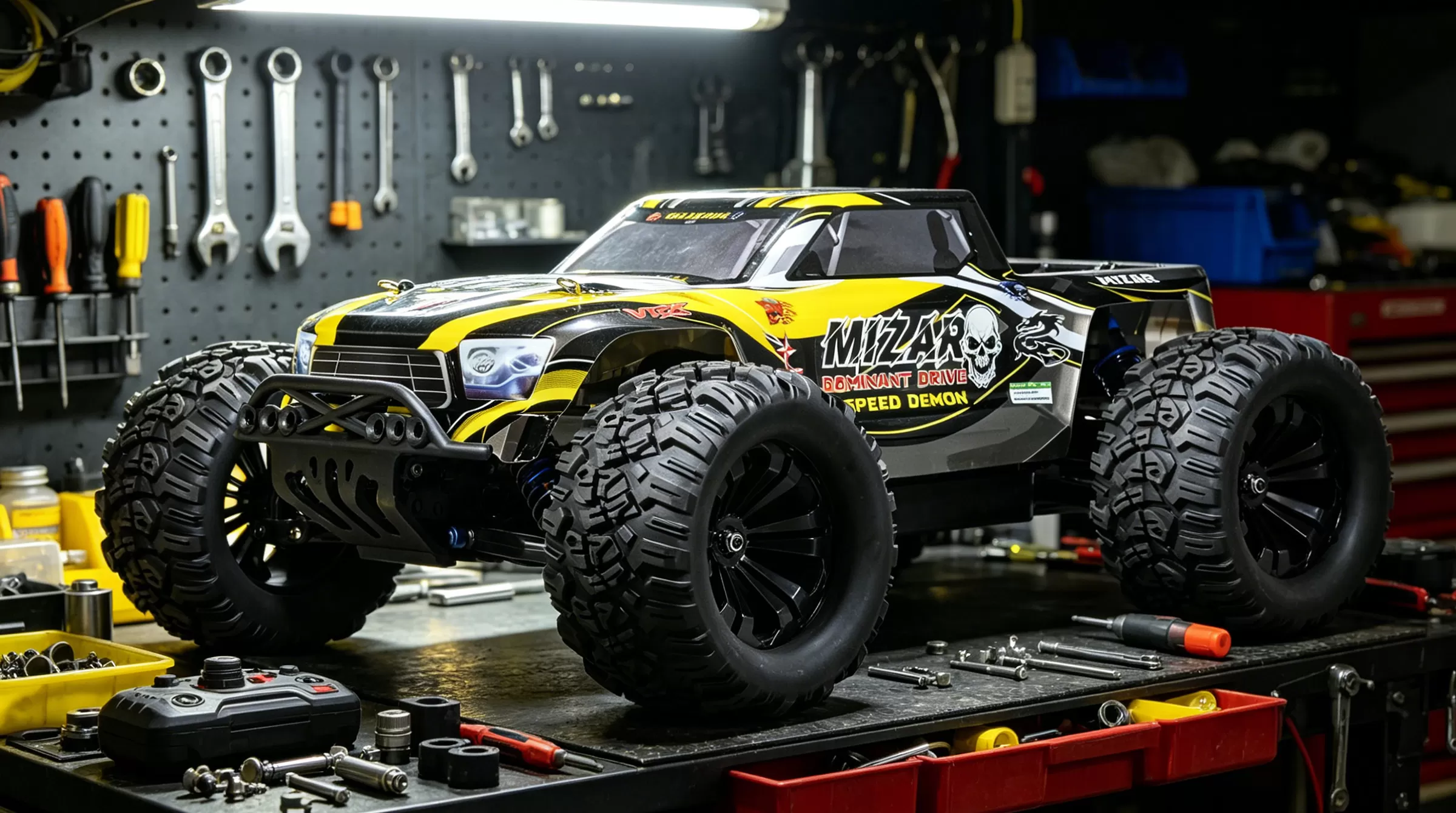
VRX Racing's 1/8 electric models use independent suspension with adjustable large-bore oil-filled shocks. The 1/8 nitro range likewise uses oil-filled suspension systems with adjustable characteristics.
On a rough dirt track, more suspension movement can help the wheels follow terrain. On smoother pavement, excessive movement may reduce precision.
This is especially important for drivers who want to experiment with different environments. Instead of treating suspension as a fixed specification, experienced users can adjust damping, ride height and other settings according to the surface.
Not every mixed-surface driver needs a large 1/8 platform.
A 1/10 electric RC model can be easier to transport and operate while still offering 4WD and brushless performance. VRX Racing's electric range covers 1/10 rally, buggy, truck and other platforms, giving drivers more compact options for different environments.
The COEUS 1/10 rally car is particularly relevant for users who enjoy paved roads, gravel and controlled slides rather than large jumps.
Meanwhile, electric RC cars designed for drifting prioritize controlled loss of rear traction and precise throttle inputs. They represent another example of how the same general electric platform can be tuned for a completely different driving objective.
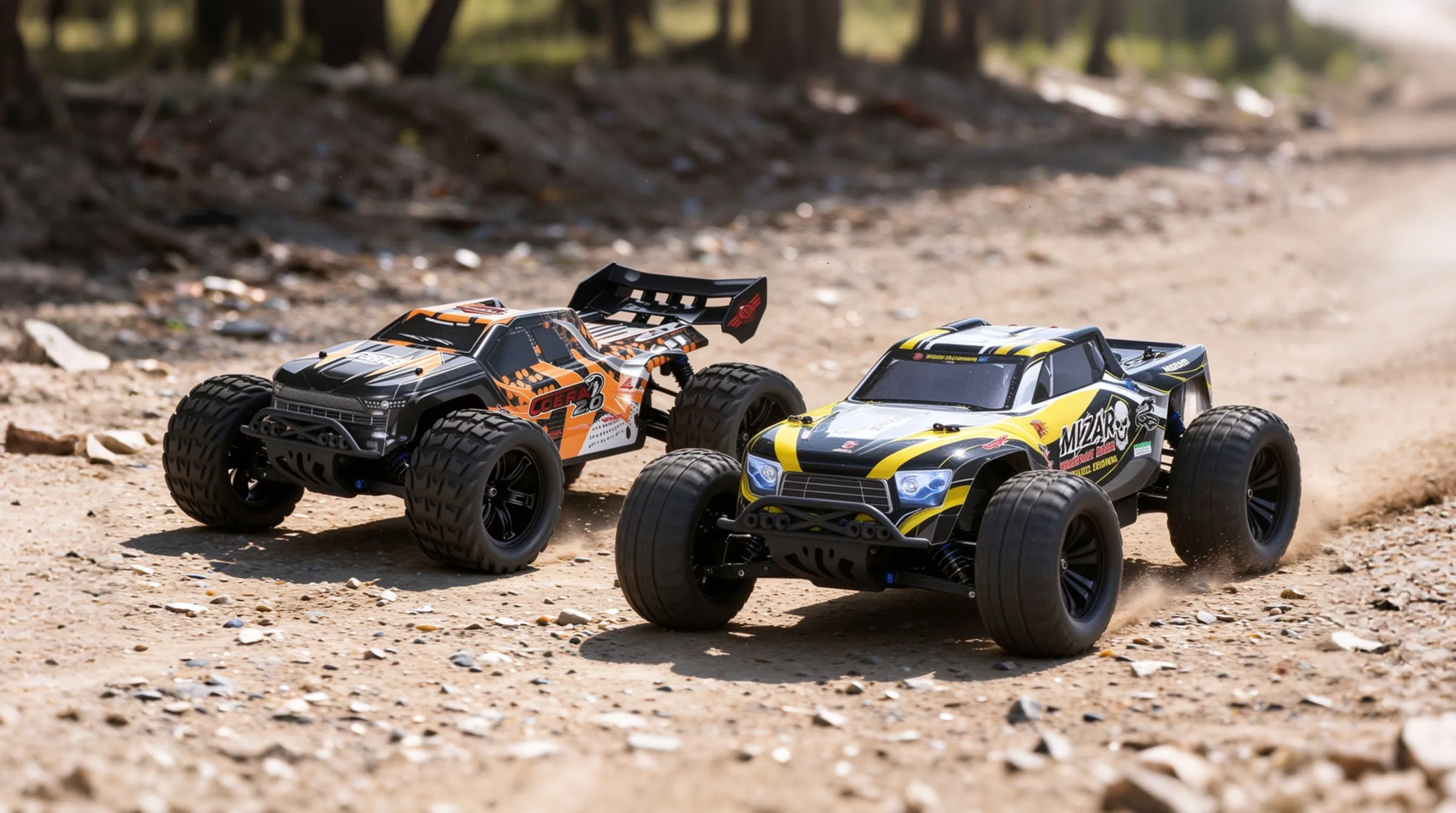
The choice between 1/8 nitro RC car and electric should therefore be connected to the experience the driver wants.
Driving priority | Platform to consider | Main consideration |
Rough off-road racing | 1/8 nitro buggy | Engine tuning and suspension |
Large-scale electric performance | 1/8 electric buggy/truggy | Power delivery and chassis control |
Mixed pavement and gravel | Electric rally car | Surface adaptability |
Sand and loose terrain | Dune buggy | Tire and ground clearance |
Compact mixed-surface driving | 1/10 electric rally | Portability and control |
Mechanical driving experience | 1/8 nitro | Engine operation and maintenance |
Neither power system automatically defines the driving style. Chassis geometry, tires, suspension and terrain remain equally important.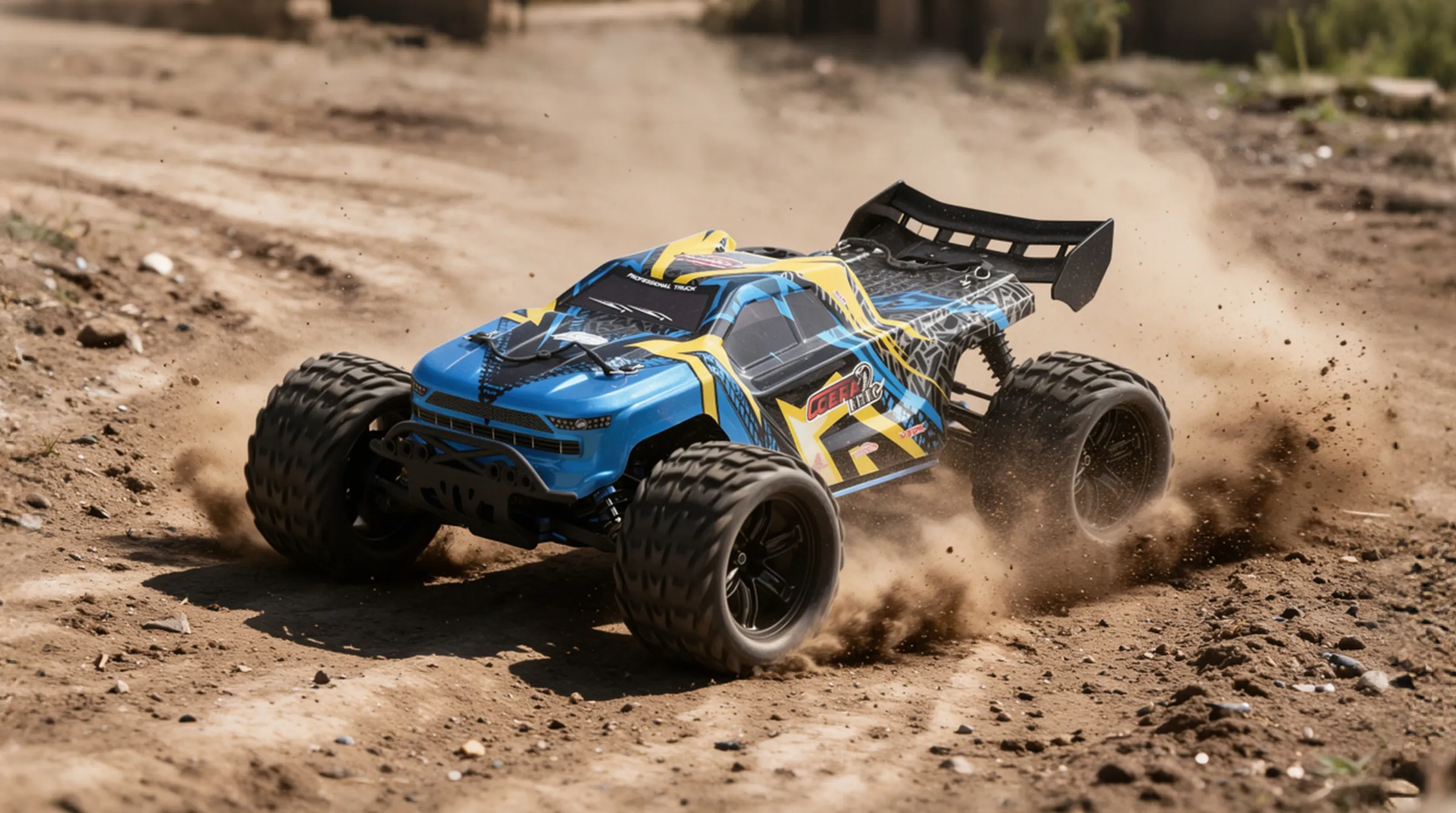
The most useful way to think about an RC platform is to start with the environment and work backward.
If the vehicle will spend most of its time on rough dirt, a 1/8 buggy or truggy provides a substantial foundation. If the goal is to explore mixed surfaces, a rally platform with appropriate tires and suspension may be more suitable. If easy operation and electronic control are priorities, an electric platform provides another practical route.
VRX Racing's product range demonstrates this principle across its 1/8 nitro and electric models as well as its 1/10 electric rally vehicles. The company covers multiple combinations of scale, drivetrain and body style rather than treating one configuration as suitable for every application.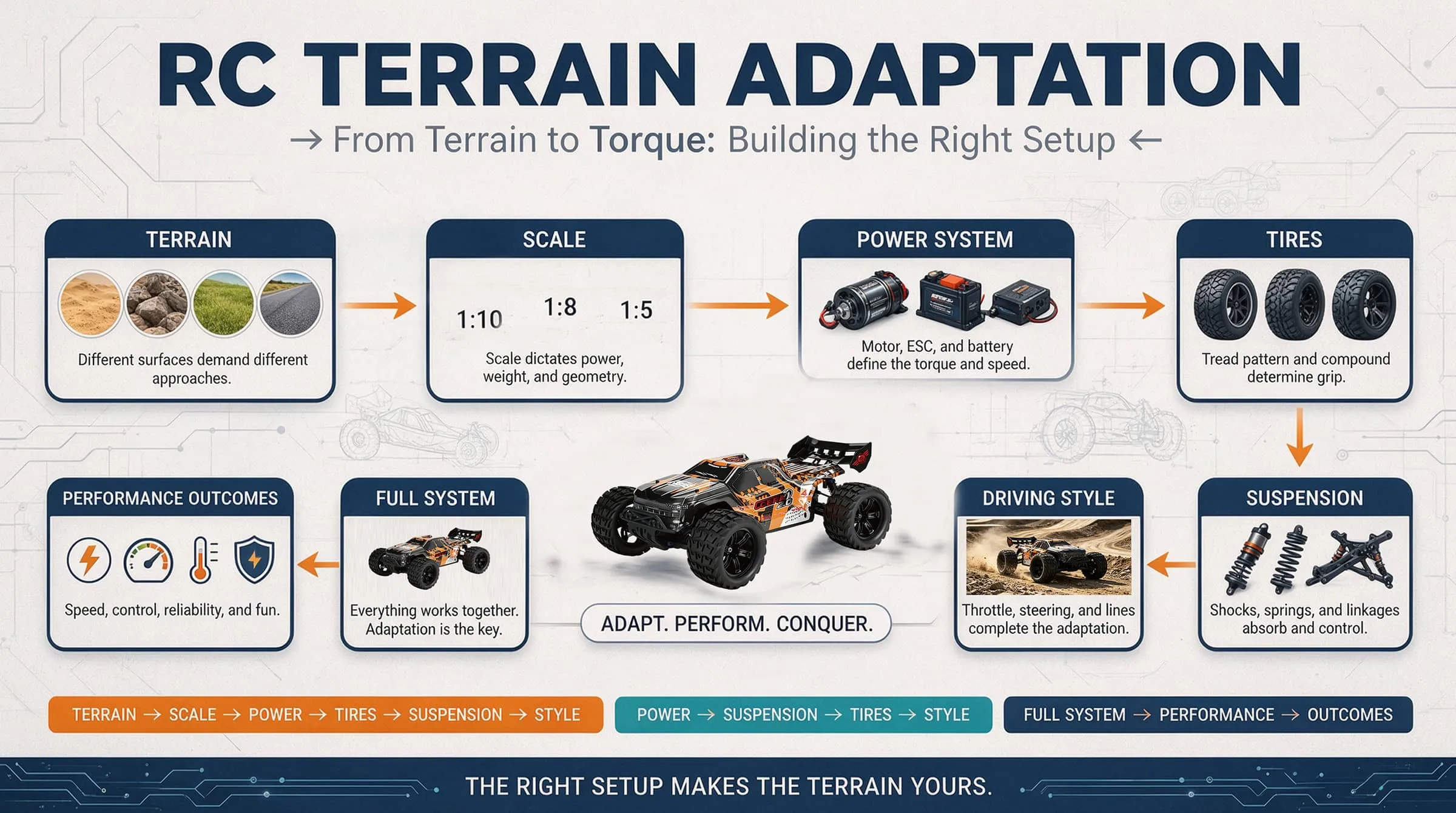
The appeal of a modern RC car is not simply how fast it can travel in a straight line. It is how effectively the vehicle can adapt to the environment in which it is driven.
A 1/8 scale nitro RC platform can deliver a hands-on off-road experience, while a 1/8 electric RC car can combine substantial chassis capacity with electronically controlled power. A smaller electric rally model can then take a different approach by connecting asphalt and loose surfaces through one balanced setup.
Ultimately, the best RC platform is determined by the relationship between surface, suspension, tires, drivetrain and driving style. Once those factors are considered together, scale becomes more than a number on a specification sheet—it becomes the foundation for a particular type of driving experience.