Buying an RC car is rarely just a matter of choosing the fastest model. A beginner may need simple controls and predictable power, while an experienced driver may prioritize acceleration, suspension response, drivetrain strength or racing capability. The right choice therefore depends on how the vehicle will actually be used.
Looking at the different types of RC cars available today, buyers can move from brushed electric models to brushless RTR vehicles, larger 1/8 platforms or nitro-powered machines as their experience and requirements develop. VRX Racing offers this broad range, making it possible to compare different configurations within one product ecosystem.
Before comparing motors or scales, define the intended driving experience.
For casual outdoor driving, a 1/10 electric truck or buggy can provide a practical combination of manageable dimensions, four-wheel drive and easy operation. For competitive dirt tracks, a buggy or truggy may offer better handling characteristics. Drivers interested in engine sound and mechanical tuning may instead consider nitro.
This approach is more useful than simply searching for the highest advertised speed. A vehicle designed for technical track driving has different priorities from one intended for open-field bashing.
VRX Racing's current range reflects these different requirements, including 1/10 and 1/8 electric cars, brushless models, nitro cars, buggies, truggies and short course trucks.
For a first electric RC car, brushed power can make the learning process easier.
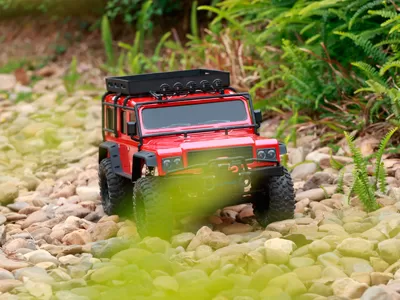
VRX Racing's 1/10 brushed models use either a 550 15T brushed motor or 540 motor, together with a 40A ESC. These configurations are designed for predictable power delivery and speeds of up to around 35 km/h.
The 550 15T brushed motor is therefore not simply a lower-performance alternative. It can make sense when the priority is controllability, straightforward operation and a lower barrier to entry.
For a new driver, these characteristics can be more valuable than maximum acceleration. Learning steering input, throttle control, braking and cornering is easier when the vehicle responds progressively.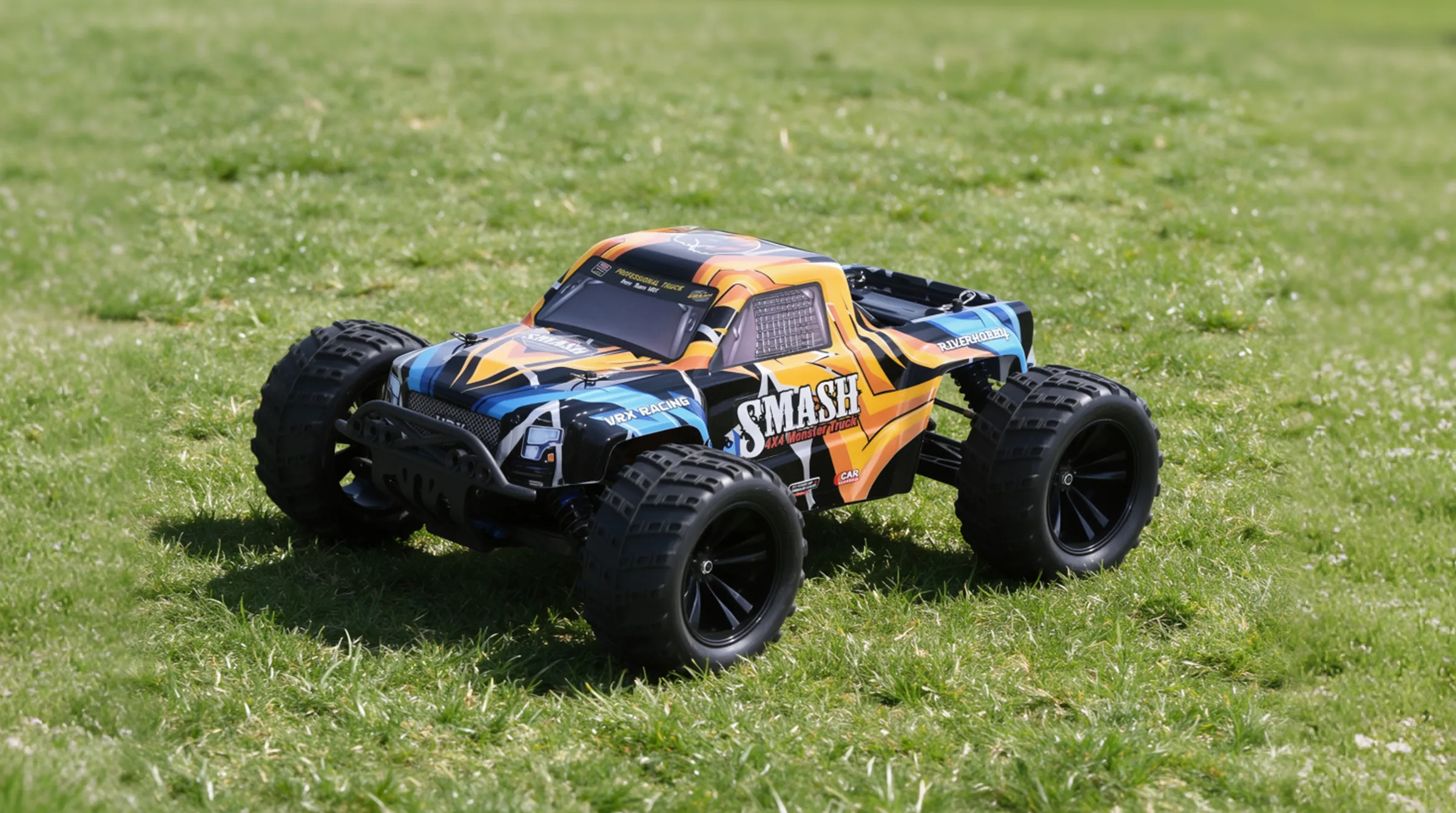
Once a driver wants stronger acceleration and higher efficiency, brushless becomes a natural next step.
A typical RC 1/10 brushless motor offers more efficient operation than a brushed motor because it does not rely on physical brushes for commutation. VRX Racing's 1/10 brushless models use 3650 3300KV or 3650 4200KV motors with 45A ESCs, with listed speeds reaching up to approximately 60 km/h depending on the configuration.
The 3300KV brushless motor specs should still be viewed as part of a complete system rather than as an isolated performance number. Battery voltage, gearing, tire diameter, vehicle weight and ESC capability all influence actual behavior.
This is why two RC cars equipped with motors of similar KV ratings can feel quite different on the track.
For drivers who want brushless performance without assembling a complete vehicle, RC RTR brushless models provide a convenient middle ground.
A brushless RTR package normally integrates the motor, ESC, steering servo, receiver, transmitter and drivetrain into a ready-to-use configuration. This reduces compatibility issues when moving from a brushed beginner vehicle to a higher-performance platform.
VRX Racing offers several brushless RTR configurations across its 1/10 and 1/8 ranges. The product lineup includes the BLAST BX, VRX-2E, COBRA and VRX-1E, as well as 1/10 brushless trucks and buggies.
For buyers who want convenience while retaining room for future driving development, an RC brushless RTR platform can therefore serve as a transition between basic hobby driving and more advanced setup work.
The next decision is vehicle architecture.
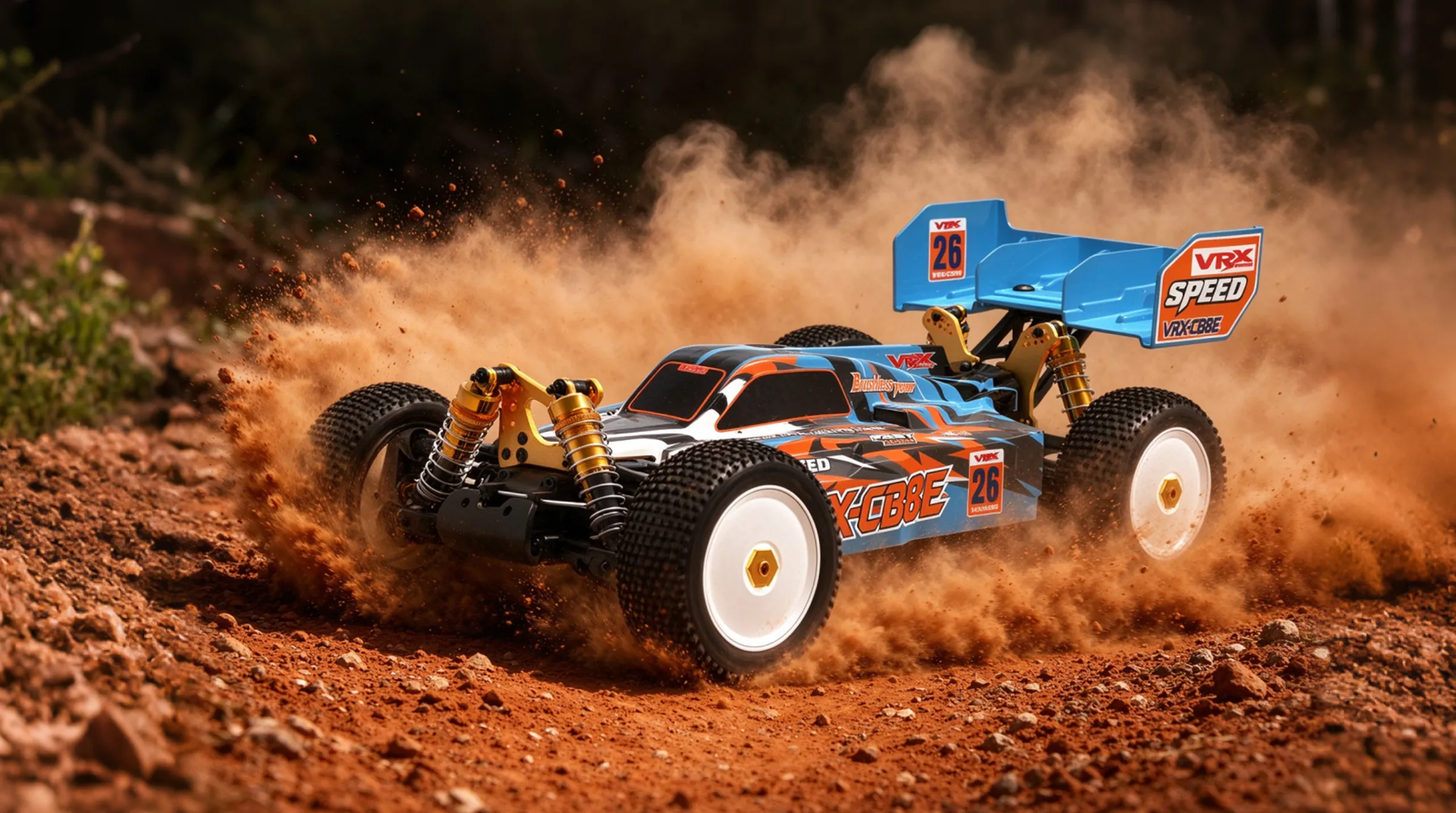
A 1/10 brushless buggy is generally focused on responsive handling, lower bodywork and efficient movement across dirt surfaces. VRX Racing's 1/10 range includes brushless buggy models such as BULLET and SPRINT, covering both 2WD and 4WD configurations.
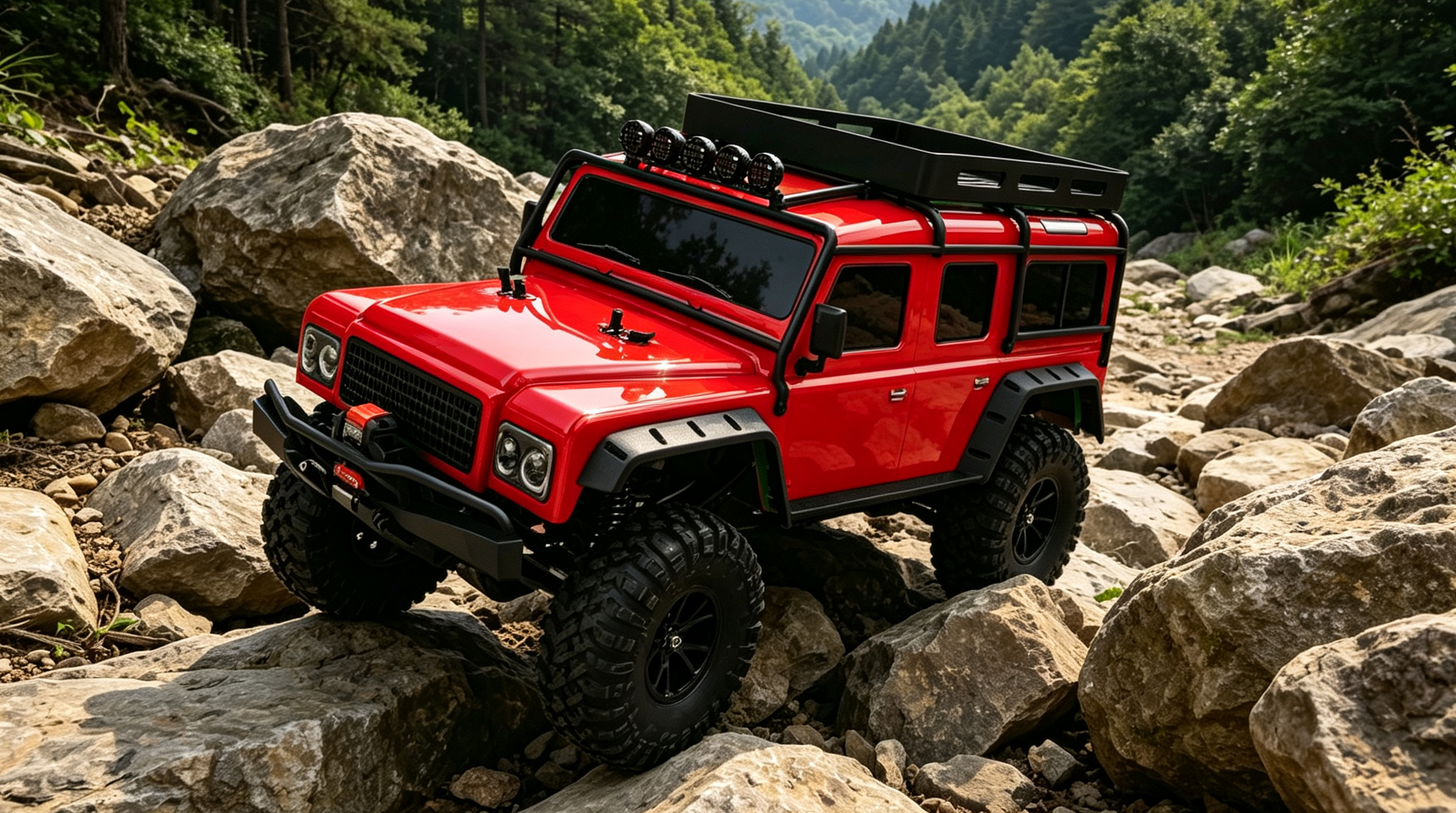
A truck takes a different approach. Larger tires and a higher ride height make it more suitable for mixed surfaces and recreational off-road driving. A 1/10 brushless truck can provide a useful compromise between portability and performance.
The decision should therefore be based on terrain. If cornering and track lines are the priority, a buggy may make more sense. If loose surfaces, jumps and general outdoor driving dominate, a truck may provide greater flexibility.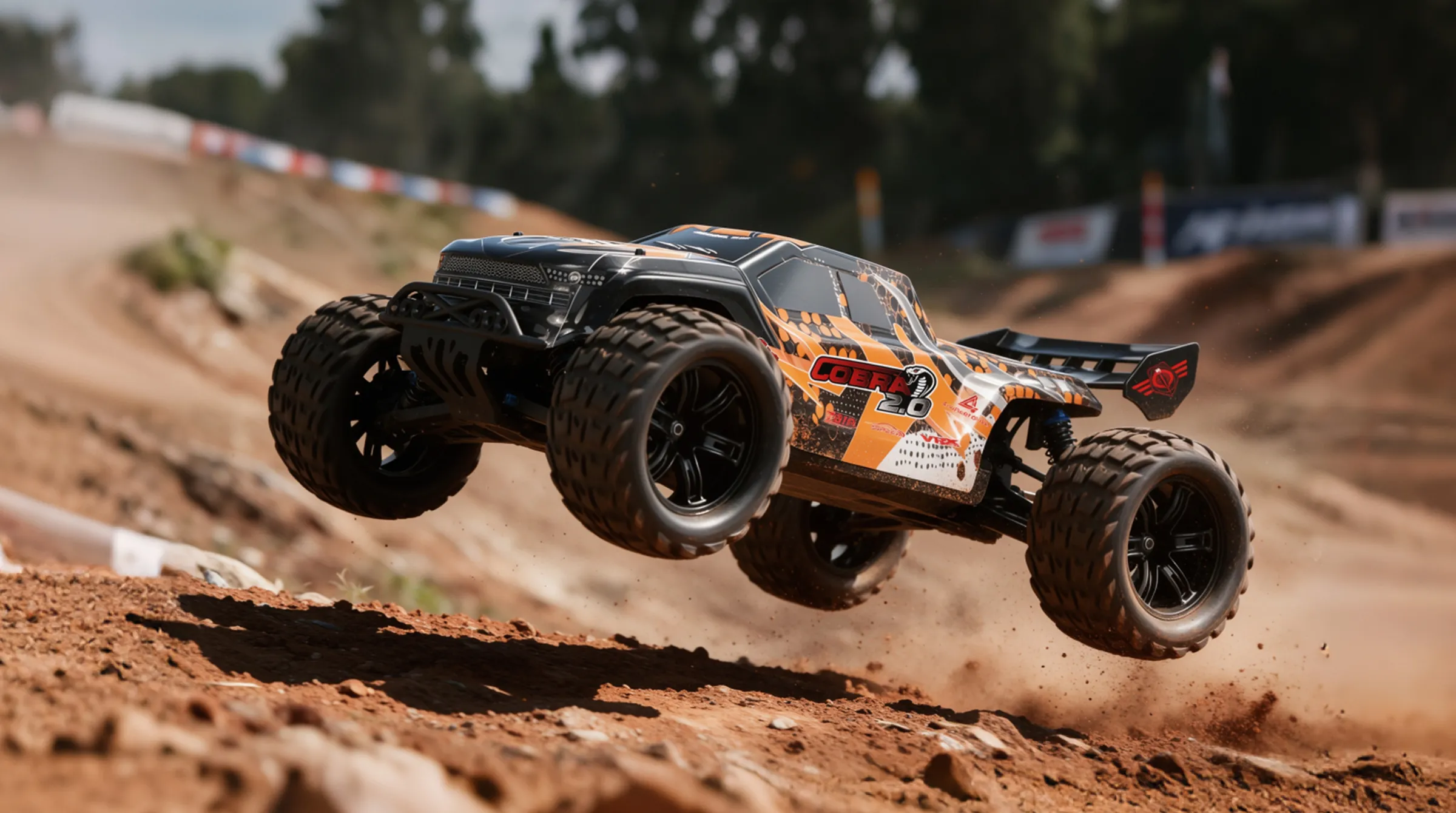
A RC truggy brushless model sits between a buggy and truck in terms of design philosophy.
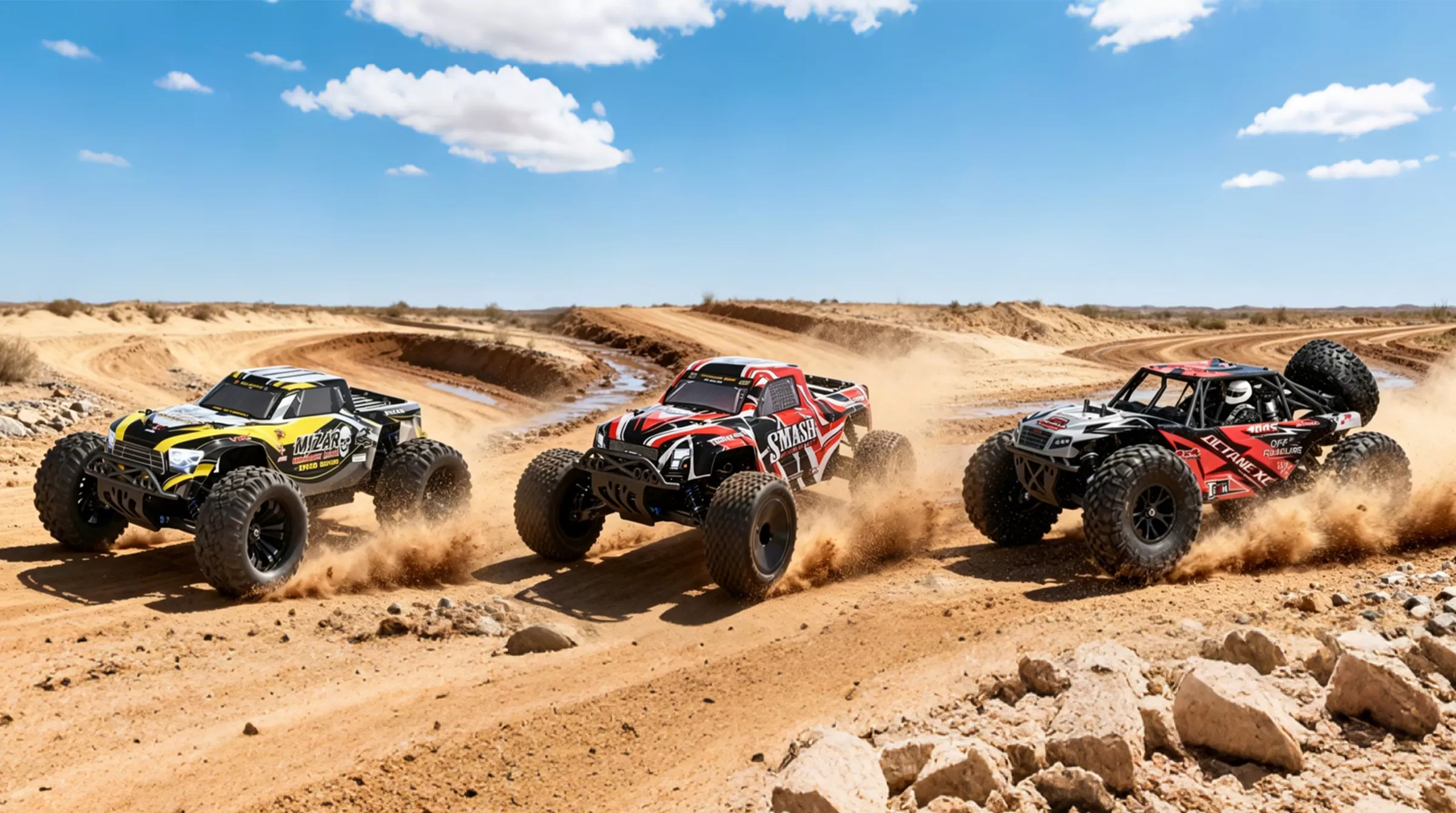
VRX Racing's COBRA 1/8 and MEGREZ 1/10 brushless truggies use 4WD drivetrains, while the larger COBRA platform combines a wider stance, longer wheelbase and larger tires with a reinforced chassis.
This makes a brushless truggy useful for drivers who want responsive steering without giving up the stability and obstacle clearance associated with a wider truck-style platform.
An RC truggy RTR can also be an effective choice for users who want this combination without building the vehicle themselves. VRX Racing lists both 1/8 and 1/10 truggy RTR configurations, including the COBRA and MEGREZ series.
For experienced drivers, the move to 1/8 can provide a substantially larger driving platform.
VRX Racing's 1/8 electric range includes brushless buggies, truggies and short course trucks. Brushless configurations use motors such as 3660 2000KV and 3674 2440KV, paired with 60A–120A ESCs and 2S–4S LiPo support.
A 1/8 RC brushless platform also benefits from larger suspension components, greater ground clearance and a more substantial 4WD drivetrain. This makes the format suitable for demanding off-road environments and larger racing facilities.
The same principle applies when comparing a 1/8 scale electric RC truck with smaller 1/10 models: the larger platform is not automatically better, but it provides a different balance of stability, physical size and terrain capability.
Some drivers eventually want a more mechanical driving experience. This is where a starter RC nitro model can introduce a completely different side of the hobby.
Nitro vehicles require fuel, engine tuning, glow-plug ignition and mechanical maintenance. In return, drivers experience engine sound, throttle characteristics and a more hands-on relationship with the vehicle.
VRX Racing offers 1/10 nitro buggies and truggies as well as larger 1/8 platforms. Its 1/8 nitro lineup includes the VRX-2 1/8 buggy and VRX-1 1/8 truck, using SH 21 or SH 28 engines and 4WD drivetrains.
For buyers specifically looking for an 1/8 nitro buggy RTR, the VRX-2 is available as a 2.4G engine-powered model, while VRX's nitro lineup also includes 1/10 SPIRIT buggy models.
Drivers interested in RC short course racing need to consider a different set of priorities.
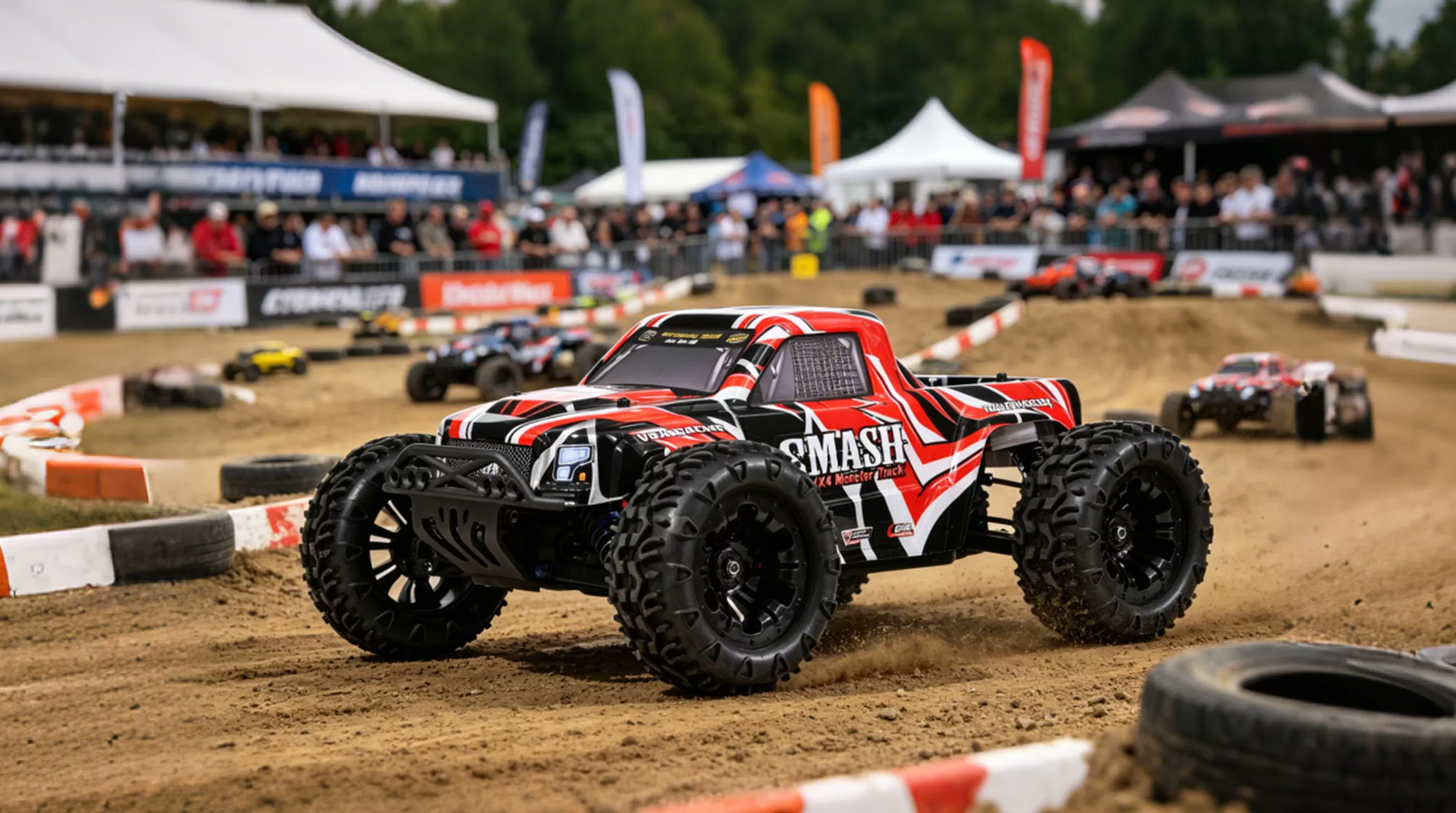
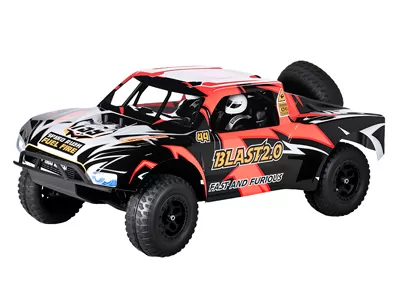
Short course trucks use wide stances, full-fender bodies, enclosed wheels and optimized centers of gravity. VRX Racing's electric SCT lineup includes 1/10 brushed and brushless models as well as a 1/8 brushless RTR platform. The designs are intended for dirt, clay and gravel tracks, with 4WD and independent suspension used across the range.
This makes the category particularly interesting for drivers who enjoy close racing, contact and jumps rather than only clean racing lines.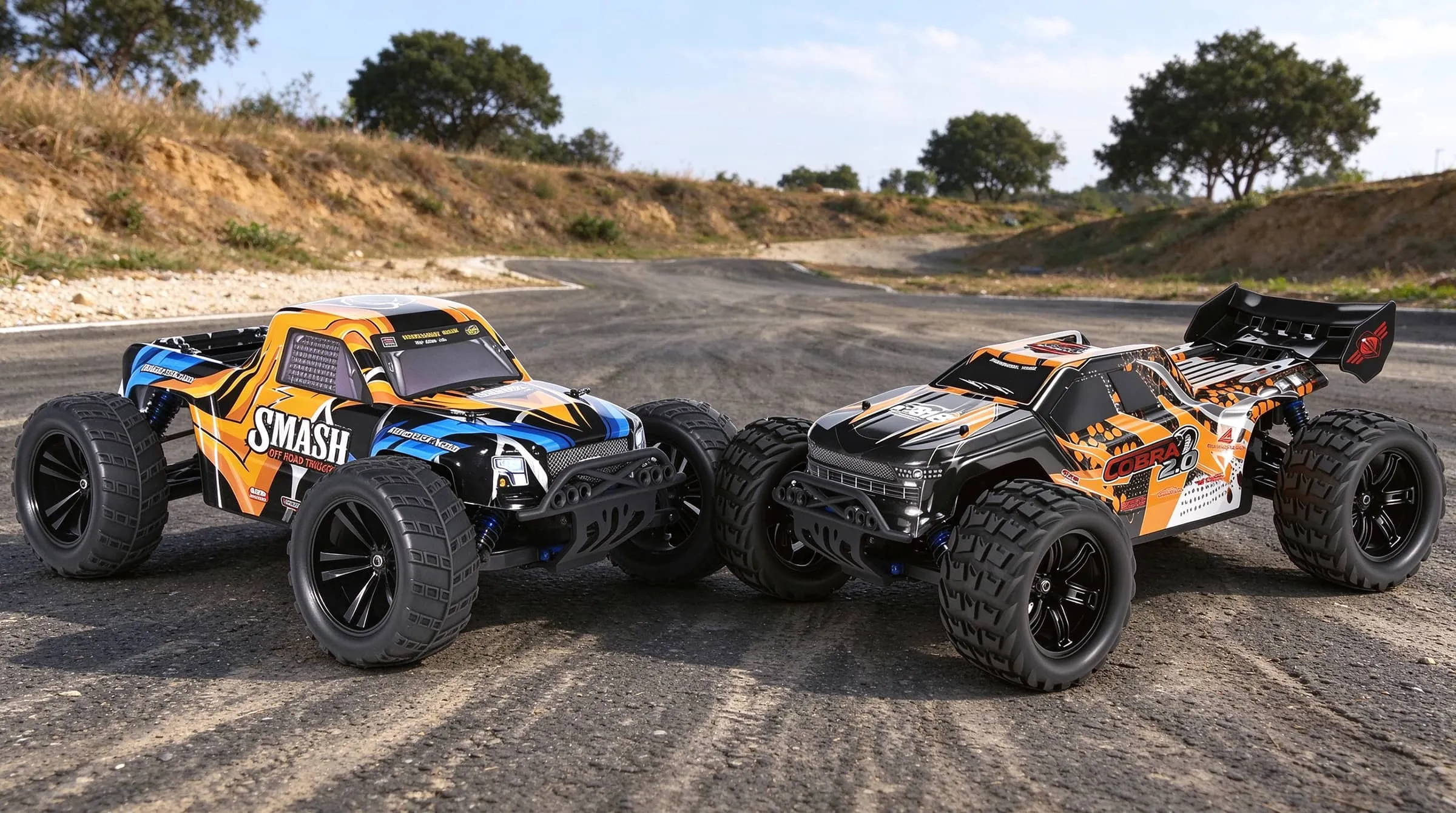
Driving stage | Suitable direction | Main priority |
First RC experience | 1/10 brushed | Easy control |
Learning off-road driving | 1/10 4WD electric | Stability |
More acceleration | 1/10 brushless | Power and efficiency |
Ready-to-use performance | Brushless RTR | Convenience |
Mixed off-road driving | Brushless truggy | Stability and versatility |
Larger-track driving | 1/8 brushless | Power and chassis capacity |
Close-contact racing | Short course truck | Stability and protection |
Mechanical hobby experience | Nitro | Engine tuning and realism |
There is no single upgrade path that every RC driver needs to follow. Some users may remain with a 1/10 brushed truck because it fits their driving environment, while others may move directly into a brushless RTR model or a larger 1/8 platform.
The more useful question is not simply “Which RC car is fastest?” but “What do I want to learn or experience next?”
A 550 15T brushed system can provide an accessible starting point. A 3650 3300KV brushless motor can introduce stronger electric performance. A brushless buggy or truggy can develop track-driving skills, while a 1/8 platform adds scale, stability and mechanical capacity. Nitro then offers another direction for drivers who want greater involvement in engine operation and tuning.
With electric, brushless and nitro models covering multiple scales and vehicle types, VRX Racing provides a broad platform for this progression. The best starting point is simply the configuration that matches the driver's current experience, preferred terrain and next driving goal.