The history of RC cars is often told through engines, tires, suspension, and chassis design. But one of the most important changes happened inside the vehicle: the evolution of its electronics.
Early radio-controlled cars relied on relatively simple control systems. Modern models can combine proportional radio systems, electronic speed controllers, brushless motors, rechargeable LiPo batteries, waterproof electronics, and programmable control features in a compact chassis.
This transformation changed not only how fast an RC car could go, but also how easily it could be operated, maintained, and adapted to different driving environments. From a basic electric model to a modern 1/10 RC RTR, today's RC vehicle is increasingly an integrated electronic platform.
Early RC cars were mechanically simple compared with today's models. Radio systems primarily needed to send steering and throttle commands, while the vehicle's mechanical components did much of the work.
As electronics became smaller and more reliable, manufacturers could introduce proportional control. Instead of simply switching the motor between full power and no power, drivers gained much finer control over acceleration and steering.
This was an important change because an RC car does not always need maximum power. Smooth throttle input can improve cornering, reduce wheelspin, and make the vehicle easier to control on loose surfaces.
The development of electronic speed controllers eventually made this type of control standard across hobby-grade electric RC vehicles.
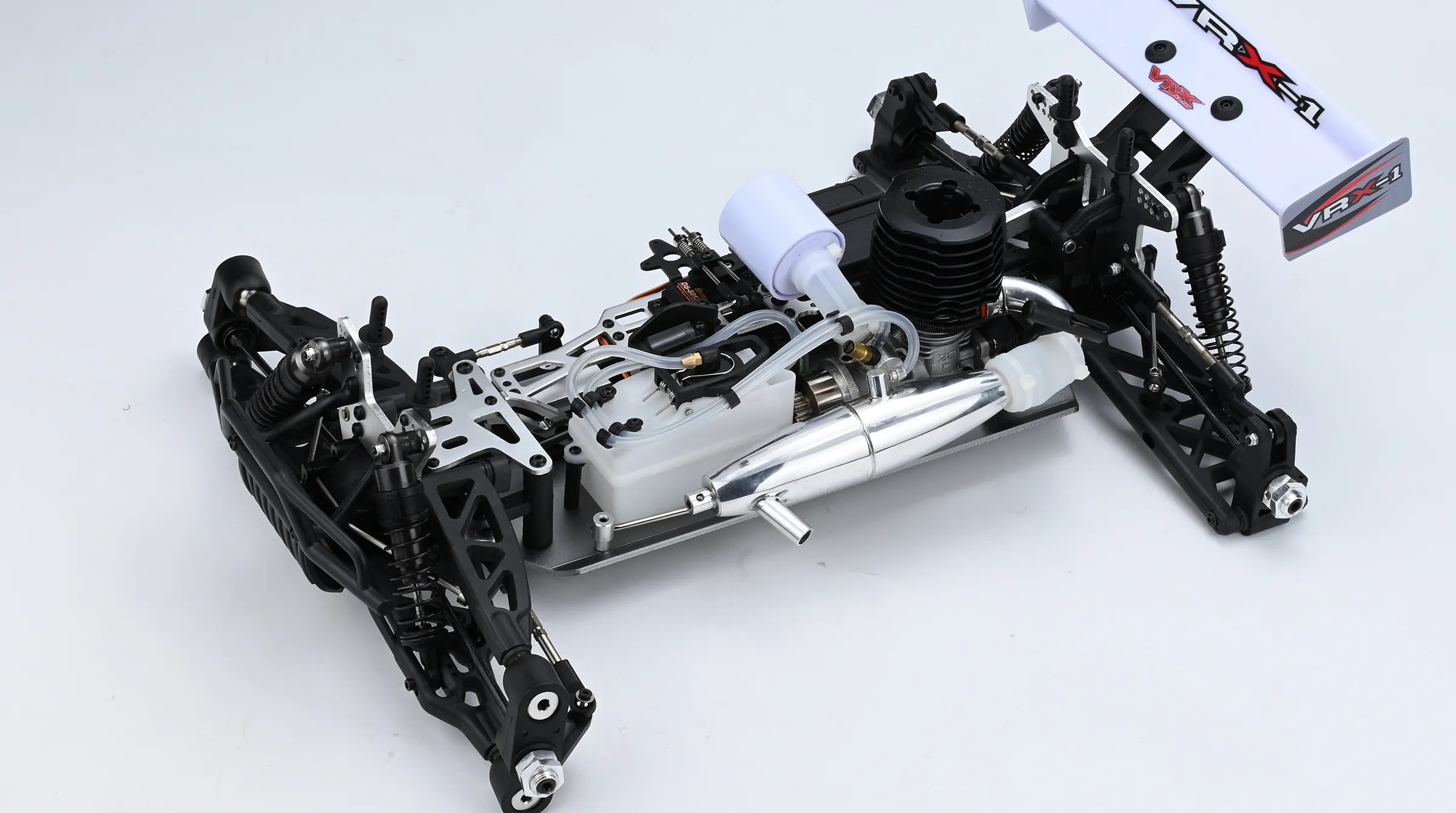
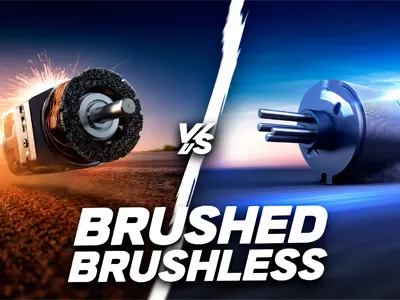
For many years, brushed motors were the mainstream choice for electric RC cars. Their relatively simple construction made them practical for a wide range of vehicles, from beginner models to trucks and buggies.
A brushed motor requires a compatible controller to regulate its operation. Modern versions of an ESC 60A brushed system can provide forward, reverse, and braking functions while incorporating protections such as low-voltage cutoff and temperature protection.
VRX Racing's 60A brushed ESC, for example, is designed for 1/10 and 1/12 applications including cars, buggies, short course trucks, touring cars, crawlers, and tanks. It supports 2S LiPo or NiMH batteries and can provide 60A continuous current.
This illustrates an important point in RC development: electronic components became increasingly standardized across vehicle categories, allowing manufacturers to build multiple models around related electrical platforms.
Brushless motors introduced another major step forward. Instead of using physical brushes to transfer electrical current to the rotating component, brushless systems use electronic switching.
The result is a power system with less mechanical brush wear and strong efficiency potential. This made brushless motors particularly attractive for high-performance electric RC cars.
A modern 3300KV brushless motor is a good example of the technology's influence on 1/10 platforms. VRX Racing uses 3650 3300KV brushless motors in several 1/10 vehicles, including its BLAST 2.0 short course truck. That model combines the motor with a 45A ESC, a 2S 3300mAh LiPo battery, 4WD shaft drive, and oil-filled shocks.
The important development was not simply higher speed. Brushless systems gave manufacturers more flexibility in creating compact vehicles that could deliver strong acceleration while retaining controllable power delivery.
The ESC is effectively the electronic link between the battery, motor, and driver's throttle command.
A 60A brushless ESC must manage current flow while responding quickly to throttle input. Its suitability depends on the motor, battery voltage, vehicle type, gearing, and expected load.
VRX Racing's 60A brushless ESC is designed for 1/10 applications and supports 2S–3S LiPo or 4–9 cell NiMH batteries. Its specifications also distinguish between on-road and off-road motor requirements, demonstrating that an ESC cannot be selected simply by looking at its current rating.
For example, the same ESC may support a higher-KV motor in an on-road application while requiring a lower-KV motor for an off-road buggy or monster truck. Heat generation, gearing, tire size, and terrain all affect the electrical load.
Therefore, the number “60A” is only one part of the system specification.
As electronic components became more compact, manufacturers could install complete power and control systems directly into assembled vehicles.
This helped create the modern 1/10 RC RTR category. RTR, or Ready-to-Run, means the vehicle arrives largely assembled with the major driving components already installed.
For example, VRX Racing's MIZAR 1/10 truck combines a waterproof 60A ESC, brushless motor, 2S 3300mAh LiPo battery, 2.4GHz radio system, adjustable suspension, metal differential gears, and a high-torque steering servo.
The significance of RTR is not simply convenience. It represents the integration of components that previously required the hobbyist to select, install, and configure separately.
That integration allows a manufacturer to validate the motor, ESC, battery, drivetrain, and chassis as a complete package before the vehicle reaches the user.
Different RC vehicles place different demands on electronics.
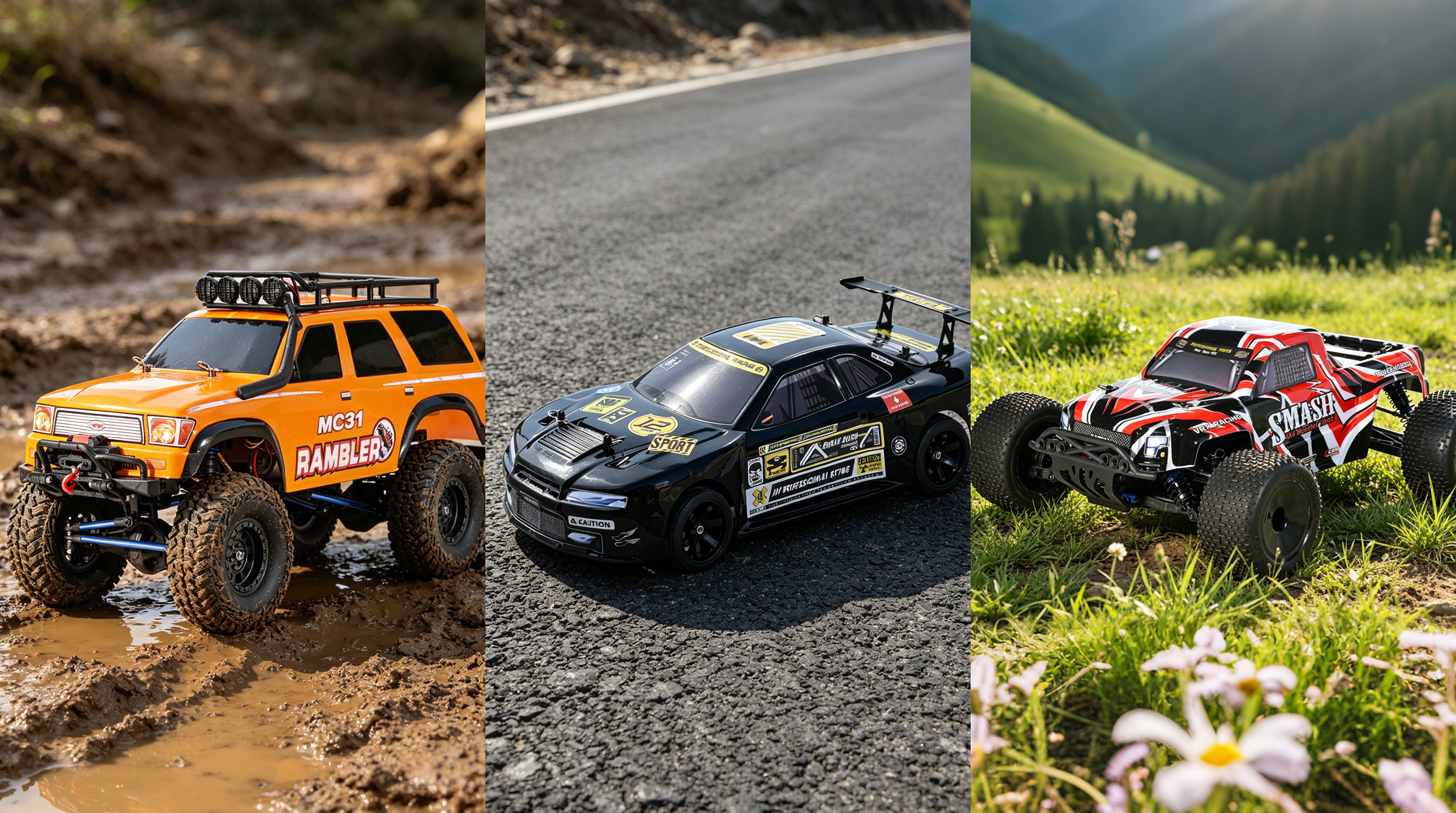
A 1/10 RC on road car generally operates on relatively smooth surfaces, where low rolling resistance and high-speed acceleration are important. Its ESC and motor combination can therefore be configured differently from an off-road vehicle.
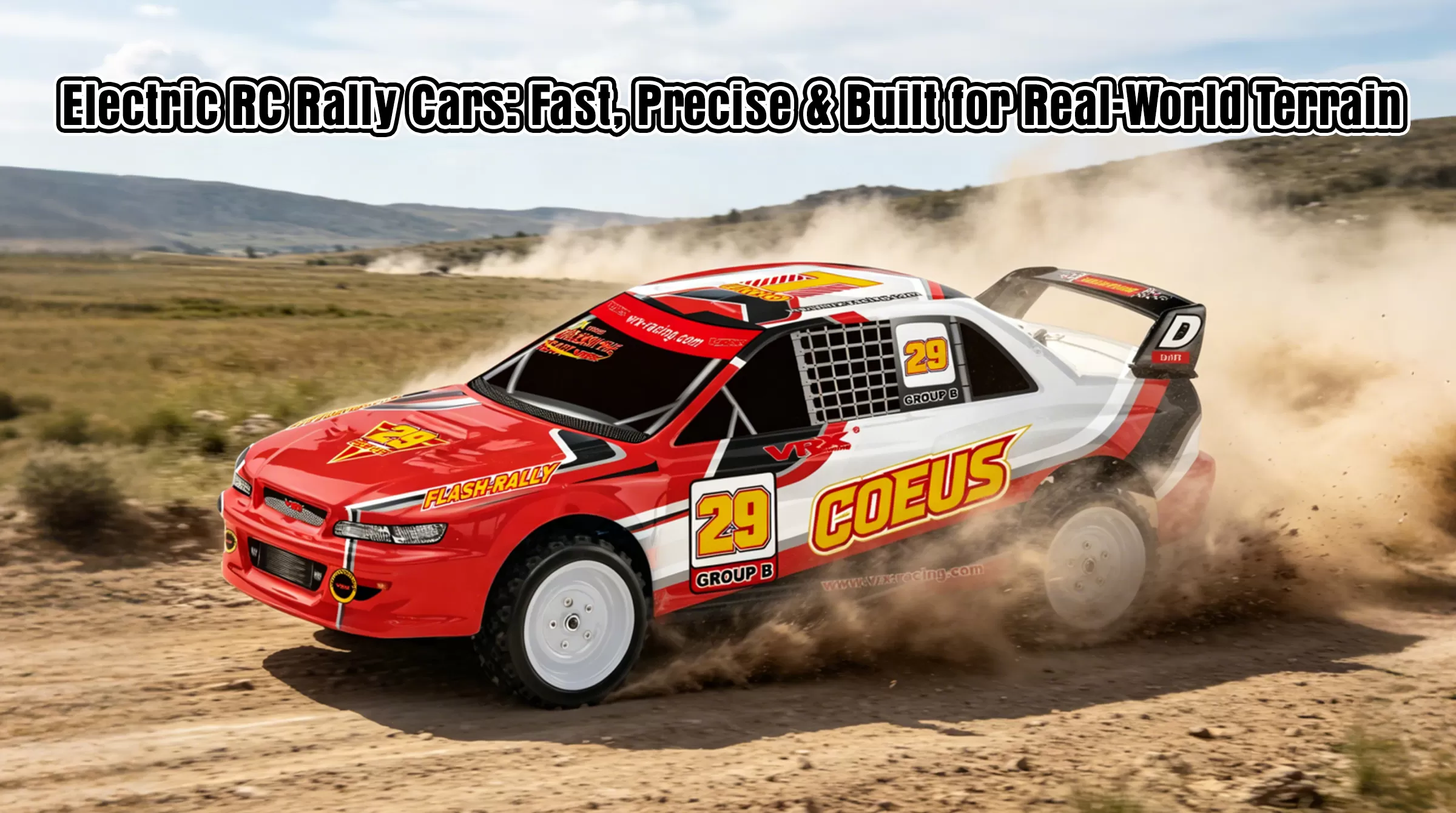
A 4WD RC short course truck, in contrast, must handle dirt, jumps, cornering, and changing traction conditions. VRX Racing's electric short course range combines 4WD drivetrains, independent suspension, enclosed bodies, and both brushed and brushless power systems.
A monster truck RTR has another set of requirements. Large tires and high ground clearance increase the mechanical and electrical load, particularly when the vehicle is climbing, jumping, or driving through loose terrain.
VRX Racing's electric monster trucks are designed around high ground clearance, oversized tires, reinforced chassis structures, independent suspension, and 4WD drivetrains. Both brushed and brushless configurations are available.
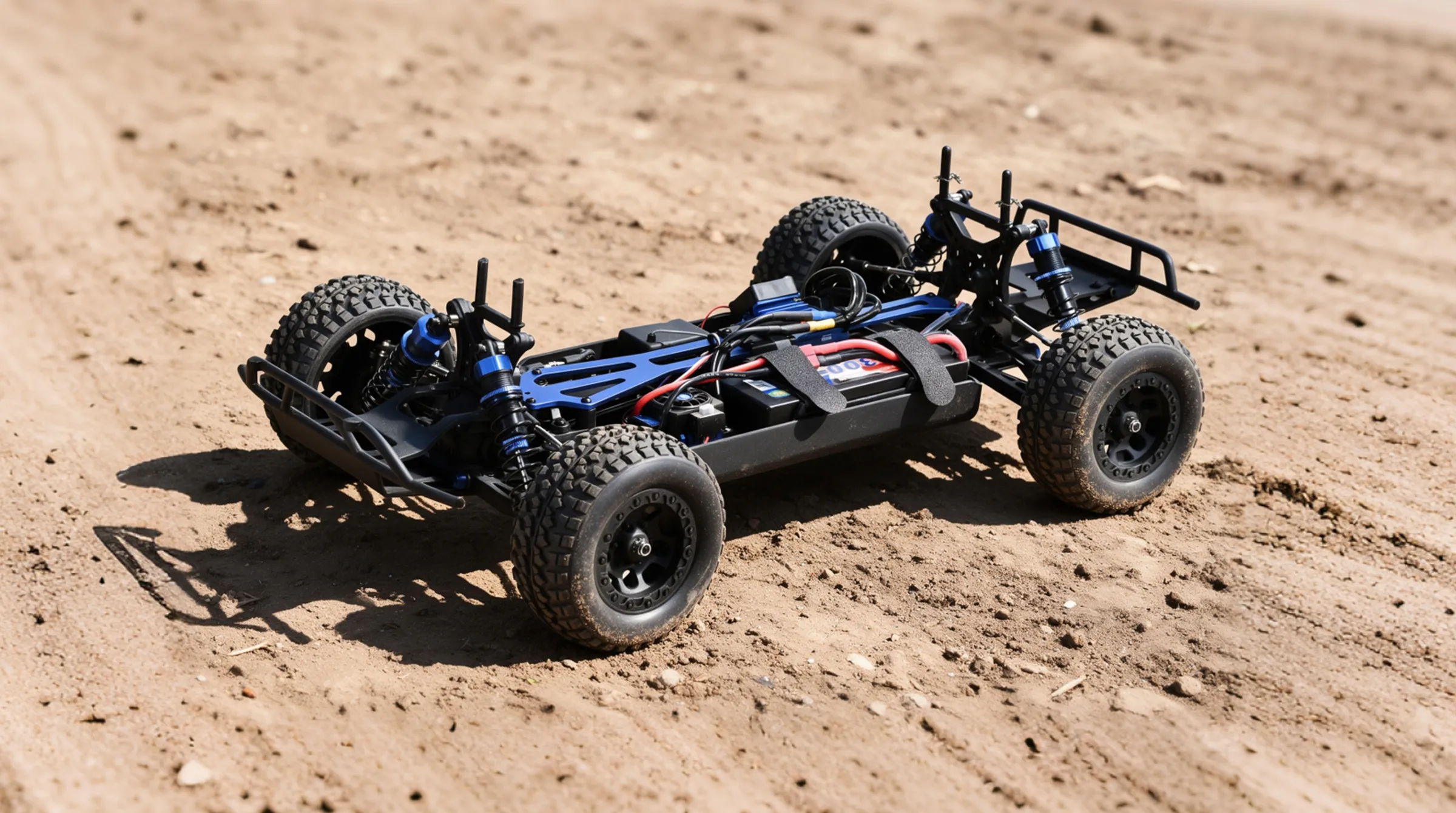
The development of electronics also made different RC truck sizes easier to support.
A 1/10 truck can remain relatively compact while carrying a brushless motor, ESC, LiPo battery, and 4WD drivetrain. Larger platforms have more physical space for motors, batteries, cooling systems, and reinforced mechanical components.
However, larger does not automatically mean more powerful. The relationship between vehicle size, motor KV, battery voltage, gearing, tire diameter, and ESC capacity is more important than scale alone.
This is why modern RC manufacturers develop several electronic configurations rather than simply installing the largest possible motor in every vehicle.
Today's RC car is increasingly defined by the relationship between its mechanical and electronic systems.
A 3300KV brushless motor can provide a very different driving experience depending on the ESC, battery, gearing, tires, and chassis carrying it. The same principle applies to brushed systems: a well-matched ESC 60A brushed setup can provide predictable control for applications where extreme brushless performance is unnecessary.
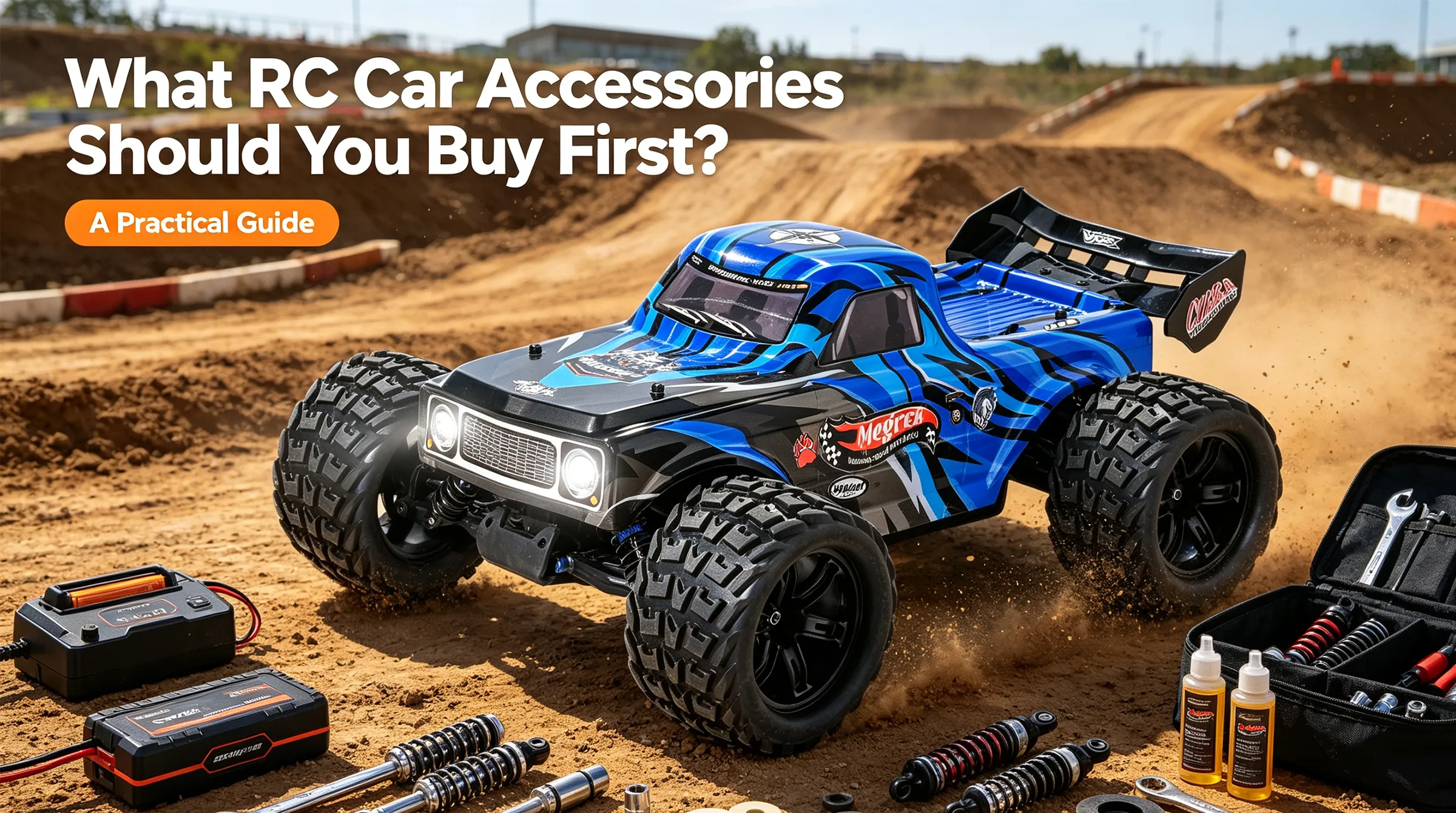
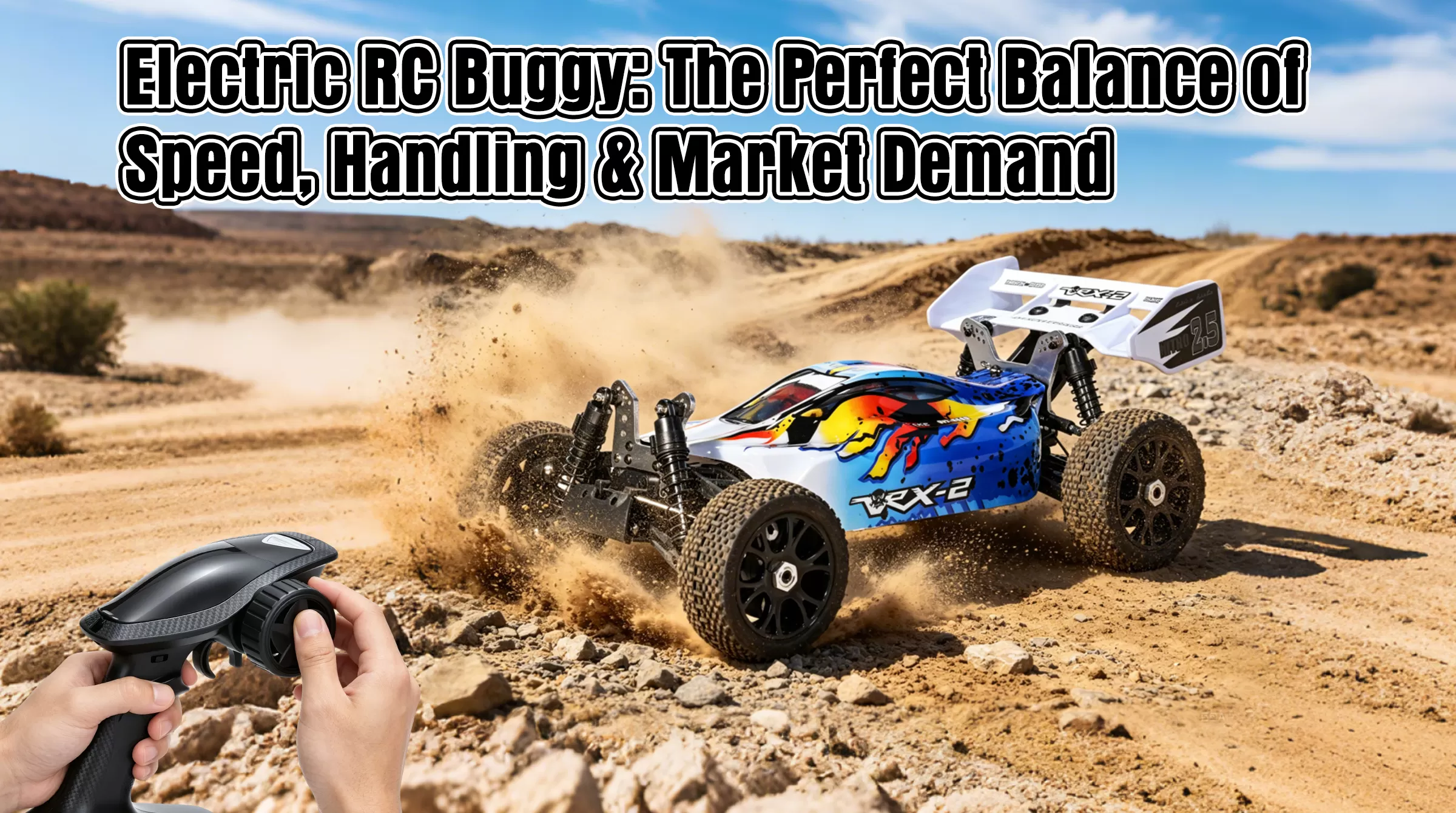
VRX Racing's current product range demonstrates this broader approach. Its 1/10 models include brushless trucks, truggies, buggies, and short course vehicles, while different ESC and motor combinations are used according to the intended application. For example, the MEGREZ 1/10 truggy uses a 3650 3000KV brushless motor with a 60A Hobbywing ESC and 2S 3300mAh LiPo battery.
The evolution of RC electronics has quietly transformed the hobby.
Early systems mainly provided remote steering and throttle control. Brushed ESCs brought more precise electronic power management. Brushless motors and modern ESCs then raised the performance ceiling, while LiPo batteries and compact electronics made complete RTR vehicles practical.
Today, an RC car is no longer simply a miniature mechanical vehicle controlled by a radio. It is an integrated system in which electronics influence acceleration, braking, efficiency, heat management, and overall drivability.
From a 1/10 RC RTR truck to a brushless buggy, a 4WD RC short course truck, or a high-clearance electric monster truck, the modern RC experience is built on this combination of mechanical engineering and electronic control.
For VRX Racing, this evolution provides a foundation for developing different vehicle platforms around carefully matched power and control systems rather than treating the electronics as secondary components.