In RC racing and high-performance bashing, few things are more frustrating than a tire coming off mid-run. A single delaminated tire can destroy a race lap, cause a serious crash, or turn a fun backyard session into a repair job. Proper tire gluing is not just maintenance — it is a critical skill that directly affects grip, handling consistency, safety, and overall reliability. For hobby-grade RC cars from manufacturers like VRX Racing, professional tire bonding is what separates casual driving from confident, competitive performance.
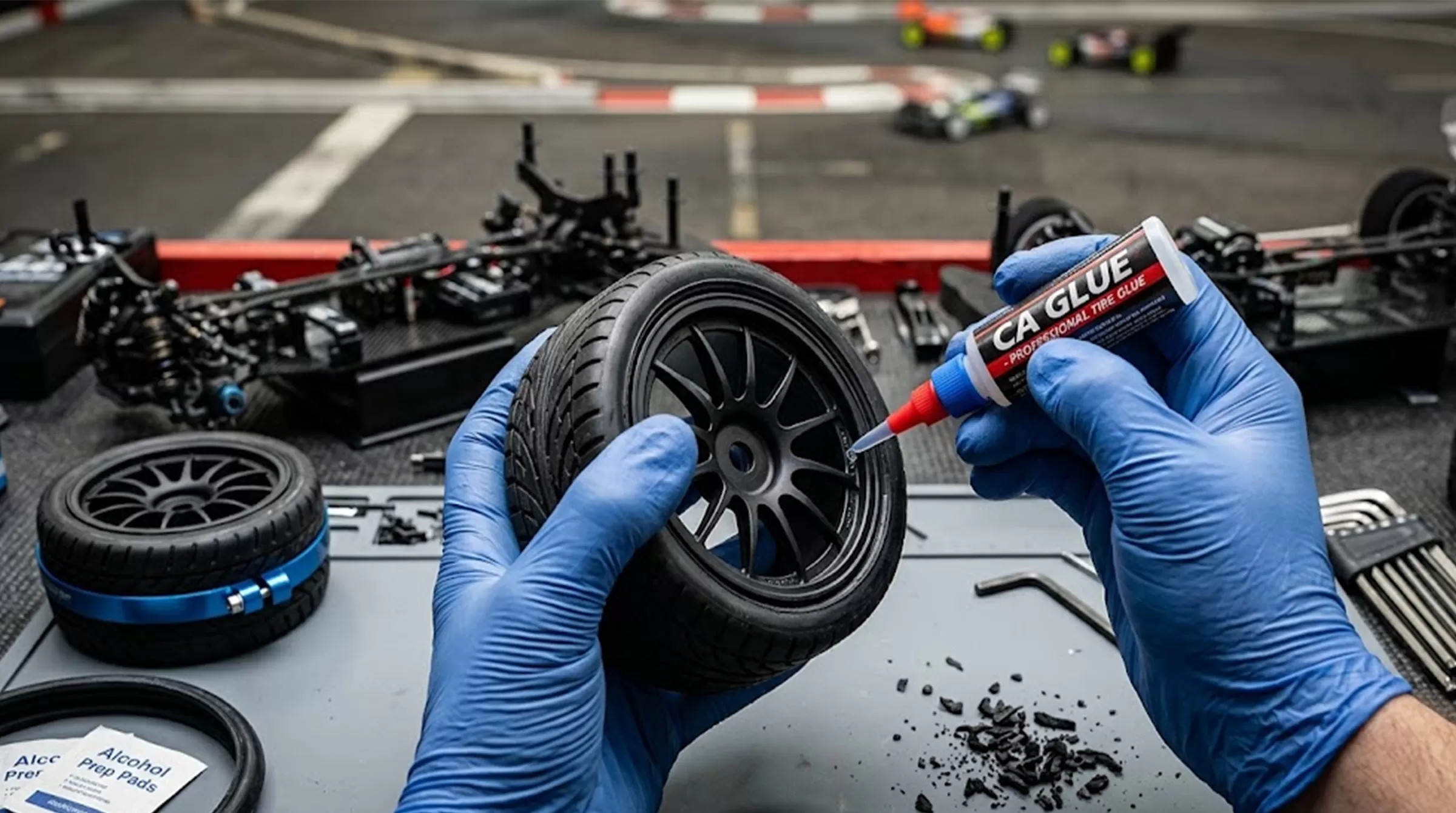
RC tires endure extreme forces — high-speed cornering, heavy landings, sudden acceleration, and constant lateral stress. When a tire detaches even slightly from the rim, you immediately lose traction, stability, and control. In racing, this often results in a spin-out or crash. In bashing, it can lead to damaged wheels, bent axles, or broken suspension components.
Unlike toy-grade cars that use snap-on or poorly bonded tires, hobby-grade RC vehicles (including VRX Racing’s performance platforms) require proper chemical bonding between the tire bead and wheel rim. A strong, even glue joint ensures consistent grip lap after lap and prevents catastrophic failures during high-speed runs or aggressive off-road use.
Proper tire bonding equals consistent performance on track.
Before applying any glue, it is essential to understand how RC car tires and wheels are engineered. The tire has a bead (the inner lip that seats into the wheel), while the wheel has a grooved rim designed to lock the bead in place. Inside the tire sits a foam insert that maintains shape and supports sidewall flex during cornering.
The sidewall flex behavior is particularly important — it allows the tire to conform to the track surface for maximum contact patch. Glue works best when there is both mechanical fit (tight bead seating) and chemical bonding. If either is compromised, the tire will eventually peel under load, especially during high-speed runs or heavy braking.
Good gluing starts with understanding this engineering logic: mechanical fit plus chemical bond creates a reliable, long-lasting assembly.
Detailed diagram showing RC tire bead, foam insert, and wheel rim structure
Professional results require professional tools. A proper tire gluing setup includes:
Category | Items |
Adhesive | High-quality CA tire glue (medium and thin viscosity) |
Precision Tools | Applicator tips, micro nozzles, fine brushes |
Cleaning | Isopropyl alcohol (99%), shop towels, compressed air |
Holding Tools | Tire bands, professional gluing jig |
Safety | Nitrile gloves, ventilation, eye protection |
Investing in the right tools significantly improves bond strength and reduces waste. Professional racers and serious hobbyists rarely rely on rubber bands alone — a good gluing jig ensures even pressure distribution around the entire bead.
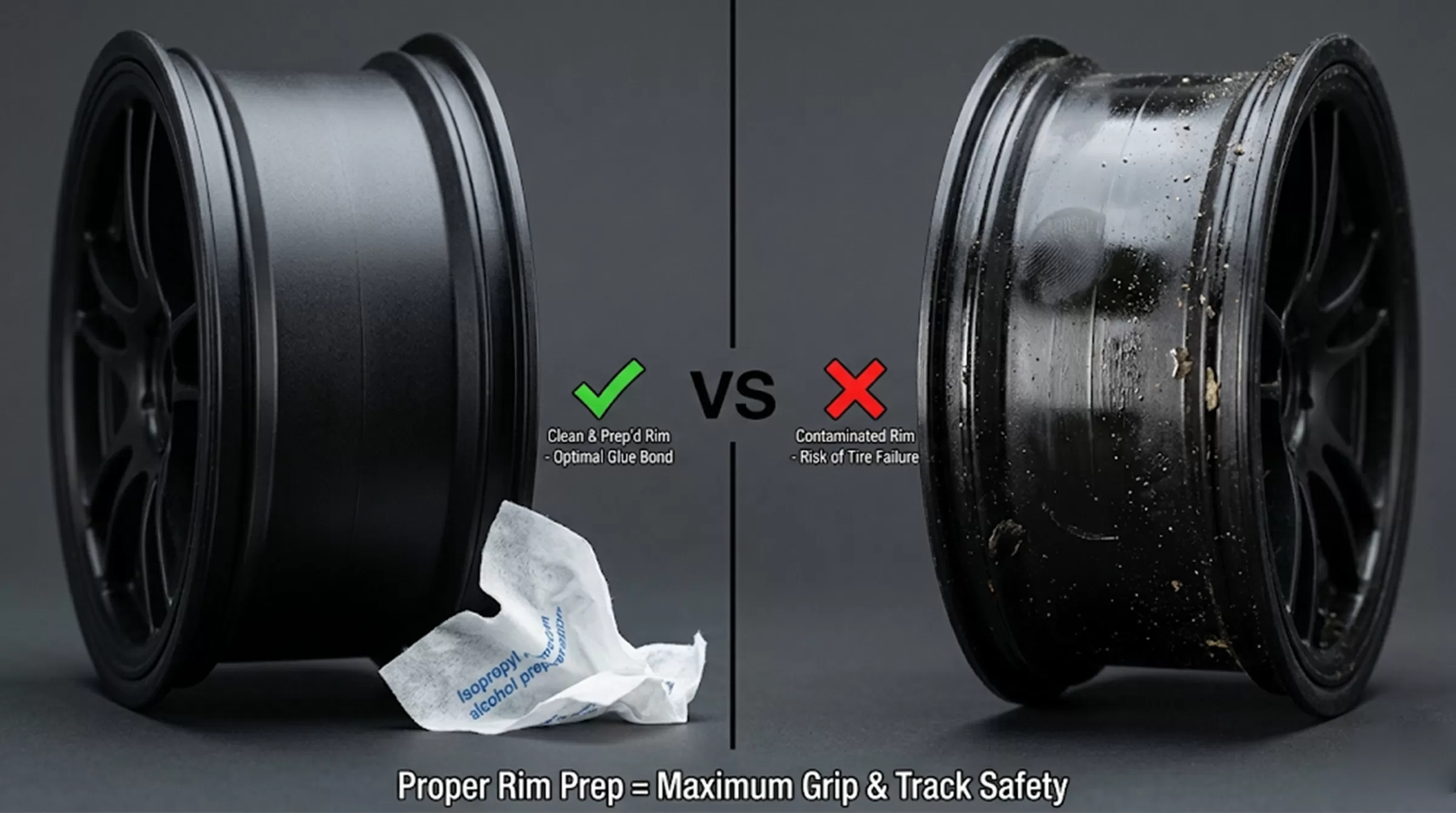
90% of tire failures start with poor surface preparation. New tires and wheels often have factory release agents, mold release oil, or dust that prevents glue from forming a strong chemical bond.
Thoroughly clean both the tire bead and the wheel rim groove using isopropyl alcohol. Pay special attention to the inner bead area. Even microscopic contamination can cause the glue to bond to oil instead of rubber, leading to delamination under load. A clean, dry surface is the foundation of a professional tire bond.
Correct assembly is critical for traction consistency. Start by inserting the foam liner evenly inside the tire — it supports the sidewall and helps maintain a stable contact patch during high-speed cornering. Then carefully stretch the tire over the wheel, ensuring the bead seats fully into the rim groove on both sides.
Proper seating prevents air gaps and ensures the tire maintains its intended profile under load. Well-assembled RC truck wheels and tires combination provides more predictable grip and reduces the chance of the tire rolling off the rim during aggressive driving.
Professional tire gluing is a controlled, methodical process rather than simply squeezing glue around the rim. Here is the proven technique used by experienced racers and builders:
Work in small sections (1–2 inches at a time). Gently lift the tire bead away from the rim just enough to expose the groove. Apply a thin, consistent bead of medium or thin CA glue into the wheel groove — not on the tire itself. Release the tire slowly so the bead settles naturally into the glue. The capillary action of the thin glue will draw it deep into the joint for maximum bonding strength.
Continue around the entire remote control wheel, working one side at a time. Avoid applying too much glue, as excess can create hard spots that affect tire flex and balance. After gluing one side, allow 10–15 minutes of initial set time before flipping the wheel and repeating the process on the opposite side.
Professional tip: Rotate the wheel slowly while applying glue to ensure even distribution and better penetration.
Even pressure during curing is what separates amateur gluing from professional results. Uneven pressure creates micro-gaps that become failure points under high-speed cornering or heavy landings.
Method | Precision | Cost | Recommended Use |
Rubber Bands | Medium | Low | Beginners & casual use |
Professional Gluing Jig | High | Medium | Racing & serious hobbyists |
A good gluing jig applies uniform pressure around the entire circumference, resulting in a stronger, more consistent bond.
CA glue dries to the touch quickly, but full molecular bonding takes time. For high-performance RC remote control cars, rushing the curing process is one of the most common causes of tire failure during racing.
Allow a minimum of 8–12 hours (ideally overnight) for full cure before running the car at high speed. Early driving can cause the bond to shear, leading to delamination under load. Patience during curing directly translates to better grip and greater reliability on the track.
Most tire problems are preventable:
Tire peeling — Caused by poor cleaning or insufficient glue penetration. Solution: Thorough alcohol cleaning and capillary gluing technique.
Uneven glue lines — Leads to vibration and inconsistent grip. Solution: Work in small sections with controlled application.
Bead separation — Usually from inadequate curing time or pressure. Solution: Use a gluing jig and allow full cure.
Wheel contamination — Oil or dirt prevents bonding. Solution: Clean both surfaces meticulously before assembly.
Here are battle-tested tips from experienced racers:
Apply glue from inside the groove rather than the tire surface for deeper penetration.
Rotate the wheel slowly while gluing to ensure even coverage.
Use thin glue for initial bonding and medium glue to seal the outer edge.
Venting your tires is crucial. Punch small holes in the rubber (not the plastic wheels) to allow air and dirt to escape, preventing the tire from bouncing like a basketball under high speeds.
Use thin CA glue for the initial bond—its capillary action pulls it deep into the bead. Use medium glue as a final outer seal or for quick trackside repairs.
Double-check bead seating under bright light before final curing.
Never rush the process — a few extra minutes during gluing can save an entire race weekend.
Re-glue or replace tires when you notice:
Visible gaps or soft spots along the bead
Uneven traction or vibration at speed
Tires that have been through heavy crashes or extreme heat cycling
After long-term storage or extended drifting/racing sessions
At VRX Racing, we understand that consistent factory tire gluing is essential for product reliability. Our RTR platforms undergo strict quality control to ensure tires are properly bonded using professional techniques and materials. This attention to detail reduces warranty claims and delivers better ownership experience for both end users and distributors.
Our tire bonding process is tested for high-speed off-road and racing conditions, supporting different tire compounds and setups across our 1/8, 1/10, and smaller scale lines.
1. Do all RC tires need glue?
Yes — hobby-grade RC tires must be properly glued. Snap-on or poorly bonded tires are typical of toy-grade products and will fail under load.
2. How long does CA glue last?
Surface dry time is a few minutes, but full cure requires 8–12 hours minimum for high-performance use.
3. Can I reuse wheels after tire failure?
Yes, if the rim is not damaged. Thorough cleaning is required before re-gluing new tires.
4. What glue is best for RC tires?
High-quality CA tire glue specifically formulated for RC use (medium and thin viscosity).
5. Why do tires come off during racing?
Common causes include poor surface preparation, insufficient curing time, uneven glue application, or using the wrong glue viscosity.
Tire gluing is not a minor maintenance task — it is a fundamental aspect of RC performance, safety, and racing success. A well-glued tire provides consistent grip, predictable handling, and the confidence to push your car to its limits.
Precision assembly leads to consistent performance on every terrain. Whether you are a competitive racer, weekend basher, or distributor supporting your customers, mastering professional tire gluing techniques will significantly improve reliability and enjoyment.
At VRX Racing, we engineer our platforms with durability and performance in mind, and we support our partners with reliable products and technical knowledge to custom RC car wheels, helping end users get the most from every run.