Whether you are a newcomer to the hobby or a seasoned RC veteran, one question always comes up: How fast can an electric RC car actually go? Thanks to advancements in brushless motors and lithium-polymer (LiPo) batteries, modern hobby-grade RC cars are shattering speed barriers that were once thought impossible.
In this comprehensive 2026 speed guide, we will break down the average speeds, the factors that make an RC car fast, and how you can tune your vehicle for maximum performance.
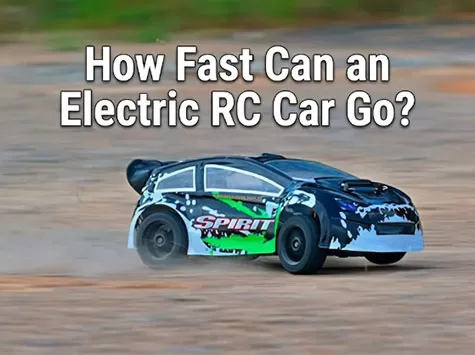
Direct Answer: On average, a hobby-grade electric RC car can go anywhere from 15 mph to over 70 mph, depending on its motor, battery, and intended use.
While custom-built speed run cars can break 100 mph, the vast majority of hobbyists find their "sweet spot" between 30 mph and 50 mph for everyday bashing and racing. Speeds within this range offer a perfect balance of adrenaline-pumping fun and controllable handling.
Here is a quick breakdown of electric RC car speeds based on their performance level:
RC Car Level | Typical Speed Range | Best For |
Entry-Level (Brushed/NiMH) | 15 – 25 mph | Kids, Beginners, Casual backyard fun |
Mid-Range (Brushless/2S LiPo) | 25 – 45 mph | Enthusiasts, Skateparks, Dirt tracks |
High-Performance (Brushless/3S-6S) | 45 – 70+ mph | Experienced drivers, Large open spaces |
Extreme / Modified | 100+ mph | Speed runners, Professional tuners |
When we talk about extreme RC speed, we are entering the realm of world records. The absolute fastest electric RC cars in the world are heavily modified custom builds. The current Guinness World Record for a battery-powered RC car is an astonishing 202 mph (325 km/h), achieved by RC enthusiast Nic Case with his custom "RC Bullet."
In the Ready-to-Run (RTR) market, cars like the Traxxas XO-1 are famously advertised to hit 100 mph right out of the box (with unlocked settings and specific batteries).
Important Note: Extreme speed ≠ a great daily experience. Cars built for 100+ mph runs require perfectly flat surfaces, long stopping distances, and advanced driving skills. For 99% of hobbyists, a reliable 40 mph off-road buggy is much more fun.
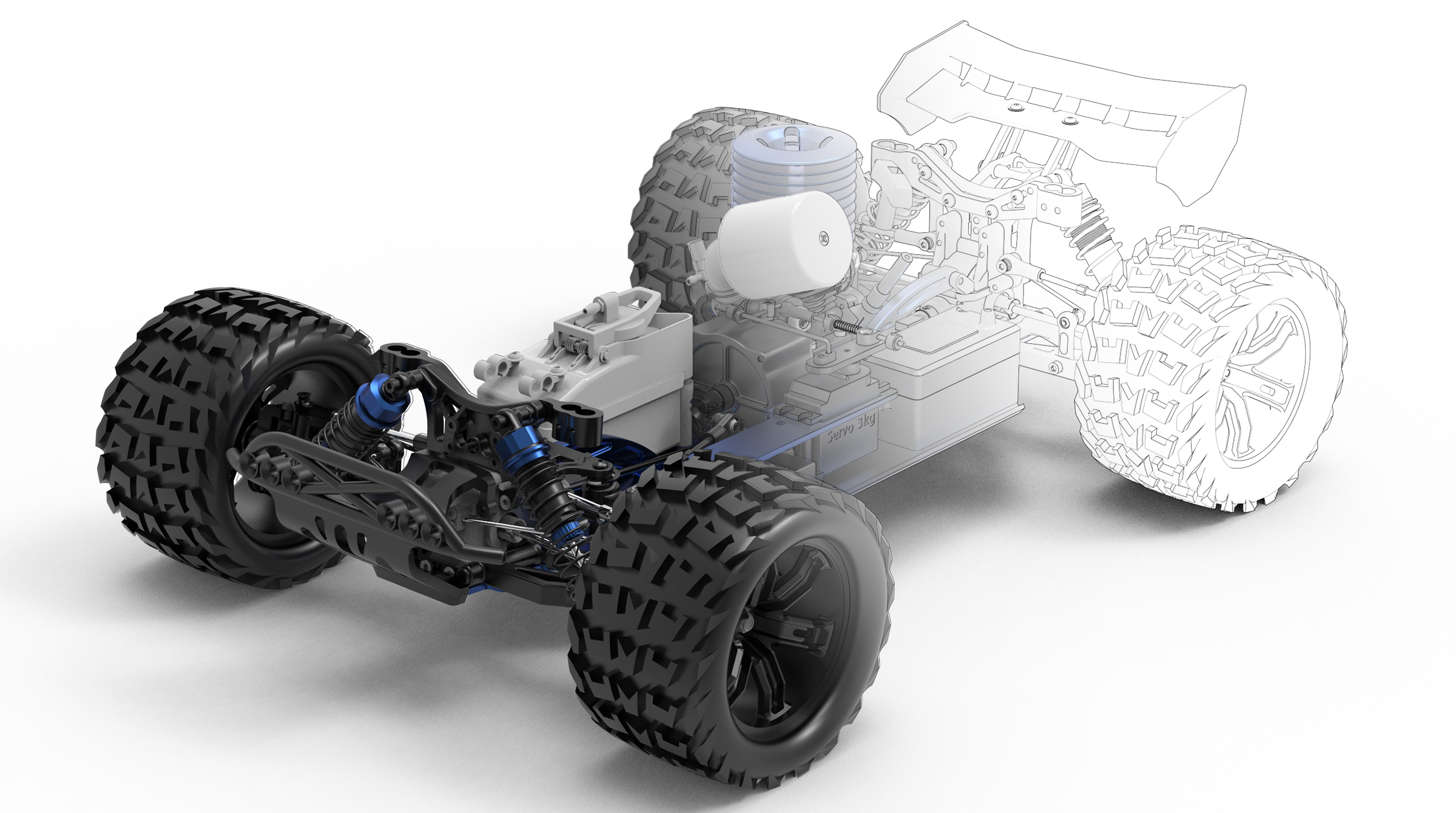
f you want to understand RC speed, you need to look under the body shell. The top speed of an electric RC car is primarily determined by a combination of these 5 critical factors:
Battery Voltage: The "fuel" of the car; higher voltage means higher RPMs.
Motor (KV Rating): Determines how fast the motor spins per volt of electricity.
Weight & Aerodynamics: Heavier cars accelerate slower and struggle against wind resistance.
Gear Ratio: The balance between acceleration (punch) and top-end speed.
Tires & Terrain: Grip and friction dictate how well power is transferred to the ground.
Let's break these down.
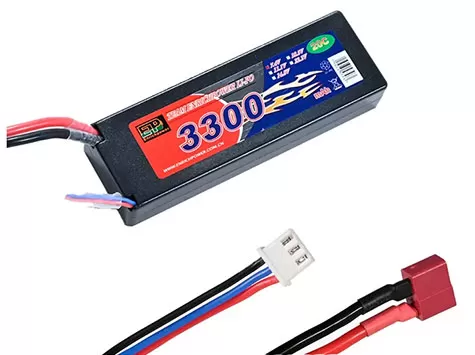
Upgrading your RC car battery is the easiest way to make your RC car faster. Hobby-grade electric RC cars usually run on LiPo (Lithium Polymer) batteries, which are rated by "Cells" or "S".
The higher the "S" rating, the higher the voltage. More voltage delivered to the motor translates directly to higher RPMs and faster speeds.
Battery Type | Nominal Voltage | Speed Potential |
2S LiPo | 7.4 Volts | Fast (Great for beginners/mid-level) |
3S LiPo | 11.1 Volts | Very Fast (High performance) |
4S LiPo | 14.8 Volts | Extreme (Track and heavy bashing) |
6S / 8S LiPo | 22.2V / 29.6V | Insane (Requires massive open space) |
Want to learn more about choosing the right power source? Read our complete Ultimate RC Car Battery Guide: Electric RC Cars Battery Guide: LiPo vs NiMH – Everything You Need to Know
Electric RC cars use either brushed or brushless motors (brushless is highly recommended for hobbyists aged 14+). Brushless motors are rated in KV, which stands for RPM per Volt.
Higher KV = Higher Top Speed: The motor spins faster, but produces less torque.
Lower KV = More Torque: The motor spins slower but has the raw pulling power needed for heavy monster trucks or crawlers.
KV Rating | Speed vs Torque | Best Used For |
1500KV - 2500KV | High Torque, Lower Speed | 1/8 Monster Trucks, Rock Crawlers |
3000KV - 4000KV | Balanced Speed & Torque | 1/10 Buggies, Short Course Trucks |
4500KV+ | High Speed, Lower Torque | On-road Drift Cars, Touring Cars |
Your RC car's speed is heavily influenced by the Pinion gear (attached to the motor) and the Spur gear (attached to the drivetrain). Changing these gears is called "re-gearing."
High Gear Ratio (Bigger Pinion / Smaller Spur): Higher top speed, but slower acceleration. Your motor will also run hotter. Ideal for on-road racing.
Low Gear Ratio (Smaller Pinion / Bigger Spur): Extremely fast acceleration (punch off the line) but a lower top speed. Perfect for off-road setups and bashing.
Physics applies to RC cars just like real cars.
Weight: A heavier aluminum chassis provides durability but requires more power to reach top speeds and slows down acceleration.
Aerodynamics: At 20 mph, air resistance is barely noticeable. But once you push past 50 mph, aerodynamics become crucial. Without the right downforce from a rear wing or a streamlined body, high-speed air will get under the chassis and cause the car to flip backwards (often called a "blowover").
You can have the fastest electronics in the world, but if your tires can't grip, you won't go anywhere.
Smooth Tarmac/Asphalt: Offers the lowest rolling resistance and the highest top speeds. Requires slick or street-tread tires.
Grass, Sand, and Dirt: High friction surfaces. Your car will be significantly slower on thick grass compared to the street. You will need knobby or paddle tires to dig into the terrain.
Related Reading: What Affects Electric RC Car Performance?
Battery choice plays a major role in speed, runtime, and overall driving feel—but it's only one of several factors that shape RC car performance. Learn how motors, drivetrain setups, gearing, and electronics all work together to influence speed, power, and efficiency: What Affects Electric RC Car Performance? A Complete Guide to Speed, Power & Efficiency
Not all RC cars are designed for speed. The chassis style dictates the vehicle's purpose. Here is what you can expect from different hobby-grade types:
RC Car Type | Typical Speed Range | Speed Focus |
Touring / Speed Cars | 50 – 80+ mph | Built purely for maximum speed on flat roads. |
35 – 60 mph | Lightweight and aerodynamic, great for fast dirt tracks. | |
30 – 50+ mph | Heavy and powerful. Geared for jumping and bashing, not pure speed. | |
15 – 25 mph | Built for sliding sideways using hard plastic tires, not forward speed. | |
3 – 10 mph | Geared incredibly low for maximum torque to climb over rocks. |
A decade ago, Nitro (gas-powered) RC cars were the undisputed kings of speed. Today, the landscape has changed.
Electric (Brushless + LiPo): Offers significantly faster acceleration and a higher top speed right off the line. They are quieter, cleaner, and require less tuning.
Nitro: Still offers an authentic engine sound, the smell of exhaust, and great high-speed potential on long stretches, but they accelerate slower than modern electric systems.
Related Reading: Nitro vs Electric RC Cars – Which One Should You Choose?
Speed is one of the most important factors when comparing electric and nitro RC cars, but it's not the only one. To understand the full picture—including acceleration, top speed, maintenance, cost, and real-world usability—explore our complete comparison guide: Nitro vs Electric RC Cars: Which One Should You Choose in 2026?
If you already own an RC car and want to push it to the limit, here are the top upgrades (perfect for 14+ hobbyists):
Upgrade your Battery: Moving from a 2S to a 3S LiPo battery (if your ESC supports it) will give you an instant 30-40% speed boost.
Switch to a Brushless Motor System: If you have a brushed motor, upgrading to a brushless ESC and motor combo is a game-changer.
Change the Pinion Gear: Add a pinion gear with 2 or 3 more teeth to increase your top-end speed.
Install On-Road Tires: Swap out heavy off-road tires for lighter street tires to reduce rotational mass and drag.
As a leading manufacturer of hobby-grade RC vehicles (designed for users aged 14+), VRX Racing engineers our cars to handle extreme power while maintaining durability.
When we design a high-speed electric RC car, we focus on:
High-Performance Motor Combos: Pairing the exact right KV brushless motor with high-capacity LiPo batteries.
Stable ESC Systems: Ensuring smooth power delivery and thermal protection so electronics don't burn out during high-speed runs.
Durable Drivetrains: Using hardened steel gears, robust differentials, and sturdy aluminum chassis components to handle the immense torque of 3S and 4S systems.
For distributors and hobby shops, VRX Racing provides a stable supply chain and a highly scalable product line, offering everything from entry-level brushed buggies to extreme high-speed brushless beasts that keep hobbyists coming back for more.
1. Can RC cars go 100 mph?
Yes. Certain highly modified electric RC cars, and specific high-end RTR models running on 6S or 8S LiPo batteries with aerodynamic bodies, can exceed 100 mph. However, this requires a large, perfectly smooth surface.
2. How fast is a 7.4V RC car?
A 7.4V (2S LiPo) RC car typically travels between 20 mph and 35 mph, depending on whether it has a brushed or brushless motor. It is the perfect speed for intermediate hobbyists.
3. What is the fastest RTR RC car?
Currently, models like the Traxxas XO-1 and the Arrma Limitless are widely considered some of the fastest Ready-to-Run (RTR) cars, capable of reaching 100+ mph under optimal conditions.
4. Does battery affect speed?
Absolutely. The battery is the biggest determining factor for speed. Upgrading from a lower voltage battery (like 2S) to a higher voltage battery (like 3S) directly increases motor RPMs and top speed.
The world of electric RC cars is faster and more exciting than ever before in 2026. While extreme 100 mph speed runs make for great videos, most electric RC cars are fast enough for incredible fun right out of the box (usually sitting comfortably in the 30–50 mph range).
True performance doesn't just come from raw speed—it comes from the right setup, durable components, and finding the perfect balance for your terrain.