When it comes to RC car performance, the drivetrain is one of the most important factors influencing speed, control, durability, and overall driving experience. Among the available drivetrain configurations, four-wheel drive (4WD) systems have become the preferred choice for many hobbyists, racers, and RC vehicle manufacturers due to their ability to deliver superior traction and stability across a wide range of terrains.
From high-speed racing tracks and off-road trails to rock crawling and recreational bashing, a well-designed 4WD system can significantly improve vehicle performance compared to traditional two-wheel drive (2WD) designs. Understanding how these systems work and why they matter can help distributors, retailers, and OEM buyers make more informed product decisions.
A 4WD RC car distributes power from the motor to all four wheels rather than only the rear or front axle. This allows the vehicle to maximize available traction and maintain better control under various driving conditions.
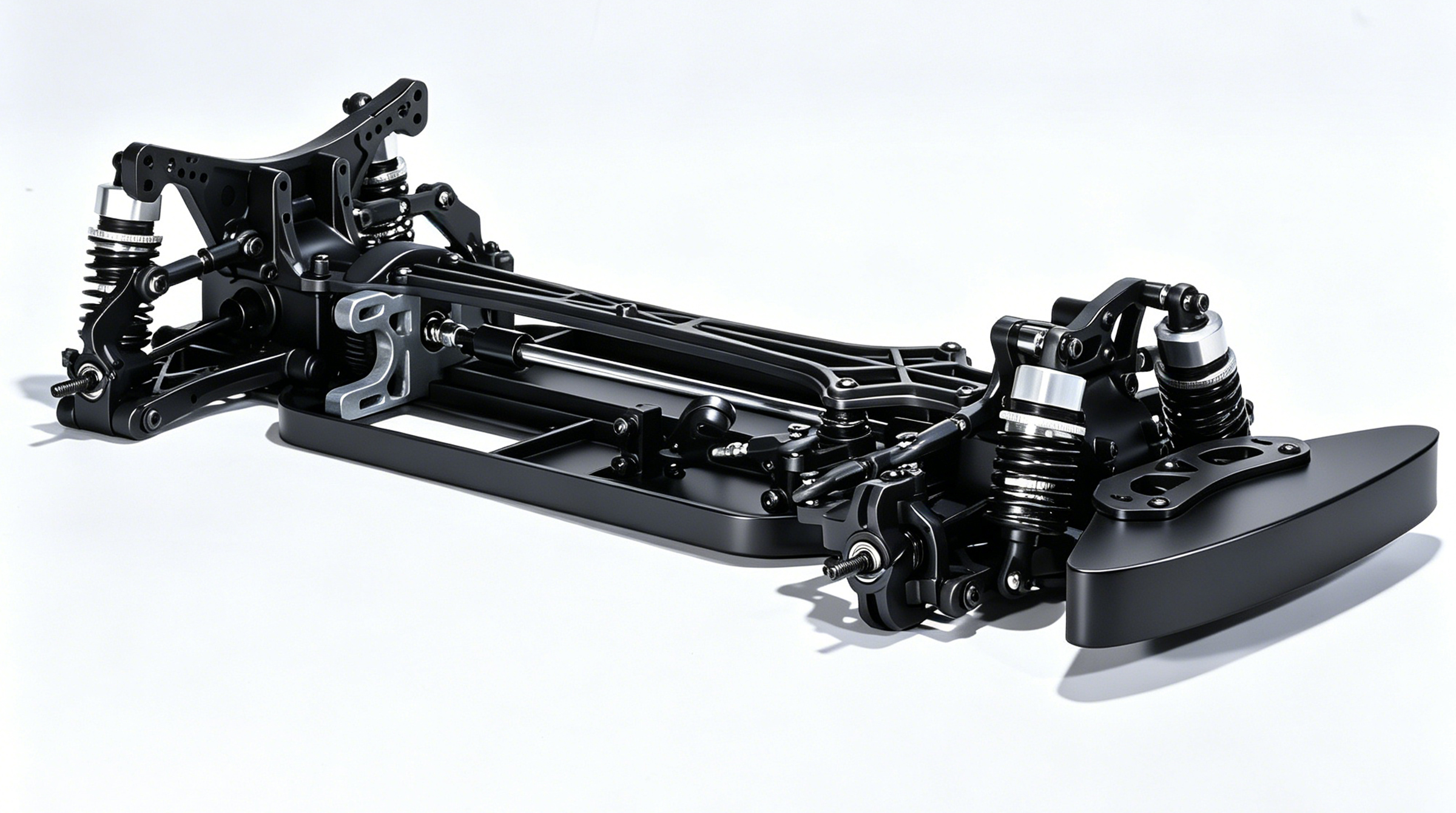
A typical 4WD drivetrain consists of several key components:
Motor and Electronic Speed Controller (ESC)
Main transmission or gearbox
Front and rear differentials
Center driveshaft or center transmission system
Front and rear drive shafts
Wheels and tires
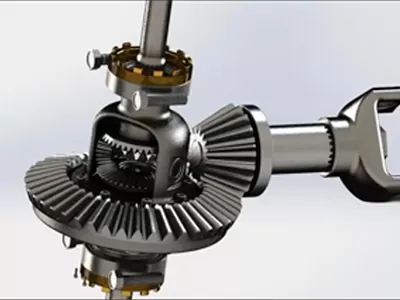
The process begins when the motor generates power and transfers it through the gearbox. The gearbox sends torque to both the front and rear differentials via a center driveshaft or center transmission assembly. The differentials then distribute power between the left and right wheels while allowing each wheel to rotate at different speeds when cornering.
This drivetrain architecture offers several advantages:
Power is distributed more evenly across all four wheels.
Wheel slip is reduced on loose surfaces.
Acceleration becomes more efficient.
Vehicle stability improves during high-speed driving.
Terrain adaptability increases significantly.
In modern RC vehicles, manufacturers often fine-tune differential settings, gear ratios, and shaft configurations to optimize performance for specific applications such as racing, crawling, or recreational use.
For example, many high-performance off-road platforms use sealed gear differentials and heavy-duty driveshafts to ensure smooth power delivery while maintaining durability under demanding conditions.
One of the most noticeable advantages of a 4WD system is improved traction.
When a 2WD vehicle accelerates, power is delivered to only two wheels. On loose dirt, gravel, grass, or uneven surfaces, those driven wheels may lose grip and spin, resulting in reduced acceleration and less predictable handling.
By contrast, a 4WD vehicle distributes torque to all four wheels, allowing the vehicle to make better use of available traction.
During acceleration, weight transfer causes increased load on certain wheels. In a 2WD setup, only the driven axle can utilize this weight transfer. A 4WD system allows all four tires to contribute to forward motion, resulting in:
Faster acceleration
Reduced wheel spin
Better launch consistency
Improved control on slippery surfaces
This advantage becomes especially noticeable in off-road racing environments where traction conditions constantly change.
Many RC enthusiasts drive on:
Dirt tracks
Gravel roads
Sand
Grass
Rocky trails
In these conditions, traction can vary dramatically from one wheel to another. Because 4WD systems continuously distribute power across four contact points, they maintain momentum more effectively than 2WD vehicles.
For a detailed comparison of the strengths and limitations of each drivetrain type, see 2WD vs 4WD RC Cars: Which Drive System Is Better for You?
Another reason 4WD vehicles are popular among distributors and retailers is their broad market appeal.
A single 4WD platform can often satisfy multiple customer segments, including:
Beginner hobbyists
Competitive racers
Off-road enthusiasts
Recreational bashers
This versatility can simplify inventory planning and increase product attractiveness across different markets.
Beyond acceleration, 4WD systems significantly enhance handling and vehicle stability.
When entering a corner at speed, weight shifts across the chassis and traction demands change rapidly.
In a 2WD vehicle, the driven axle may struggle to maintain grip while simultaneously providing propulsion and directional stability.
A 4WD system spreads these forces across all four tires, helping the vehicle:
Maintain a more balanced attitude
Reduce oversteer tendencies
Improve corner exit acceleration
Deliver more predictable steering response
This makes 4WD platforms easier to control for drivers of varying skill levels.
Braking performance is another area where 4WD systems offer advantages.
Because all four wheels remain actively connected through the drivetrain, braking forces can be distributed more evenly throughout the chassis.
Benefits include:
Reduced vehicle instability
Better straight-line braking
Improved control on loose terrain
Greater confidence at high speeds
This becomes especially important for larger RC trucks and high-powered brushless vehicles capable of reaching significant speeds.
Off-road environments introduce constant changes in traction.
Vehicles may encounter:
Rocks
Mud
Sand
Uneven trails
Loose dirt
A 4WD drivetrain allows the vehicle to continue moving even when one or two wheels lose grip. As torque remains available to other wheels with traction, the vehicle is less likely to become stuck.
This capability is particularly valuable for:
Rock crawlers
Desert trucks
Monster trucks
Trail vehicles
Scale off-road platforms
The result is improved obstacle-clearing performance and a more enjoyable driving experience.
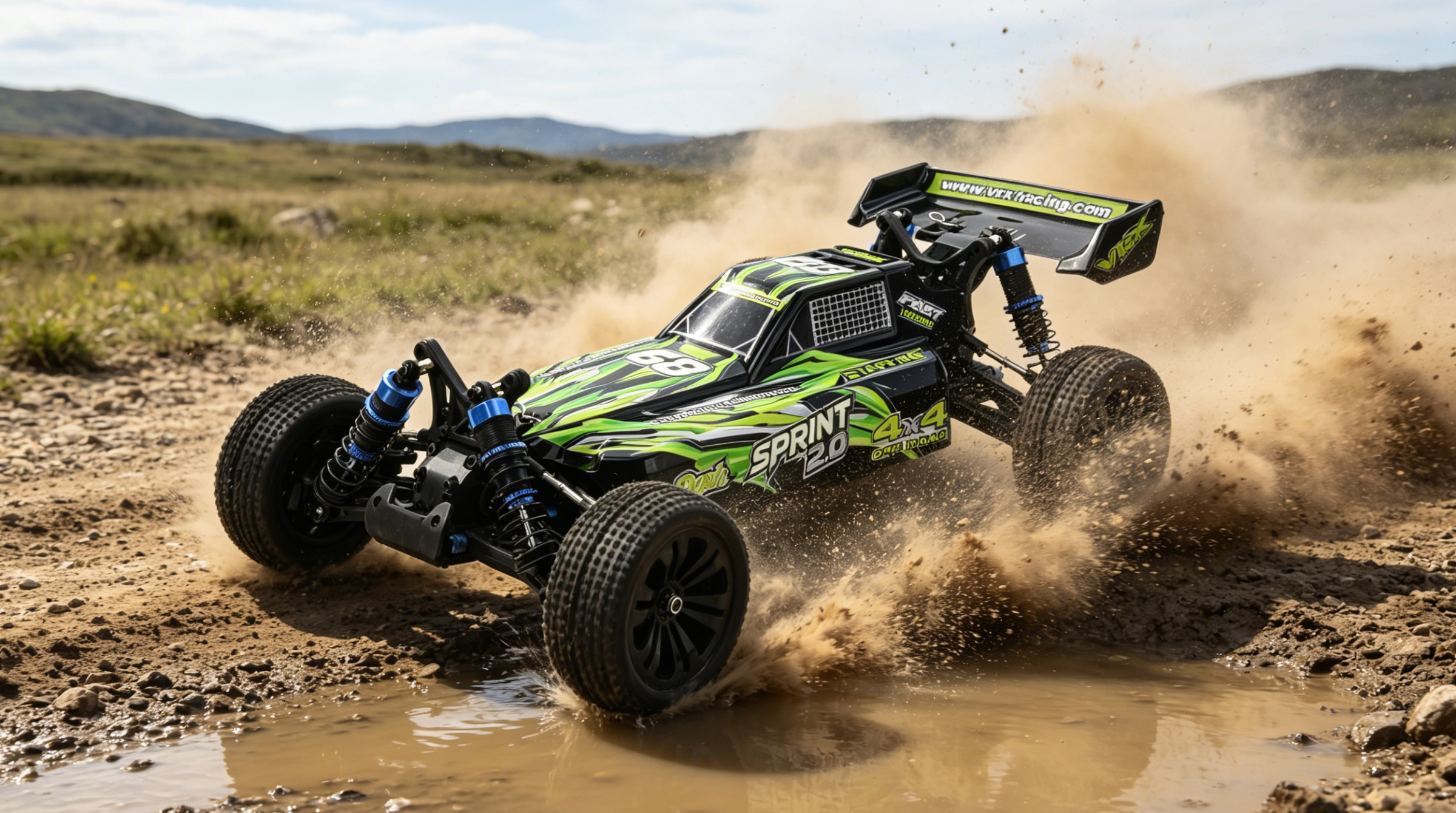
For distributors, wholesalers, and OEM buyers, drivetrain durability is often just as important as performance.
A high-quality 4WD system depends on several critical components working together reliably over extended periods of use.
Differentials are responsible for allowing wheels on the same axle to rotate at different speeds during cornering.
Common RC differential types include:
Gear differentials
Ball differentials
Limited-slip differentials
Sealed gear differentials are particularly popular in modern off-road platforms because they provide:
Smooth operation
Consistent power transfer
Lower maintenance requirements
Better durability under high loads
Driveshafts transfer power from the transmission to the wheels.
Their design directly affects drivetrain reliability.
Common materials include:
Hardened steel
Aluminum alloys
Composite materials
Heavy-duty steel driveshafts are often preferred in high-torque applications because they resist bending and wear under extreme loads.
The gearbox serves as the central hub of the drivetrain.
A well-engineered gearbox should provide:
Efficient power transfer
Reduced friction loss
Long-term durability
Easy maintenance access
Manufacturers often strengthen gearboxes using reinforced housings and precision-machined gears to improve reliability in demanding environments.
High-quality bearings play a critical role in drivetrain efficiency.
Premium bearings help:
Reduce rotational resistance
Minimize wear
Improve drivetrain smoothness
Extend component lifespan
For B2B buyers evaluating RC vehicle suppliers, drivetrain construction quality is often a key indicator of overall product reliability and customer satisfaction.
Not all 4WD systems are designed for the same purpose. Different vehicle categories require different drivetrain characteristics.
For manufacturers, distributors, and private-label brands, selecting the right configuration is essential for meeting market expectations.
Competitive racing vehicles prioritize:
Lightweight drivetrains
High efficiency
Fast acceleration
Precise handling
Recommended features include:
Lightweight center driveshafts
Tunable gear differentials
Adjustable differential oils
Optimized gear ratios
These systems focus on maximizing speed and responsiveness.
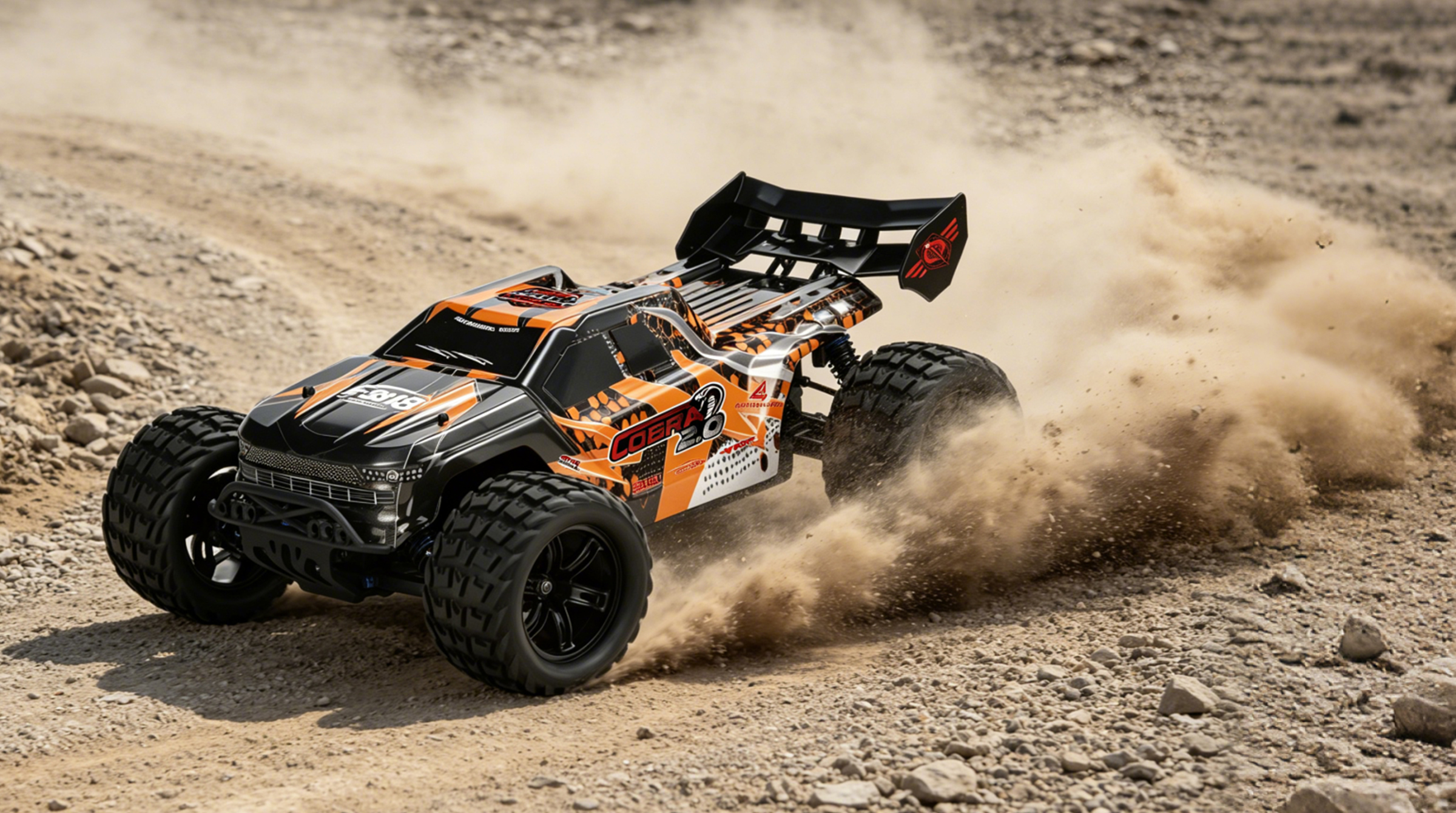
Crawlers operate in low-speed, high-torque environments.
Ideal drivetrain characteristics include:
Locked or limited-slip differentials
High-torque gear reduction
Reinforced driveshafts
Maximum traction capability
The goal is maintaining control while climbing steep and uneven obstacles.
Bashing vehicles must balance performance and durability.
Recommended configurations include:
Metal gear differentials
Heavy-duty driveshafts
Reinforced gearboxes
Durable suspension integration
These features help the vehicle withstand jumps, impacts, and aggressive driving.
When selecting RC vehicles for distribution or private-label development, buyers should consider:
Target customer skill level
Intended terrain usage
Performance expectations
Maintenance requirements
Product price positioning
A properly matched 4WD drivetrain can improve customer satisfaction, reduce warranty issues, and strengthen long-term brand reputation.
4WD systems have become a cornerstone of modern RC vehicle design because they offer measurable advantages in traction, acceleration, handling, stability, and durability. By distributing power to all four wheels, these systems provide superior performance across racing tracks, off-road trails, rock crawling courses, and recreational driving environments.
For RC distributors and OEM buyers, understanding the engineering behind 4WD drivetrains is essential when evaluating products and developing new vehicle lines. The right combination of differentials, driveshafts, gearboxes, and drivetrain tuning can transform an RC car from a basic toy into a high-performance machine capable of delivering exceptional driving experiences across a wide range of applications.