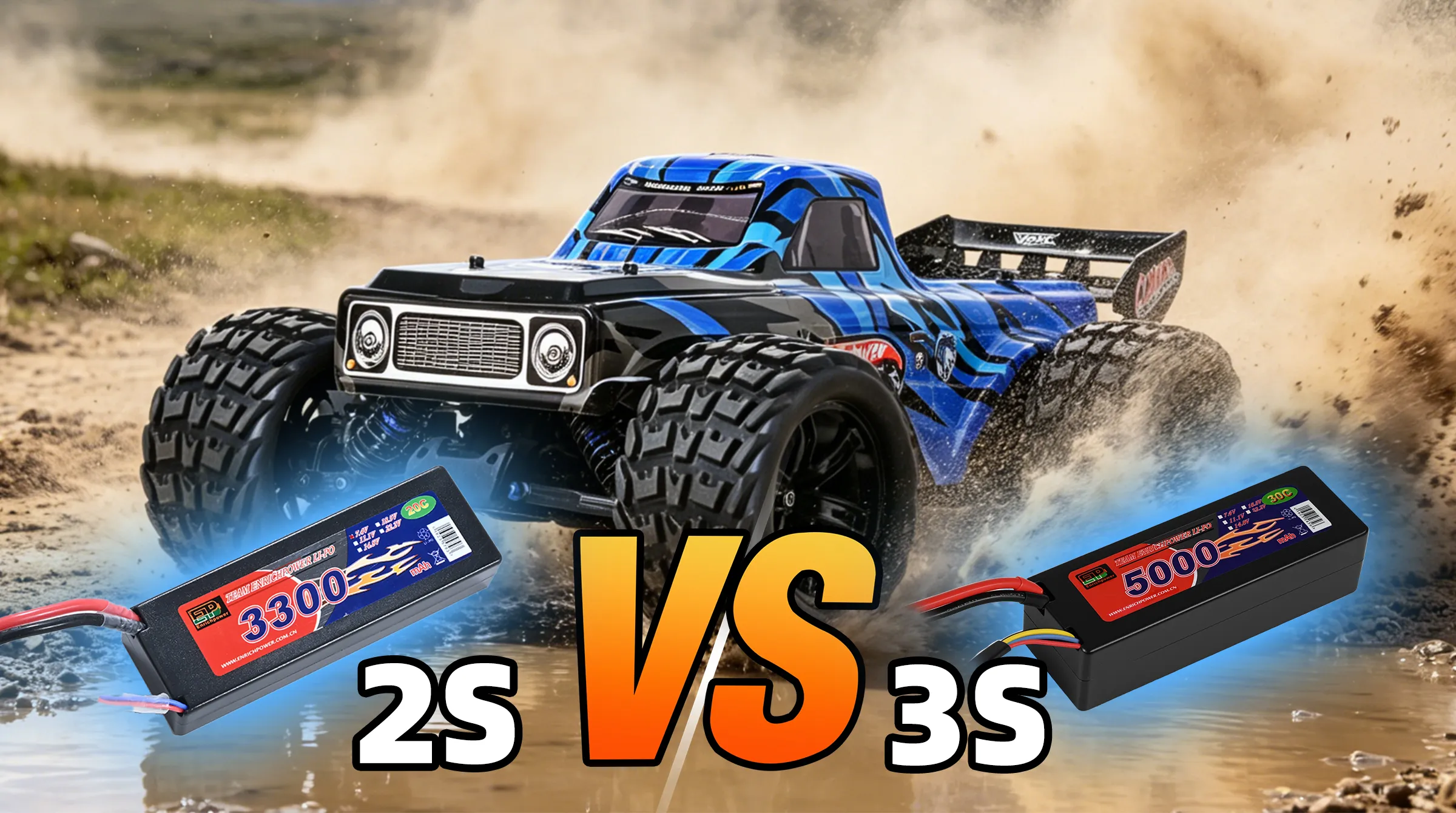
In the world of RC cars, few systems have a greater impact on performance than the suspension. While powerful motors and advanced drivetrains often receive the most attention, a well-designed and properly tuned suspension system is what allows a vehicle to convert power into control, stability, and speed.
Whether you're driving a high-speed racing buggy, a monster truck tackling rough terrain, or a rock crawler navigating technical obstacles, suspension performance directly influences traction, cornering, braking, and overall drivability.
For hobbyists seeking better handling and for distributors or OEM buyers evaluating product quality, understanding RC suspension systems is essential. This guide explores the key components, tuning principles, and advanced geometry concepts that define modern RC suspension performance.
An RC suspension system is designed to keep the tires in contact with the ground while absorbing impacts and maintaining vehicle stability. Although designs vary across vehicle categories, most modern RC platforms share several fundamental components.
Springs support the vehicle's weight and determine how much the suspension compresses under load.
Their primary functions include:
Supporting chassis weight
Absorbing impacts from jumps and obstacles
Controlling weight transfer during acceleration and braking
Maintaining tire contact with the ground
Spring stiffness significantly affects vehicle behavior. Softer springs generally improve grip on rough surfaces, while stiffer springs provide more responsive handling on smooth tracks.
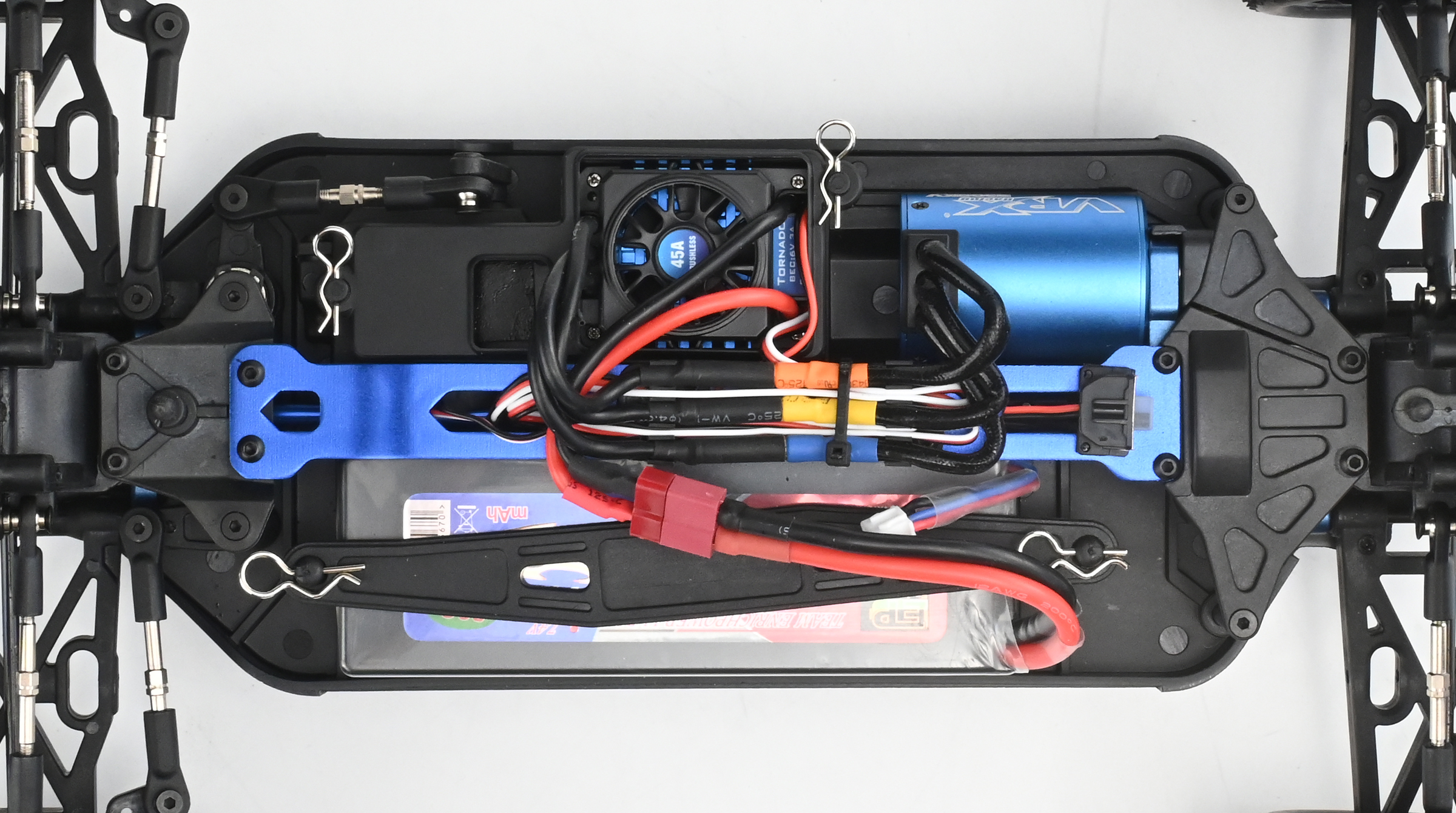
Shock absorbers, commonly called shocks, control the speed at which the suspension compresses and rebounds.
Without damping, springs would continuously oscillate after every bump, making the vehicle difficult to control.
Modern oil-filled shocks provide:
Improved stability
Better cornering control
Reduced chassis bounce
More predictable handling
High-performance RC vehicles often feature adjustable aluminum shocks for enhanced durability and tuning flexibility.
Suspension arms connect the wheels to the chassis and guide wheel movement throughout the suspension's travel range.
These components play a critical role in maintaining suspension geometry and ensuring consistent handling characteristics.
Common configurations include:
Double wishbone suspension
Independent suspension systems
Multi-link crawler designs
The material and construction quality of suspension arms directly affect durability and precision.
Sway bars connect the left and right suspension systems and help reduce chassis roll during cornering.
Benefits include:
Improved cornering stability
Reduced body roll
More consistent tire contact
Better steering response
Sway bars are commonly found on racing-focused vehicles but may be omitted on crawlers that require maximum articulation.
Additional components such as turnbuckles, hinge pins, shock towers, and suspension mounts contribute to overall geometry and adjustability.
These elements allow drivers to fine-tune suspension settings for different conditions and driving styles.
Suspension tuning is often the most effective way to improve vehicle performance.
Many experienced racers recommend starting with suspension setup adjustments before making differential or drivetrain changes. Suspension tuning often delivers larger gains in handling consistency and overall control.
Ride height refers to the distance between the chassis and the ground.
Lower ride height provides:
Lower center of gravity
Reduced body roll
Improved cornering performance
Higher ride height offers:
Greater ground clearance
Improved rough terrain capability
Better landing stability after jumps
Track racers often prefer lower ride heights, while off-road vehicles benefit from increased clearance.
Camber describes the angle of the wheels relative to vertical when viewed from the front or rear.
Negative camber means the tops of the wheels lean inward.
Benefits include:
Increased cornering grip
Better tire contact during body roll
Improved steering response
However, excessive negative camber can reduce straight-line traction and increase tire wear.
Caster is the angle of the steering pivot axis when viewed from the side.
Increasing caster generally improves:
High-speed stability
Steering consistency
Self-centering characteristics
Many off-road racers utilize higher caster settings to maintain stability over rough surfaces.
Toe refers to the direction the wheels point relative to the vehicle centerline.
Toe-in improves:
Straight-line stability
Predictable handling
Toe-out improves:
Initial steering response
Corner entry performance
Proper toe settings help balance agility and stability depending on vehicle purpose.
And you may also interested in: How to Tune Your RC Suspension Setup for Better Handling
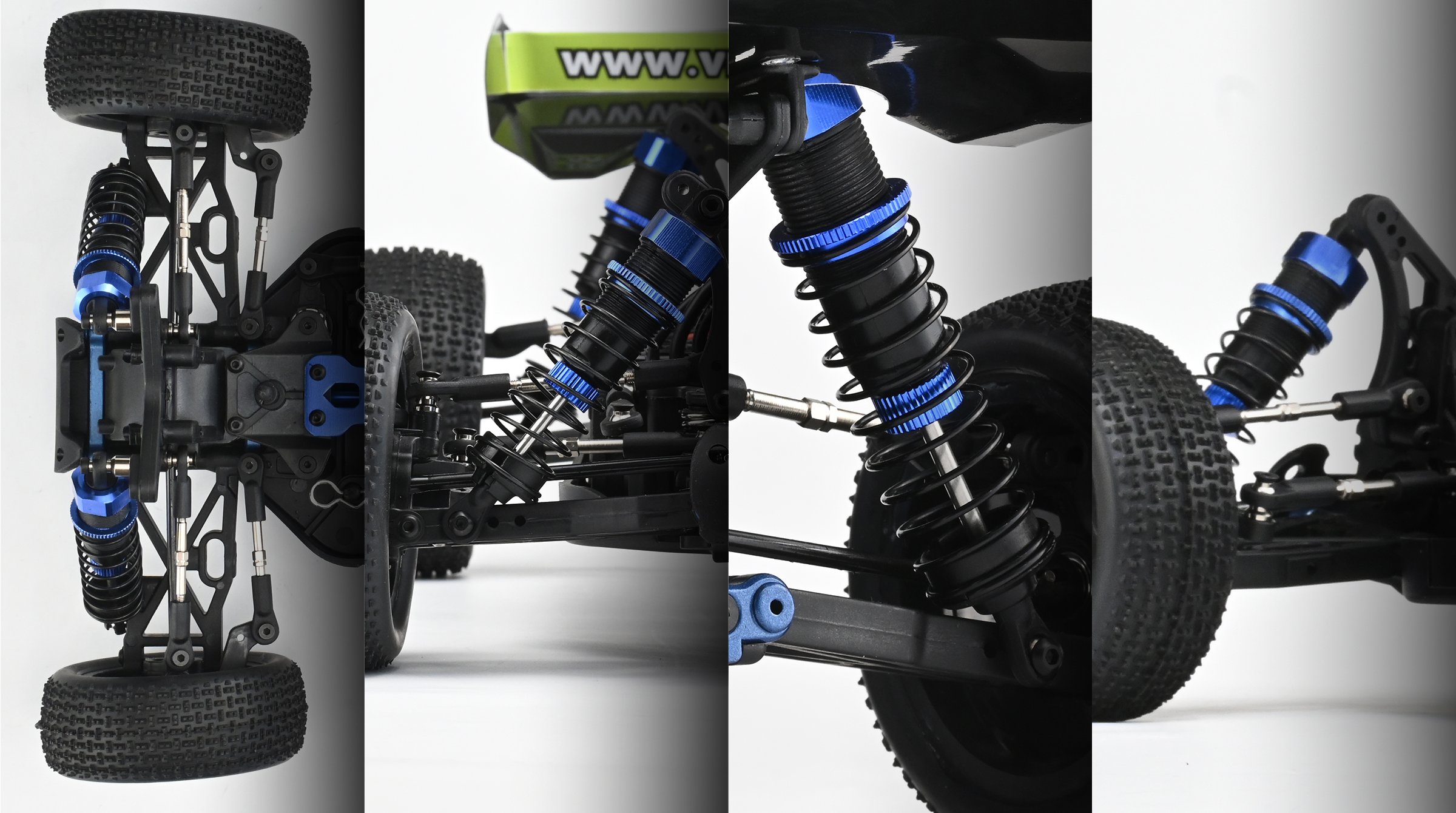
Suspension performance is not determined by springs alone. The interaction between shock oil, piston design, and spring rates creates the damping characteristics that define how a vehicle responds to terrain changes.
Shock oil viscosity controls how quickly fluid moves through the shock piston.
Thicker oil:
Slows suspension movement
Improves stability on smooth surfaces
Reduces chassis roll
Thinner oil:
Allows faster suspension response
Improves rough terrain compliance
Enhances grip on uneven surfaces
Racers often experiment with different oil weights to match specific track conditions.
Spring rate determines how much force is required to compress the spring.
Soft springs:
Increase traction
Improve bump absorption
Enhance performance on rough surfaces
Stiff springs:
Reduce chassis roll
Improve steering precision
Support aggressive driving styles
The optimal spring choice depends on vehicle weight, terrain, and driving objectives.
Shock pistons contain holes that regulate fluid flow.
The number and size of these holes significantly influence damping characteristics.
Larger piston holes:
Faster oil flow
Softer damping response
Smaller piston holes:
Slower oil flow
Increased damping force
Many competition-grade shocks offer interchangeable pistons to provide additional tuning flexibility.
A properly tuned shock balances:
Compression damping (when suspension compresses)
Rebound damping (when suspension extends)
This balance determines how effectively the vehicle absorbs impacts and recovers after obstacles or jumps.
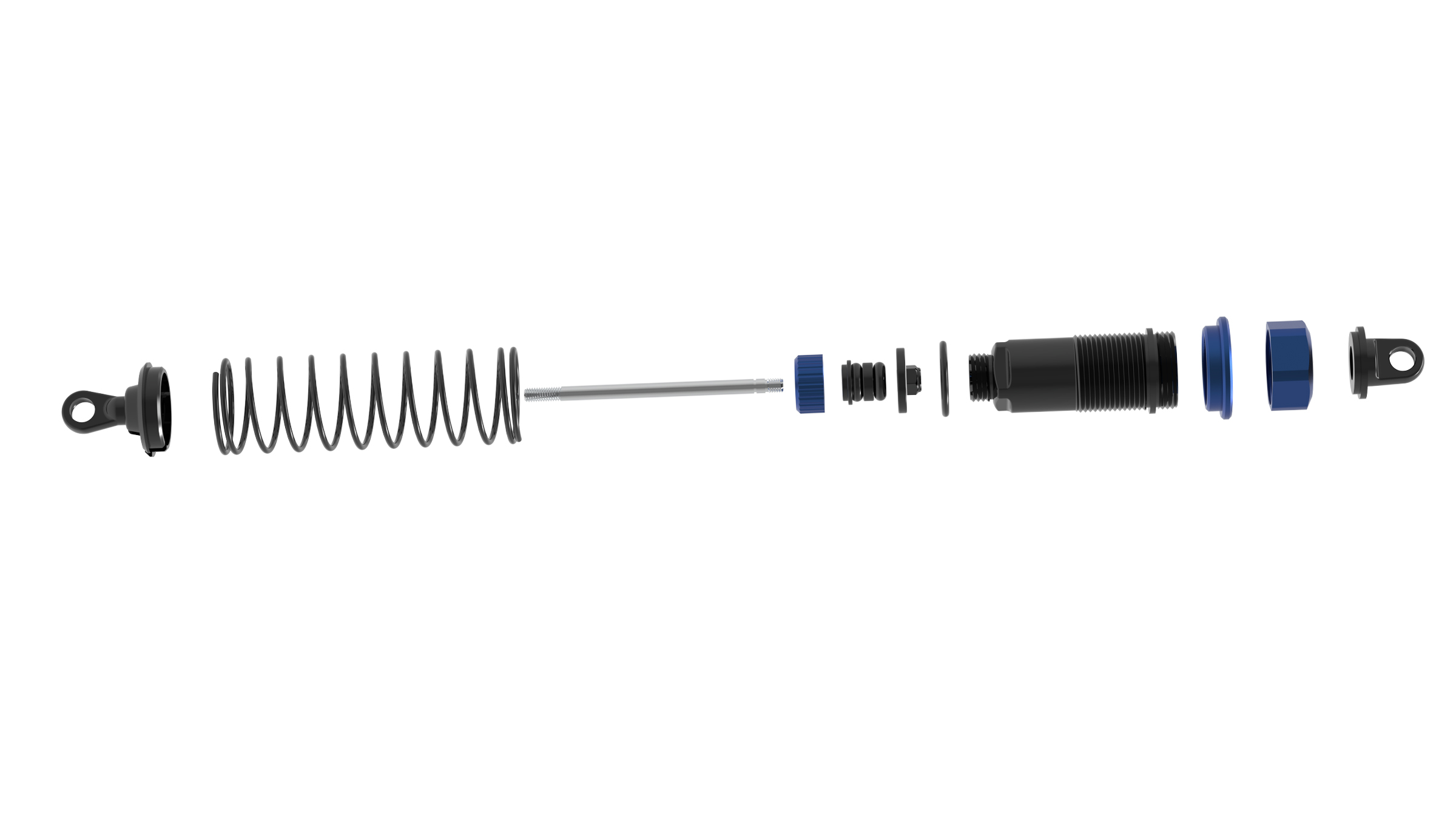
Beyond basic tuning lies the more advanced field of suspension geometry.
Geometry settings influence how the vehicle transfers weight during acceleration, braking, and cornering.
The roll center is the theoretical point around which the chassis rotates during cornering.
A lower roll center generally:
Increases grip
Allows more chassis roll
A higher roll center:
Reduces body roll
Provides quicker response
Manufacturers carefully balance roll center height to achieve desired handling characteristics.
Anti-squat geometry affects how the rear suspension behaves under acceleration.
Higher anti-squat settings:
Reduce rear-end compression during acceleration
Improve power transfer
Enhance corner exit performance
This feature is particularly important for high-powered 4WD racing vehicles.
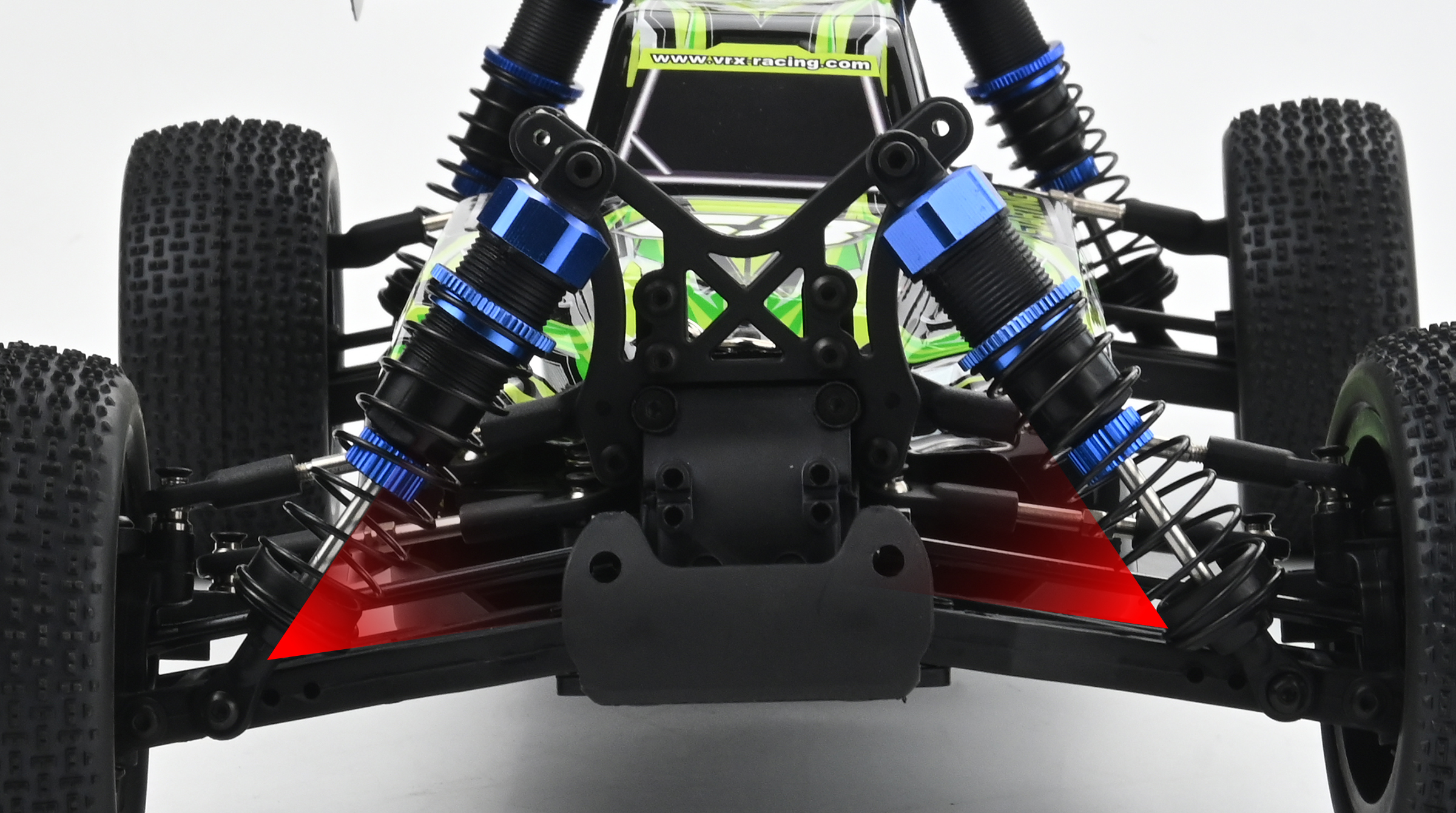
Kick-up refers to the upward angle of the front suspension arms.
Increased kick-up helps:
Absorb bumps more effectively
Improve landing stability
Reduce chassis pitching
Off-road vehicles frequently use greater kick-up angles to improve performance on rough terrain.
The ultimate goal of suspension geometry is controlling weight transfer.
Well-designed geometry helps maintain tire contact patches and maximize available traction during:
Acceleration
Braking
Cornering
Jump landings
This is one reason why premium RC platforms often outperform entry-level models even when using similar power systems.
No suspension setup works perfectly in every environment. Different terrains require different tuning approaches.
For smooth, high-grip tracks:
Lower ride height
Stiffer springs
Thicker shock oil
Reduced suspension travel
These settings improve responsiveness and cornering precision.
For mixed-terrain racing:
Moderate ride height
Medium spring rates
Balanced damping
Slightly softer rear setup
This configuration provides a balance of grip and stability.
Sand requires maximizing traction while maintaining stability.
Recommended settings:
Softer springs
Lighter shock oil
Increased suspension travel
Slightly higher ride height
These adjustments help tires maintain contact with shifting surfaces.
Rock crawlers prioritize articulation rather than speed.
Ideal settings include:
Very soft springs
Low damping
Maximum suspension travel
Minimal sway bar influence
These setups allow wheels to remain planted on uneven terrain.
For recreational use, durability and versatility matter most.
A balanced setup should include:
Medium spring rates
Moderate damping
Increased ride height
Reinforced suspension components
This combination delivers reliable performance across a wide range of environments.
RC suspension systems are far more than simple springs and shocks. They are highly engineered assemblies that determine how effectively a vehicle accelerates, corners, brakes, and absorbs impacts. Understanding the relationship between suspension components, damping characteristics, and geometry enables drivers to unlock significant performance gains without modifying motors or drivetrains.
From ride height and camber adjustments to advanced concepts like roll center and anti-squat geometry, suspension tuning remains one of the most powerful tools for optimizing RC vehicle performance. Whether you're a competitive racer, off-road enthusiast, distributor, or OEM buyer, mastering suspension fundamentals is essential for building RC vehicles that deliver superior control, durability, and driving enjoyment across every terrain.