Choosing the right battery is one of the most important decisions when setting up or upgrading a 1/10 electric RC car. The debate between 2S vs 3S Lipo RC car packs directly affects top speed, acceleration, runtime, heat generation, and long-term reliability of the electronics. Understanding the real-world differences helps drivers avoid costly mistakes and get the performance they actually want from their battery powered RC car.
This guide focuses on practical product selection for 1/10-scale platforms. It covers voltage basics, speed and runtime trade-offs, ESC compatibility requirements, and how to match the correct 2S Lipo RC battery or 3S RC battery to your vehicle and driving style.
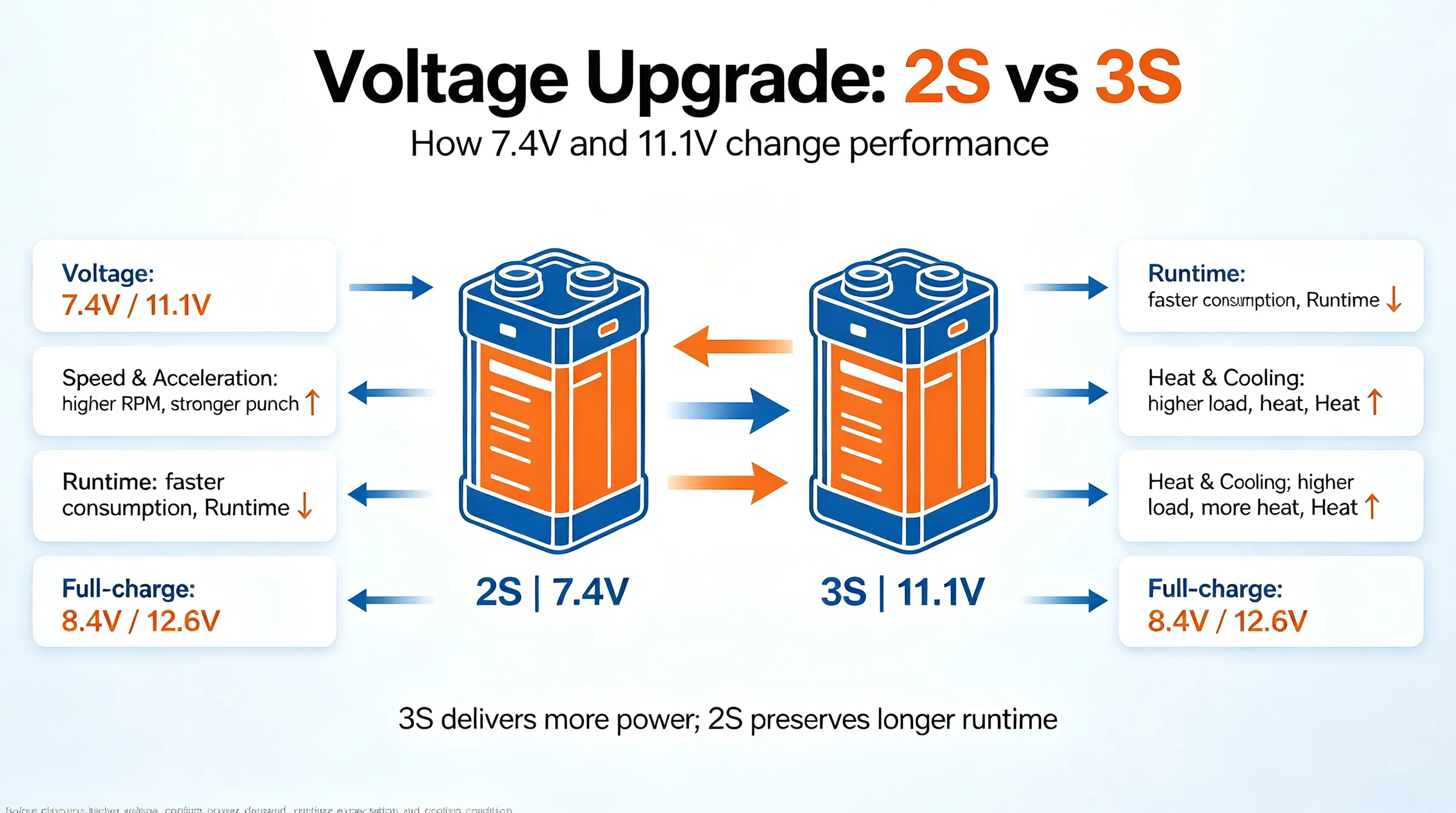
A single Lipo cell has a nominal voltage of 3.7V and a full-charge voltage of 4.2V.
A 2S 7.4 Lipo battery contains two cells in series → 7.4V nominal / 8.4V fully charged.
A 3S Lipo battery RC car pack contains three cells → 11.1V nominal / 12.6V fully charged.
The “S” simply stands for series. Higher cell count increases voltage, which increases motor RPM when the same KV motor is used. This is why moving from a 2S battery Lipo to a 3S battery for RC car produces a noticeable jump in performance—provided the rest of the power system can handle it.
Most modern 1/10 electric platforms are designed around these two voltage levels. Entry-level and many stock RTR models ship with or recommend 2S RC battery packs, while performance-oriented brushless setups often support or prefer 3S Lipo RC car battery packs.
Voltage has a direct relationship with motor speed. Motor RPM ≈ KV rating × battery voltage.
On a typical 1/10 brushless motor, switching from 2S to 3S raises RPM by roughly 50%. In real driving this translates into:
Higher top speed
Stronger acceleration and punch out of corners
More aggressive throttle response
Many drivers report a 30–60% increase in peak speed when moving from a quality 2S Lipo RC battery to a compatible 3S battery RC car, assuming gearing and tires remain unchanged. The exact gain depends on motor KV, final drive ratio, vehicle weight, and surface grip.
However, more speed is not always better. On tight tracks or in small backyards, the extra velocity of a 3S RC battery can make the car harder to control and increase the risk of crashes. For learning throttle control or technical driving, a 2S 7.4 Lipo battery often remains the smarter choice.
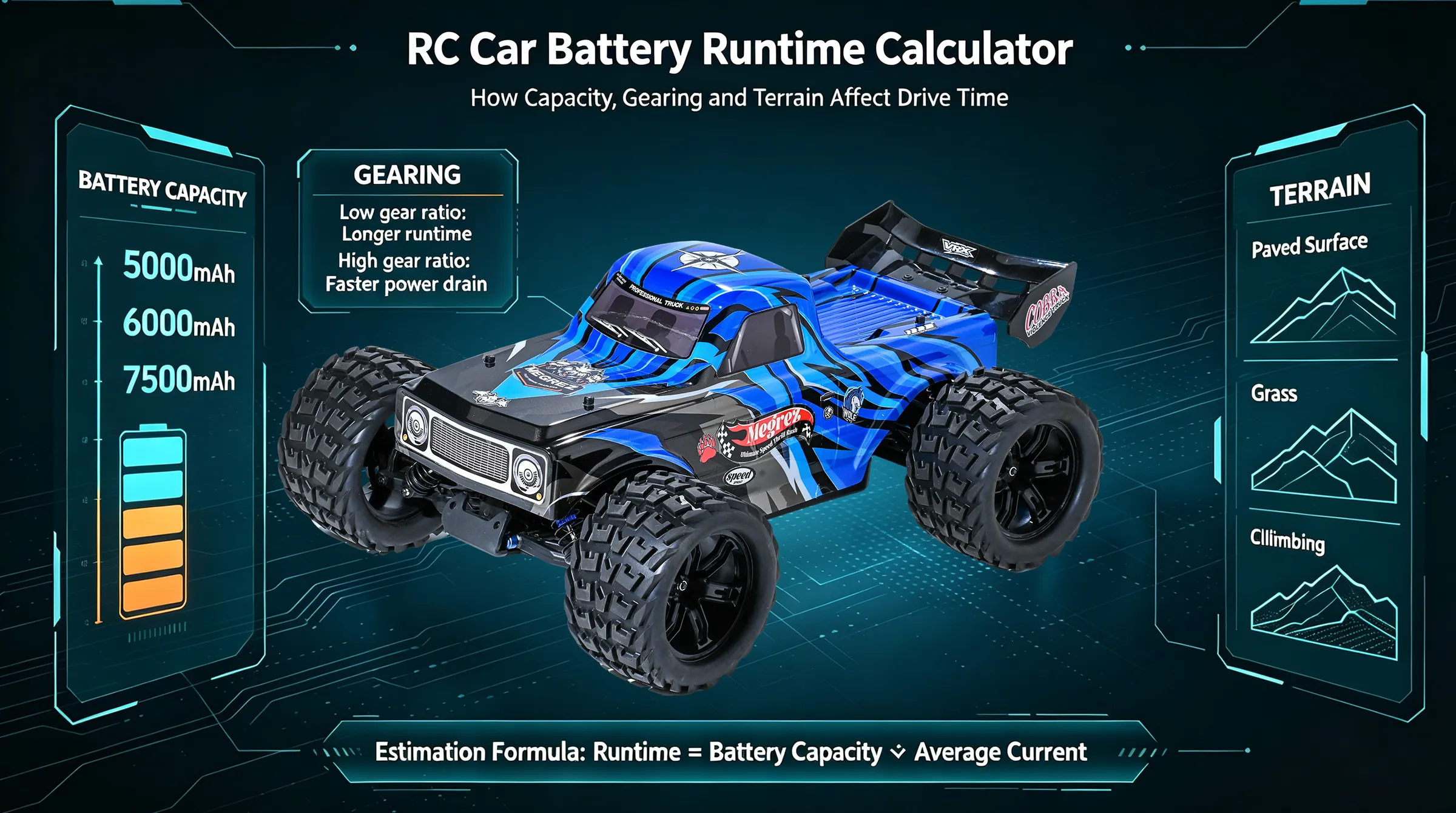
Runtime is influenced by capacity (mAh), discharge rate, driving style, and voltage.
At the same capacity, a 3S Lipo usually delivers shorter runtime than a 2S pack. The higher voltage causes the motor and ESC to draw more current under hard acceleration, draining the pack faster. Aggressive drivers may see 20–30% less run time when switching from 2S to 3S at identical mAh ratings.
Typical observed runtimes for 1/10 electric cars (mixed bashing or moderate racing):
3300–5000 mAh 2S battery and charger setups: 15–25 minutes
Equivalent capacity 3S Lipo battery RC car packs: 12–20 minutes
Drivers who prioritize longer sessions often stay with higher-capacity 2S RC battery packs or carry multiple packs. Those who want maximum speed accept the shorter runtime as the cost of performance
.
The single most important rule is never exceed the voltage rating of the ESC and motor.
Many entry-level brushed or basic brushless ESCs are limited to 2S. Installing a 3S battery for RC car on an incompatible ESC will destroy the electronics almost immediately. Always check the ESC label or manual for the maximum supported cell count before upgrading.
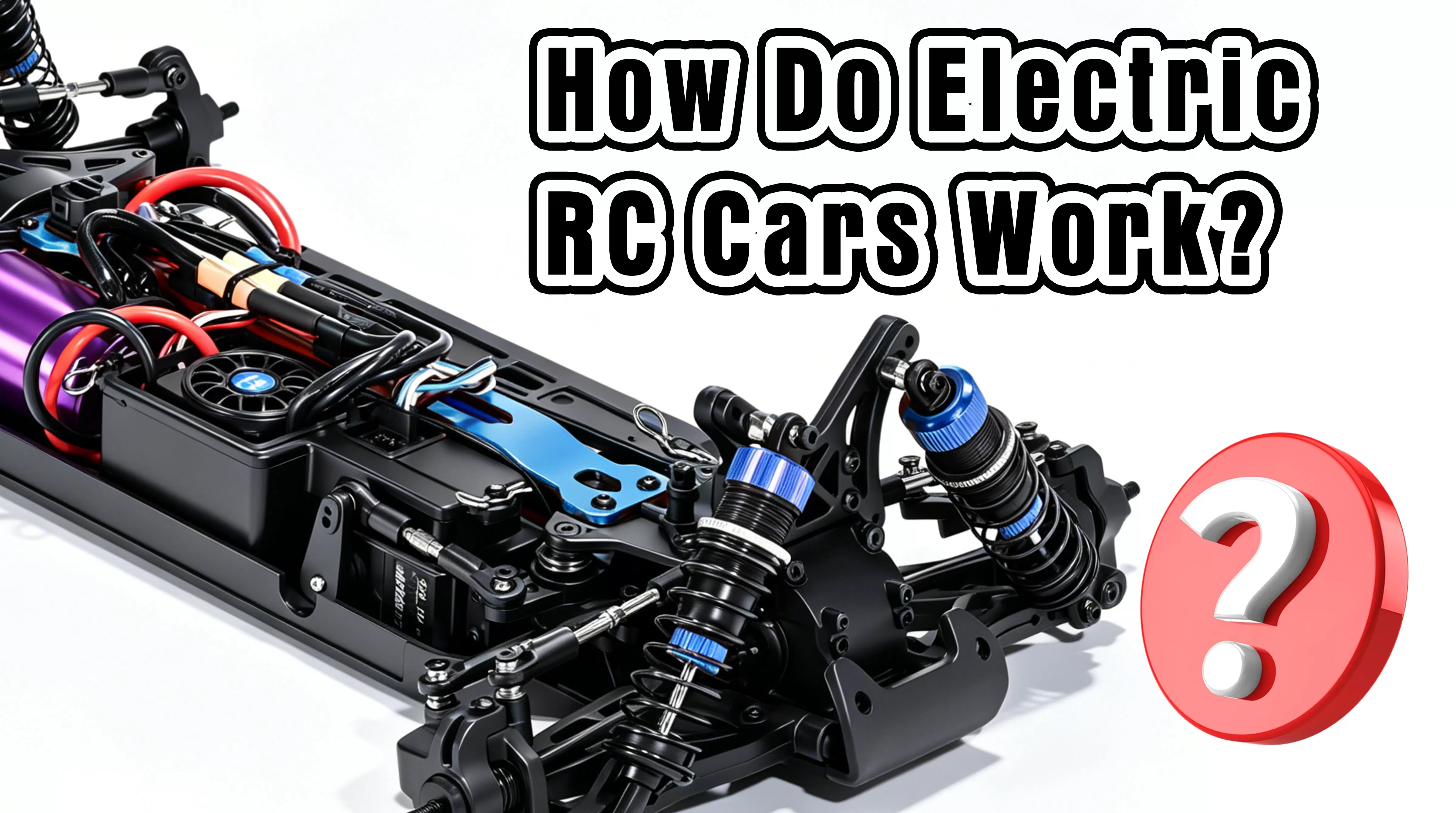
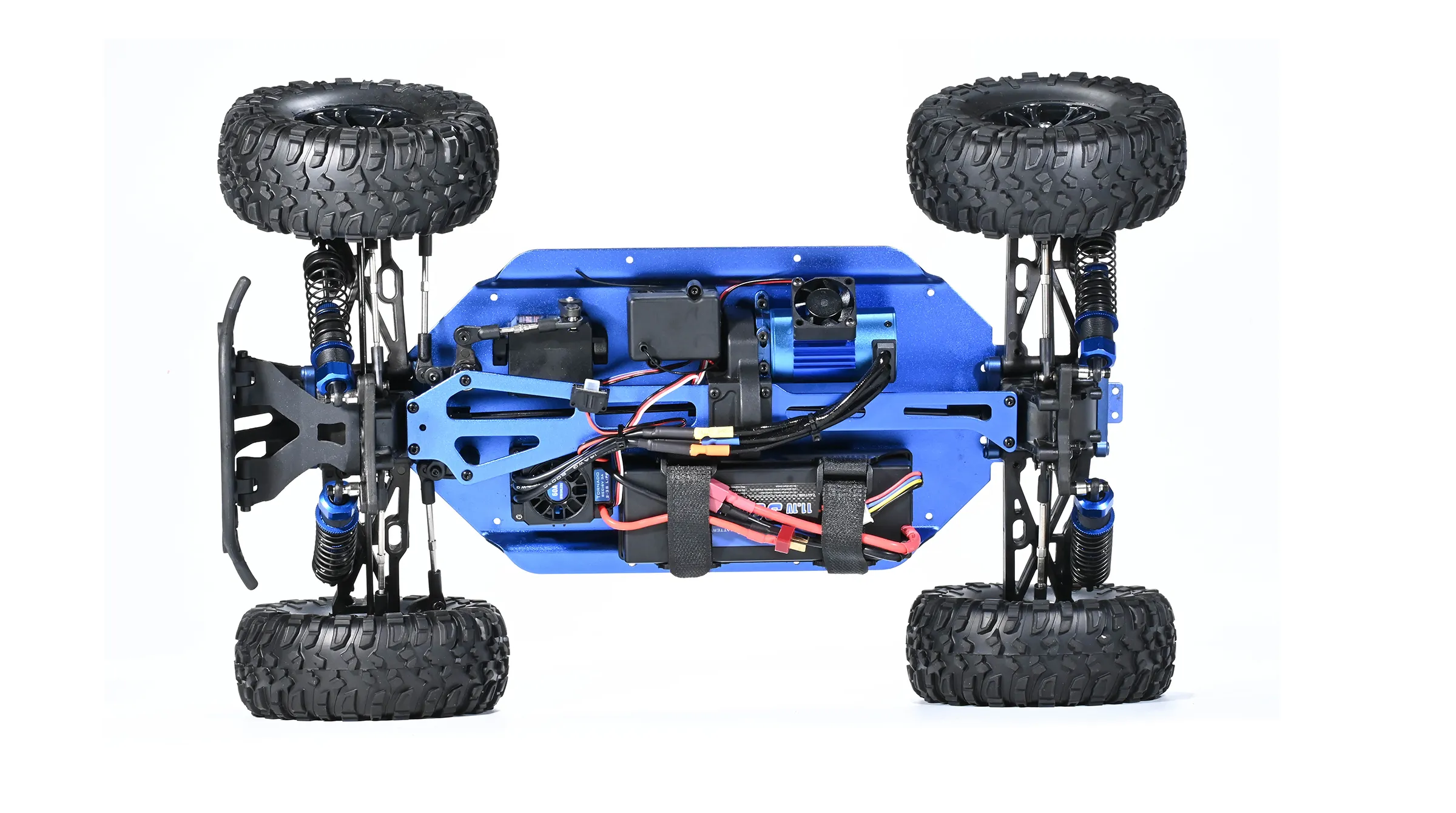
Modern performance ESCs commonly support both 2S and 3S. When the ESC is rated for 3S, the rest of the system must also be considered:
Motor must be capable of the higher RPM and heat
Gearing may need adjustment (smaller pinion) to control temperature
Drivetrain components experience higher stress
Connectors and wiring must handle the increased current
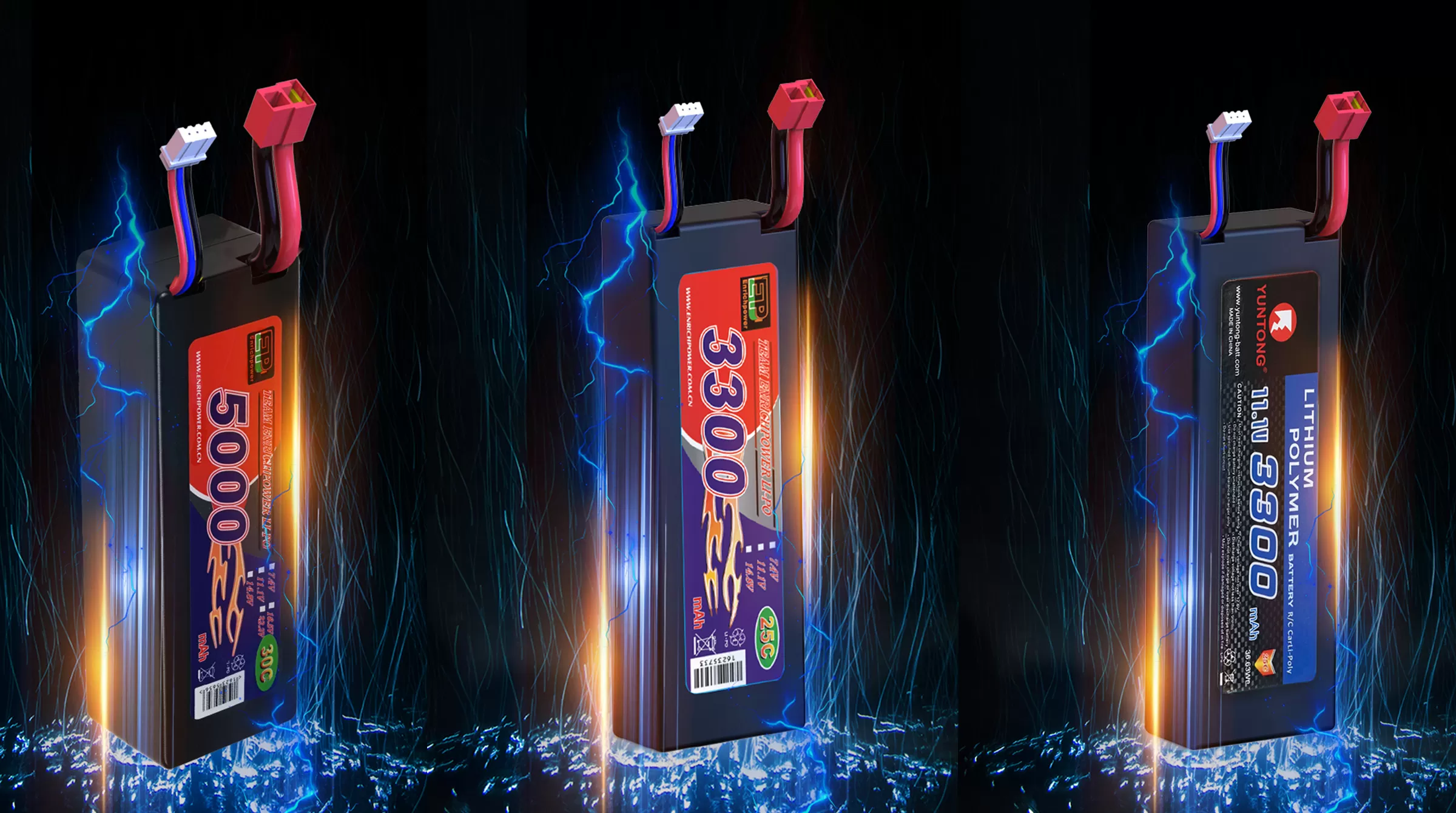
A proper 2S battery and charger or 3S balance charger is equally essential. Balance charging keeps individual cells at equal voltage and significantly extends pack life. Manufacturers such as VRX Racing offer dedicated 2S-3S battery balance chargers alongside hard-case 2S 7.4 Lipo battery and 3S packs designed for their 1/10 and 1/8 platforms, making matching components straightforward.
You are new to the hobby or still developing throttle control
The car is used in limited space or technical tracks
The ESC or motor is only rated for 2S
Longer runtime and cooler operating temperatures are priorities
You want lower stress on gears, driveshafts, and differentials
The ESC and motor are clearly rated for 3S
You have open space and want higher top speed
Acceleration and “punch” are more important than maximum runtime
You are willing to monitor temperatures and possibly adjust gearing
The vehicle is a performance brushless platform designed for the extra voltage
Hard-case packs are strongly recommended for both 2S Lipo RC battery and 3S RC battery use in cars. The rigid plastic shell protects the cells from impact and punctures—critical in a battery operated RC car that can roll or crash.
Regardless of whether you run battery Lipo 2S or 3S, follow standard Lipo safety practices:
Always use a balance charger matched to the cell count
Never leave charging batteries unattended
Store packs at storage voltage (approximately 3.8V per cell) when not in use
Allow packs to cool before charging after a run
Inspect for swelling or damage before every use
Quality chargers with multiple protection ciRCuits and balance functions, such as those offered alongside VRX Racing battery lines, help maximize both safety and cycle life.
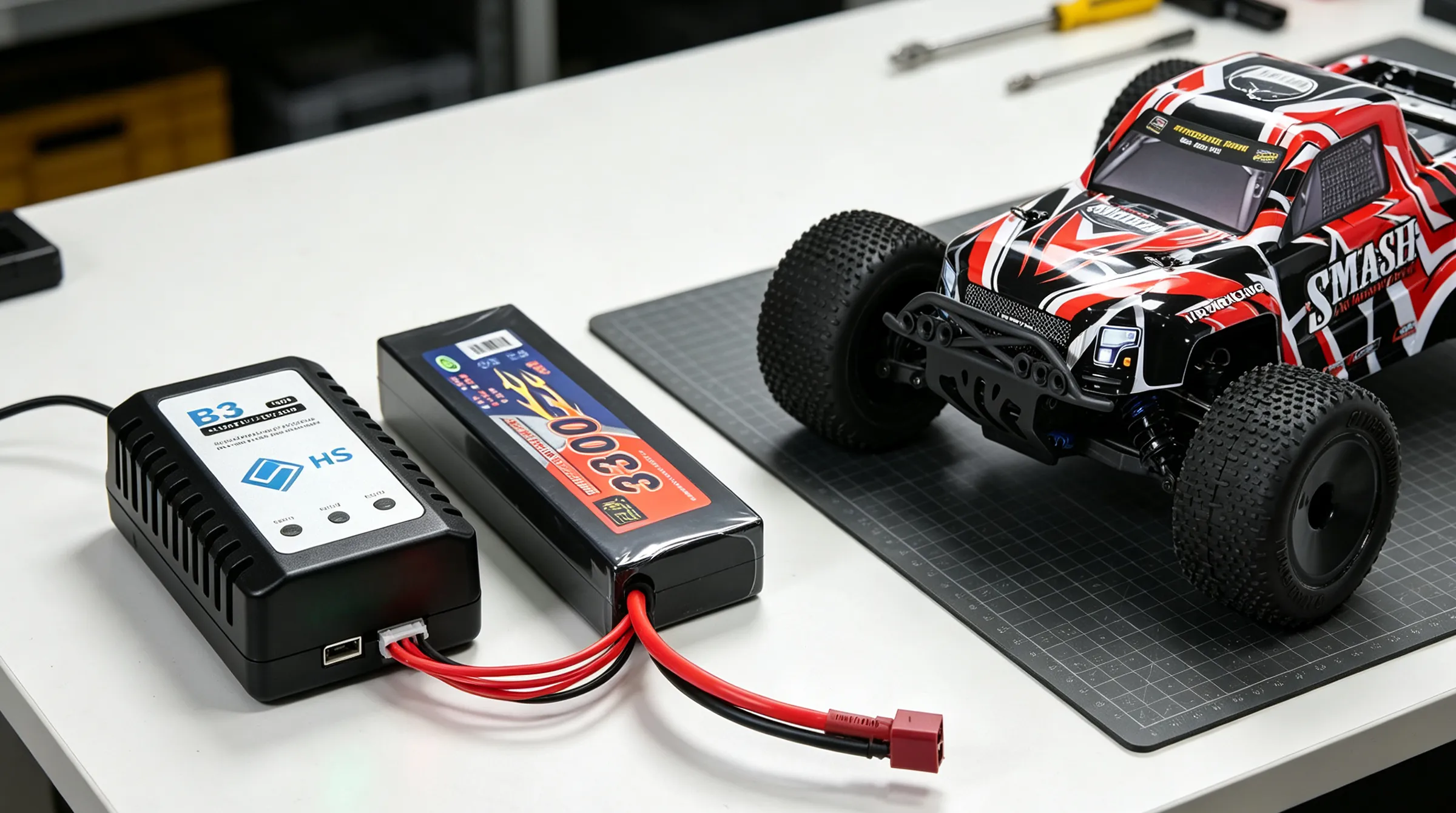
For most 1/10 battery powered RC drivers, the decision ultimately comes down to intended use. Casual backyard or parking-lot running is often more enjoyable and safer on a good 2S 7.4 Lipo battery. Track racing or open-area speed runs frequently benefit from a properly supported 3S Lipo RC car battery.
Many experienced owners keep both. They use 2S for practice, technical sessions, or when teaching new drivers, and switch to 3S when they want maximum performance. Because modern ESCs often support both voltages, the change is as simple as swapping the pack—provided the rest of the system is ready.
There is no universal “best” choice between 2S vs 3S Lipo RC car batteries. The correct pack is the one that matches your ESC rating, driving environment, skill level, and performance goals.
Start by confirming the maximum voltage your ESC and motor can safely accept. Then decide whether you value controllable speed and longer runtime or higher top speed and stronger acceleration. Pair the chosen pack with a quality balance charger and hard-case construction for the best combination of performance, safety, and longevity.
When the voltage, capacity, and charger are properly matched to the vehicle, a 1/10 electric RC car delivers the responsive, enjoyable experience that makes the hobby rewarding. Choose deliberately, respect the electronics limits, and the difference between a good run and a great one becomes clear the moment you squeeze the throttle.