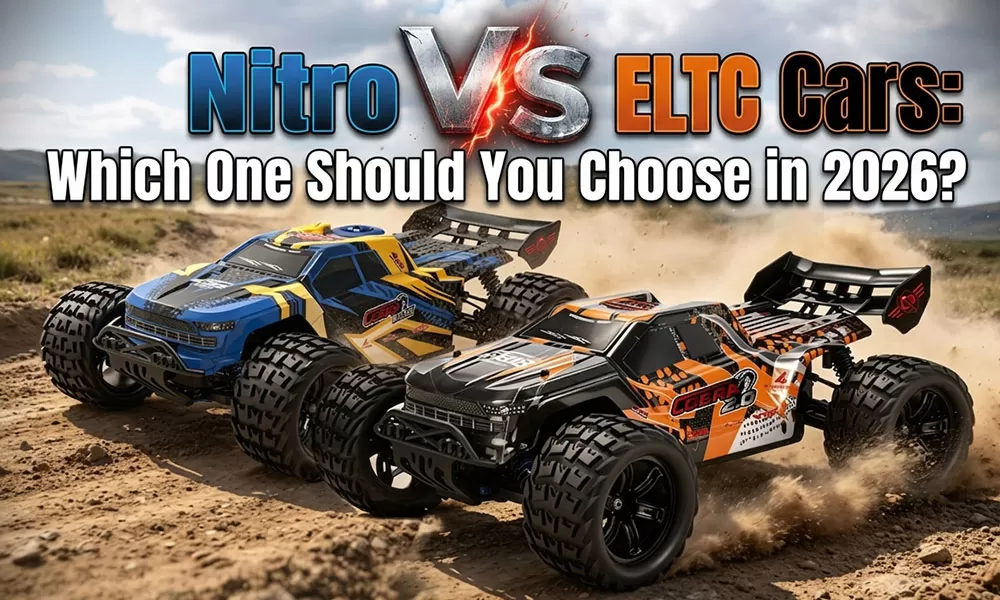
Speed is one of the first specifications RC enthusiasts notice, but it is rarely the only factor that determines how a vehicle performs on a track. Two RC cars with similar top speeds can behave very differently when they enter a tight corner, land from a jump, cross loose gravel or run wheel-to-wheel with other vehicles.
The difference comes from the vehicle's role. A buggy may be designed around quick direction changes, a truggy may prioritize stability over rough terrain, while a short course truck focuses on predictable handling during close racing. Understanding these differences provides a more useful way to evaluate different types of RC cars.
VRX Racing's range of electric buggies, truggies, trucks and short course models offers a practical example of how RC platforms can be developed around different track conditions and driving requirements.
An RC track is not simply a surface on which a car travels. Its layout determines how the vehicle uses acceleration, steering, suspension and traction.
A technical circuit may contain tight corners, short straights and frequent direction changes. On such a track, a responsive chassis and predictable steering can be more useful than extreme top speed.
A faster circuit may contain longer straights and larger jumps. Here, high-speed stability, suspension travel and drivetrain strength become increasingly important.
Loose dirt, gravel and clay create another challenge. Tire selection and four-wheel drive can become important because available traction changes constantly throughout the lap.
This explains why a brushless 1/10 RC truck and a 1/8 buggy can both be fast while feeling completely different during the same session.
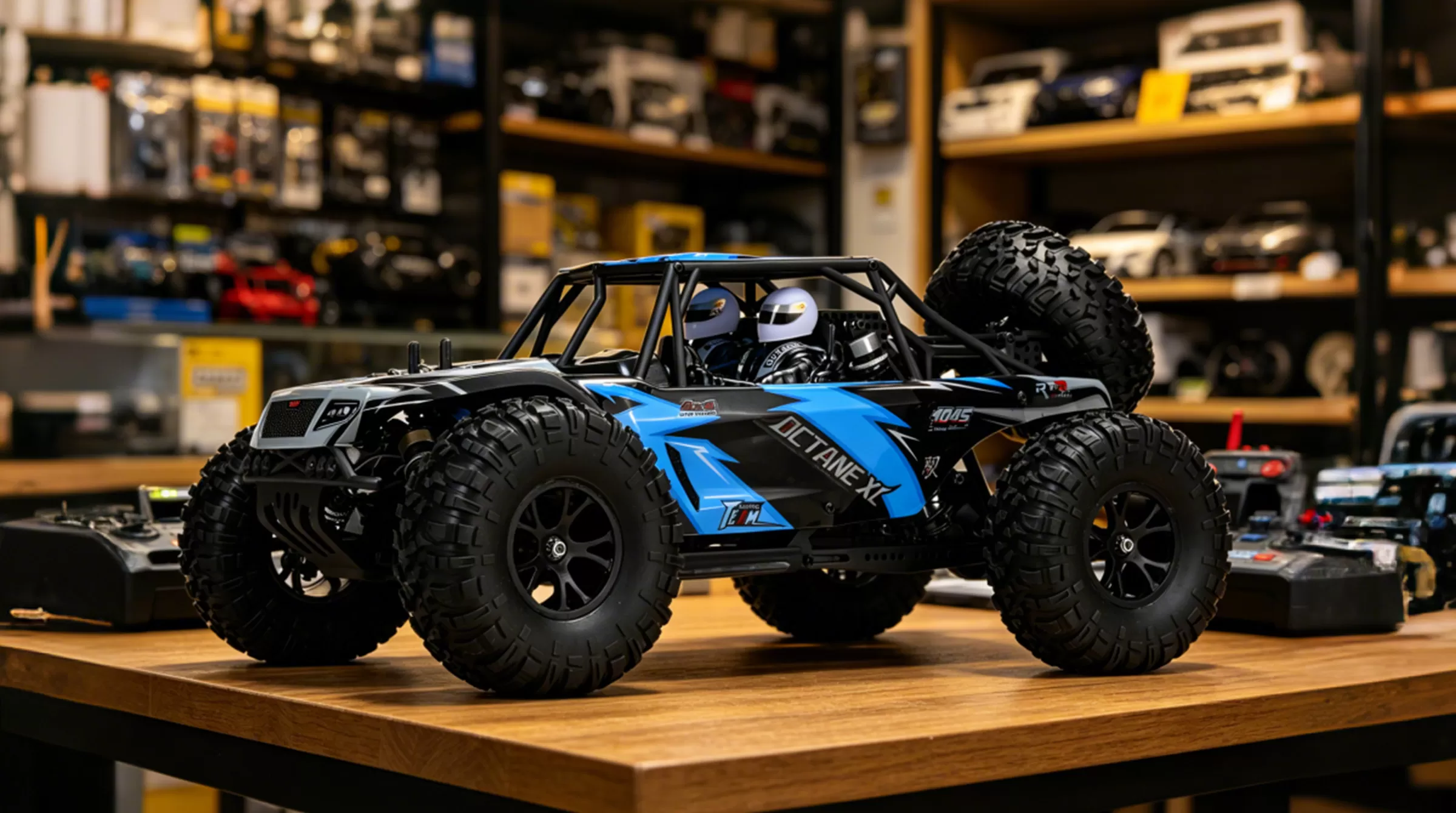
Electric buggies are generally built around an open-wheel layout, relatively low weight and responsive suspension. These characteristics make them particularly suitable for tracks where steering precision matters.
VRX Racing's electric buggy lineup ranges from compact models to professional-grade 1/8 4WD platforms. The range includes 1/10 brushless buggies such as SPRINT and BULLET, as well as the 1/8 BLAST BX and VRX-2E.
A 1/10 buggy can be easier to maneuver through a compact circuit, while a larger 1/8 platform offers more physical stability and suspension capacity.
The 1/8 RTR electric buggy category is particularly interesting for drivers who want a larger platform without building the vehicle from individual components. VRX Racing's BLAST BX and VRX-2E are supplied as 4WD brushless RTR configurations, with the VRX-2E using a 3660 2000KV motor and an 80A or 120A ESC depending on configuration.
A truggy occupies a different position on the track.
The design combines buggy-inspired handling with a wider stance, longer wheelbase and larger tires. This makes the truggy racer particularly suitable for tracks where the ideal racing line is not always smooth.
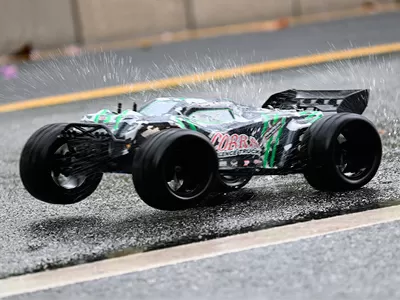
VRX Racing's 1/8 COBRA series, for example, uses a wide stance, longer wheelbase and larger tires than a conventional buggy. Its 4WD chassis and heavy-duty components are designed for dirt, gravel and rough terrain.
This additional stability can become useful when a track includes deep ruts or larger jumps. Instead of requiring the driver to avoid every rough section, a truggy can maintain a more stable platform while carrying speed through uneven terrain.
The RC truggy RTR format also gives recreational drivers access to this type of chassis without requiring a complete build. VRX Racing currently lists both 1/10 and 1/8 brushless truggies in RTR configurations.
A short course RC car is designed around a different racing problem: what happens when several vehicles occupy the same piece of track?
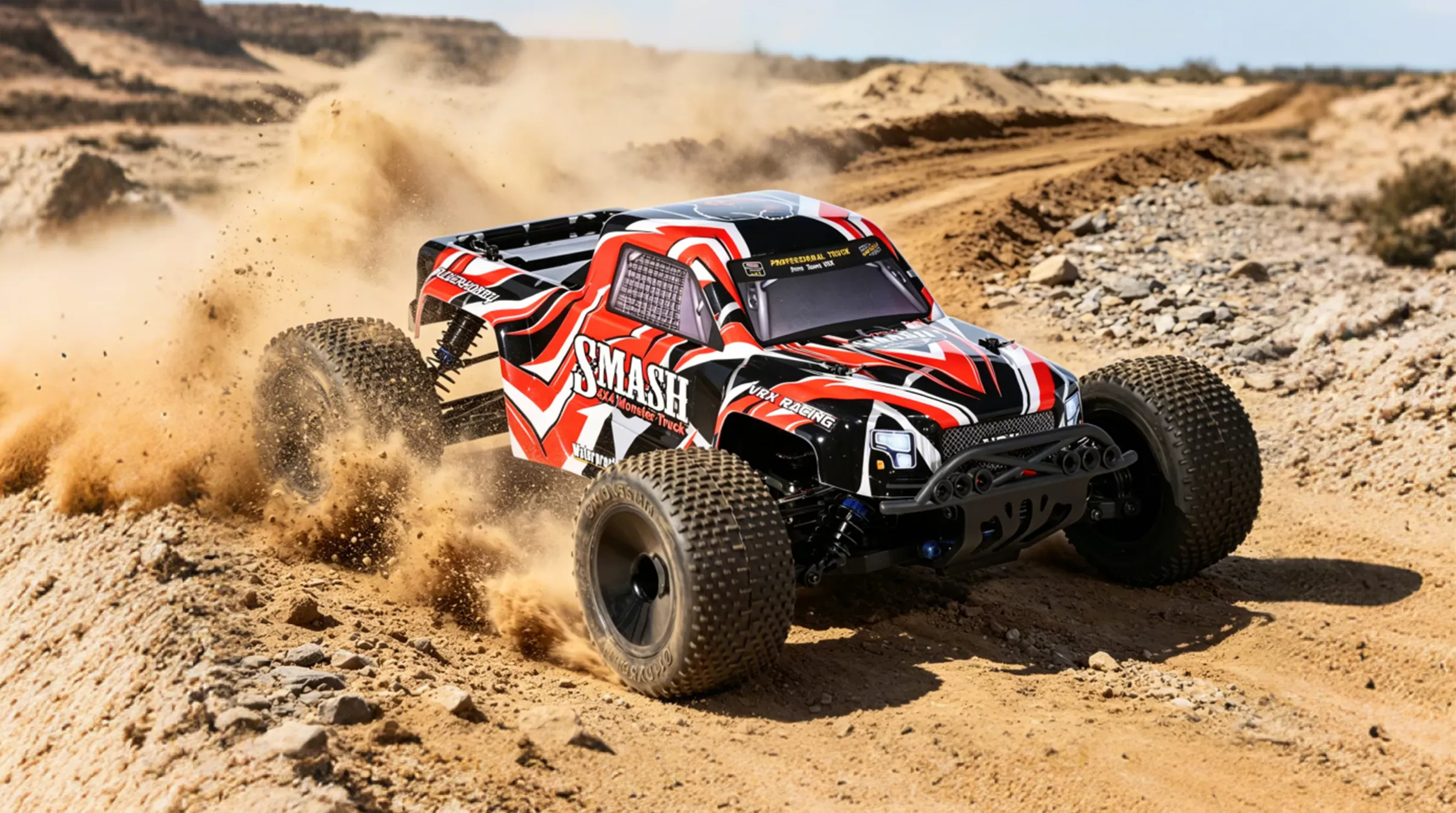
Short course trucks use enclosed wheels, full-fender bodies and wide chassis layouts. These features give them a distinctive appearance, but they also serve a practical purpose during racing.
VRX Racing's SCT lineup includes 1/10 brushed and brushless models as well as a 1/8 brushless short course truck. The vehicles use 4WD drivetrains and independent suspension, with designs intended for dirt, clay, gravel and even asphalt surfaces.
The enclosed wheel design is particularly useful during RC short course truck racing because it reduces the exposure of suspension components during side-to-side contact.
This makes an RC SCT fundamentally different from a lightweight open-wheel buggy. The objective is not simply to complete a clean lap. The vehicle must remain controllable when the racing environment becomes crowded.
One of the most overlooked factors in RC racing is track width.
A wider platform can provide additional stability during high-speed cornering, while a narrower vehicle may feel more responsive when changing direction. Wheelbase has a similar effect. A longer wheelbase generally contributes to stability, while a shorter one can make a vehicle feel more agile.
This is one reason a truggy, short course truck and buggy can produce different driving experiences even when equipped with similar brushless electronics.
VRX Racing's BLAST 2.0 1/10 brushless short course truck, for example, combines a 3650 3300KV brushless motor with a 45A ESC, 4WD shaft drive and a reinforced chassis. The design is intended for dirt, sand and gravel tracks rather than simply maximizing straight-line speed.
The lesson is straightforward: track geometry should influence vehicle selection as much as motor specifications.
An RTR monster truck serves yet another role.
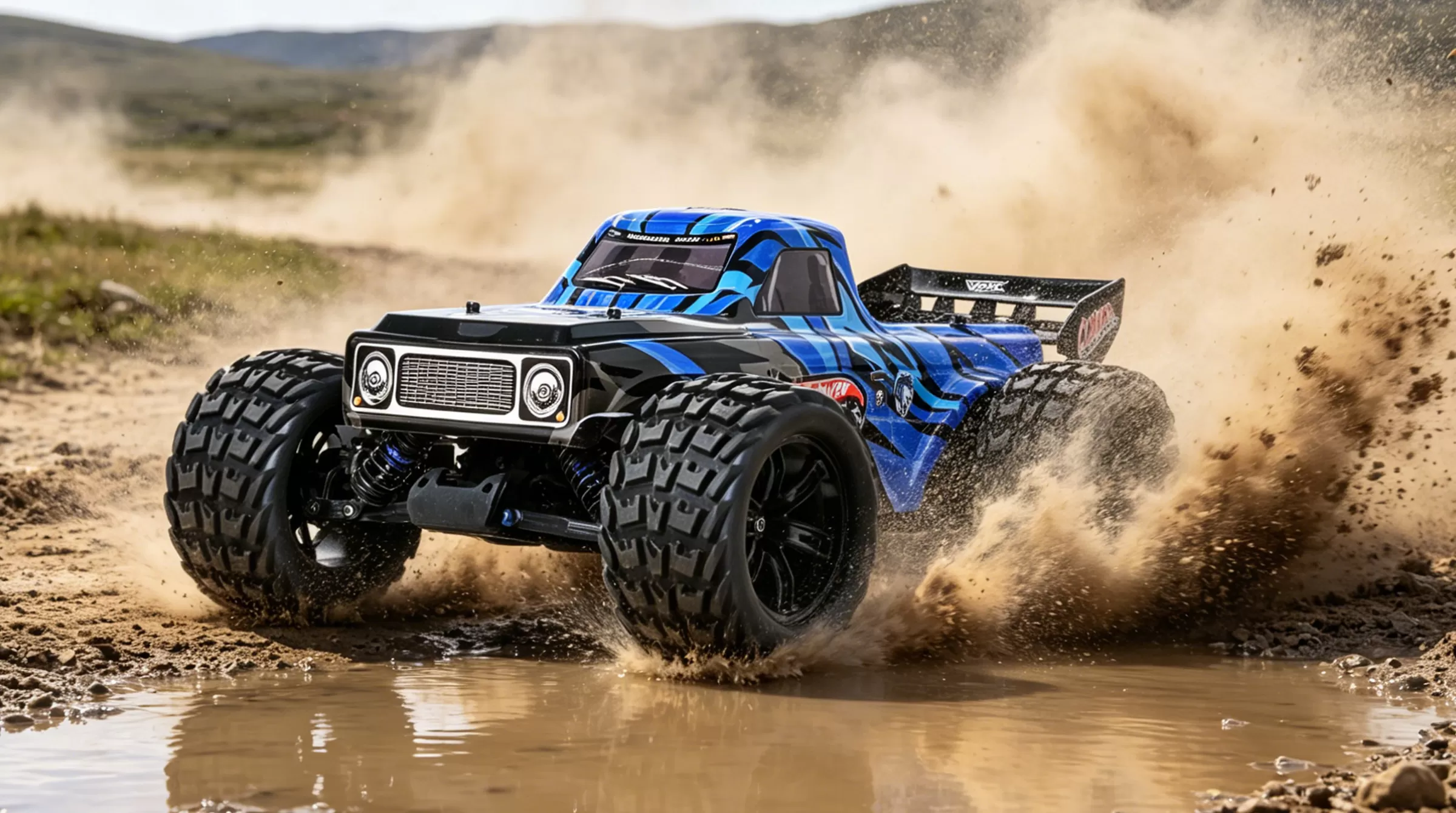
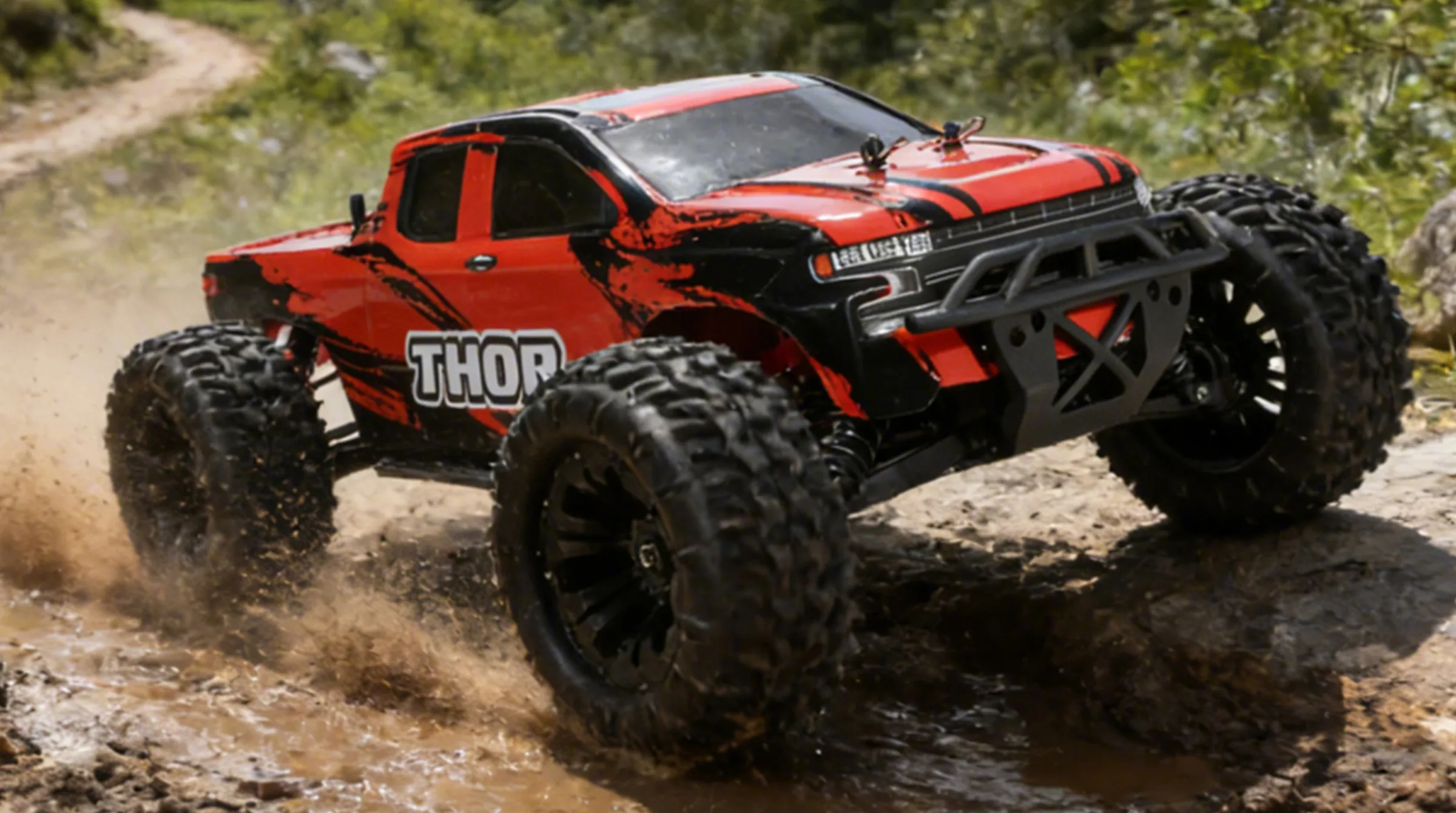
Monster trucks are generally designed around larger tires, substantial ground clearance and the ability to handle obstacles that would disrupt a low-slung race buggy. They are therefore well suited to recreational tracks, open outdoor areas and obstacle-based driving.
A monster truck may not be the natural choice for a tightly designed racing circuit, but it becomes useful when the course contains rocks, steep transitions, deep grass or large obstacles.
This distinction is important for buyers because “off-road” describes a very broad environment. A smooth clay race track and a rocky backyard may both be off-road locations, yet they demand completely different vehicle characteristics.
As track size and obstacles increase, the physical advantages of a larger platform become more noticeable.
VRX Racing's 1/8 electric range includes brushless buggies, truggies and short course trucks. The platform uses 60A–120A ESCs, 2S–4S LiPo compatibility on applicable models, 4WD drivetrains and larger suspension components.
A 1/8 vehicle also occupies more physical space on the track. This changes the driver's perception of braking points, corner entry and jump timing.
For example, the VRX-2E measures approximately 505 mm long and 305 mm wide, with 35 mm of ground clearance and 115 mm diameter wheels.
These dimensions help explain why a larger vehicle can feel more planted at speed, while also requiring more room to operate effectively.
Brushless systems are now common across high-performance RC categories because they provide strong acceleration, efficient power delivery and reduced mechanical wear compared with brushed motors.
However, the motor should be selected according to the vehicle and track rather than treated as a standalone performance upgrade.
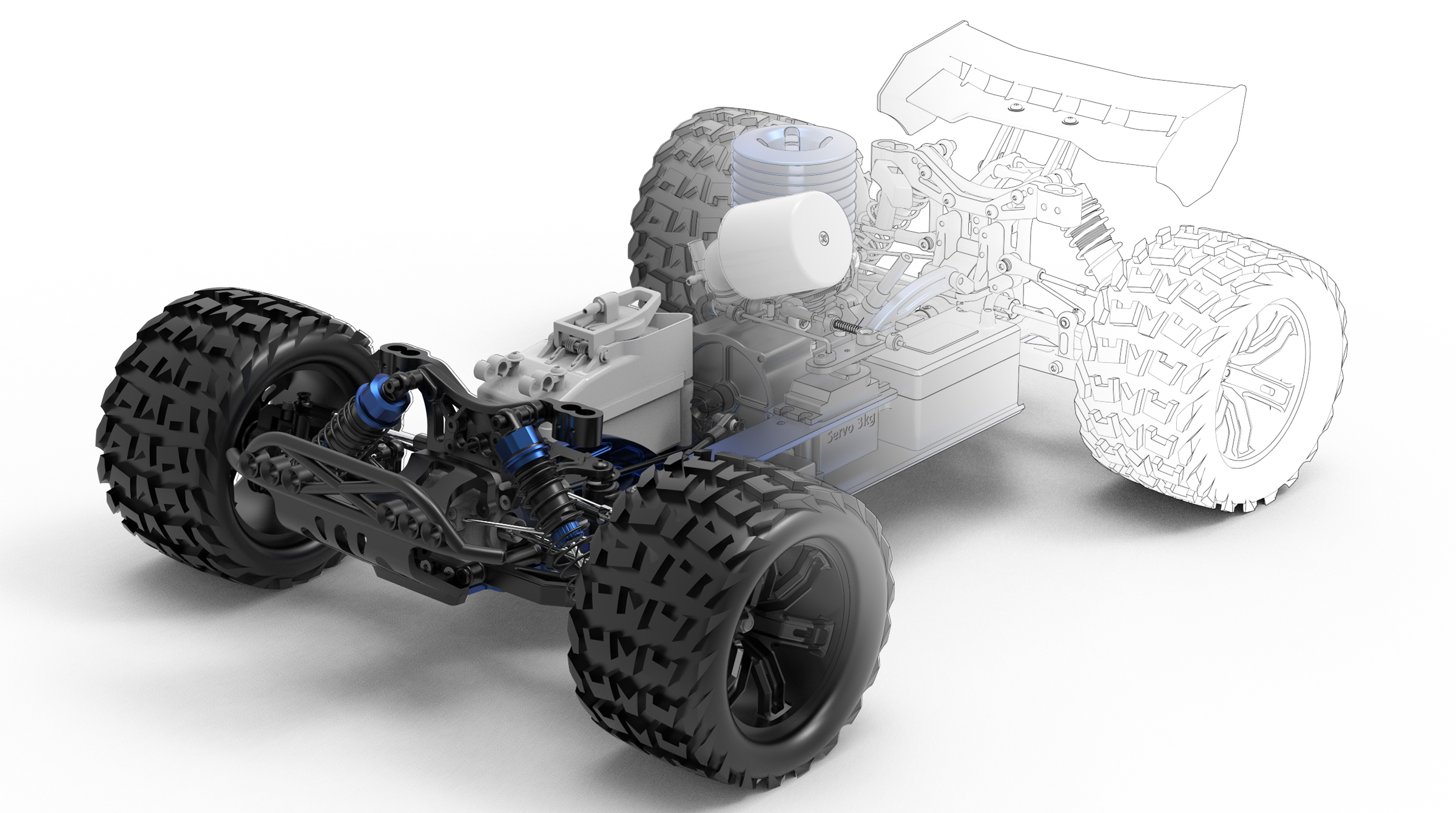
VRX Racing's brushless lineup spans 1/10 trucks, buggies, truggies and larger 1/8 models. The supporting drivetrain is also important because higher motor output places greater demands on gears, driveshafts and differentials.
A powerful motor on a technical track may not automatically produce faster lap times. Excessive wheelspin can make acceleration harder to control, especially on loose surfaces.
Track requirement | Platform to consider | Main design priority |
Tight technical circuit | Buggy | Steering response |
Rough dirt track | Truggy | Stability and suspension travel |
Wheel-to-wheel racing | Short course truck | Protection and predictable handling |
Large jumps and open tracks | 1/8 buggy/truggy | Stability and chassis capacity |
Obstacles and recreational bashing | Monster truck | Ground clearance and tire size |
Mixed recreational driving | 1/10 brushless truck | Versatility |
High-speed electric racing | Brushless 1/8 platform | Power and high-speed control |
A race-ready RC car is not necessarily the one with the highest advertised speed. It is the vehicle whose chassis characteristics match the demands of the track.
A short truck course rally car may sound similar to other off-road platforms, but rally-oriented vehicles generally place more emphasis on controlled transitions and mixed surfaces. A short course truck instead focuses on high-speed off-road racing and close competition.
Likewise, RC short track driving can place greater emphasis on cornering and line selection than raw acceleration.
The VRX Pro approach is therefore better understood through the complete vehicle rather than one specification: chassis dimensions, suspension, drivetrain, tires, electronics and intended application all contribute to performance.
The most useful way to compare RC cars is to ask what the track demands before asking what the motor can deliver.
A buggy makes sense when rapid direction changes dominate. A truggy becomes attractive when rough terrain and stability become more important. A short course truck adds protection and predictability for close racing, while a monster truck expands the range of obstacles the vehicle can handle.
VRX Racing's broad selection demonstrates this principle across 1/10 and 1/8 platforms, from brushless trucks and buggies to truggies and SCTs.
Ultimately, good RC design is not about creating one vehicle that does everything. It is about creating the right balance of handling, stability, power and protection for a particular driving environment. Once the track role is understood, choosing the right RC platform becomes far more straightforward.