An electric RC car is not defined by its motor alone. The way it performs on dirt, grass, gravel, asphalt, sand, or rocky trails depends on how the entire chassis is designed around a specific driving environment. Tire size, ground clearance, suspension travel, drivetrain layout, vehicle weight, and motor output all influence how efficiently an RC car can convert electrical power into usable traction.
This is why a fast track-oriented buggy may struggle on loose gravel while a larger truggy remains stable. Likewise, a vehicle designed for high-speed off-road driving is not necessarily the best choice for crawling over rocks.
For enthusiasts choosing between an electric RC truggy, or an electric rock crawler, understanding terrain-specific engineering can be more useful than simply comparing top speed.
Every driving surface creates different demands on an RC vehicle.
Smooth asphalt provides predictable traction, allowing a lightweight chassis and responsive suspension to work efficiently. Dirt tracks require a balance between grip and controlled sliding. Gravel introduces loose particles that can reduce traction and increase impacts. Sand demands flotation and sufficient power to prevent the vehicle from becoming buried.
Rocky terrain creates an entirely different problem. Instead of maximizing speed, the vehicle needs slow-speed torque, suspension articulation, high ground clearance, and tires capable of conforming to irregular surfaces.
This explains why there is no universal “best” electric RC car. The right platform is the one whose mechanical characteristics match the environment.
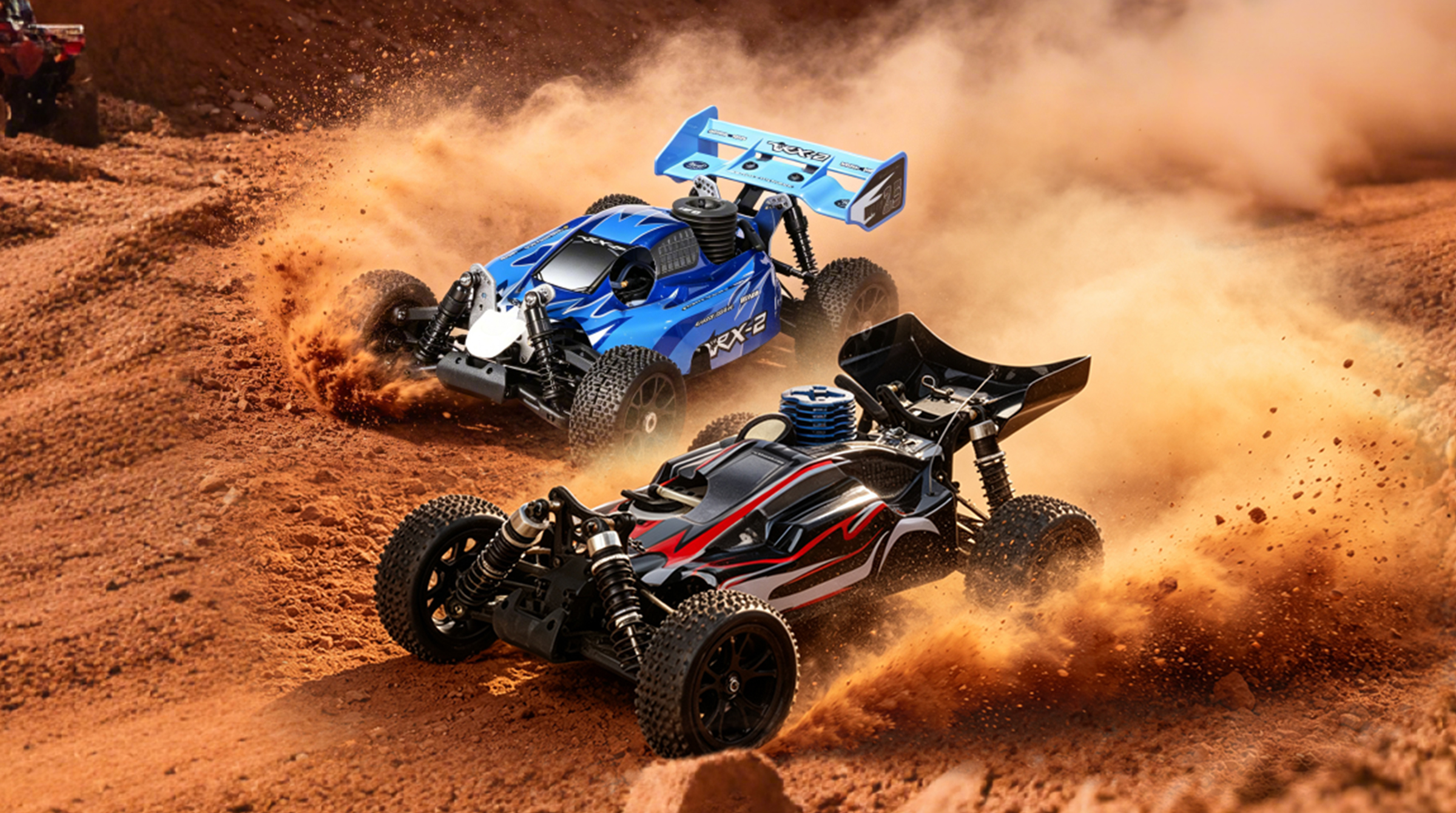
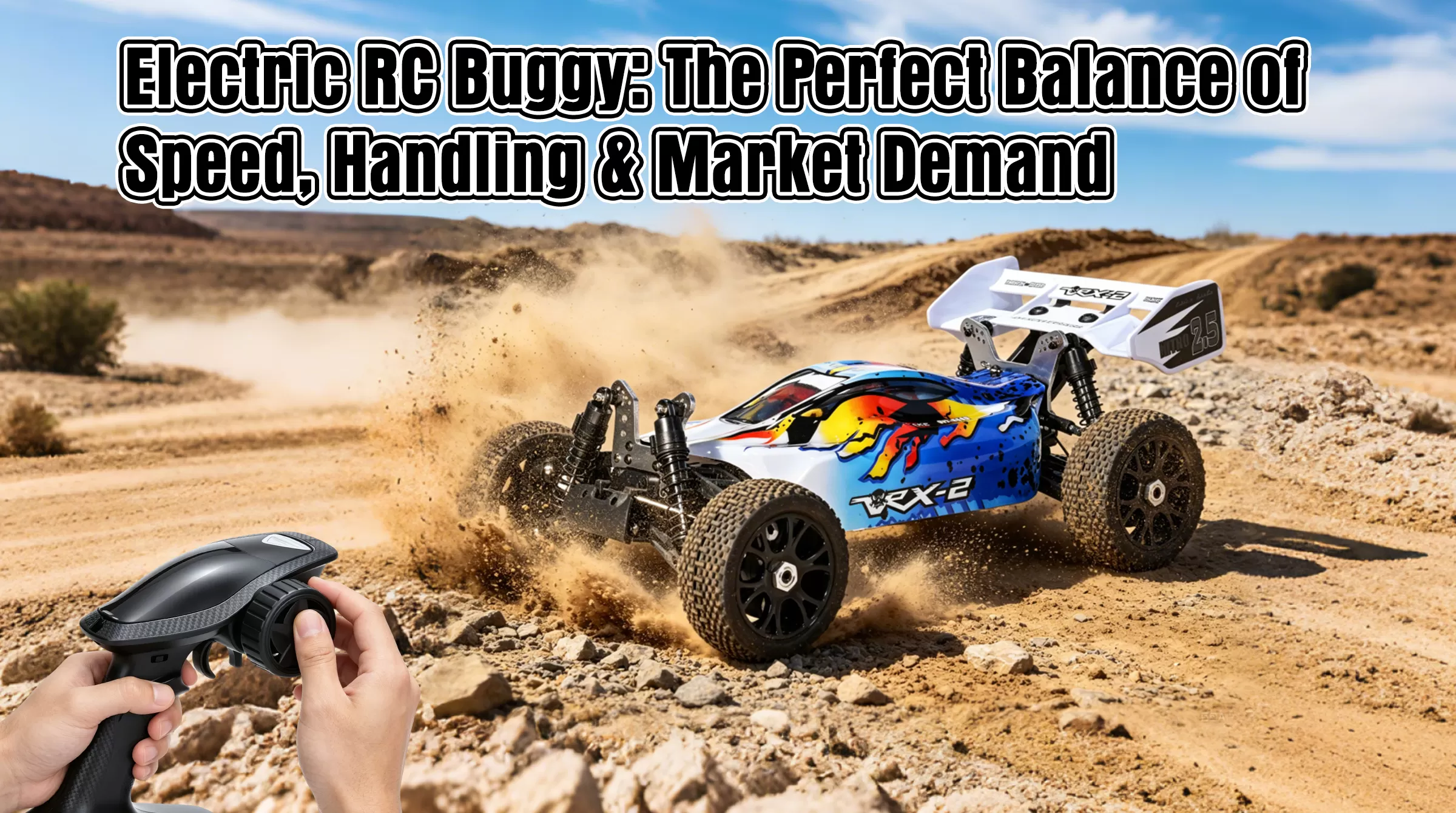
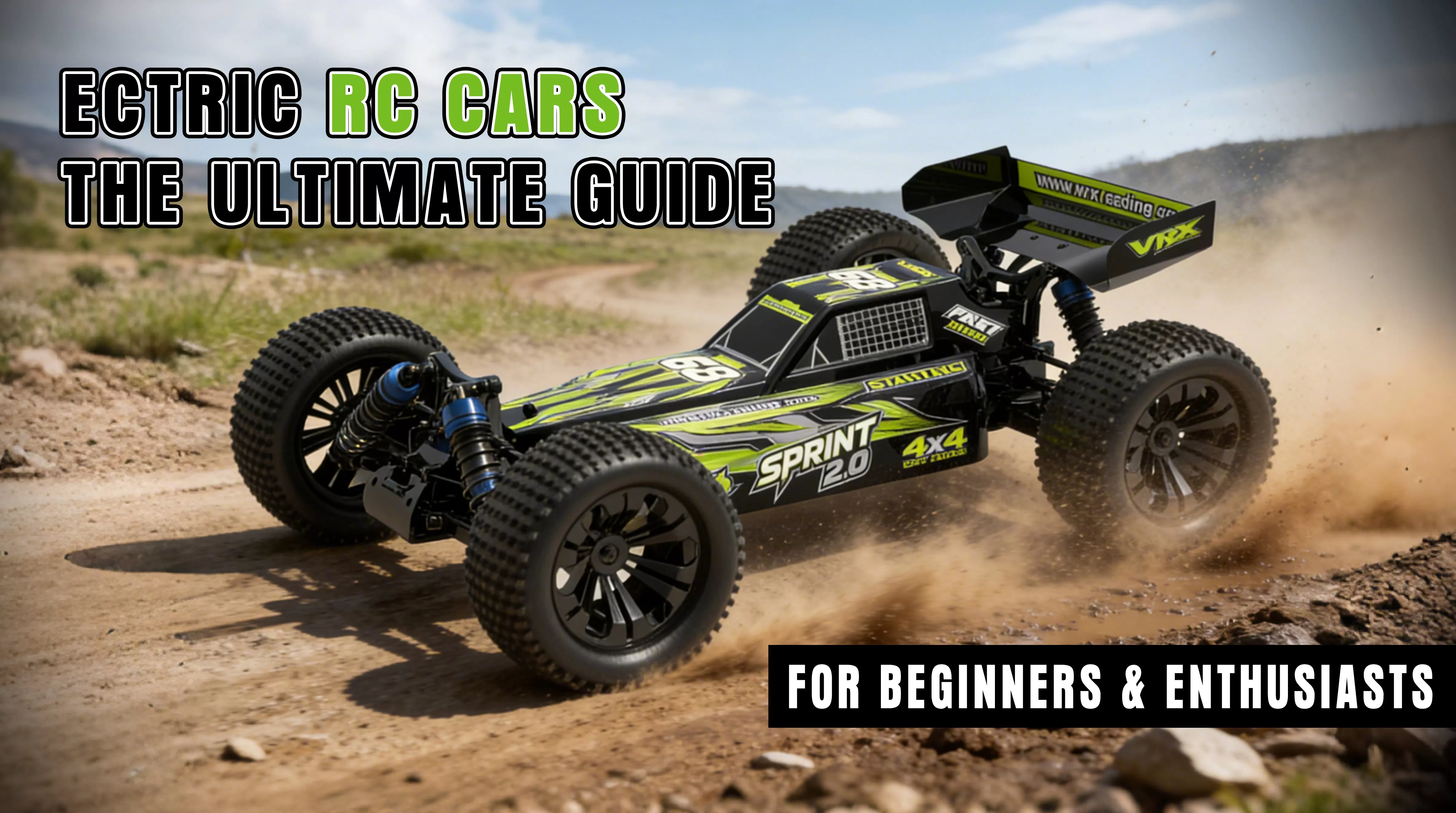
An RC racing buggy electric platform is designed around agility. Its open-wheel layout, relatively low body profile, and suspension geometry help reduce unnecessary weight while maintaining responsive handling.
VRX Racing offers electric buggies across several scales and configurations. Its lineup includes professional-grade 1/8 4WD models such as the BLAST BX and VRX-2E, as well as 1/10 models such as the SPRINT and BULLET.
A 1/8 brushless RC buggy is particularly suited to fast dirt tracks, jumps, and rough racing surfaces where stability and suspension control are important. VRX Racing's 1/8 electric platforms use brushless power systems, 4WD drivetrains, adjustable oil-filled shocks, and rigid chassis structures designed for demanding off-road use.
The main advantage of a buggy is not simply speed. It is the ability to change direction quickly, carry momentum through corners, and recover efficiently after jumps.
An electric RC truggy takes a different approach. It combines the handling characteristics of a buggy with a wider stance, larger tires, and more substantial construction.
This makes an e truggy particularly useful when the driving surface becomes less predictable. Larger tires can roll over obstacles that would disturb a conventional buggy, while the wider chassis helps maintain stability during high-speed cornering.
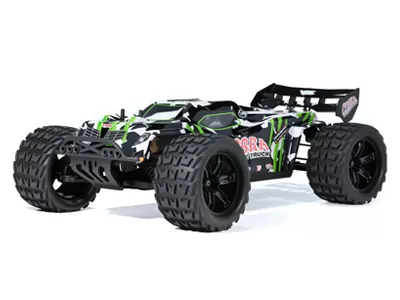
VRX Racing's COBRA 1/8 and VRX-1E 1/8 platforms demonstrate this concept with 4WD layouts, large tires, reinforced components, and long-travel suspension. The MEGREZ provides a 1/10 alternative for drivers looking for a more compact electric truggy.
A RC truggy 1/8 brushless model is especially suitable for open dirt areas, gravel, jumps, and rough tracks where stability matters as much as acceleration.
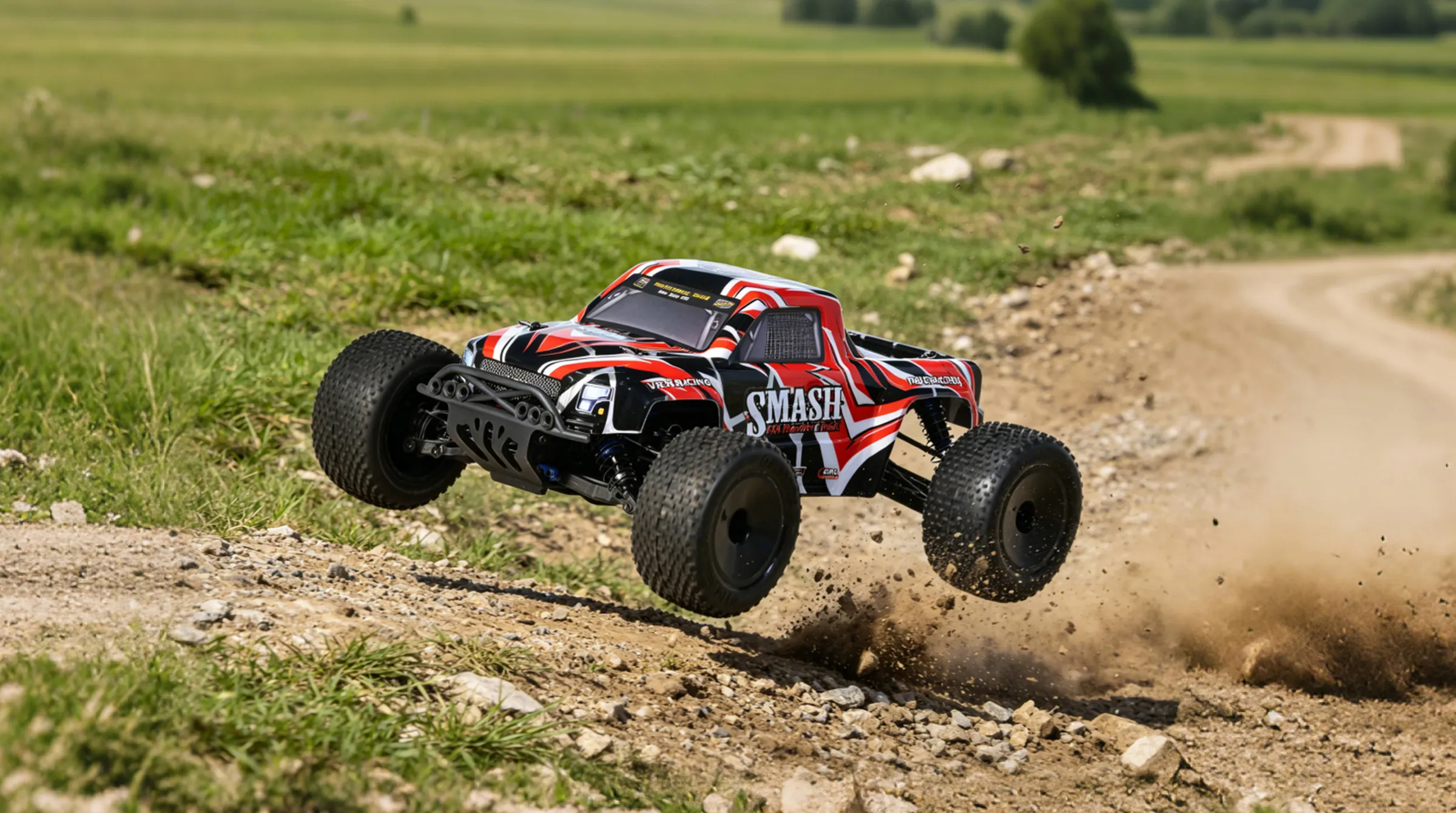
An electric short course truck occupies a useful middle ground between racing performance and recreational bashing.
Its enclosed truck-style body provides additional protection around the wheels and chassis, while the suspension and tires are designed for high-speed off-road driving. This makes the format attractive for drivers who want to combine jumps, loose surfaces, and fast cornering without using a dedicated racing buggy.
VRX Racing's 1/8 BLAST and 1/10 BLAST 2.0 platforms demonstrate how the short course format can be offered at different scales. The 1/10 brushless version uses a 3650 brushless motor with a 45A ESC and 4WD drivetrain, providing a strong balance of acceleration, control, and off-road durability.
For buyers searching for an RC truck 1/10 brushless, this configuration can be particularly attractive when the goal is versatile off-road driving rather than a single specialized environment.
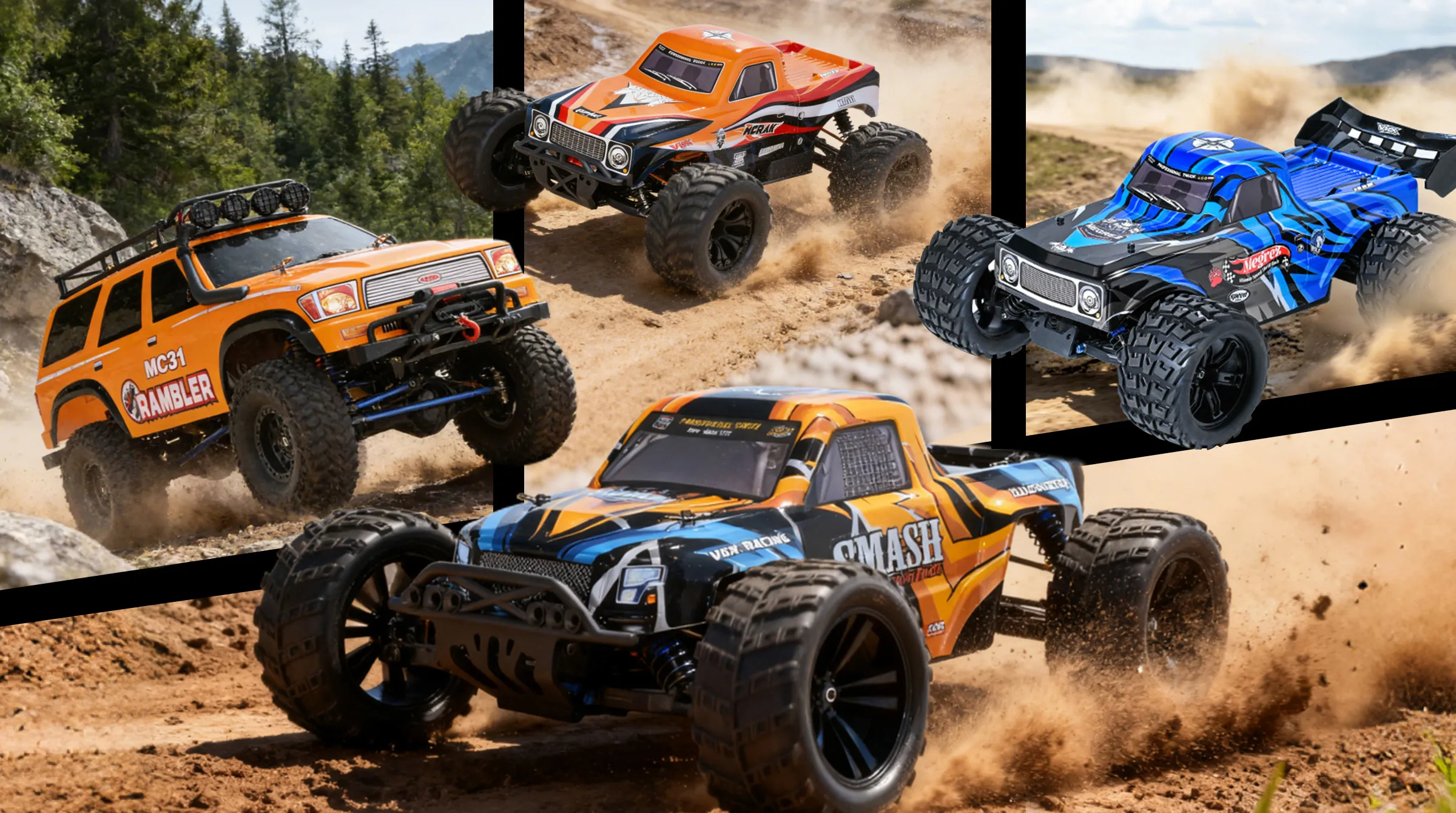
An electric RC monster truck is designed around a different priority: overcoming obstacles.
Large tires and greater ground clearance allow monster trucks to climb over objects, absorb landings, and continue moving through uneven terrain. Their taller stance can sacrifice some high-speed cornering precision, but the trade-off is greater obstacle clearance and a more forgiving driving experience.
Brushless versions add strong acceleration and high torque, making them suitable for grass, dirt, jumps, and recreational bashing. VRX Racing's brushless range includes compact monster truck platforms alongside its larger buggy, truggy, and truck models.
For drivers who spend more time jumping over obstacles than following a prepared racing line, this design philosophy can be more important than outright top speed.
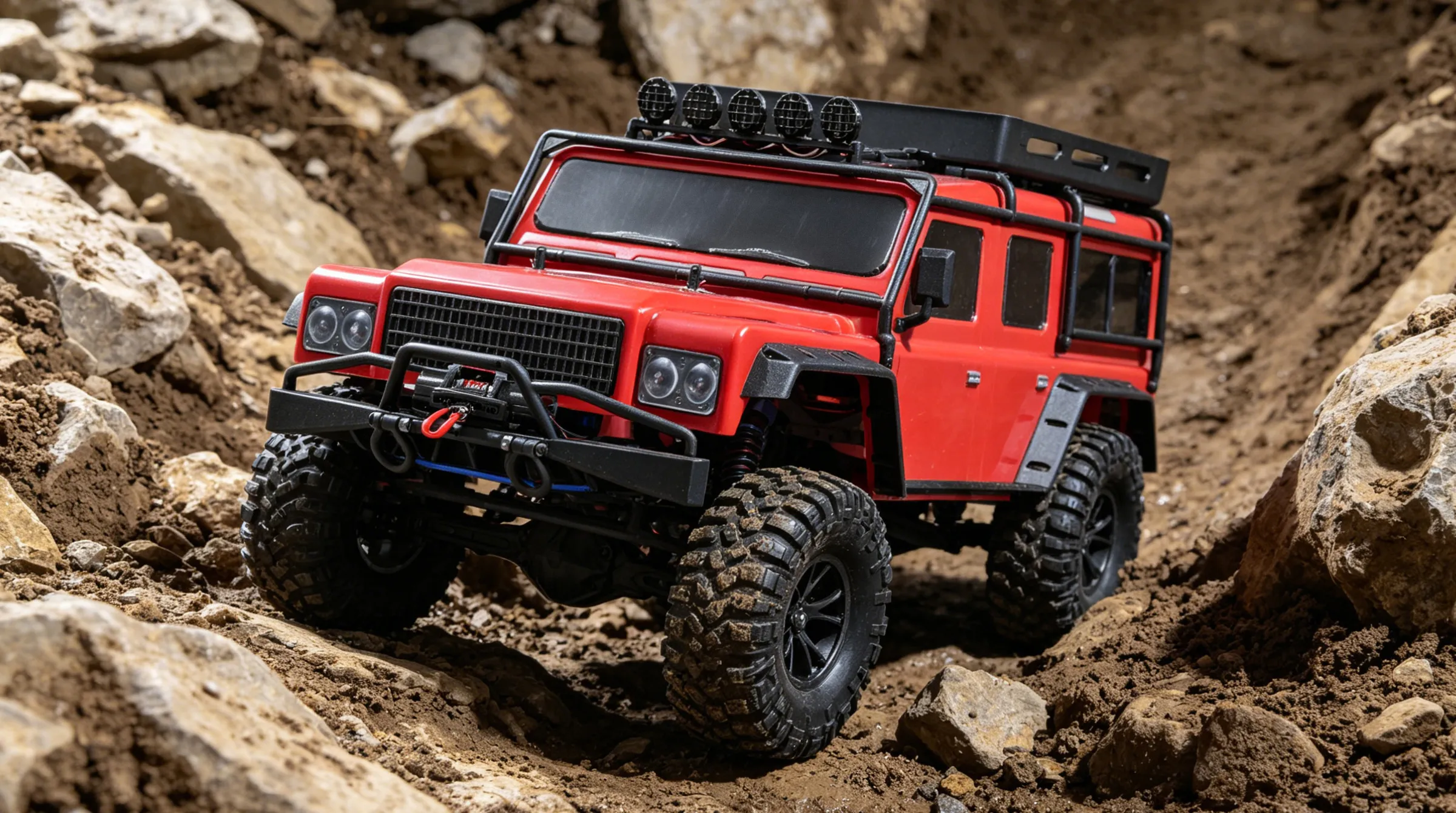
An electric rock crawler demonstrates the opposite end of the RC performance spectrum.
Instead of maximizing acceleration, a crawler needs precise throttle control and consistent torque at very low speeds. High ground clearance, flexible suspension, specialized tires, and drivetrain control become more important than aerodynamic bodywork or maximum motor RPM.
This is also why brushed power systems can still have a place in technical RC driving. VRX Racing notes that its brushed platforms provide smooth, linear throttle control and can be suitable for technical applications such as rock crawling.
The objective is simple: maintain traction and place each wheel accurately rather than cover the greatest distance in the shortest possible time.
Motor selection becomes particularly important when terrain resistance increases.
For example, many VRX Racing 1/10 brushless models use 3650 motors rated around 3300KV or 4200KV with 45A ESCs. These systems provide considerably stronger acceleration than the brushed configurations used in the same scale category.
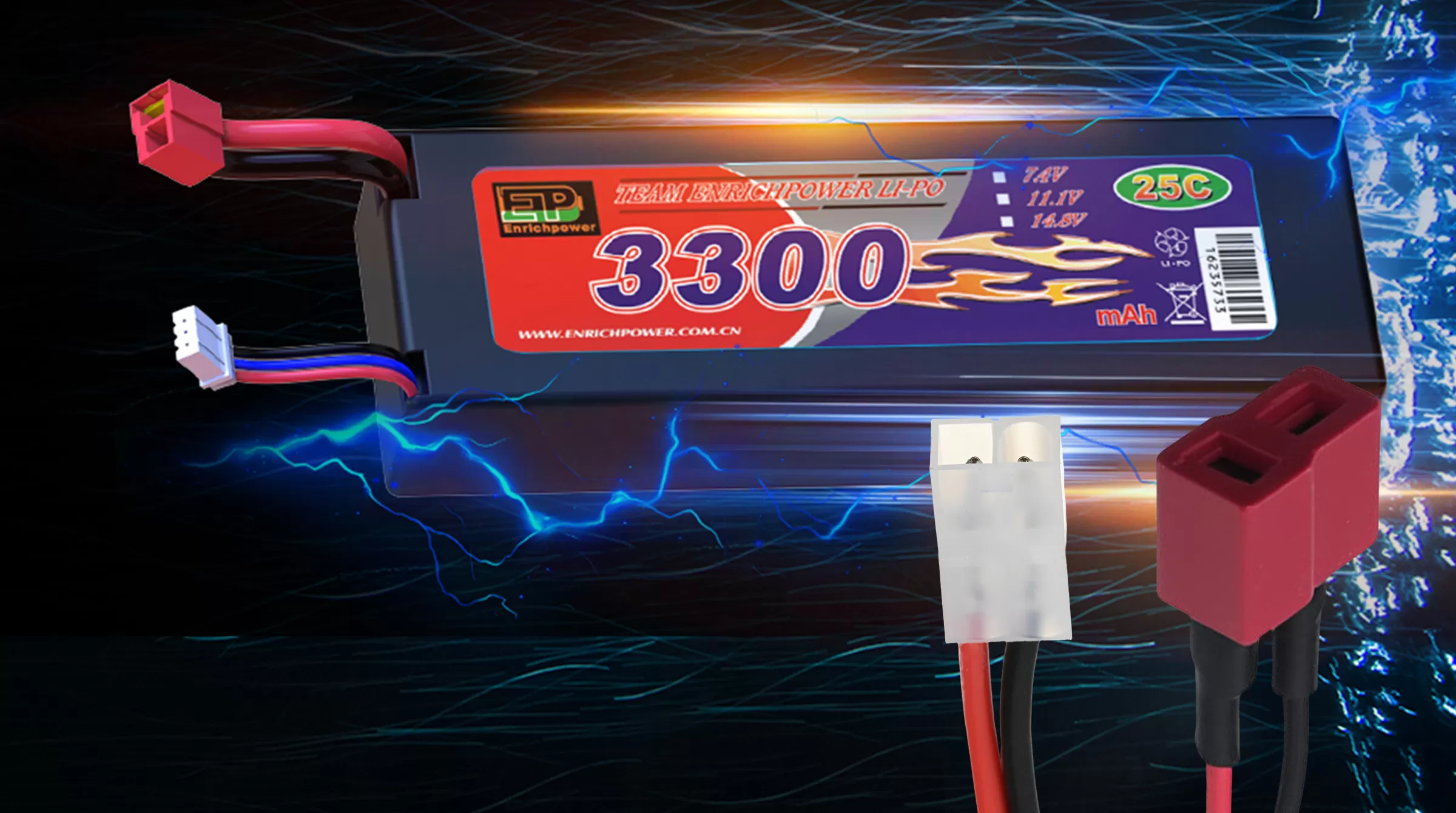
Larger 1/8 electric platforms use larger brushless motors, including 3660 2000KV and 3674 2440KV configurations, combined with 60A–120A ESCs and support for 2S to 4S LiPo batteries.
This creates an important distinction: motor power should be evaluated together with the terrain and chassis. More power is useful when the tires, suspension, drivetrain, and cooling system can convert it into traction without sacrificing reliability.
A simple terrain-based approach can make selection easier:
Driving Environment | Suitable Platform | Key Characteristics |
Prepared dirt track | 1/8 electric buggy | Low weight, responsive suspension, 4WD |
Gravel and rough tracks | Electric truggy | Wide stance, larger tires, long suspension travel |
Grass and mixed off-road | 1/10 brushless RC truck | Versatility, acceleration, durable drivetrain |
High-speed loose terrain | Electric short course truck | Stability, protection, off-road suspension |
Jumps and obstacles | Electric monster truck | Large tires, high clearance, impact tolerance |
Rocks and technical trails | Electric rock crawler | Low-speed control, torque, articulation |
The best choice therefore depends less on a universal performance ranking and more on where the vehicle will actually be driven.
A specification such as “60 km/h” can be attractive, but speed alone does not determine whether an RC car performs well.
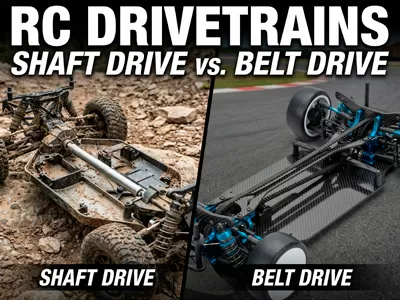
VRX Racing's brushless electric range illustrates the importance of combining motor output with structural engineering. Brushless models use supporting components such as steel gears, hardened driveshafts, and robust differentials to handle increased torque.
For an RC car 1/10 brushless motor, for example, the motor's KV rating only describes part of the system. Gear ratio, tire diameter, battery voltage, ESC capability, drivetrain strength, and terrain resistance all affect the final driving result.
The same principle becomes even more important with an 1/8 scale brushless RC truck or high-performance truggy, where greater vehicle mass and larger tires increase the load placed on the drivetrain.
Electric RC performance is ultimately a product of adaptation. A buggy is effective because its chassis and suspension are optimized for agility. A truggy gains versatility from greater width and tire size. A short course truck balances speed with protection, while a monster truck emphasizes obstacle clearance and durability. A crawler takes the opposite approach by prioritizing controlled torque over outright speed.
For enthusiasts and buyers, the better question is therefore not simply “Which electric RC car is fastest?” but “Which platform is engineered for the terrain I actually drive on?”
With its range of 1/8 and 1/10 electric buggies, truggies, trucks, short course models, and brushless platforms, VRX Racing provides multiple configurations for matching RC performance to different driving environments.