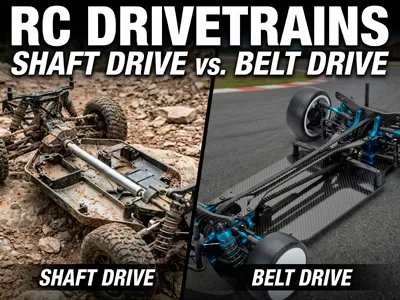
Battery runtime is one of the most important factors affecting the RC driving experience. While speed and handling often attract the most attention, knowing how long RC battery lasts helps drivers plan longer sessions, choose the right battery pack, and avoid unexpected downtime.
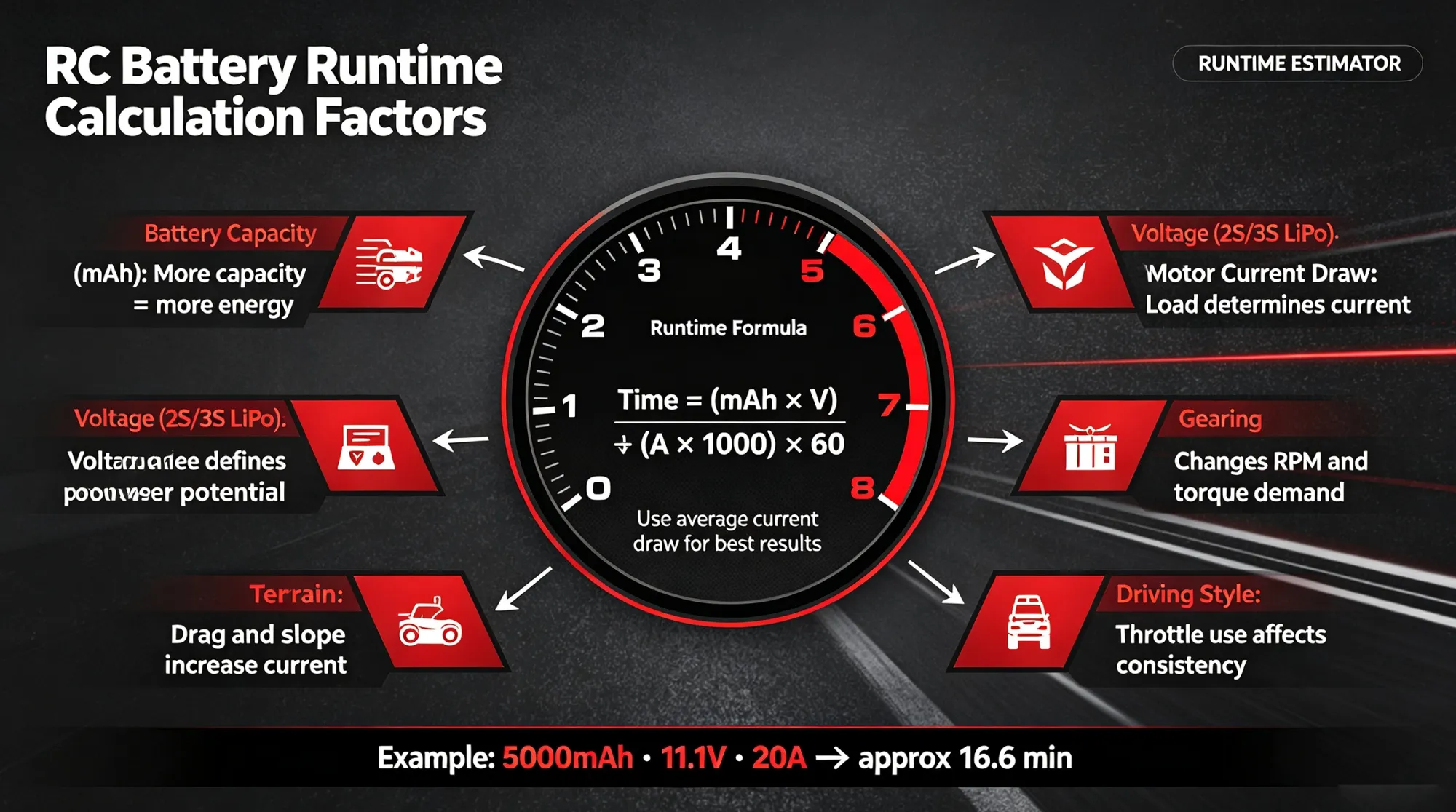
The actual runtime of an electric RC vehicle depends on several factors, including battery capacity, voltage, motor efficiency, gearing, and driving conditions. A larger battery does not always guarantee longer driving time because higher power output and demanding terrain can quickly increase energy consumption.
Using an RC battery runtime calculator allows drivers to estimate expected runtime and understand how different components affect battery performance. For enthusiasts using VRX Racing electric RC vehicles, choosing the correct battery and charger combination can improve efficiency while protecting important electronic components.
The basic formula for estimating RC battery runtime is:
Runtime = Battery Capacity ÷ Average Current Draw
Battery capacity is measured in milliamp-hours (mAh). For example, a 3300mAh battery stores 3.3Ah of energy. If an RC vehicle consumes an average of 15 amps during operation:
3.3Ah ÷ 15A ≈ 13 minutes
This calculation provides an estimate, but real driving conditions can change the result significantly.
Factors that influence runtime include:
Battery capacity
Battery voltage
Motor type
Gear ratio
Vehicle weight
Driving surface
Throttle control
A battery powered RC car driven smoothly on flat ground will usually run longer than the same vehicle used for aggressive acceleration or off-road driving.
Battery capacity is one of the easiest ways to increase driving time. RC batteries are commonly available in different capacities, such as 2200mAh, 3300mAh, and 5000mAh.
A higher-capacity battery stores more energy, which can extend runtime.
For example, a Lipo battery 3300mah pack can provide longer operation than a smaller battery when used with the same vehicle setup.
However, increasing battery capacity also adds weight. A heavier battery may affect acceleration, handling, and suspension performance. Therefore, choosing the correct capacity requires balancing runtime needs with vehicle performance.
For many RC enthusiasts, a medium-capacity Lipo RC car battery provides a practical combination of power, weight, and driving time.
Battery voltage directly affects RC performance. Modern electric RC vehicles commonly use LiPo batteries because they offer high energy density and strong power output.
A 2S 7.4 Lipo battery uses two lithium polymer cells and provides a nominal voltage of 7.4V.
Advantages include:
Longer runtime
Lower heat generation
Smooth acceleration
Reduced stress on electronics
A 2S Lipo RC battery is a popular choice for drivers who want reliable performance without excessive power consumption.
A properly matched 2S battery and charger setup also helps maintain battery safety and charging efficiency.
A 3S battery for RC car uses three cells and provides approximately 11.1V.
Benefits include:
Higher speed
Stronger acceleration
Increased power output
However, higher voltage also increases energy consumption and heat production.
A 3S Lipo battery RC car setup requires compatible motors, ESCs, and drivetrain components. Without proper matching, additional power may reduce battery efficiency and increase component wear.
Battery performance is closely connected to the mechanical setup of the vehicle. The gear system determines how efficiently motor power is converted into movement.
Important components include:
Pinion gear
Spur gear
Differential gears
The relationship between these parts affects acceleration, speed, and energy consumption.
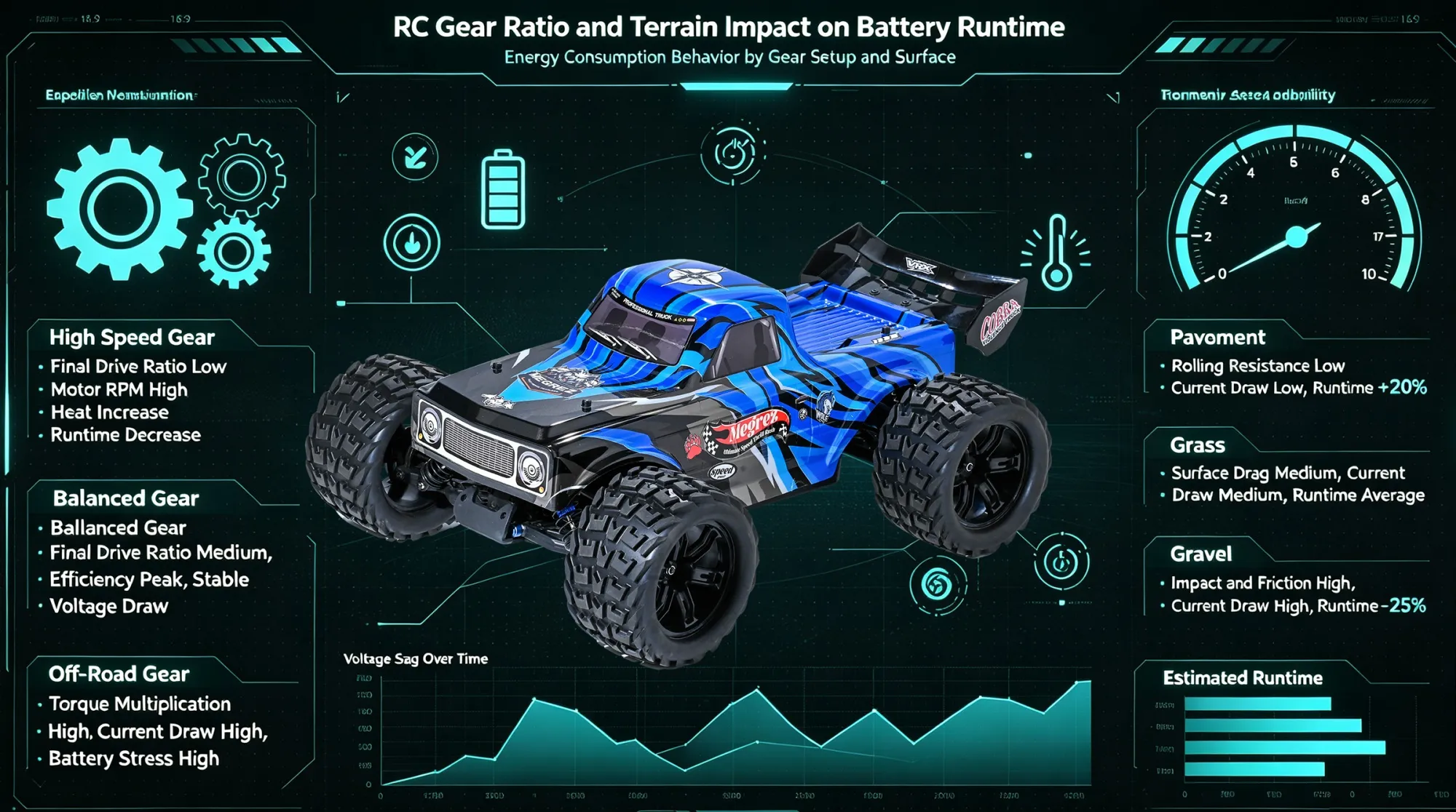
A high-speed gearing setup may increase top speed but also forces the motor to work harder. This can result in:
Higher current consumption
Increased motor temperature
Shorter runtime
A lower gearing setup usually provides:
Better acceleration control
Reduced heat
Improved efficiency
Regular inspection of the RC car motor gear system is also important. Damaged or poorly adjusted remote control car gears can create extra resistance and reduce battery efficiency.
The surface where an RC vehicle operates has a major impact on battery consumption.
Roads and flat surfaces create less resistance, allowing the vehicle to use energy more efficiently.
Grass creates additional rolling resistance, requiring more motor power to maintain speed.
Gravel, dirt, and uneven surfaces demand more torque because the vehicle constantly adjusts to changing traction.
For remote control off-road driving, runtime is usually shorter because the motor works harder to overcome terrain resistance.
Driving style also matters. Frequent full-throttle acceleration consumes significantly more energy than smooth, controlled driving.
Motor technology also affects runtime. Brushed motors are affordable and easy to maintain, making them suitable for many beginner RC vehicles.
However, brushless motors generally provide:
Higher efficiency
Better power consistency
Lower heat generation
Longer service life
Modern brushless platforms allow drivers to achieve strong performance without unnecessary energy waste.
VRX Racing offers electric RC models designed around modern performance requirements, including brushless-compatible vehicles that balance speed, durability, and efficiency.
An RC battery runtime calculator can help estimate expected driving time by considering:
1. Battery capacity
2. Battery voltage
3. Average current consumption
4. Driving conditions
For example:
Battery: 3300mAh (3.3Ah)
Average current draw: 20A
Calculation:
3.3 ÷ 20 = 0.165 hours
0.165 × 60 ≈ 10 minutes
Actual runtime may vary depending on terrain, gearing, and driving habits.
Selecting the correct charger is just as important as choosing the battery.
A suitable charger should support:
Correct battery type
Proper voltage
Balance charging
Safe charging current
LiPo batteries require careful charging management to maintain performance and lifespan.
For beginners, a nimh RC battery can be a simple option because it is easier to maintain. However, many performance-focused drivers prefer LiPo batteries because of their higher energy density and stronger output.
VRX Racing provides RC battery chargers and accessories designed to support reliable charging and maintenance for electric RC applications.
An RC battery runtime calculator is a useful tool for estimating driving time, but real-world runtime depends on many factors. Battery capacity, voltage, gearing, terrain, and driving style all influence performance.
By understanding how batteries, gears, and motors work together, RC enthusiasts can make smarter upgrade decisions and enjoy longer driving sessions.
With reliable electric RC vehicles, chargers, and accessories, VRX Racing helps drivers achieve a better balance between performance, efficiency, and durability.