Whether you're running a high-speed stadium truck, a short course truck, or an off-road crawler, few problems are more frustrating than watching your RC car drift to one side on a straight line. A vehicle that constantly veers left or right not only reduces driving enjoyment but also affects cornering consistency, tire wear, and overall handling.
Fortunately, most RC steering problems are easier to diagnose than many hobbyists expect. In many cases, the issue is caused by incorrect steering trim, binding linkage, a loose servo saver, or a worn steering servo rather than expensive drivetrain components.
This guide walks through a systematic inspection process, helping you identify why your RC car pulls to one side and determine whether adjustment, maintenance, or replacement parts are needed. For enthusiasts using VRX Racing vehicles or upgrading their steering systems, understanding these checks can also help maximize steering precision and durability.
When an RC vehicle refuses to travel in a straight line, the steering system is usually the first place to investigate.
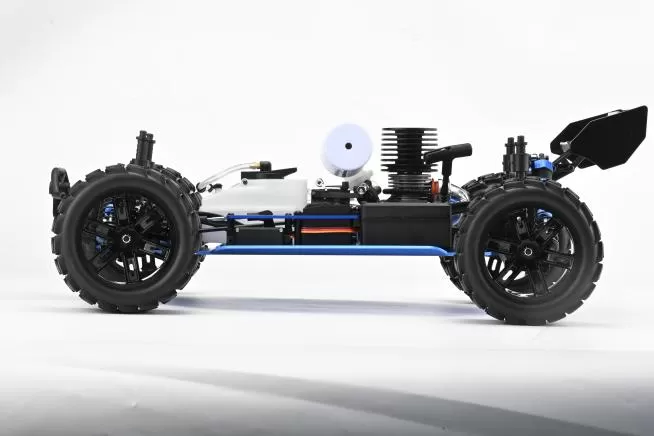
Several components work together:
Radio transmitter steering trim
Steering servo
Servo horn
Servo saver
Steering linkage
Steering bellcranks
Steering knuckles
Suspension geometry
Tire condition
If any one of these components becomes misaligned, worn, or damaged, the vehicle may gradually drift or sharply pull to one side.
Instead of replacing parts immediately, work through the following diagnostic steps from the simplest to the most complex.
Steering trim exists for one purpose—to compensate for tiny differences that prevent perfectly straight driving.
Before making mechanical adjustments:
1. Place the vehicle on a flat surface.
2. Turn on the transmitter first.
3. Turn on the vehicle.
4. Leave the steering wheel centered.
5. Observe the front wheels.
If the wheels are already pointing slightly left or right, adjust the steering trim until both wheels face straight ahead.
Avoid using excessive trim.
If you need more than a few clicks to achieve straight tracking, another mechanical problem is likely present.
A large trim correction often hides:
Bent linkage
Off-center servo horn
Damaged servo gears
Incorrect linkage length
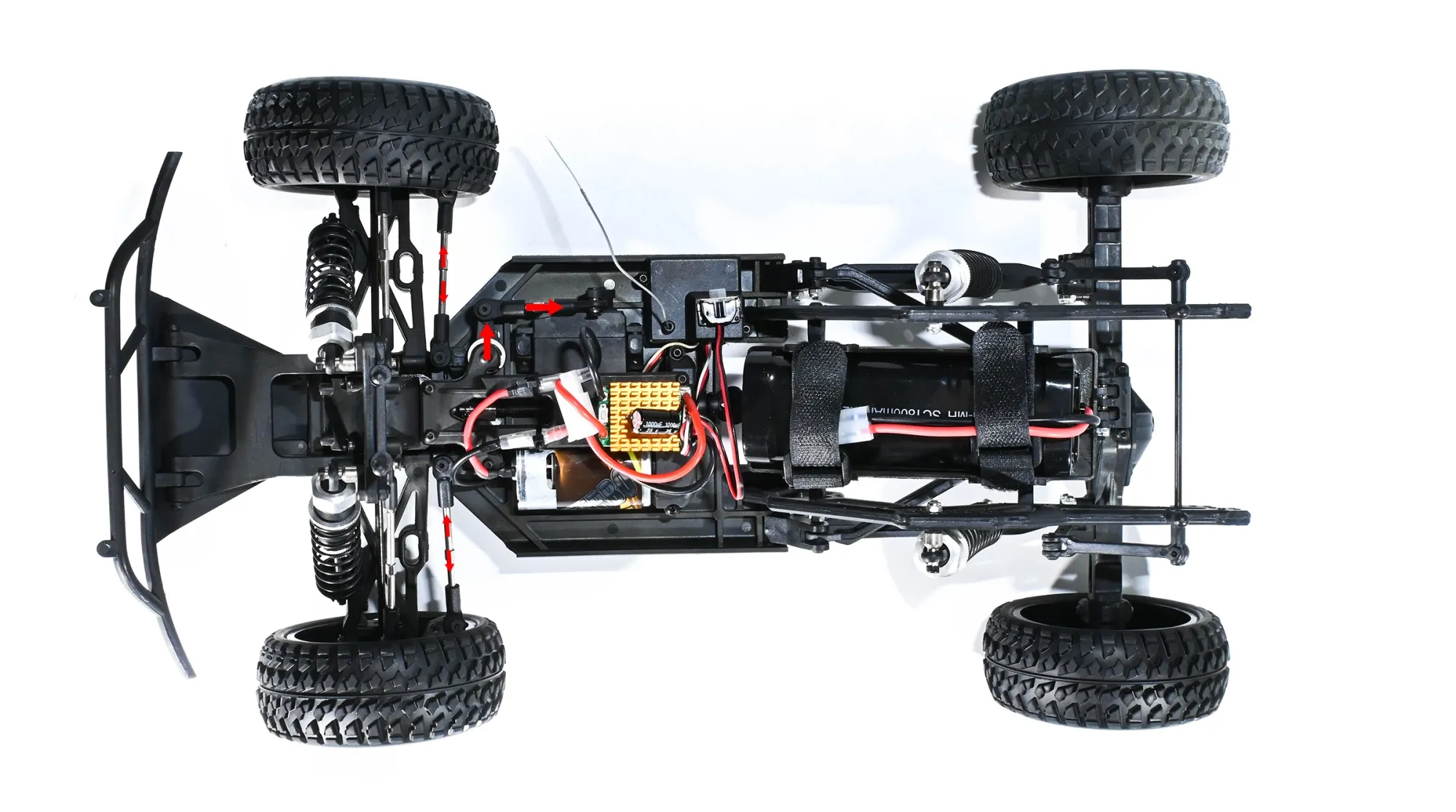
The steering linkage transfers movement from the servo to both front wheels.
Even a small amount of play or resistance can create uneven steering.
Check for:
After crashes, metal steering links may bend slightly.
A bent linkage changes wheel alignment, causing one wheel to steer more aggressively than the other.
Ball cups gradually wear during off-road driving.
Loose joints introduce steering slop, making straight driving inconsistent.
Disconnect the servo horn and move the steering by hand.
The steering should move smoothly from lock to lock.
If resistance is felt:
Dirt may be trapped in pivot points.
Bearings may need cleaning.
Steering posts may be bent.
Plastic parts may be warped.
Cleaning and lubricating these components often restores smooth operation.
Many hobbyists overlook the servo saver during troubleshooting.
The servo saver protects the steering servo by absorbing impact energy during crashes or hard landings.
However, if the spring becomes weak or loose, steering accuracy suffers.
Symptoms of a worn servo saver include:
Vehicle wandering on straight roads
Delayed steering response
Inconsistent steering angle
Front wheels changing direction under acceleration
Hold the front wheels firmly and gently rotate the servo horn.
A small amount of movement is normal.
Excessive movement indicates the servo saver may need tightening or replacement.
Many performance drivers choose adjustable servo savers that provide better steering precision while still protecting the servo.
A damaged steering servo is one of the most common causes of an RC steering problem.
The servo converts radio signals into steering movement.
Over time, internal gears, motors, or potentiometers wear out.
Typical symptoms include:
Steering jitters
Slow steering return
One steering direction weaker than the other
Random steering corrections
Buzzing noises while centered
If your vehicle frequently drives on rocky terrain, choosing a high-torque RC crawler servo can significantly improve steering reliability under heavy loads.
Likewise, larger monster trucks and trail vehicles benefit from a robust RC rock crawler servo capable of maintaining steering authority even when the tires are wedged between obstacles.
For racing platforms, selecting an appropriately sized RC truck steering servo ensures faster response and improved control during high-speed cornering.
If replacement becomes necessary, choose a steering servo for RC car with sufficient torque, metal gears, and waterproof construction for your driving environment.
Sometimes the servo itself works perfectly, but the servo horn has been installed incorrectly.
This often happens after:
Servo replacement
Gear repair
Crash damage
To verify alignment:
1. Reset steering trim to zero.
2. Power on transmitter and receiver.
3. Allow the servo to center automatically.
4. Remove the servo horn.
5. Reinstall it as close to 90 degrees as possible.
Minor corrections can then be made using steering trim.
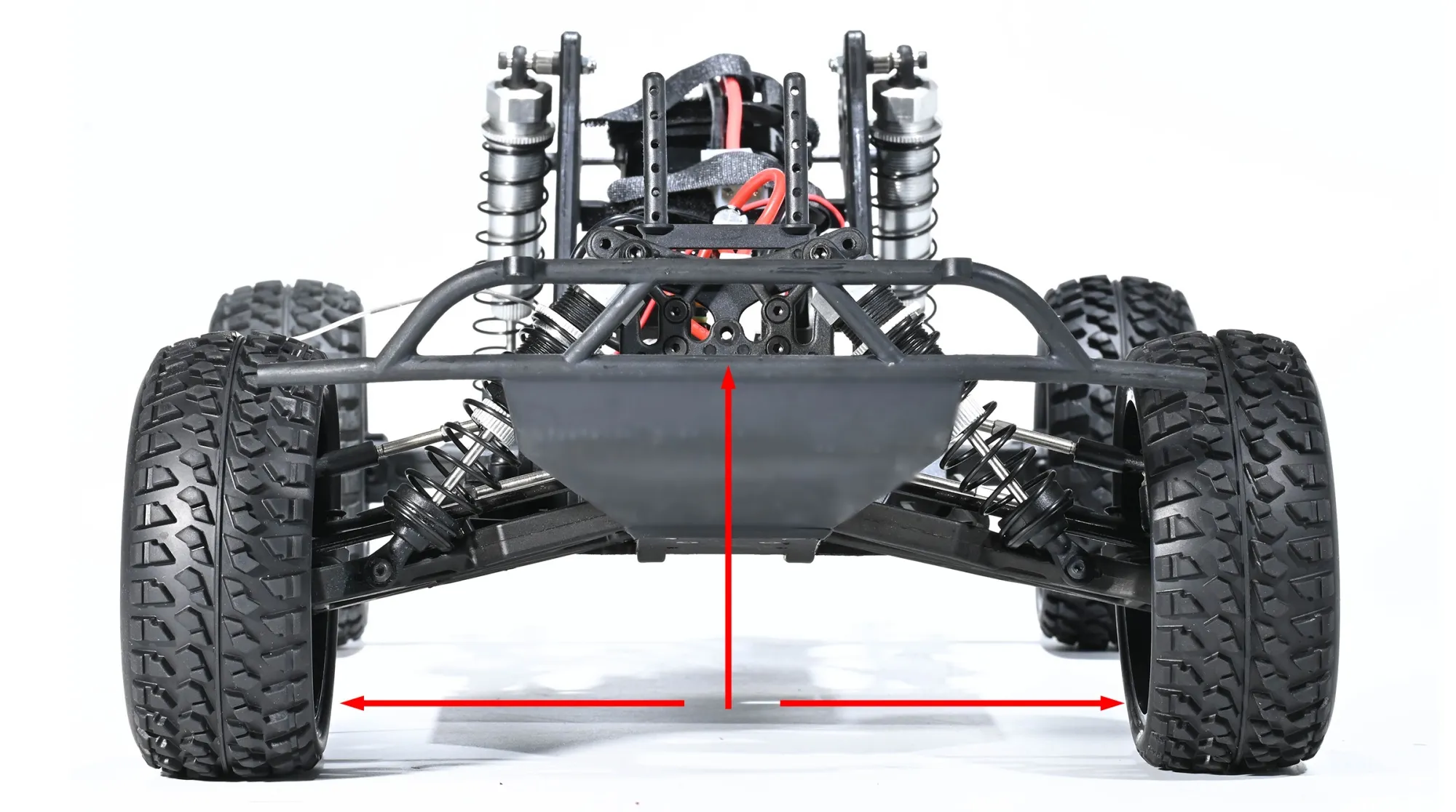
Steering isn't the only system responsible for straight driving.
Suspension alignment also plays an important role.
Inspect:
Incorrect toe settings often produce wandering or unstable steering.
Too much toe-out:
Nervous handling
Poor straight-line stability
Too much toe-in:
Increased tire wear
Reduced steering response
Uneven camber causes unequal tire contact patches.
One tire may generate more grip than the other, leading to pulling during acceleration.
Broken springs or leaking shocks can create uneven chassis weight distribution.
The result may feel like a steering issue even though the steering system itself is functioning correctly.
Sometimes the steering system isn't the culprit at all.
Compare both front tires.
Look for:
Uneven wear
Torn foam inserts
Loose wheel nuts
Bent wheel hexes
Damaged rims
Different tire diameters can easily make an RC vehicle drift to one side, especially at higher speeds.
Off-road vehicles frequently collect mud, sand, and small stones.
Contaminated bearings increase rolling resistance.
If one front wheel rotates less freely than the other, the vehicle naturally pulls toward that side.
Spin each front wheel individually.
Both wheels should rotate smoothly without roughness or excessive resistance.
Replace seized bearings promptly to restore steering consistency.
Although less common, electrical issues can occasionally create steering inconsistencies.
Inspect:
Servo extension cables
Receiver connections
Battery voltage
BEC output from the ESC
Low voltage may reduce servo torque, making steering feel weak or inconsistent under load.
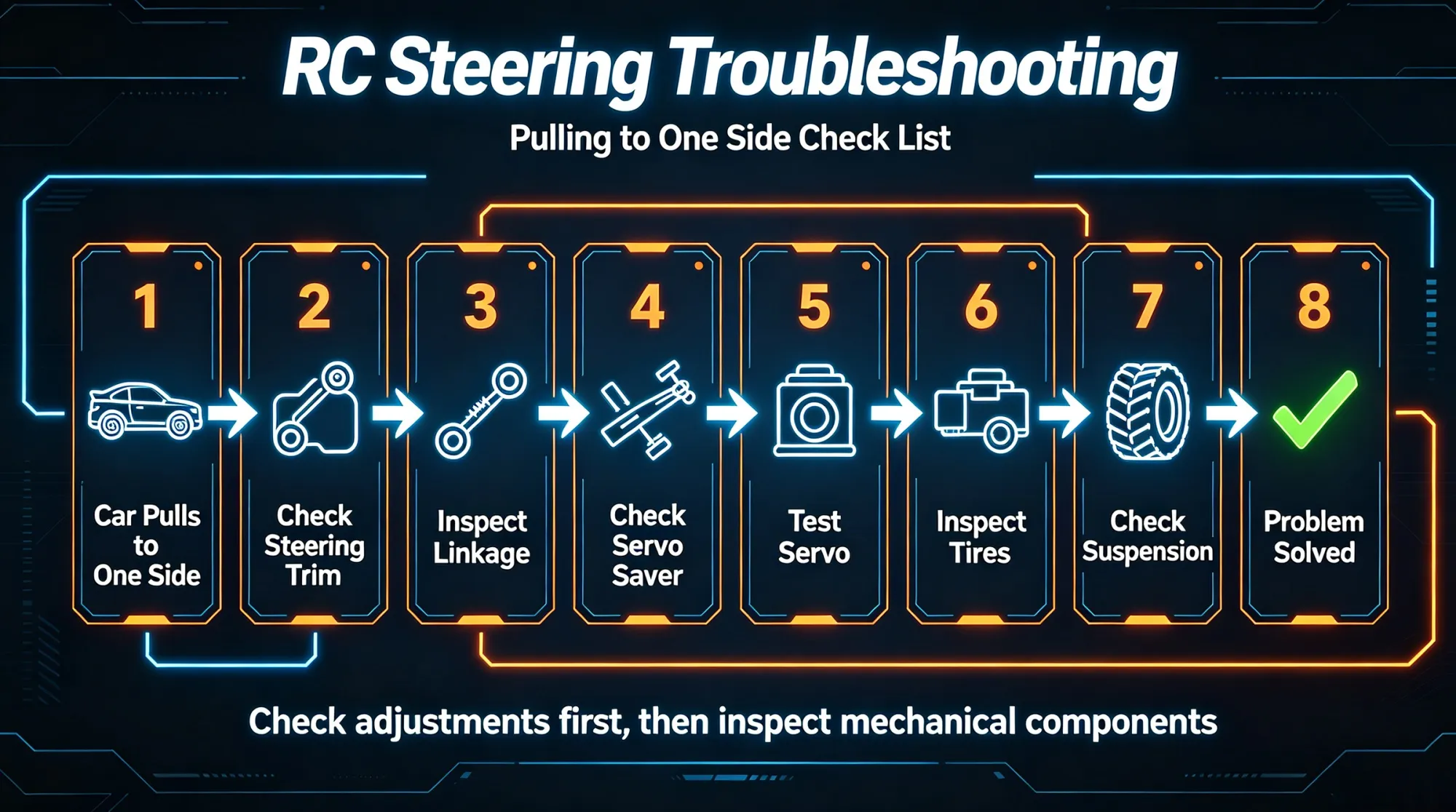
Regular maintenance greatly reduces future steering issues.
A simple checklist includes:
Clean steering pivots after every off-road session.
Tighten loose linkage hardware.
Inspect servo saver spring tension.
Keep steering bearings free of dirt.
Replace worn ball ends before excessive play develops.
Re-center steering trim after major repairs.
Avoid forcing the wheels against obstacles while holding full steering lock.
Drivers using VRX Racing vehicles can also improve long-term reliability by periodically inspecting factory steering components and upgrading to higher-performance radios, servos, and accessories when driving conditions become more demanding. The brand's range of steering electronics and RC accessories offers compatible options for hobbyists seeking improved steering precision and durability across crawlers, trucks, and other off-road platforms.
Minor alignment problems can usually be corrected through maintenance.
However, replacement is often the better solution when you notice:
Cracked servo cases
Stripped servo gears
Bent steering bellcranks
Severely worn servo savers
Excessive linkage play
Damaged steering knuckles
Persistent steering drift after repeated adjustments
Replacing worn components restores predictable handling and prevents additional wear on other steering parts.
When an RC car pulls to one side, the problem rarely originates from a single component. More often, it is the combined effect of small issues involving steering trim, linkage alignment, servo performance, or the servo saver.
A logical inspection process—from radio settings to mechanical components and finally electronics—helps identify the root cause without unnecessary RC accessories replacement. Regular maintenance, timely replacement of worn steering components, and choosing quality steering equipment all contribute to more precise handling and a better driving experience.
Whether you're maintaining a competition truck, trail crawler, or everyday basher, investing time in diagnosing RC steering problems will keep your vehicle tracking straight and performing at its best. Proper steering setup, combined with reliable components such as a durable steering servo and well-maintained linkage, ensures consistent control on everything from smooth pavement to challenging off-road terrain.