The global RC car market offers more driving styles than ever before. Some enthusiasts want high speed and acceleration, while others prefer technical off-road driving, realistic vehicle designs, or compact models that are easy to use in limited spaces. These different preferences are creating opportunities for manufacturers, hobby shops, distributors, and online retailers.
Knowing about why these categories attract attention can help buyers choose the right vehicle and help businesses plan their product ranges more effectively.
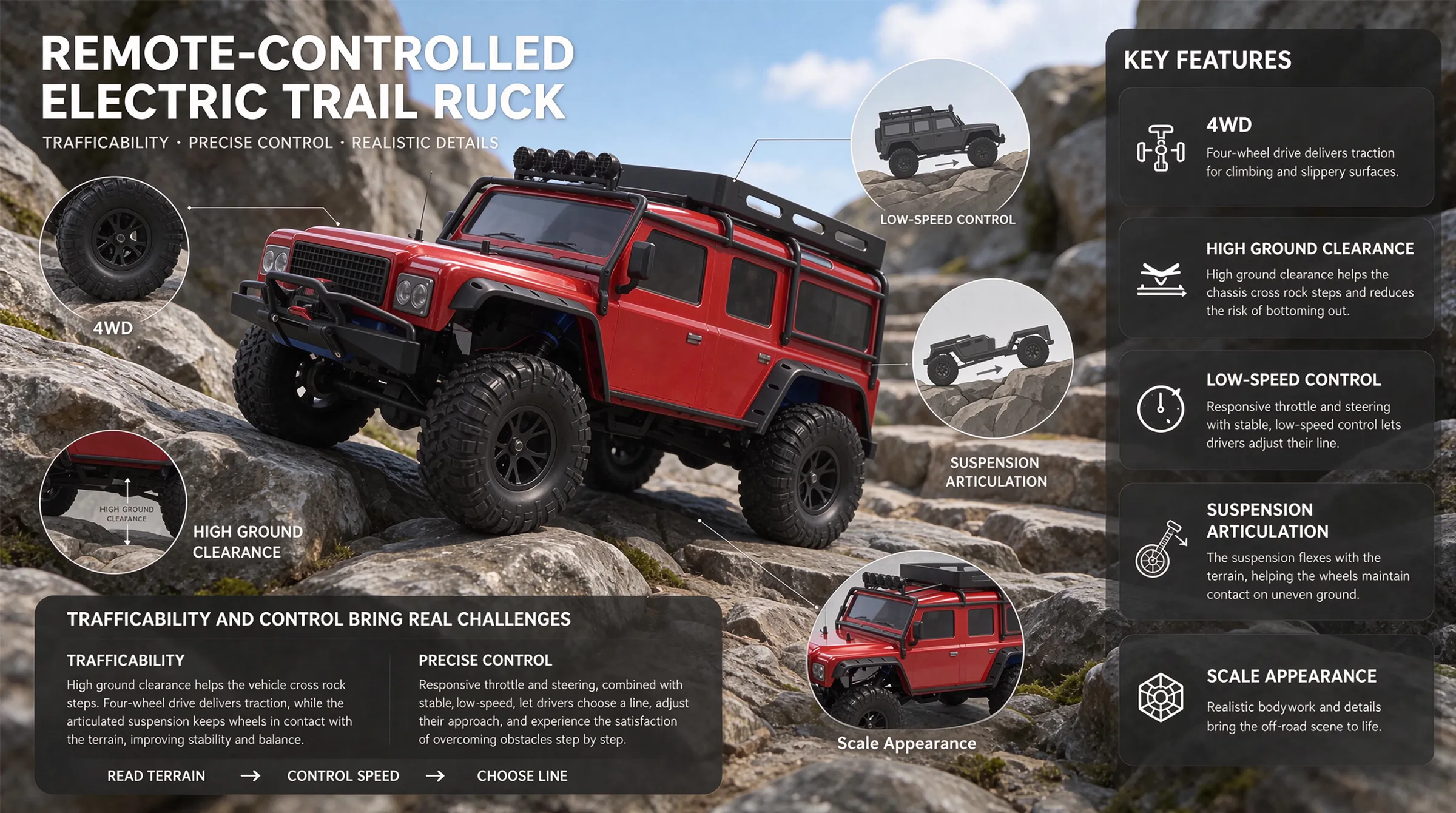
Electric RC crawlers are not speed-oriented models. They are chosen by hobbyists who want precise control, scale realism, and outdoor driving. Instead of racing around a circuit, drivers guide them slowly over rocks, roots, steep slopes, and handmade obstacles.
That style of driving suits both experienced hobbyists and beginners, though not always for the same reasons. A dedicated track is usually unnecessary. Many owners run crawlers in gardens, parks, or other outdoor spaces where local rules allow RC use.
Several features support the category’s appeal:
l Low-speed control: Drivers can make small throttle and steering adjustments when approaching obstacles.
l Off-road capability: Four-wheel drive, high ground clearance, and suitable tires help vehicles negotiate uneven terrain.
l Scale appearance: Detailed bodies and accessories make many crawlers resemble full-size off-road vehicles.
l Customization: Tires, suspension components, lighting, and body accessories provide opportunities for personal projects.
Many crawler owners buy upgrades after the initial purchase. For retailers, this can make compatible accessories a practical add-on sale, provided the parts are easy to identify and consistently available.
RC drift cars appeal to drivers who enjoy smooth controlling experience. Unlike off-road vehicles, these models are designed primarily for smooth surfaces like pavement or indoor tracks.
Drifting also has a strong visual element. Drivers can personalize the body shells, wheels, paint schemes, and even lighting.
The category benefits from several connected interests:
l Realistic replicas of popular sports cars and performance vehicles
l Technical driving skills that improve with practice
l Drift sessions and competitions that encourage community participation
l Photos and short videos that showcase driving technique and vehicle appearance
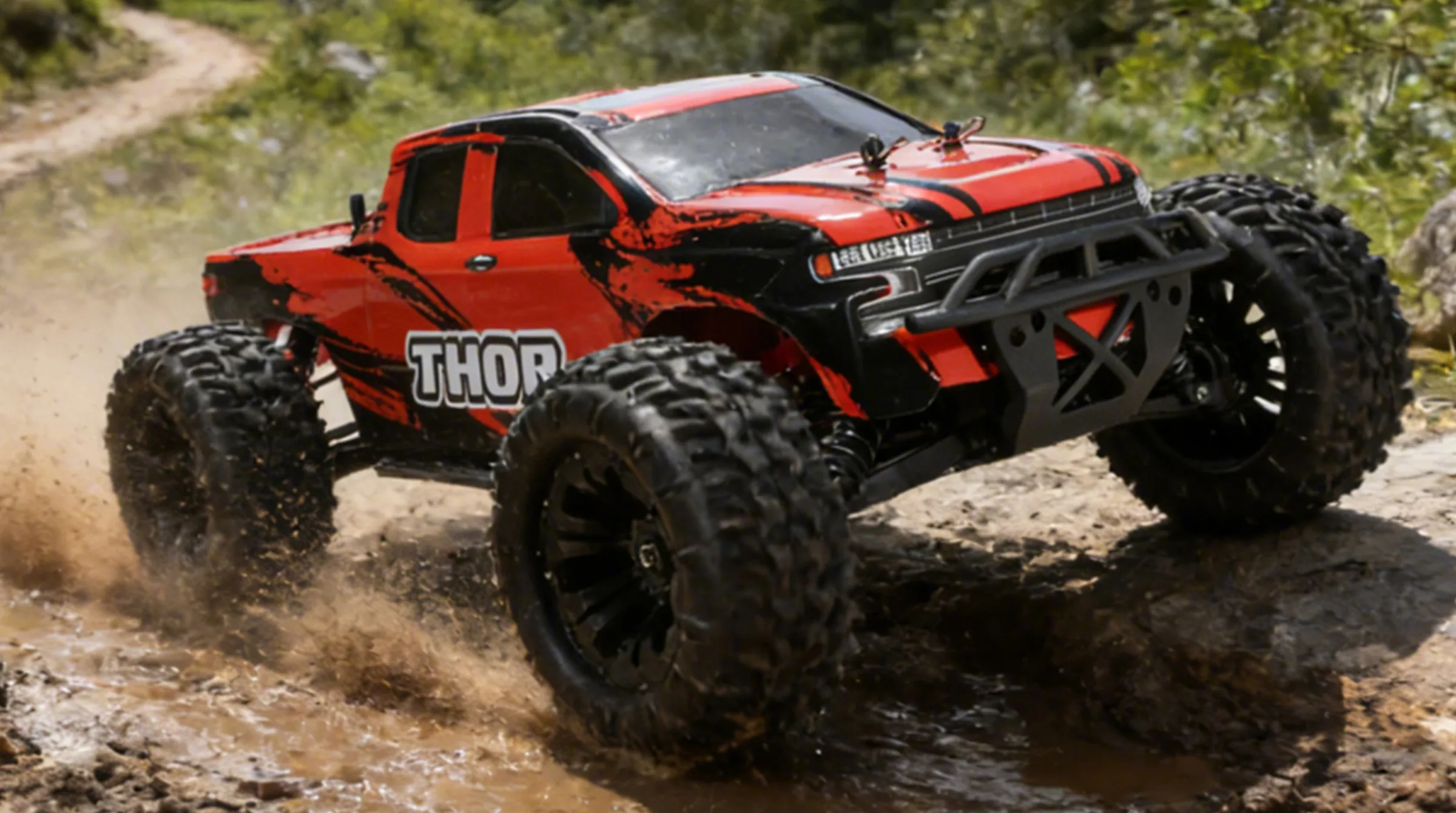
Monster trucks remain attractive because they provide an immediate, action-focused driving experience. Large tires, high ground clearance, and rugged styling make them suitable for backyard driving, dirt, grass, and other relatively rough surfaces. Compared with specialized racing vehicles, many monster trucks are easier for casual users to enjoy.
This broad appeal makes the category relevant to several customer groups:
l Beginners looking for an exciting first hobby-grade RC car
l Families purchasing gifts for suitable age groups
l Experienced hobbyists interested in bashing and performance upgrades
l Retailers seeking recognizable vehicle styles with broad appeal
Durability is particularly important in this category. Repeated impacts can place stress on the car bodies and small components. A vehicle that is easy to maintain and has accessible replacement parts can offer a better ownership experience.
Businesses should therefore assess more than tire size or advertised speed. Chassis construction, suspension design, electronic protection, and spare-parts availability all affect long-term value.
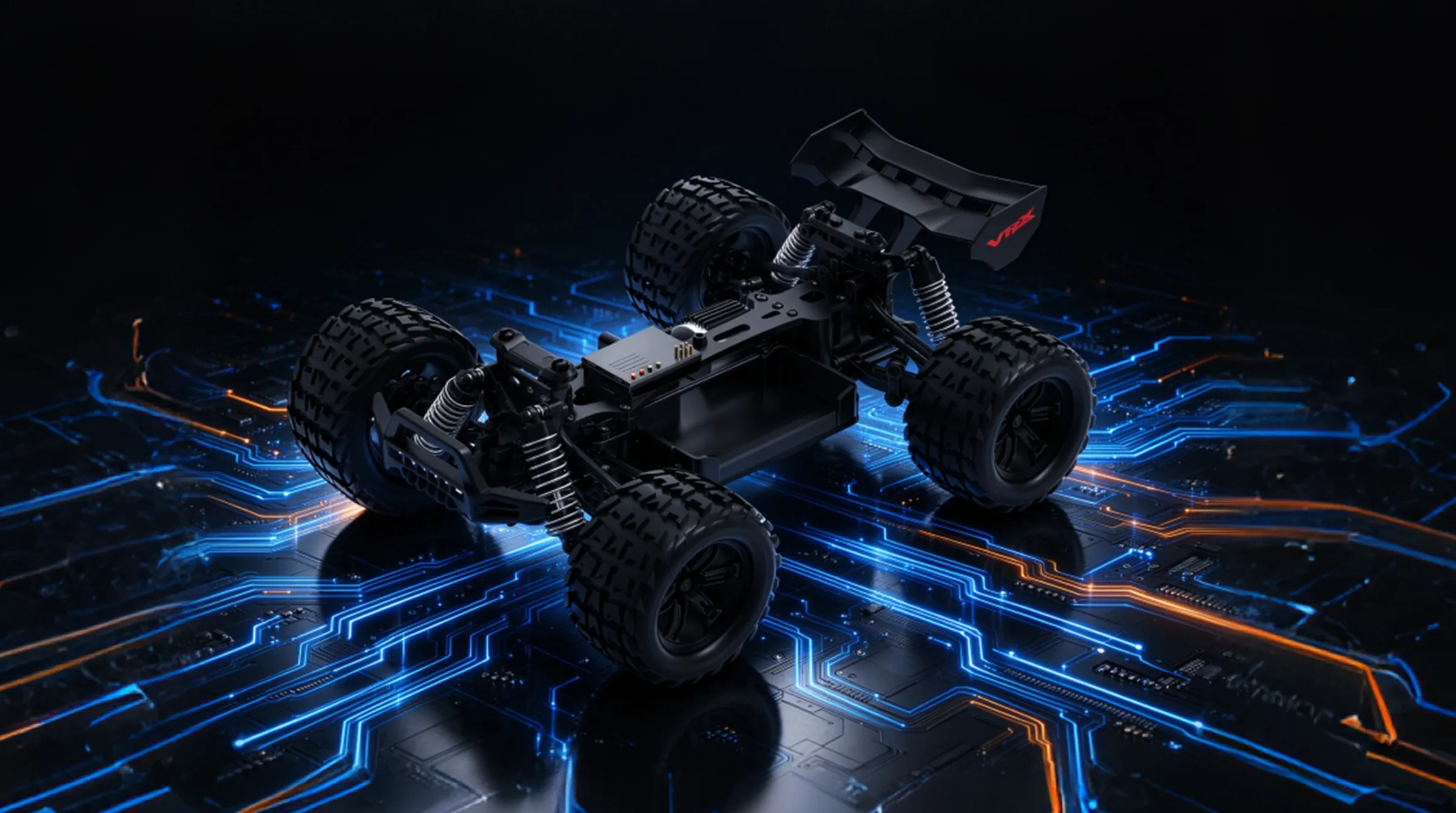
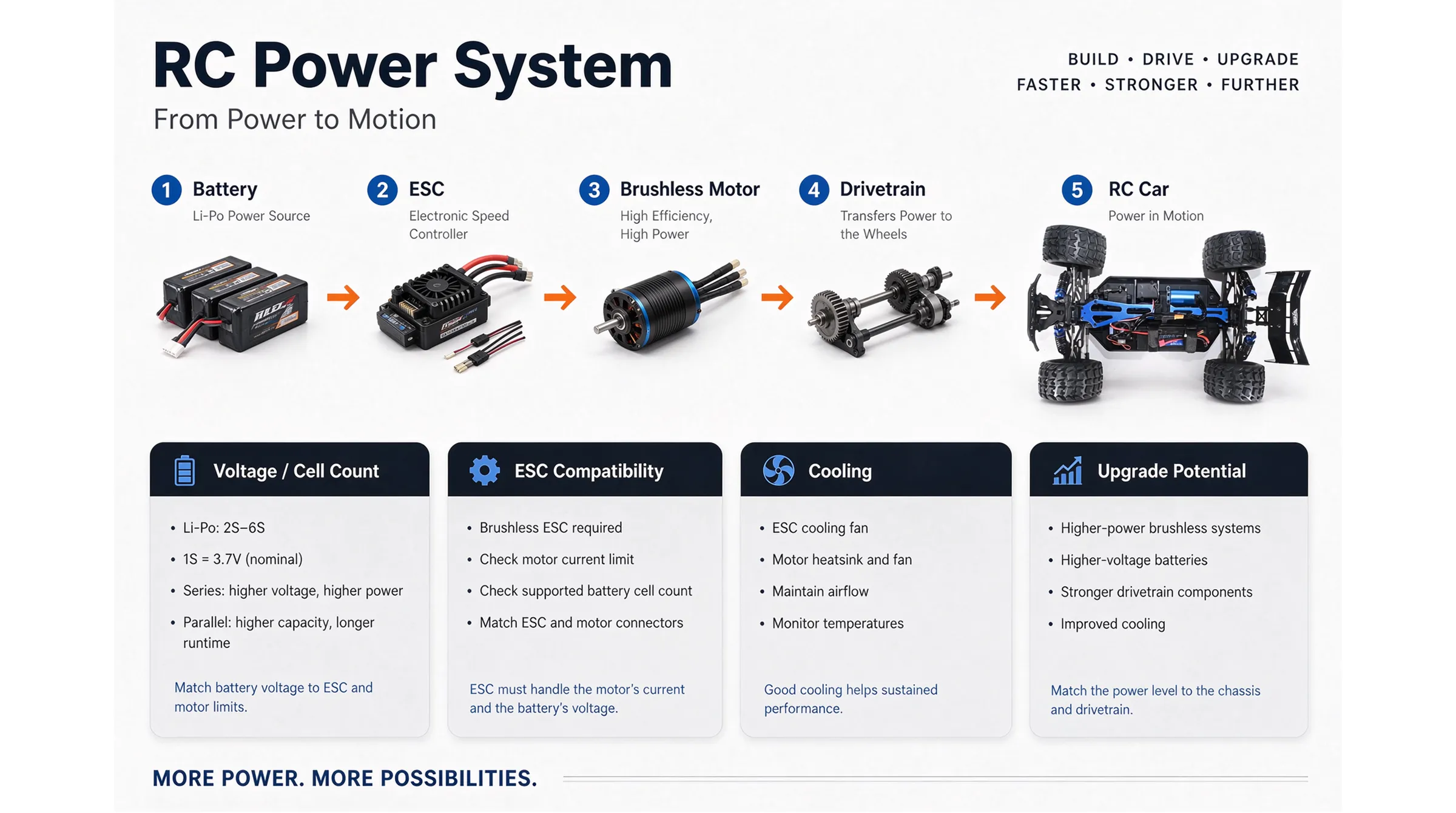
Brushless performance RC cars are chosen for acceleration, speed, and responsive handling. Compared with brushed systems, brushless electric power systems can provide stronger performance and reduce some routine motor maintenance.
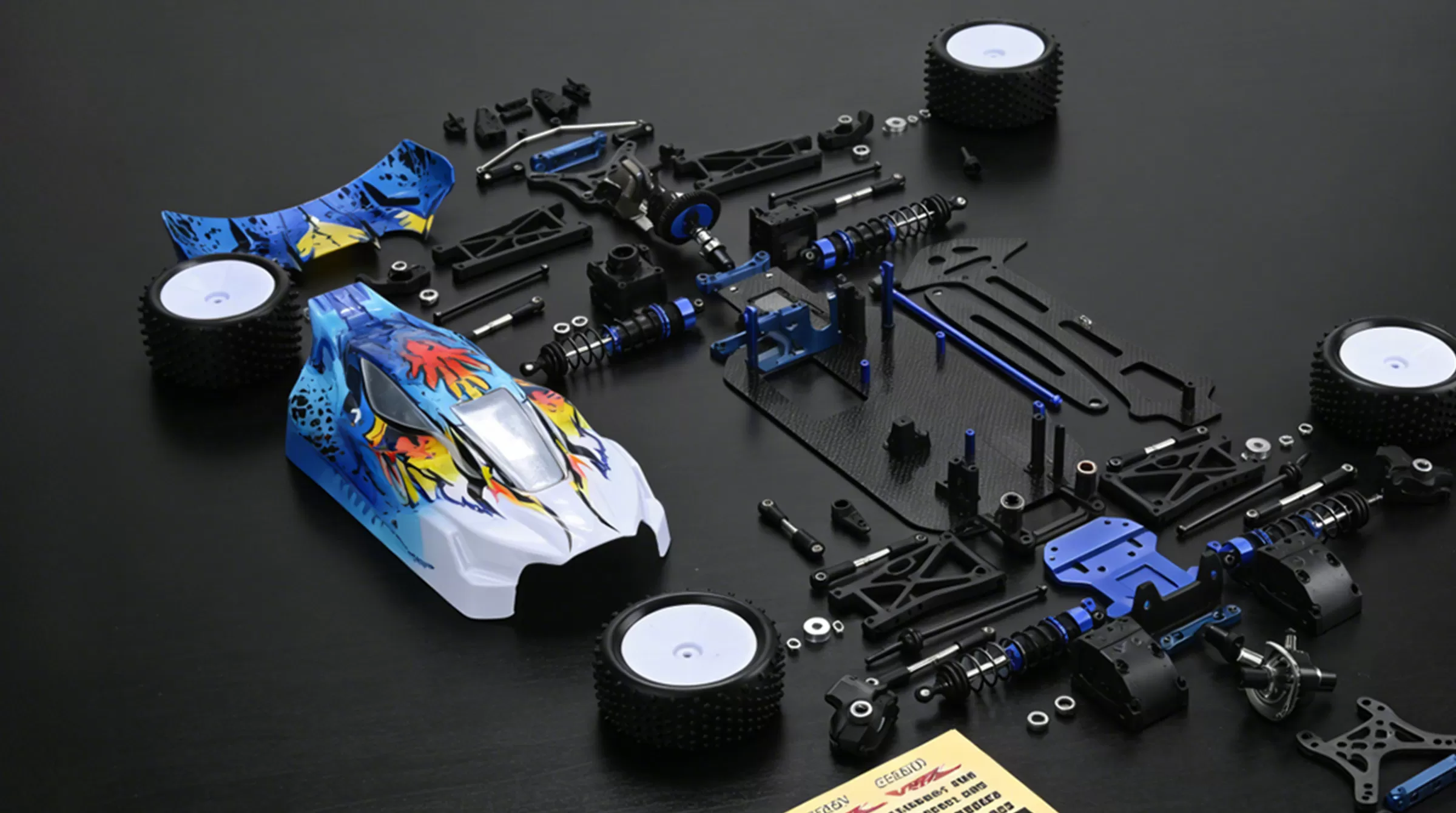
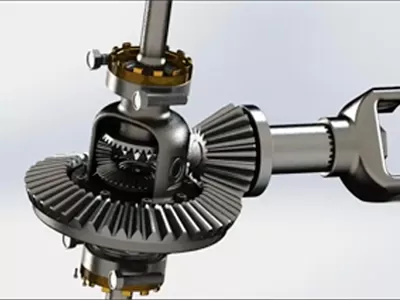
This group includes buggies, truggies, trucks, and on-road models. Their uses differ, but buyers usually compare motor systems, battery compatibility, electronic speed controllers, drivetrain strength, and cooling.
Performance models appeal to experienced users, but they can also attract newcomers when supplied in ready-to-run configurations. Clear product specifications and sensible upgrade guidance help customers make informed decisions.
For distributors, brushless models can support repeat sales of batteries, chargers, tires, gears, suspension parts, and replacement electronics. Higher performance also makes maintenance and component compatibility more important.
Mini RC cars suit drivers who do not have access to a large outdoor space. They are easier to store, carry, and transport than larger models, so they work well for casual driving and for indoor use when the space is suitable.
The smaller size also makes the hobby easier to try. Some customers prefer to buy a mini model first and move to a larger, more powerful car later.
Feature | Potential customer benefit |
Compact dimensions | Easier storage and transport |
Lower space requirements | More flexible driving locations |
Accessible entry points | Suitable for first-time hobbyists |
Multiple body styles | Wider choice of appearance and use |
Simple collection building | Encourages interest in different models |
The 1/18 RC cars segment illustrates how smaller vehicles can balance portability with hobby-grade features.
For retailers, mini models can complement larger products rather than replace them. They can serve as entry-level options, gifts, or additional purchases for existing enthusiasts.
These three types serve customers who want more than one type of driving experience.
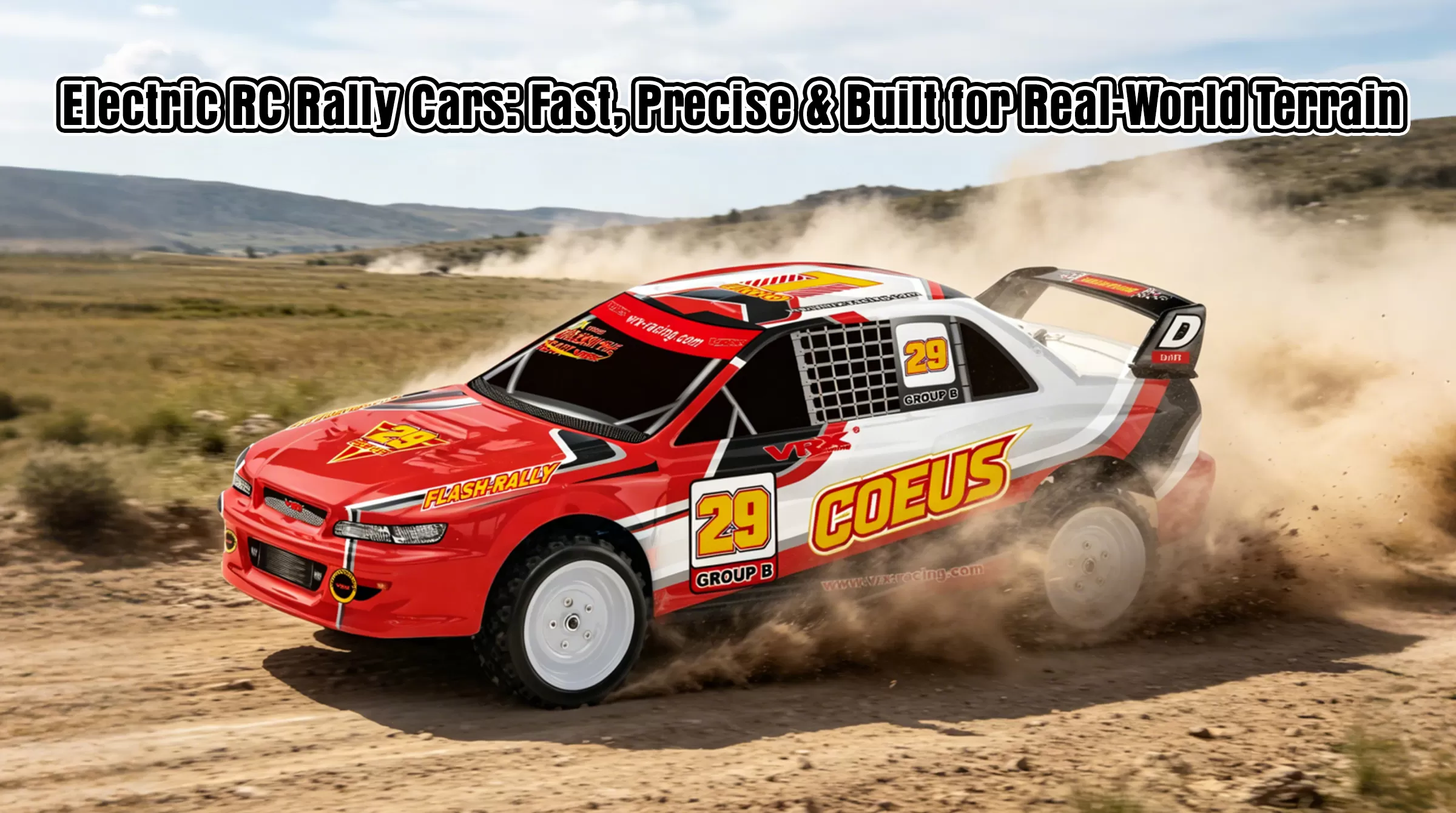
Rally models combine road-oriented styling with the ability to handle suitable mixed surfaces. Buggies generally emphasize agility and handling, while truggies combine buggy-like performance with a wider stance and larger tires. These differences make each category attractive to a different driving preference.
l Rally cars: Suitable for customers who like realistic styling and driving on appropriate paved or mixed surfaces.
l Buggies: Appeal to drivers who enjoy responsive handling, dirt tracks, and jumps.
l Truggies: Offer a balance of speed, stability, and off-road capability.
Versatility can be commercially valuable, but it should not be confused with being suitable for every terrain. Low buggies are not suitable to be driven in long grass, and a rally car is not designed for severe rock crawling. Product descriptions should explain these limitations clearly.
For distributors, offering several related categories can help cover a wider range of customer needs without relying on a single vehicle type. It also allows customers to move from a basic model to a more specialized platform as their interests develop.
Local driving environments, price expectations, retailer expertise, and customer demographics all influence demand.
The following comparison provides a practical starting point for evaluating a product range.
Category | Main appeal | Important buying factors |
Electric crawlers | Technical driving and realism | Traction, ground clearance, control |
Drift cars | Precision, styling, customization | Steering, tires, surface compatibility |
Monster trucks | Bashing, obstacles, durability | Suspension, chassis strength, parts |
Brushless models | Speed and upgrade potential | Motor, ESC, battery, drivetrain |
Mini RC cars | Portability and accessible entry | Size, runtime, intended surface |
Rally cars, buggies, truggies | Versatile driving styles | Handling, terrain, suspension |
It is also important to assess the full product lifecycle. A category may attract initial purchases but create customer dissatisfaction if replacement parts are difficult to obtain. Reliable supply, clear specifications, and after-sales support can be just as important as the initial product appeal.
For hobby shops, distributors, and online sellers, depending on one trend is risky. A mix of accessible models and more specialized vehicles usually covers customers at different experience levels.
Before expanding a product range, check these points:
l Identify the main customer group. Beginners may prioritize ease of use, while experienced drivers often look for handling, power, tuning, and upgrade options.
l Match vehicles to local driving conditions. Outdoor markets may support more off-road models, while customers with access to smooth indoor facilities may show stronger interest in drift cars.
l Compare complete ownership costs. Include batteries, chargers, spare parts, and routine maintenance when evaluating the price of a vehicle.
l Check supply and support. Consistent availability and compatible replacement parts help reduce customer service problems.
l Test demand before scaling inventory. Small initial orders, customer feedback, and sales performance can help identify which categories deserve more investment.
There is no universal ranking that fits every market. The right assortment depends on the target customer base. When evaluating suppliers such as VRX Racing, compare product variety, technical specifications, parts support, quality consistency, and whether they can maintain supply as demand changes.