Aerodynamics plays an important role in RC racing, especially when a vehicle reaches high speed. Airflow around the body, chassis, wheels, and rear wing can affect acceleration, straight-line speed, cornering stability, and how consistently a car responds to steering. The best aerodynamic setup is not always the one that produces the most downforce. It is the one that balances grip, drag, cooling, and the demands of the track. Understanding these forces helps racers make focused changes.
Two forces matter most: drag and lift. Drag resists forward motion, while lift acts perpendicular to the airflow. Lift can push an RC car upward or contribute to downforce that presses the tires toward the track, which is affected by the body shape and wing design.
Drag becomes more noticeable as speed increases. NASA explains that aerodynamic drag depends on factors including air density, vehicle speed, frontal area, body shape, and the angle at which air meets the surface. Its guide to the drag equation is a useful reference for understanding why small design changes can matter more at higher speeds.
Aerodynamics does not replace mechanical grip.What the airflow changes is how consistently the car uses its grip.
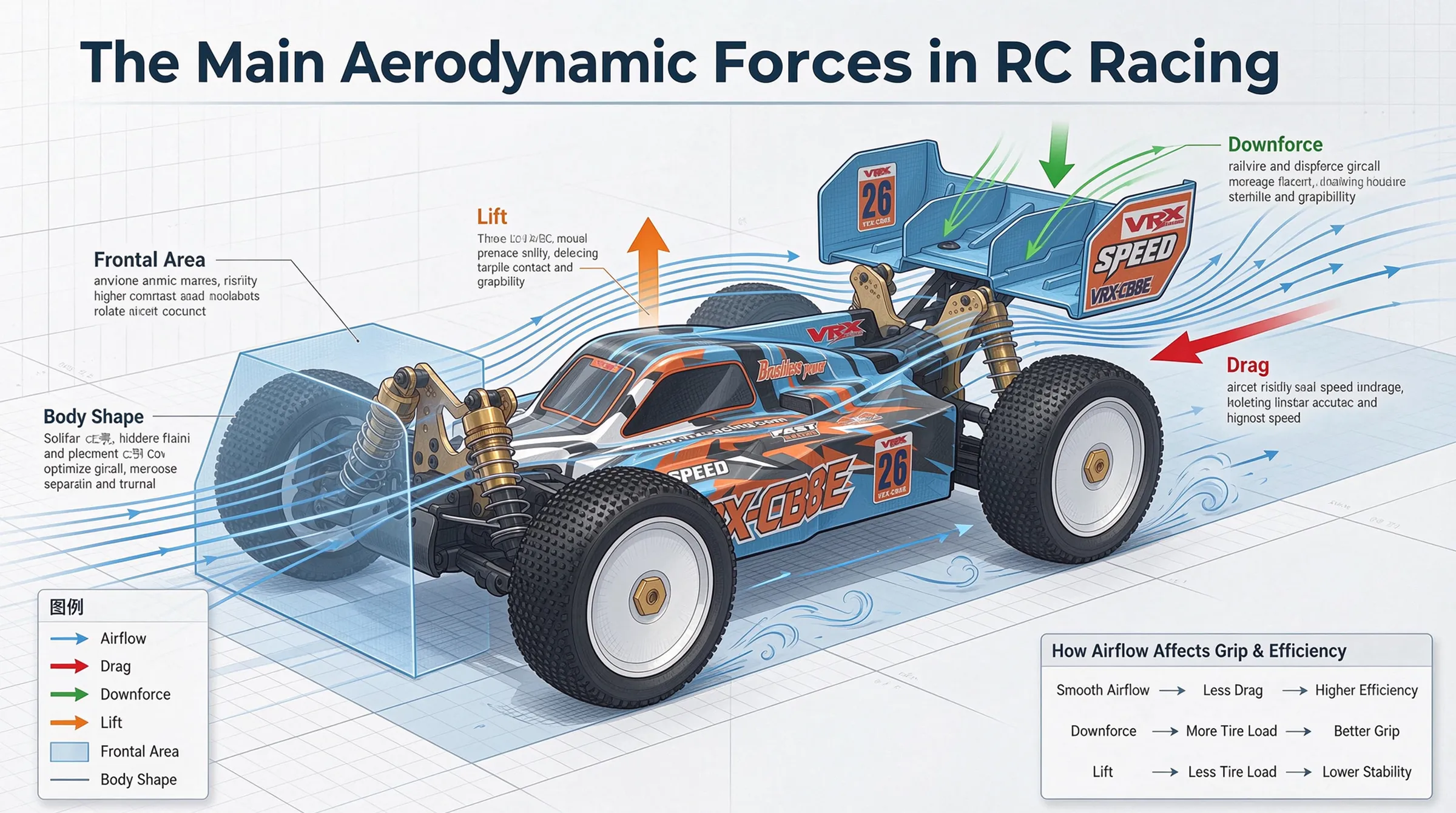
A body that pushes air aside inefficiently creates more resistance. The motor must work harder to overcome that resistance, which can reduce top speed and increase electrical or engine load. And the drag affects how quickly a car reaches its maximum speed as well.
Start by reducing unnecessary airflow obstruction. Mount the body correctly, straighten bent panels, and remove protruding accessories that serve no useful purpose. Large openings, exposed components, and a crooked shell can disturb airflow.
The lowest-drag setup is not always fastest on a circuit. A car may gain speed on a straight but lose more time through corners. So tune the car for consistent lap times.
Airflow around the wheels and chassis underside also matters. Rotating tires disturb the air, while exposed arms, suspension links, and wiring create additional turbulence. Keep cables secured and parts positioned as intended by the manufacturer.
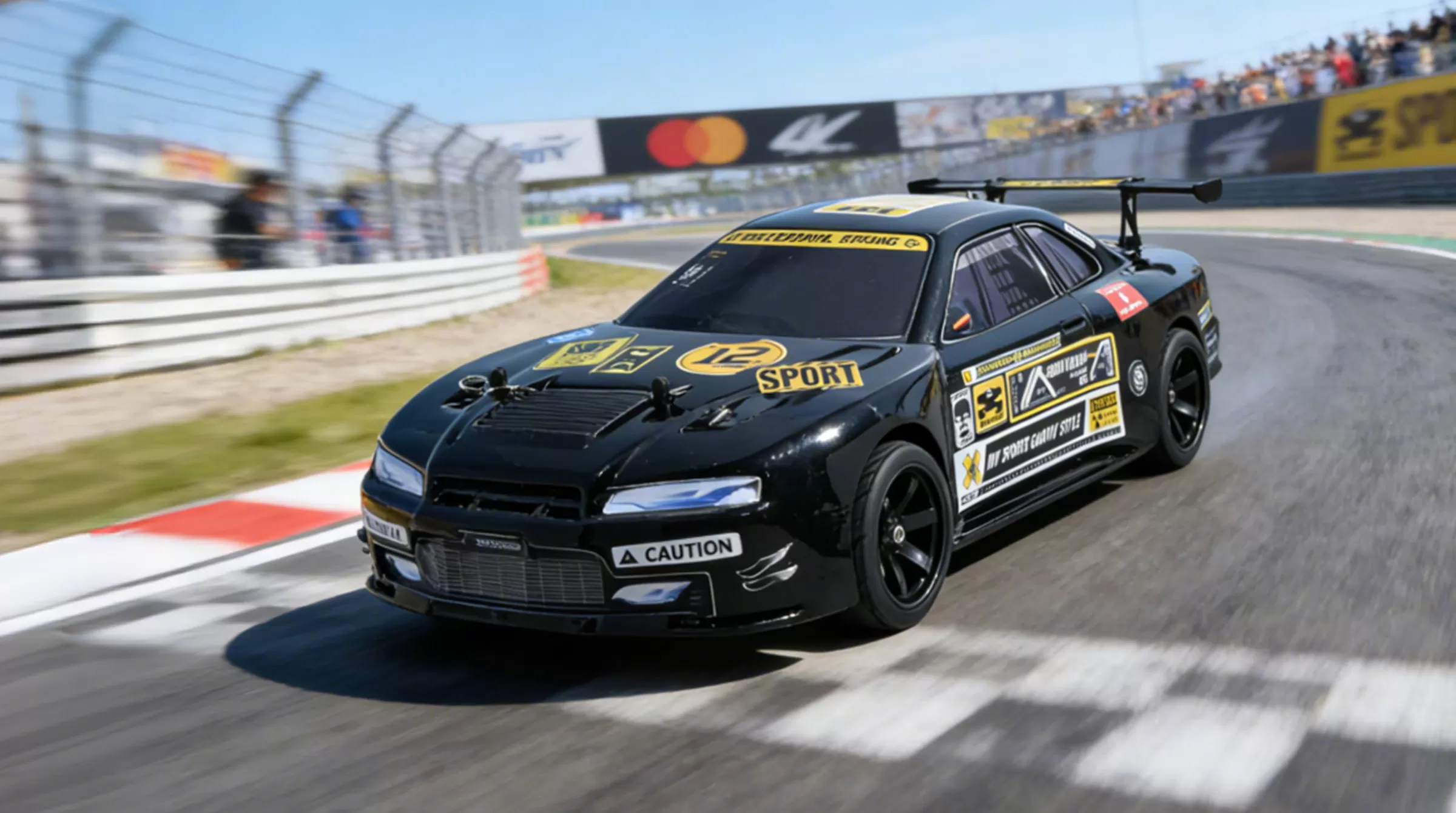
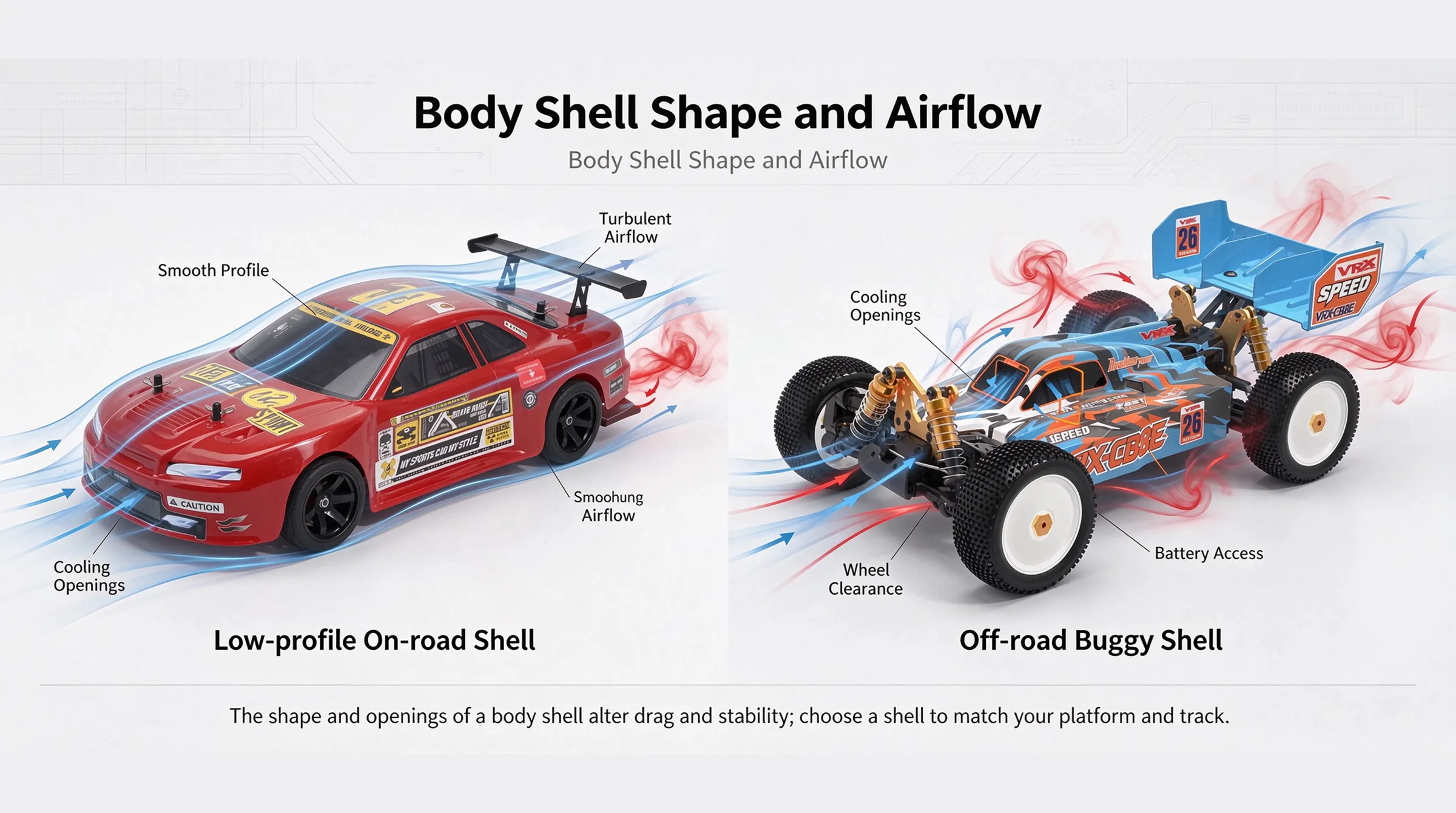
The body shell guides air around the chassis and influences both drag and stability. A smooth profile can help air flow over the vehicle, while abrupt changes in shape may create turbulent airflow and additional resistance. And at an RC scale, openings for the driver figure, battery access, or cooling also affect how air enters and exits the shell.
Consider these points when evaluating a body:
Overall profile: Choose a shell suited to the platform and track, not just its appearance.
Wheel clearance: Tires must turn and compress without touching the body.
Balance and condition: Changes at one end can affect stability; repair cracks and loose edges that let the shell vibrate.
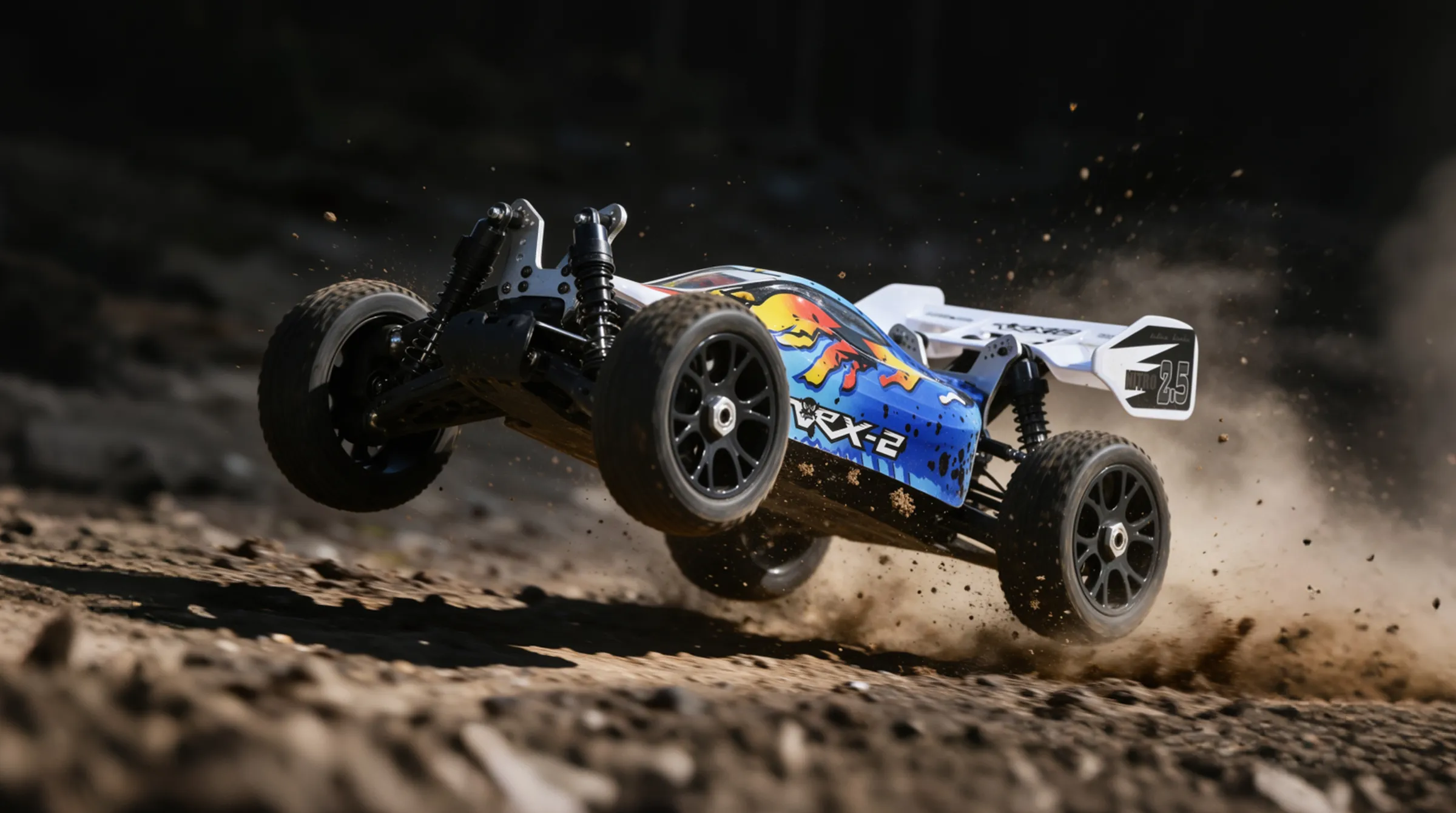
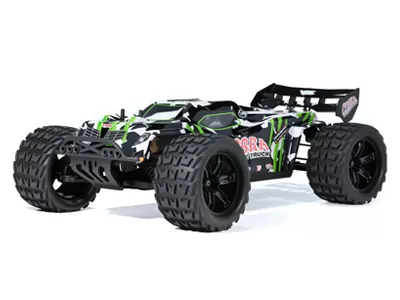
An electric RC buggy designed for off-road use has different aerodynamic priorities from a low body. Buggies need clearance for suspension movement and must cope with jumps, uneven surfaces, and airflow disturbed by exposed wheels.
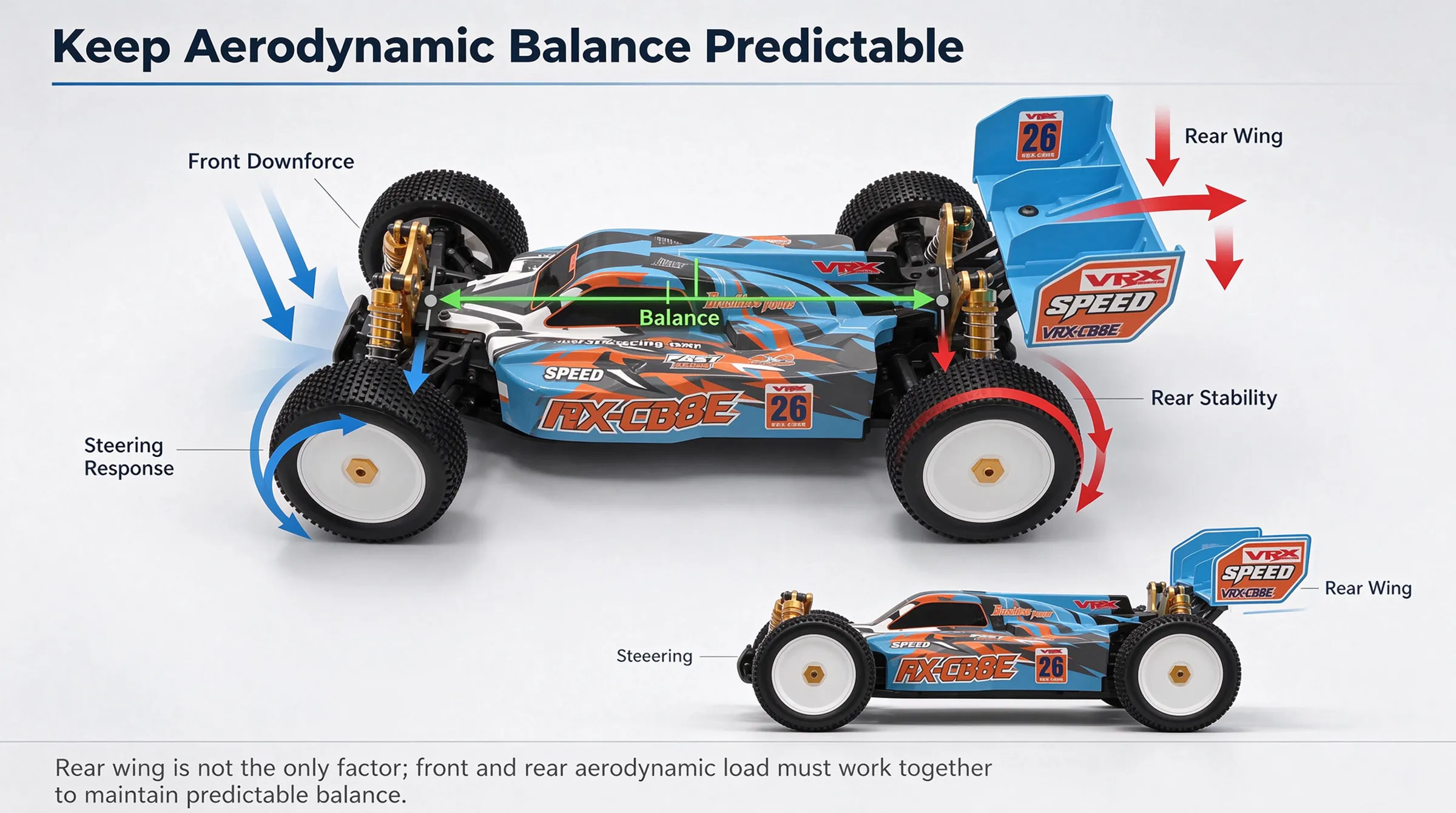
Airflow can create upward lift or downward loading, depending on body shape and the parts exposed to the air. The goal is predictable balance: the front should respond to steering while the rear remains stable under acceleration. If one end gains much more aerodynamic loading than the other, the car may get difficult to turn or abnormal at high speed.
The rear wing contributes to this balance, but it is not the only influence. The body shape, front-end airflow, and exposed wheels also matter. Additional downforce generally brings extra drag, so the best setup depends on the layout and the car’s mechanical grip. Make one change at a time and evaluate the whole vehicle.
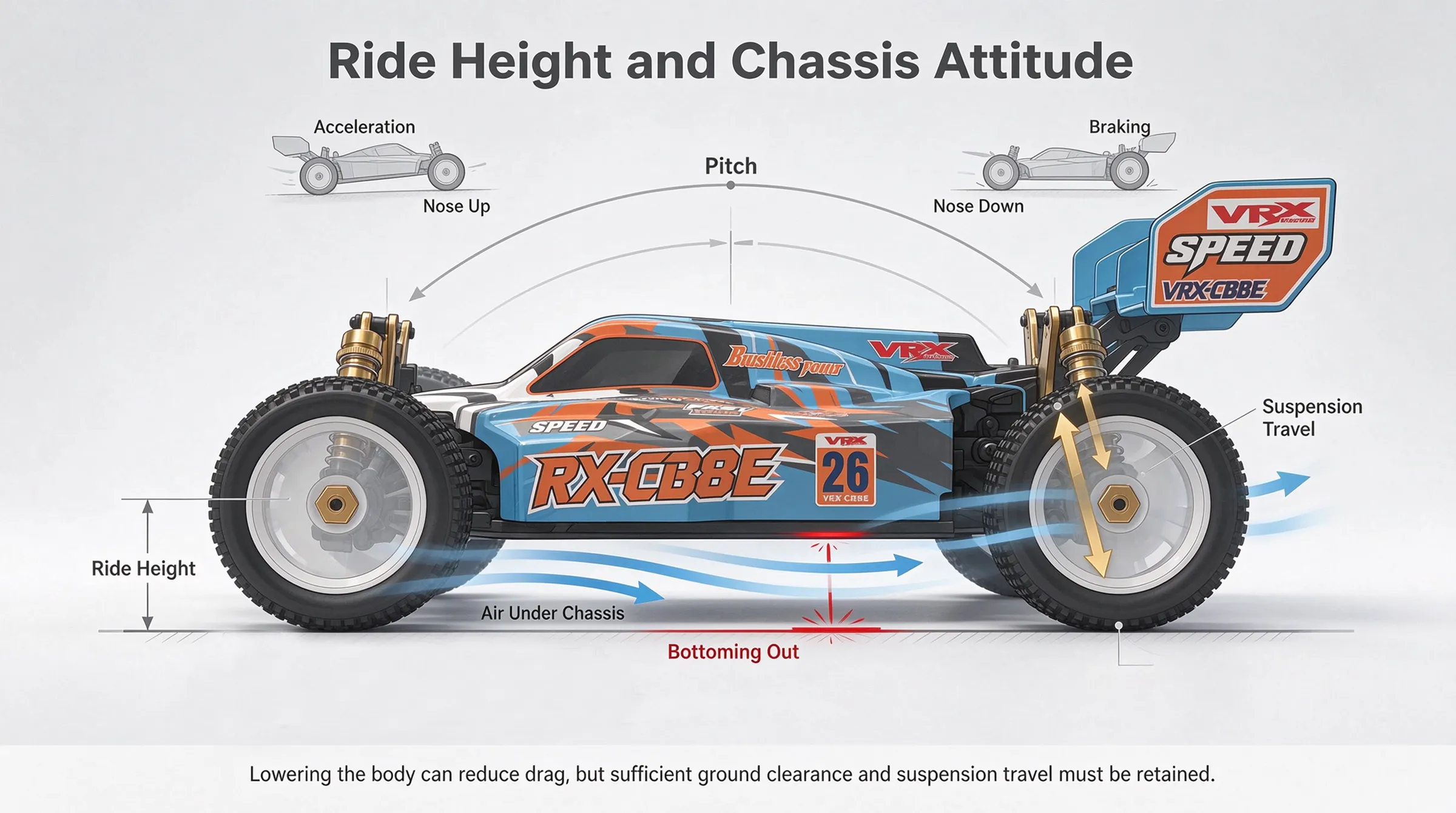
Ride height influences the air passing beneath and around an RC car. A lower stance may reduce the amount of air entering under the chassis, but the vehicle still needs enough ground clearance for bumps, curbs, and suspension travel. If the chassis bottoms out, handling and traction can deteriorate regardless of aerodynamic gains.
Pitch also changes airflow. Acceleration may lift the front, while braking compresses the front suspension. Keep suspension settings consistent during aerodynamic tests so mechanical changes are not mistaken for airflow improvements.
Before testing, set ride height for the surface, check that both sides are even, and make sure the shell clears the tires. Inspect the chassis after impacts because bent parts can alter the stance.
Do not lower the chassis simply to make the body look more streamlined. The most useful ride height is the lowest setting that still allows the suspension to work reliably on the target surface.
Aerodynamic efficiency must not come at the cost of cooling, for the electric components and the nitro engines both need suitable operating temperatures
A tightly enclosed shell may reduce some airflow but trap heat around electronics. Conversely, large, poorly placed openings can increase drag or let dirt and debris reach components.
Follow the manufacturer’s cooling recommendations and modify openings only when needed. A vent should provide a useful path for air to enter and leave, not just a hole where heat collects. Keep cuts smooth and away from stressed mounting areas.
A brushless electric RC car can deliver strong power, which requires more frequently checking of the temperatures during high-speed runs. Heat can also come from incorrect gearing, drivetrain friction, tires, or aggressive throttle use.
Smooth surfaces allow a lower stance and more precise tuning; rough tracks need clearance and suspension travel. A road-racing shell may not suit an off-road layout.
Racing condition | Aerodynamic priority | Practical approach |
Long straights | Limit unnecessary drag | Secure the shell and remove protruding, nonessential accessories. |
Fast, sweeping turns | Stable tire loading | Seek a balanced front-to-rear response rather than maximum downforce alone. |
Tight technical corners | Predictable rotation | Avoid a setup that adds rear grip but makes the front end reluctant to turn. |
Rough dirt or jumps | Body clearance and control | Prioritize shell fit, suspension travel, and stability over an extremely low stance. |
Long high-power runs | Cooling airflow | Preserve effective cooling paths and monitor component temperatures. |
Start with the same tires, gearing, battery condition, ride height, shock settings, and body. Record lap times, speed, handling, and temperatures.
Use this simple process:
1. Inspect the car. Repair loose mounts, damaged bodywork, and bent suspension parts before testing.
2. Choose one change. Adjust the body opening, ride height, or aerodynamic component—not all three together.
3. Run repeatable laps. Use the same track section, battery state as far as practical, and driving approach.
4. Compare more than peak speed. Note corner entry, mid-corner balance, straight-line stability, and lap-to-lap consistency.
5. Keep or reverse the change. If the result is unclear, return to the baseline and repeat the test.
Some factos like wind, temperature, tire wear, and battery voltage affect results. Run several laps and compare averages. Another driver can help separate vehicle behavior from driving style.
Avoid these common errors when improving RC racing performance:
Choosing appearance over fit: A visually appealing body can be ineffective if it rubs the tires or sits unevenly.
Adding downforce without checking balance: More grip at one end can make the car harder to steer at the other.
Blocking cooling: Sealing every opening may raise component temperatures during long runs.
Changing too many settings at once: Multiple simultaneous changes make it difficult to identify what helped.
Ignoring mechanical problems: Loose wheel nuts, worn bearings, poor alignment, and incorrect suspension settings can mimic aerodynamic instability.
Judging only by top speed: Lower drag is useful, but predictable cornering and consistent lap times usually matter more in a race.
Aerodynamics works best as part of a complete RC setup. A well-fitted body, balanced loading, correct ride height, and adequate cooling help the car perform consistently. Explore vehicle platforms at VRX Racing and test changes on track before keeping them.