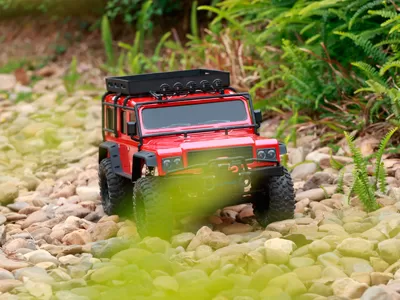
An RC truck is not simply an RC car with a larger body and bigger tires. Its driving 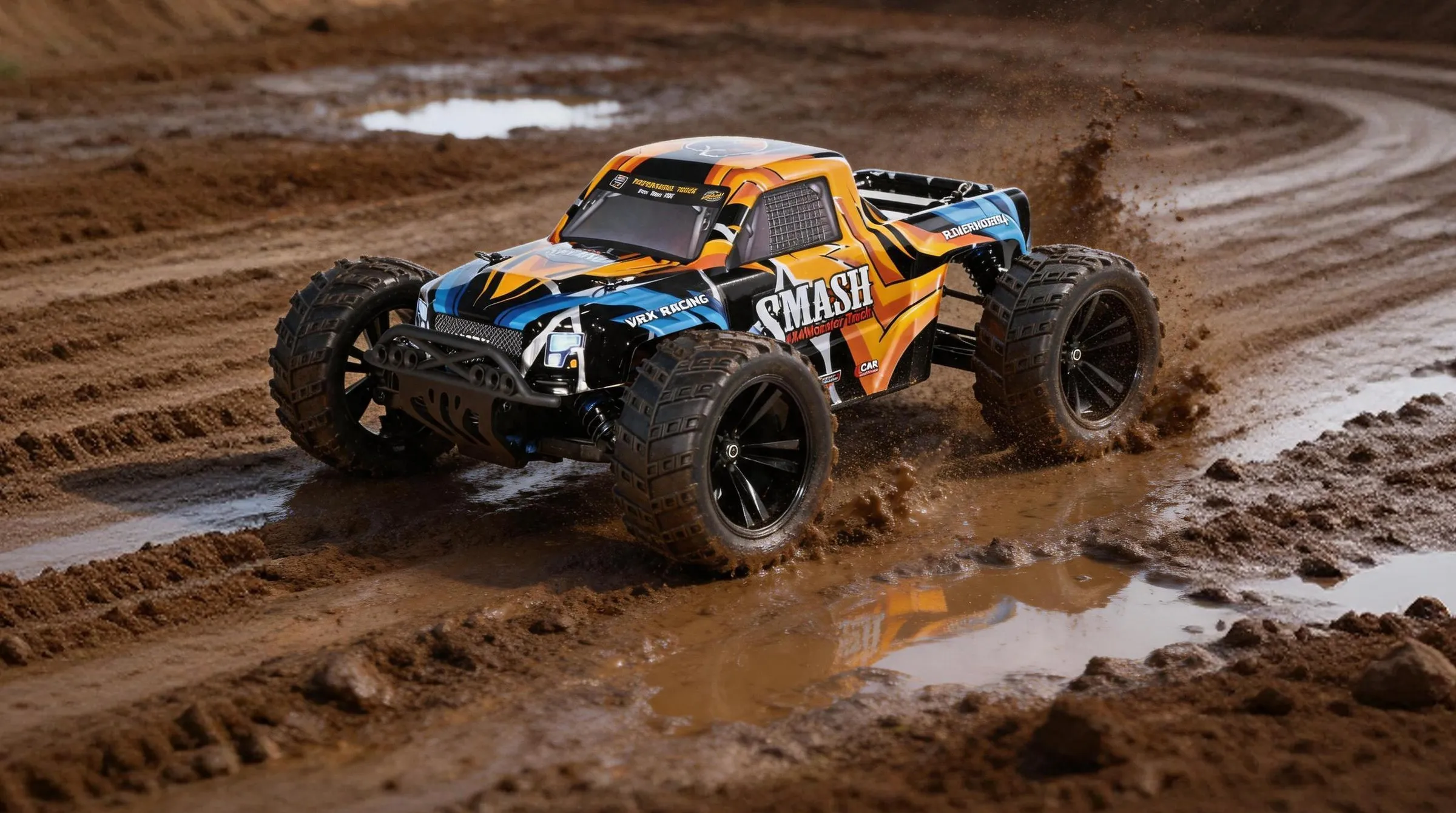 comes from how the chassis, drivetrain, suspension, tires, power system, and body are designed to work together. That is why a 1/8 nitro truck, a 1/10 brushless RC truck, an electric monster truck, and an SCT RC truck can all deliver very different experiences even when they share four-wheel drive.
For manufacturers and enthusiasts, understanding these differences is useful when choosing a platform for racing, recreational driving, commercial tracks, or demanding off-road use. VRX Racing's range of truck platforms provides a useful example of how these design decisions influence handling and performance.
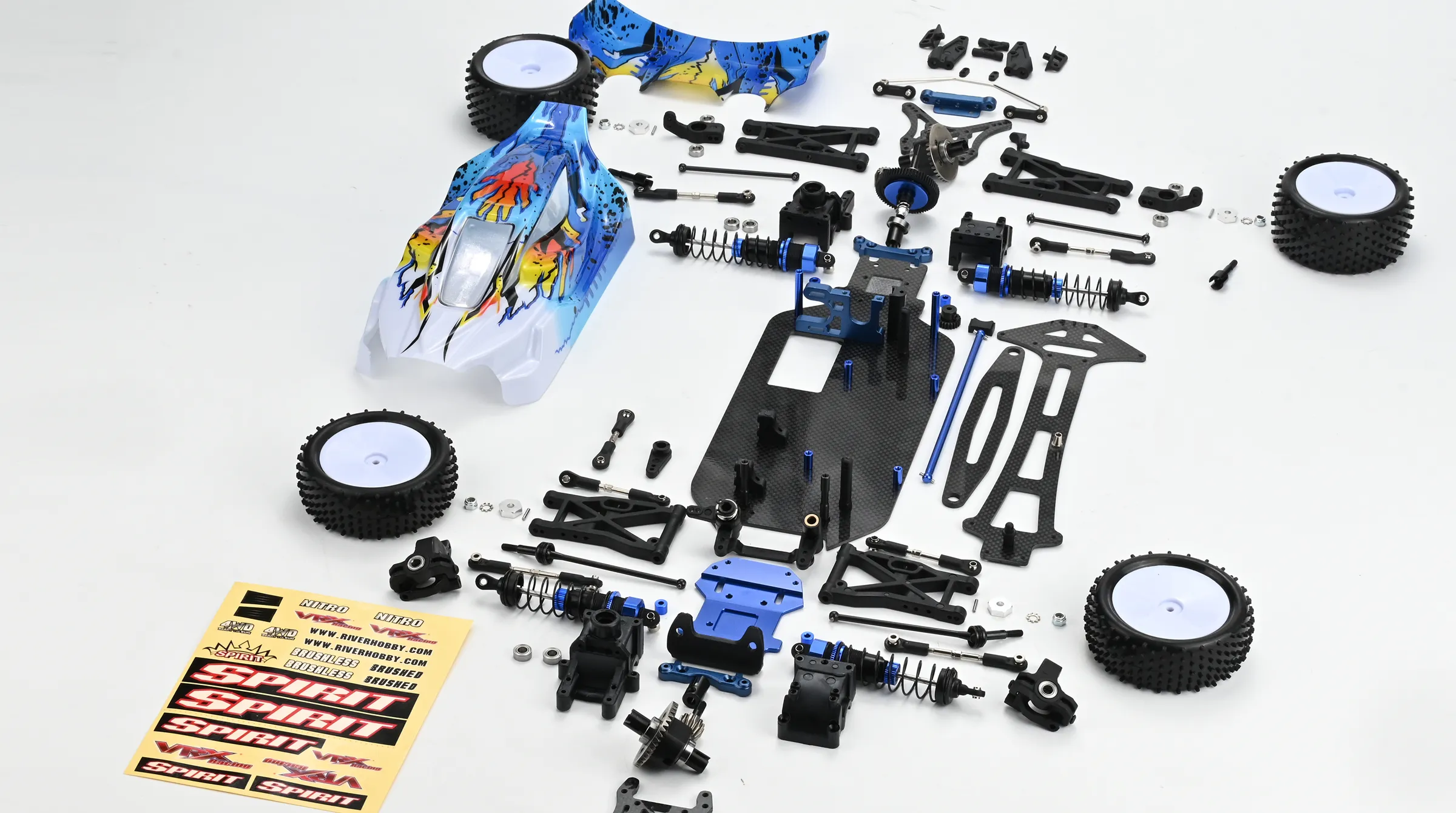
The chassis is the structural foundation of an RC truck. It determines how the suspension, drivetrain, motor or engine, battery, and steering system are positioned and how forces are distributed through the vehicle.
A larger 1/8 scale nitro RC truck, such as the VRX-1 RH801, uses a substantial chassis designed around an SH28 engine, 4WD drivetrain, metal drive components, and adjustable suspension. Its dimensions reach approximately 550 mm in length and 440 mm in width, giving the platform a large physical presence and considerable space for mechanical components.
By comparison, a 1/10 brushless RC truck can use a more compact chassis while still delivering substantial performance. VRX Racing's 1/10 electric range includes models with 3650 brushless motors, 45A ESCs, 4WD drivetrains, and independent oil-filled suspension.
The difference is not simply size. Chassis dimensions affect weight distribution, turning response, suspension geometry, and how the truck behaves when accelerating or landing.
Large tires are one of the defining characteristics of an RC truck, but their function goes beyond creating a more aggressive appearance.
A larger tire can roll over obstacles more easily because its diameter changes the approach angle between the vehicle and the terrain. It can also provide additional ground clearance and a larger contact patch, depending on the tire design and surface.
This becomes particularly important for an electric RC monster truck. Monster trucks are designed around oversized high-grip tires, elevated ground clearance, reinforced structures, and independent suspension. VRX Racing's electric monster truck range combines these features with 4WD drivetrains and either brushed or brushless power systems.
The result is a platform that feels different from a low-slung buggy. Instead of prioritizing minimal body movement and precise cornering, the monster truck is designed to handle obstacles, uneven surfaces, jumps, and aggressive driving inputs.
Two trucks can use similar motors and tires but feel completely different because of suspension design.
Oil-filled shocks control how quickly the suspension compresses and rebounds. Spring rates, shock positions, suspension-arm geometry, ride height, and damping settings then determine how the truck responds to acceleration, braking, corners, and landings.
A 1/8 brushless RC truck or larger off-road platform generally has more physical space for substantial suspension components. A larger chassis can also accommodate longer suspension travel and larger tires.
Meanwhile, a 1/10 platform can use compact geometry to achieve a more responsive driving character. VRX Racing's 1/10 electric trucks use independent suspension and adjustable oil-filled shocks, combining compact dimensions with off-road capability.
This is why suspension should be considered part of a truck's identity rather than simply a durability component.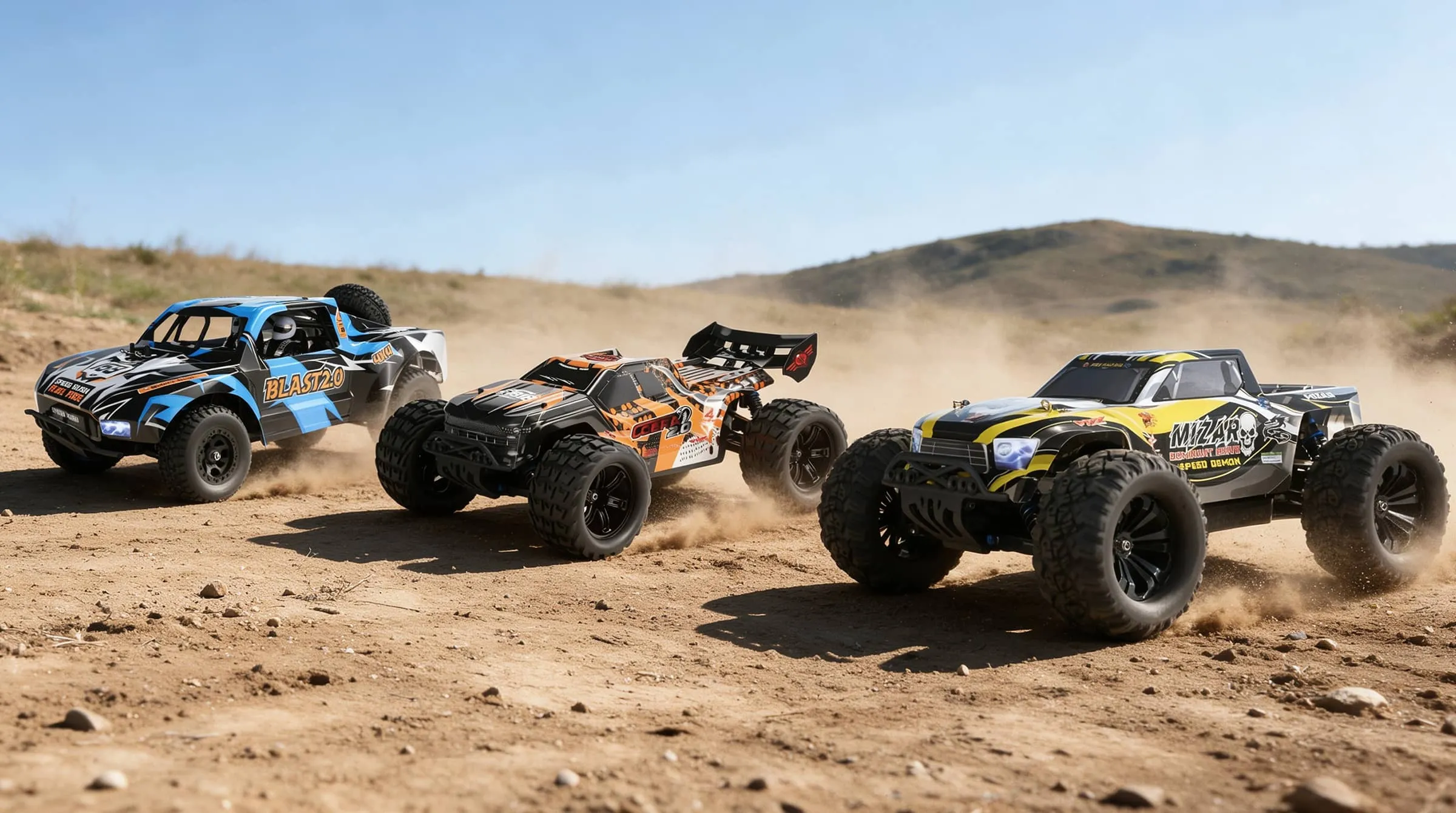
The power system determines how the truck produces acceleration, but the way that power reaches the wheels is equally important.
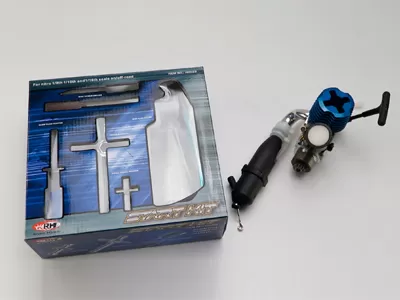
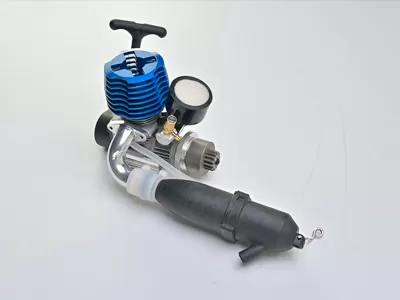
A 1/8 nitro RC truck uses an internal combustion engine and mechanical drivetrain. The VRX-1 RH801, for example, uses an SH28 engine and 4WD system, with adjustable suspension and metal drivetrain components designed for off-road operation.
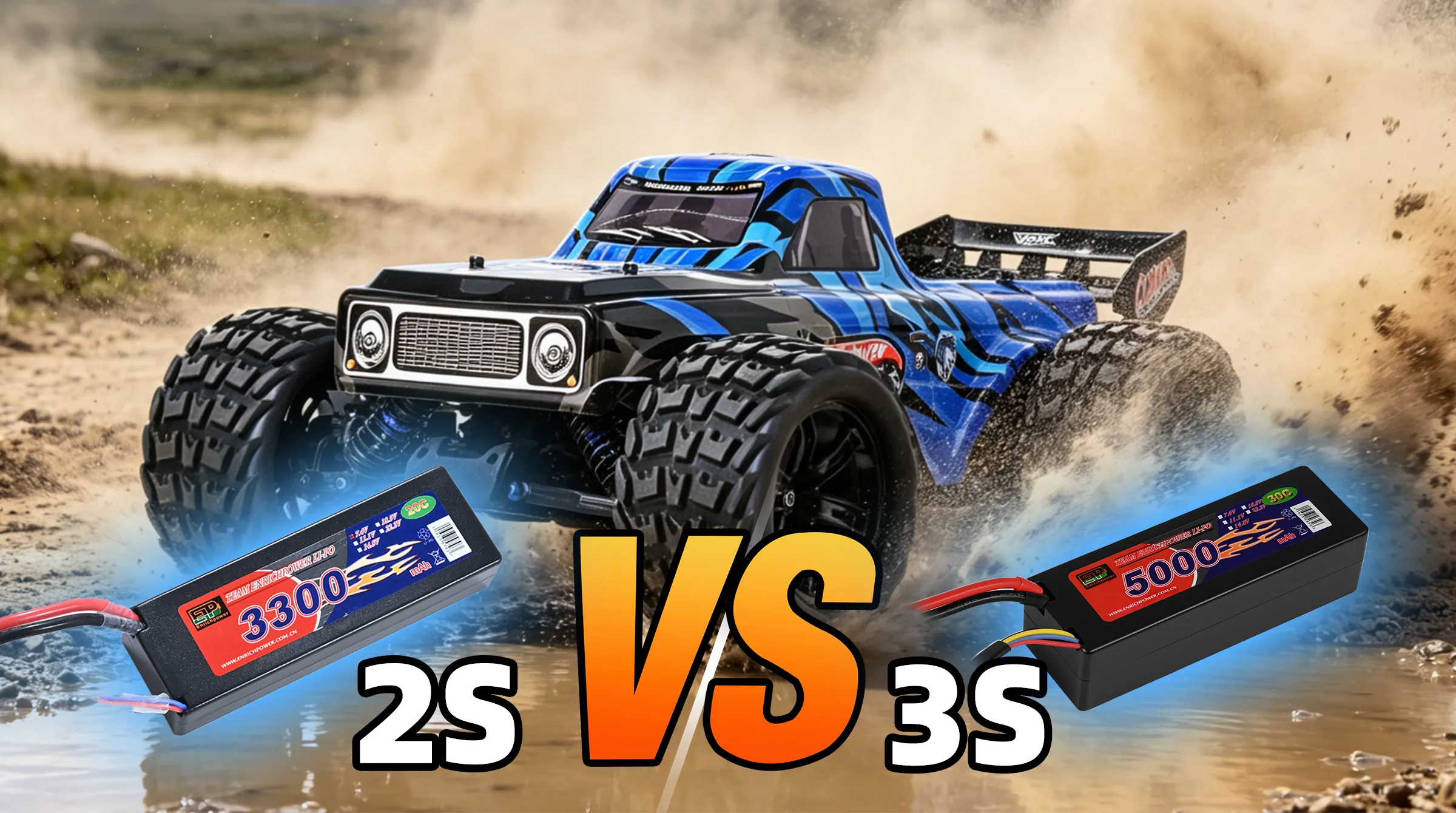
An electric truck has a different response. A brushless motor can deliver rapid torque through an ESC, while battery voltage, motor KV, gearing, and drivetrain configuration determine how that energy is converted into wheel speed and acceleration.
VRX Racing's brushless electric platforms use supporting components such as steel gears, hardened driveshafts, and robust differentials to cope with the higher torque produced by brushless systems.
This is why a 1/10 brushless RC truck can feel surprisingly aggressive despite its smaller physical size.
The word “truck” covers several different design philosophies.
A conventional 1/10 brushless RC truck generally balances acceleration, ground clearance, stability, and general-purpose off-road performance. Models such as the VRX MIZAR and BLX10 PRO demonstrate how 4WD, metal gears, brushless power, large tires, and reinforced chassis components can be combined into a versatile truck platform.
An electric RC monster truck pushes the design further toward obstacle handling. Its oversized tires, high ride height, and reinforced chassis favor jumps, rough ground, and aggressive bashing.
An electric short course truck, on the other hand, has a different priority. SCTs use wide stances, enclosed wheel arches, full-fender bodies, and optimized centers of gravity. This gives them a more stable and race-oriented character during high-speed cornering and close competition.
The body therefore reflects the intended driving environment rather than being purely cosmetic.
The SCT RC truck is particularly interesting because its bodywork is part of its functional design.
Unlike an open-wheel buggy, an SCT uses enclosed wheels and a full-fender body. This helps protect the wheels and suspension during side-by-side contact. VRX Racing also positions its SCT platforms for packed dirt, clay, gravel, asphalt, racing clubs, and commercial rental environments.
The BLAST 2.0 1/10 brushless SCT, for example, combines a 3650 3300KV brushless motor with a 45A ESC, 4WD shaft drive, reinforced suspension components, big-bore shocks, and a sealed central transmission.
Its engineering therefore reflects a specific kind of truck driving: fast, stable, close to the ground, and capable of repeated contact.
Nitro is not limited to large-scale platforms. A 1/10 scale nitro RC truck can provide a more compact alternative for drivers who want combustion-powered operation without moving to a larger 1/8 platform.
VRX Racing's 1/10 nitro lineup includes short course trucks, alongside buggies, truggies, and touring cars. The platform uses SH18 engines and is designed for high-performance off-road and on-road applications.
This illustrates an important point: scale does not determine the entire driving experience. Powertrain, chassis layout, suspension, tires, and intended application all contribute to the final character of the truck.
The identity of an RC truck comes from the interaction between its components.
A useful way to understand the design is:
Chassis → Weight Distribution → Suspension → Tires → Drivetrain → Power System → Body Geometry
Change one element and the behavior can change. Change several, and the vehicle can become an entirely different type of truck.
That is why a 1/8 nitro truck can deliver a very mechanical, large-platform driving experience, while a 1/8 brushless RC truck can focus on rapid electric acceleration. A 1/10 brushless platform can emphasize agility and accessibility, while a monster truck prioritizes obstacle clearance and a short course truck focuses on stable, close-contact racing.
For VRX Racing, this approach allows different truck platforms to serve different driving requirements rather than forcing one chassis design to do everything.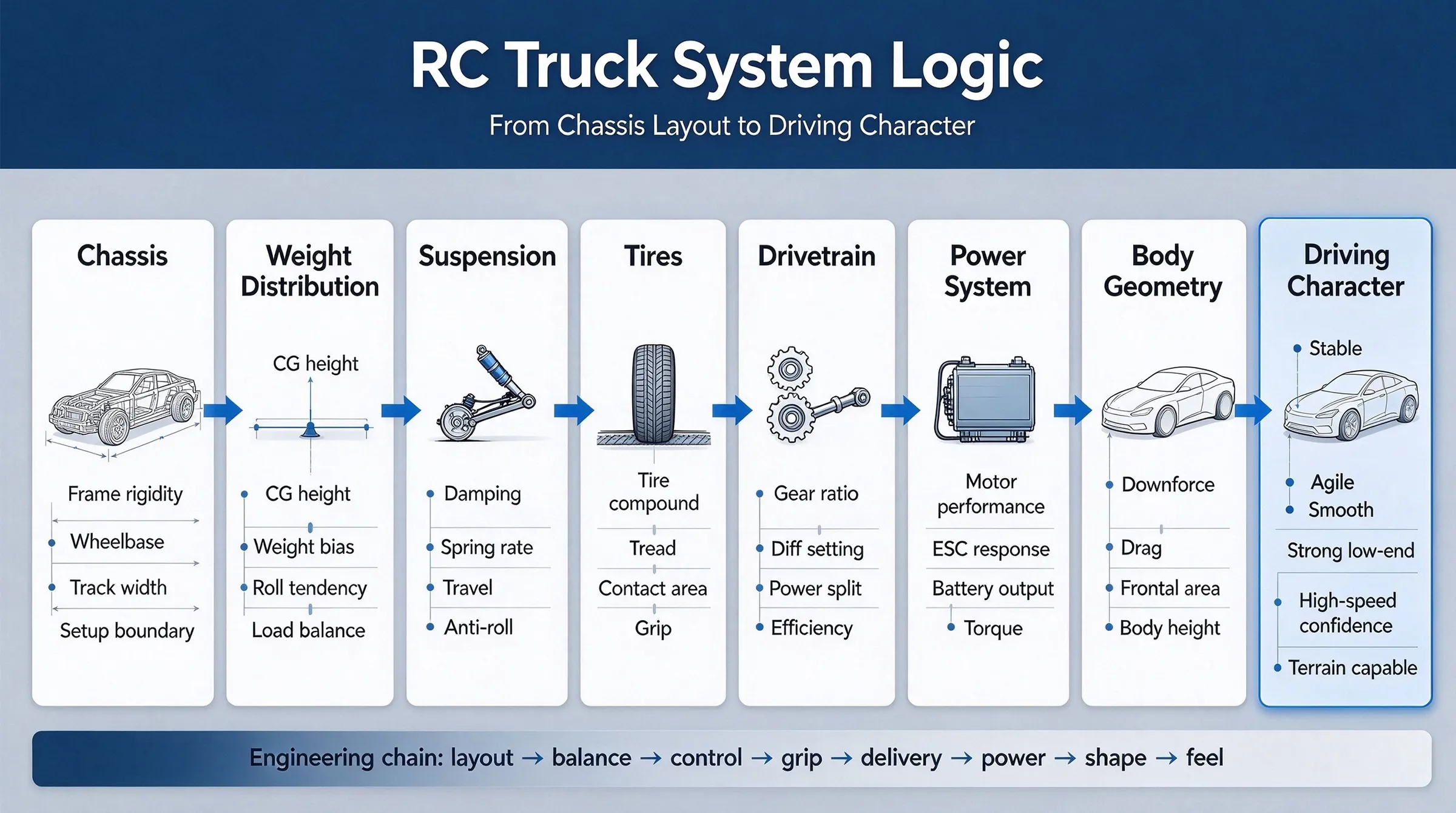
Instead of asking only how fast an RC truck can go, it is often more useful to ask what kind of behavior you want.
Choose a larger nitro platform when engine-driven operation, mechanical adjustment, and substantial off-road presence are important. Consider a 1/8 scale brushless RC truck when strong electric acceleration and a larger chassis are priorities.
For compact high-speed off-road driving, a 1/10 brushless RC truck offers a practical balance of size, power, and handling. For jumps and obstacles, an electric RC monster truck provides a different chassis philosophy. And when wheel-to-wheel competition is the objective, an electric short course truck offers body protection, stability, and race-focused geometry.
Ultimately, an RC truck feels like a truck because its engineering is built around a particular job. The most interesting differences are not always visible in the body shell—they are found underneath it, where chassis architecture, suspension geometry, drivetrain design, and power delivery determine how the vehicle behaves in the hands of the driver.