RC racing is not always about finding the fastest line or achieving the highest top speed. In close competition, vehicles constantly deal with traffic, aggressive cornering, jumps, contact, and sudden changes in direction. This is where the design of a short course truck becomes particularly interesting.
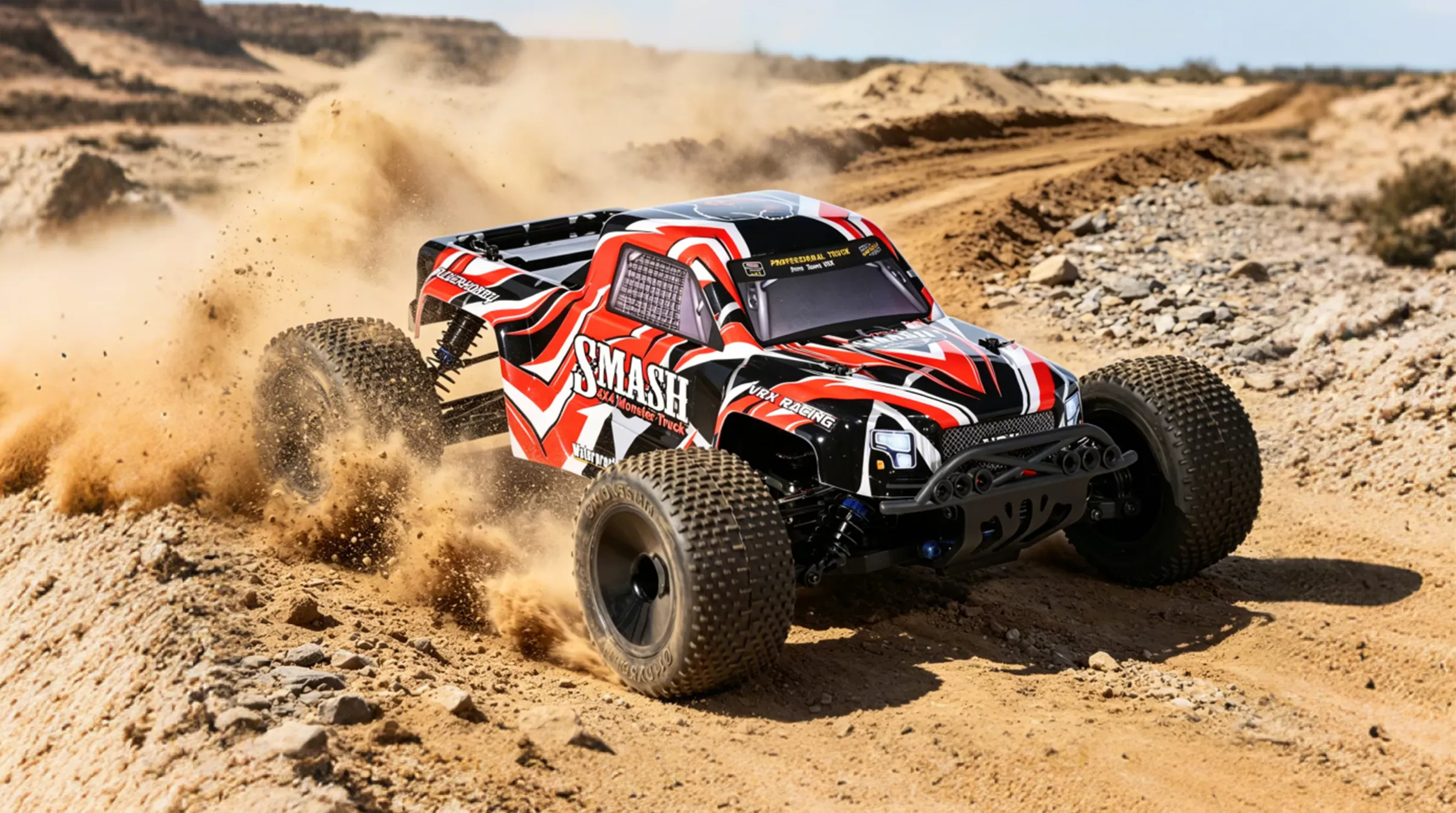
Unlike an open-wheel buggy, a short course truck uses a full-fender body that covers the wheels. Its wide stance, enclosed wheel arches, 4WD drivetrain, independent suspension, and relatively low center of gravity are designed around fast off-road driving where contact between vehicles is part of the challenge.
For enthusiasts interested in RC short course truck racing, understanding this design philosophy explains why an SCT can be more than a scale-looking truck. It is a platform specifically suited to competitive wheel-to-wheel driving.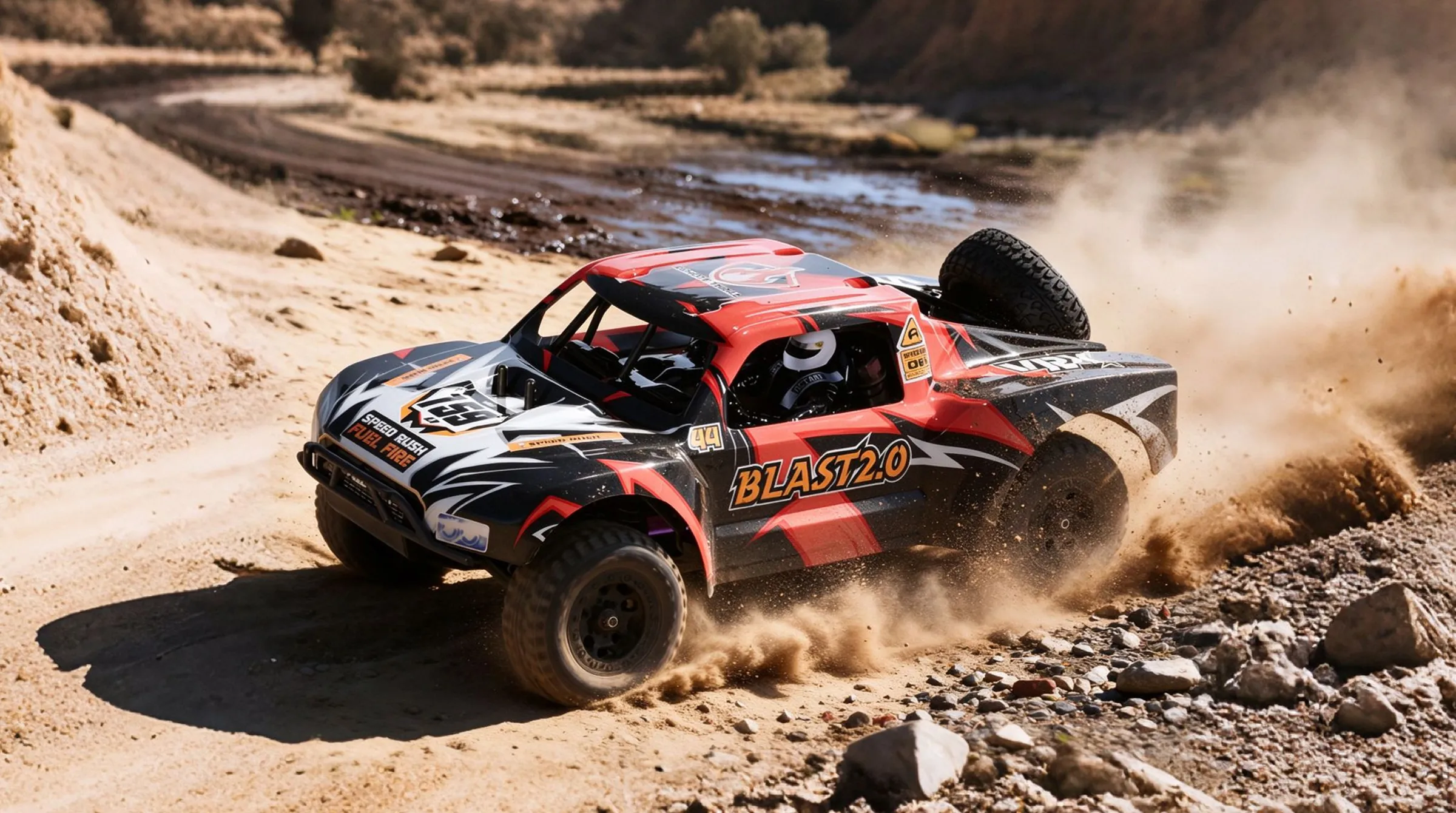
An RC SCT is visually inspired by full-size short course racing trucks, but its engineering purpose goes beyond appearance.
The most obvious feature is the enclosed body. On an open-wheel buggy, the wheels and suspension components are exposed. In a short course truck, the full-fender body provides an additional layer of protection around the wheels.
VRX Racing describes its electric short course trucks as platforms designed for high-speed stability, aggressive off-road racing, and scale realism. Its SCTs use wide stances, full-fender bodies, 4WD drivetrains, and independent suspension systems.
This combination makes the format particularly suitable for tracks where several vehicles may enter the same corner at once.
In close racing, small differences in vehicle position can quickly lead to contact.
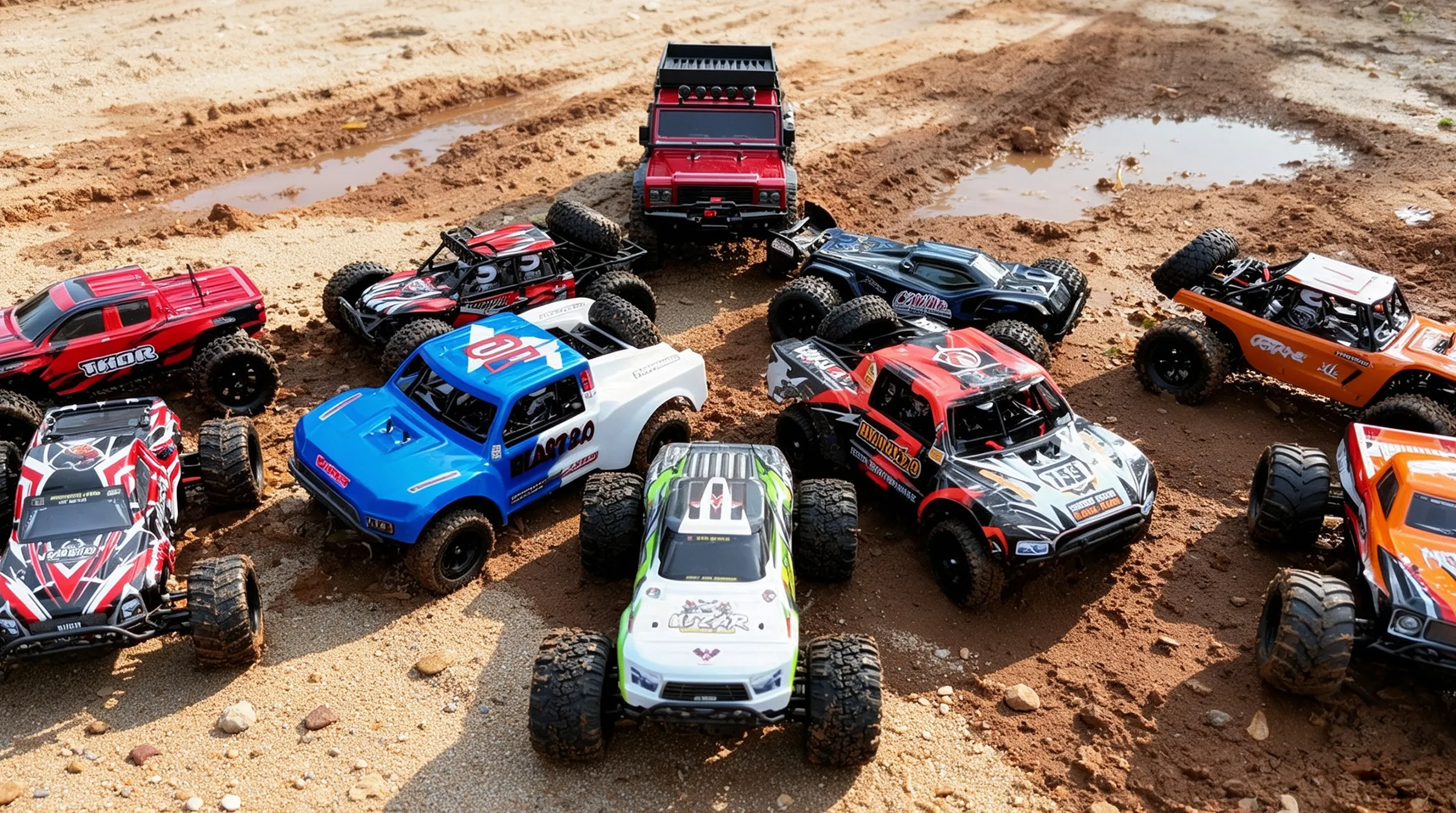
An exposed suspension arm or wheel can become vulnerable when another vehicle hits the side of the car. A full-fender body helps shield the wheel area and reduces the chance that another vehicle's tire will directly catch a suspension component.
This does not make an SCT immune to crashes, but it changes how the vehicle absorbs and recovers from contact.
VRX Racing specifically notes that its enclosed-wheel SCT design can help minimize suspension-arm damage during multi-car collisions, making the category suitable for RC racing tracks, hobby clubs, and commercial rental fleets.
That makes the body design part of the vehicle's functional engineering rather than simply a styling decision.
A short course truck is generally designed with a relatively wide track width and a stable chassis layout.
Why does this matter?
During high-speed cornering, a vehicle needs to resist excessive body roll and sudden weight transfer. A wider stance can provide a more stable footprint, while a relatively low center of gravity helps the vehicle remain planted.
VRX Racing's short course platforms are designed around this principle, with wide chassis proportions and suspension systems intended for packed dirt, clay, gravel, and other racing surfaces.
For an RC car short course truck, the goal is therefore not simply to accelerate quickly. It needs to remain predictable when the driver brakes late, changes direction, lands from a jump, or encounters another vehicle.
A race truck may look simple from the outside, but its suspension has to perform several jobs simultaneously.
It must absorb jumps, maintain tire contact through uneven sections, control body movement during cornering, and recover quickly after an impact.
The BLAST 2.0 1/10 brushless short course truck from VRX Racing uses large-bore shocks with long droop, high-impact front suspension arms, and a reinforced upper plate to increase chassis stiffness.
These components work together rather than independently.
Longer suspension travel helps the truck absorb larger surface changes, while damping controls how quickly the chassis settles afterward. A rigid enough chassis also helps the suspension geometry remain consistent when the vehicle is under load.
Four-wheel drive is another important feature of many modern SCT platforms.
When power is delivered through all four wheels, the vehicle can distribute available traction across a larger contact area. This can be particularly useful when accelerating out of corners or driving across loose dirt.
The VRX Racing BLAST 2.0 brushless SCT uses a 4WD shaft-drive system and a fully sealed central transmission for gear protection.
For RC short track racing, this can make throttle application more predictable because the driver has more opportunities to convert motor output into forward traction.
The benefit is not only straight-line acceleration. Four-wheel drive can also help maintain momentum when one or more tires temporarily lose grip.
A modern brushless RTR short course truck can deliver significantly more responsive acceleration than a basic brushed setup.
VRX Racing's 1/10 brushless electric range includes the BLAST 2.0 SCT, which uses a 3650 3300KV brushless motor and a 45A ESC. The vehicle is supplied as an RTR configuration with a 7.4V 3300mAh LiPo battery and 4WD shaft drive.
The 45A brushless ESC is an important part of this package. It controls power delivery to the motor while also handling braking and electronic protection functions.
For a racing-oriented SCT, this matters because throttle response needs to be predictable. Too much uncontrolled power can make the truck difficult to drive, especially when exiting a corner on loose terrain.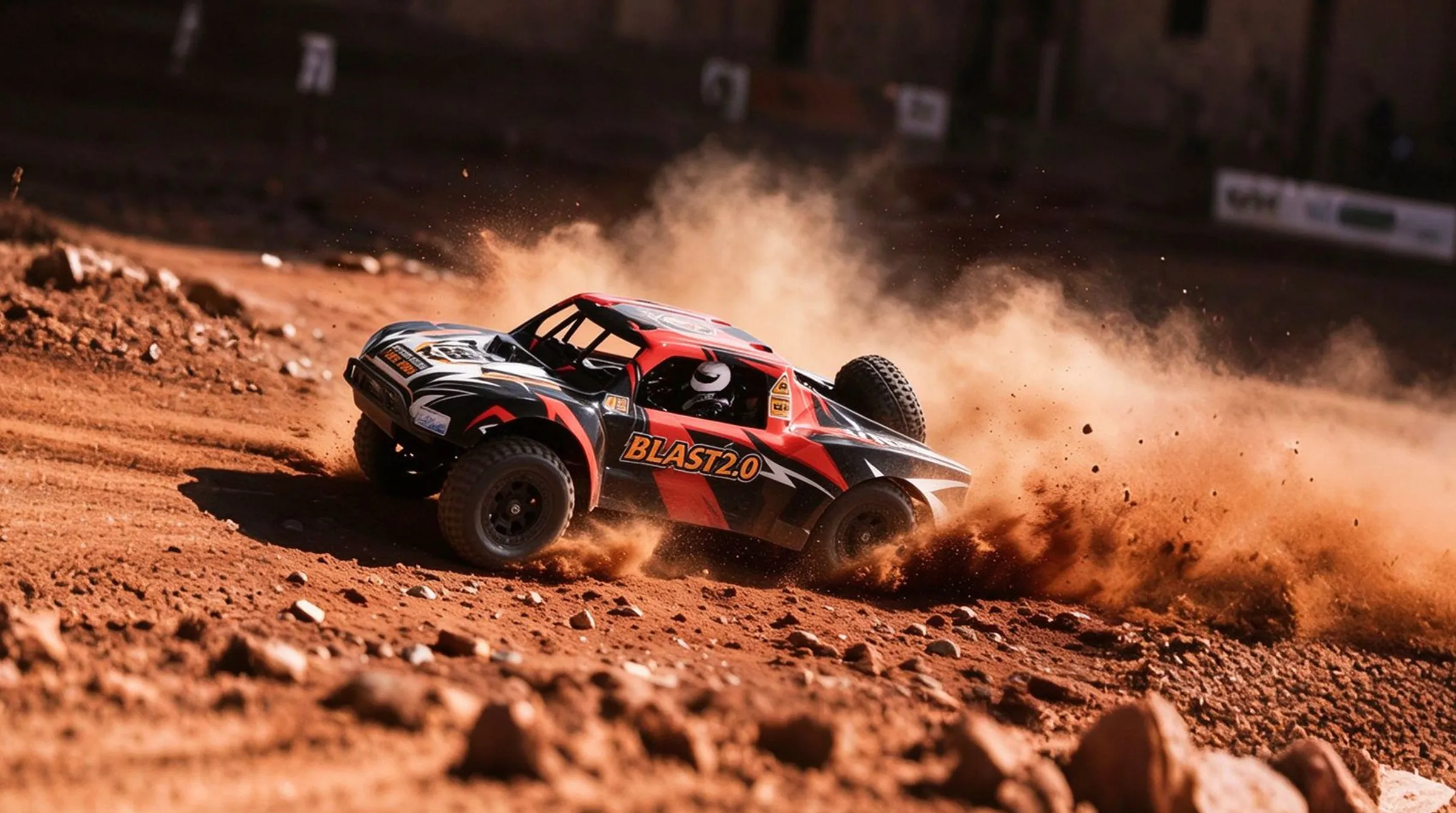
The 3650 3300KV motor is a common configuration in 1/10 brushless platforms.
KV indicates the motor's approximate unloaded revolutions per minute per volt. It should not be interpreted as a direct top-speed rating because actual vehicle speed depends on gearing, battery voltage, tire diameter, drivetrain efficiency, and vehicle load.
VRX Racing pairs its 3650 3300KV motor with a 45A ESC in several 1/10 brushless models. Its 1/10 electric platforms can reach speeds of up to around 60 km/h depending on configuration.
For an RC 1/10 short course truck, this combination provides a useful balance between acceleration, manageable vehicle size, and drivetrain load.
A racing truck needs to survive repeated impacts without becoming difficult to control afterward.
The BLAST 2.0 brushless SCT uses a reinforced upper plate to stiffen the chassis, reinforced rear axle housing, high-impact suspension arms, and a sealed central transmission.
These details may not be as visually impressive as a high-speed motor, but they can have a greater influence on racing consistency.
A vehicle that produces enormous acceleration but loses alignment or damages drivetrain components after minor contact is not necessarily a better racing platform.
This is one reason experienced drivers often evaluate structural details alongside power specifications.
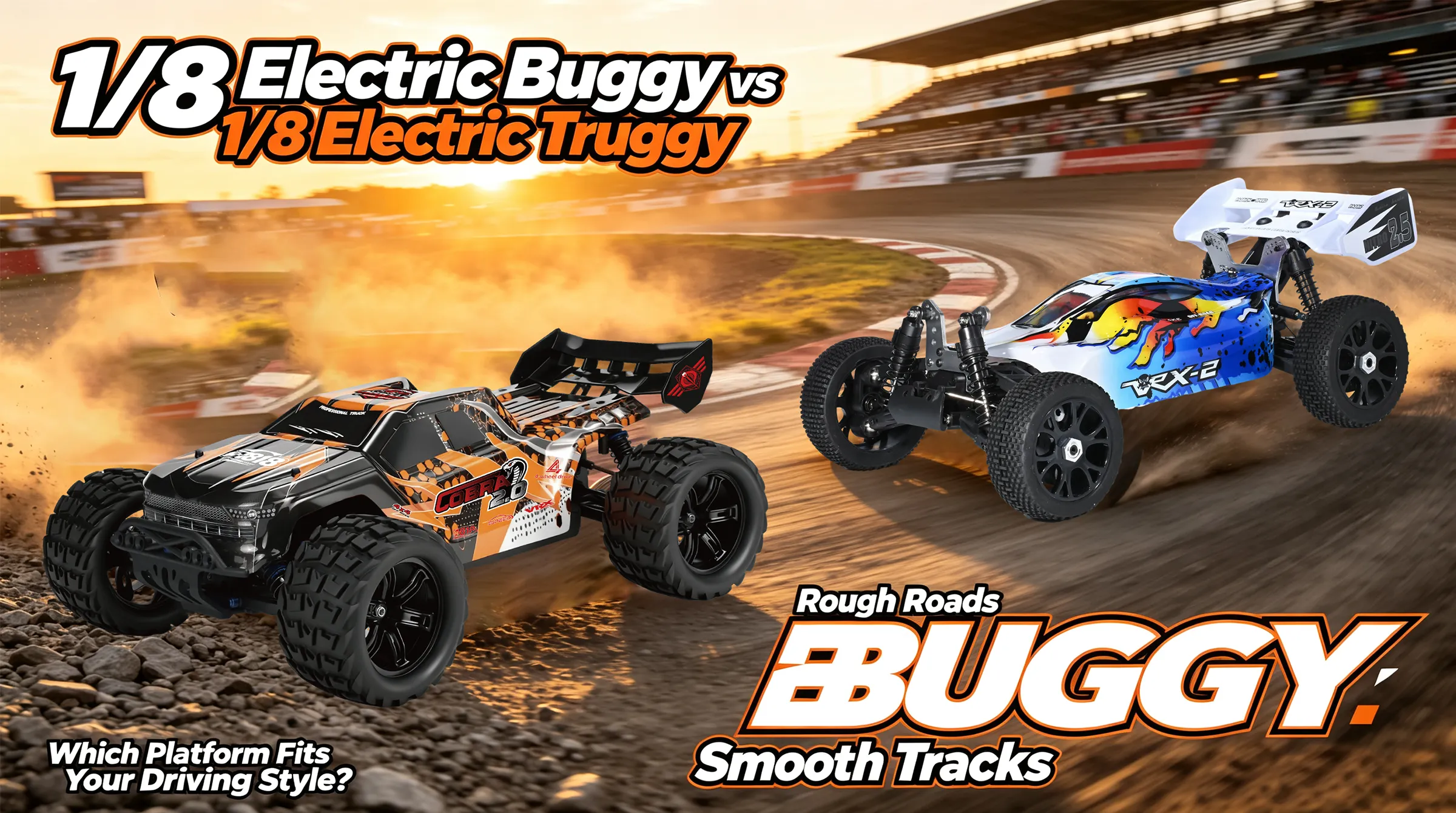
A truggy racer approaches off-road competition from another direction.
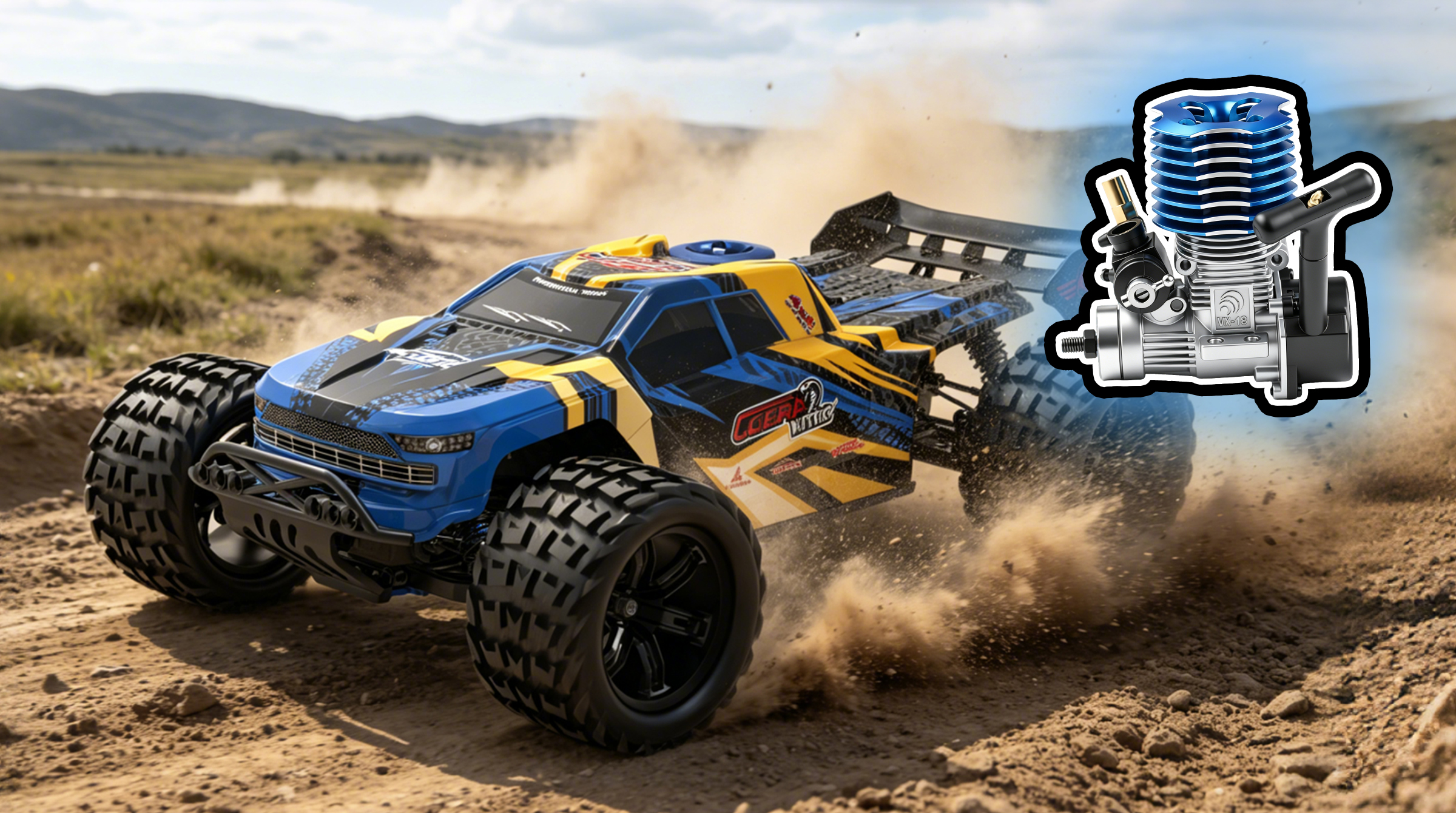
A truggy generally combines buggy-style handling with a wider chassis, larger tires, and greater structural mass. VRX Racing's electric truggies, including its 1/8 COBRA platform, use wider stances, longer wheelbases, large tires, and robust 4WD chassis for stability on rough terrain.
A short course truck, by contrast, places greater emphasis on body protection and scale racing realism.
Neither design is universally better. A truggy can be particularly effective when the track contains large jumps and rough sections, while an SCT can be attractive when close racing and frequent vehicle contact are expected.
The difference becomes even clearer when comparing an SCT with a monster truck electric platform.
An electric monster truck generally prioritizes large tires, ground clearance, and obstacle absorption. It is designed to climb over objects and handle aggressive recreational driving.
An SCT is more focused on controlled high-speed movement. Its body is lower, its wheels are enclosed, and its chassis geometry is intended to remain stable through corners and jumps.
VRX Racing offers both electric short course trucks and electric monster trucks as distinct categories, reflecting these different engineering priorities.
For racing, the SCT's lower and wider configuration can provide a more predictable platform.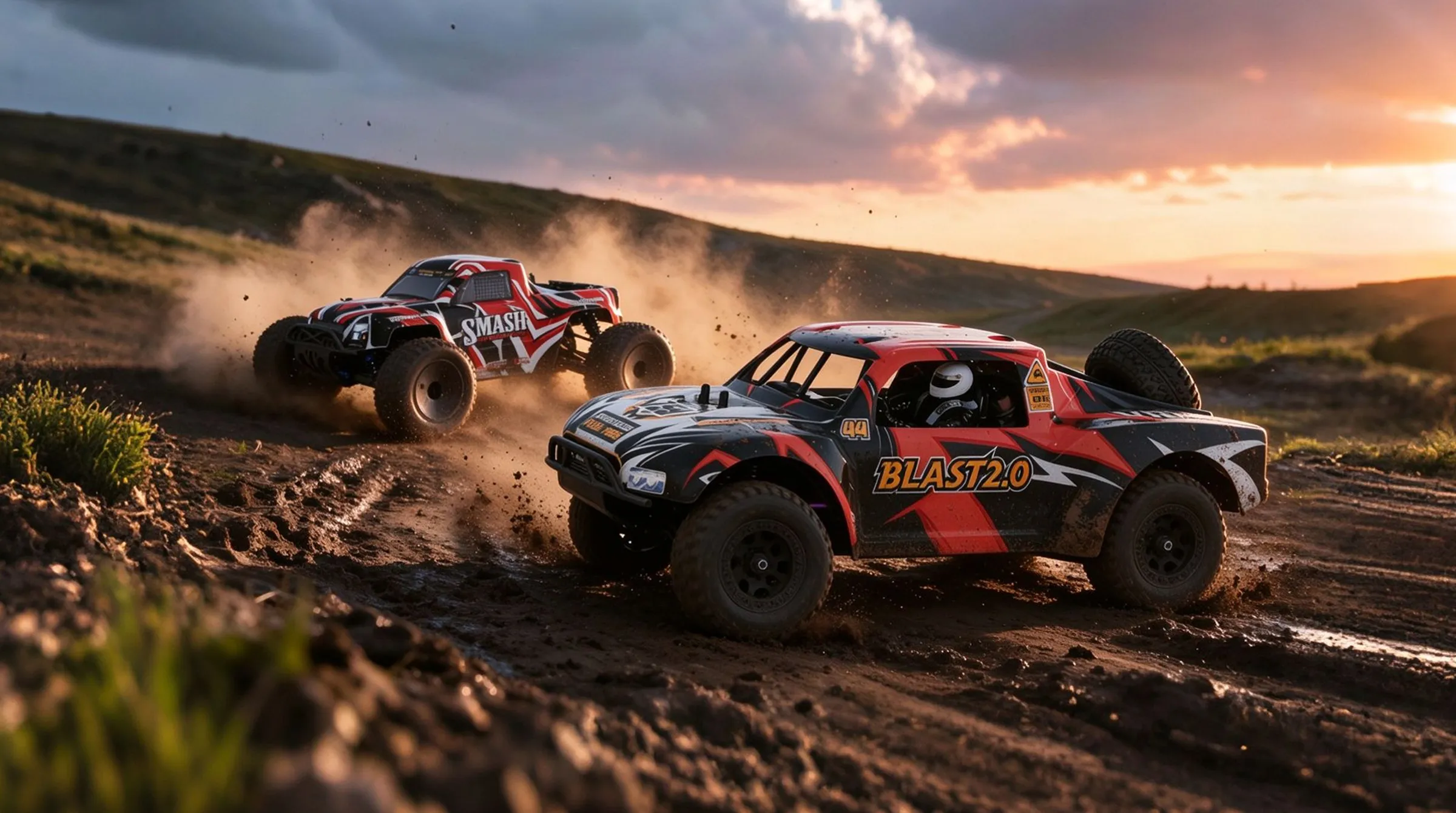
The 1/10 short course truck is particularly popular because it balances size, speed, and track accessibility.
VRX Racing offers the BLAST 2.0 1/10 SCT in both brushed and brushless versions. The brushless model uses the 3650 3300KV motor and 45A ESC, while the brushed version uses a 550 15T motor with a 40A ESC.
For larger-format racing, the 1/8 Blast SCT provides a more substantial platform with a 4WD brushless configuration. VRX Racing's 1/8 electric range also includes larger buggies and truggies designed for high-performance off-road use.
The choice between scales therefore depends not only on speed but also on track size, transportation, maintenance requirements, and the level of impact the vehicle is expected to handle.
A competitive SCT is the result of several systems working together:
System | Racing Function |
Full-fender body | Protects wheels and improves scale realism |
Wide chassis | Improves high-speed stability |
4WD drivetrain | Increases available traction |
Oil-filled shocks | Controls suspension movement |
Brushless motor | Provides efficient acceleration |
ESC | Controls throttle and braking response |
Sealed transmission | Protects internal gears |
High-impact suspension | Helps absorb collisions and jumps |
High-grip tires | Converts power into usable traction |
The important lesson is that no single component creates a successful racing truck.
The appeal of an SCT lies in how many racing requirements it addresses at the same time.
Its enclosed body helps protect the wheel area during contact. Its wide stance supports high-speed stability. Independent suspension allows the truck to handle jumps and uneven surfaces, while 4WD and brushless power provide the acceleration needed for competitive driving.
This makes the category particularly interesting for drivers who enjoy RC short course truck racing rather than simply running a vehicle in isolation.
VRX Racing's range of 1/10 and 1/8 short course trucks demonstrates how the platform can be developed for different performance levels, from accessible RTR models to higher-output brushless configurations.
For wheel-to-wheel competition, the fastest truck is not always the winner. The better platform is often the one that can stay stable, survive contact, maintain traction, and keep driving when the race becomes unpredictable.